
 By Suro Senen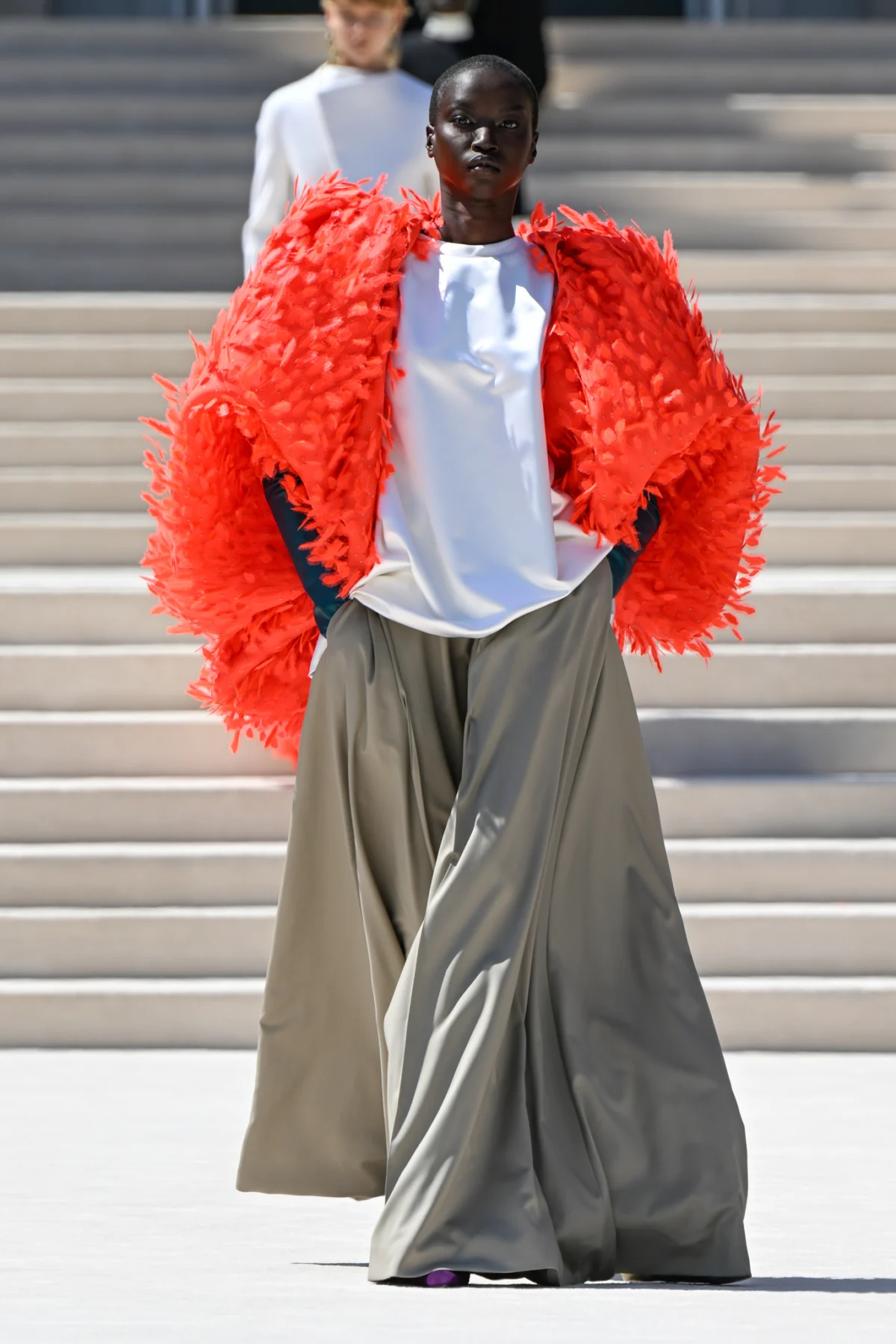
In the high-stakes world of luxury fashion, the "revolving door" of creative direction often results in a jarring disconnect between a designer’s personal aesthetic and the historical DNA of a storied house. Yet, as the industry recently witnessed in Paris, some marriages are not merely convenient; they are evolutionary. Pierpaolo Piccioli’s latest couture outing for Balenciaga represents a masterclass in alignment, blending his own penchant for romantic, emotional grandeur with the rigorous, architectural obsession of the house’s founder, Cristobal Balenciaga.
The Convergence of Vision and History
The narrative of this collection is rooted in a fundamental understanding of structure. Where many contemporary designers lean on heavy ornamentation or excessive fabric layering to create volume, Piccioli has pivoted toward a more disciplined methodology: engineering the cut.
"Engineering the cuts, not using so many fabrics, not using additional structures, but arriving at the perfect meld between the fabric, the shape, the color and the surface—as if you used only one gesture to create the object," Piccioli explained to WWD during a preview earlier this week. This philosophy is a direct homage to Cristobal Balenciaga, whose legacy was built on exacting shapes—at times austere and linear, at others, ballooning into iconic, gravity-defying volumes. For Piccioli, the reaction to these textiles and hues is not merely a technical process; it is "very personal and instinctive."
A Chronology of the Couture Showcase
The presentation took place this past Wednesday at the Cité Internationale Universitaire de Paris. Staged in a scenic, albeit unforgiving, courtyard, the venue provided a raw, naturalistic backdrop to the hyper-refined garments on display.
The Morning of the Show
The logistics of the event were as challenging as the designs were ambitious. Guests found themselves seated on benches encircling a hedge under the blazing midday sun. While the trek to the venue and the harsh conditions tested the endurance of the fashion elite, the outdoor setting served a specific purpose: it grounded the ethereal nature of the collection. The natural breeze caught the hemlines of the models, bringing movement to the static perfection of the garments—most notably, the 24,150 shredded gazar petals that adorned a singular, breathtaking strapless gown.
The Auditory Landscape
Piccioli opted to heighten the emotional timbre of the show by enlisting British singer Anohni. Having served as a creative collaborator during Piccioli’s long, acclaimed tenure at Valentino, Anohni’s haunting, atmospheric vocals served as an emotional tether, grounding the audience in the designer’s signature brand of melancholic romance.
The Finale
The show reached its emotional crescendo with a parade of topiary-like gowns, each a feat of stacked volumes. The spectacle peaked when Gigi Hadid emerged, enveloped in a dramatic, face-framing hood constructed of jutting rooster feathers. Following the final exit, Piccioli echoed his own past traditions, stepping out for his bow accompanied by his entire atelier staff, all dressed in their crisp, white couture coats—a poignant acknowledgment of the collective labor behind the artistry.
Technical Mastery: Supporting Data and Methodology
The collection was characterized by a recurring motif: maximalist surfaces applied to minimalist silhouettes. This was not a clash of styles, but a strategic marriage of texture and form.
- Tailoring and Flou: Piccioli and his team successfully blurred the lines between structured tailoring and fluid flou techniques. A standout piece was a deceptively simple black T-shirt dress. The bodice featured full-canvas construction, providing rigid shape, while the skirt remained free-hanging in the same fabric—a study in architectural contrast.
- Surface Tension: The collection utilized "tubular embroideries" and silky, lapping hairs that sat beneath lean cashmere coats. These details provided a sensory depth that demanded closer inspection, proving that minimalism does not have to mean a lack of detail.
- The Stockman Technique: During a tour of the atelier, Piccioli showcased a funnel-necked, tortoise-backed Stockman form, where seamstresses were meticulously hand-molding leather and cashmere. This process resulted in sleek, arresting silhouettes and puff-sleeved silk gazar bomber jackets that are already projected to be high-demand pieces for the house’s elite clientele.
Official Responses and Creative Intent
When questioned about the lack of traditional "daywear" in the collection—aside from a few floor-sweeping chinos and couture-grade tanks—Piccioli was unapologetic. His objective is not to dress the masses, nor to cater to the utilitarian demands of the modern wardrobe.
"You have to dream about couture," he stated firmly. "I want to deliver a dream about this house."
The response from the front row—a mix of high-profile clients, influencers, and industry legends—was one of rapturous approval. As the show concluded, the audience rose in a standing ovation, confirming that even in a climate of "quiet luxury" and commercial pragmatism, there remains a voracious appetite for the high-drama, dream-like quality of pure couture.
Implications for the Future of Balenciaga
Piccioli’s tenure at Balenciaga is still in its infancy, yet this collection signals a departure from the "shock-value" marketing that has dominated the house in recent years. By returning to the foundational principles of construction—the "engineering of the cut"—Piccioli is positioning Balenciaga as a sanctuary for those who value craftsmanship over meme-ability.
The Shift in Design Philosophy
The industry is currently in a state of flux, with many houses struggling to balance heritage with the rapid-fire demands of social media. Piccioli’s strategy is a counter-move. By focusing on the object—the garment as a singular, artistic gesture—he is attempting to elevate the brand back into the realm of timeless, collectible art.
Commercial Viability vs. Artistic Purity
Critics may point to the impracticality of such a collection in a struggling retail market. However, the purpose of a couture show is not always to move units of T-shirts. It is to set the tone for the brand’s identity. If Balenciaga can successfully translate the "dream" of this couture collection into the desirability of its accessories and ready-to-wear lines, the brand will have successfully secured its position at the pinnacle of luxury.
The Human Element
The decision to parade the atelier staff alongside the designer during the finale serves as a broader cultural statement. In an era where AI and fast-fashion manufacturing dominate the discourse, highlighting the human hand—the seamstress, the pattern-maker, the embroiderer—is a powerful branding tool. It creates a narrative of authenticity that is increasingly difficult to manufacture.
Conclusion
As the sun set on the Cité Internationale Universitaire, and the attendees scrambled for the shade, the lingering impression was not of the heat or the difficulty of the venue, but of the silhouettes that had just danced across the courtyard. Pierpaolo Piccioli has managed to do what many thought impossible: he has taken the rigid, often cold architecture of Balenciaga and infused it with the human pulse of his own creative soul.
He is not merely a designer currently occupying a seat at a storied house; he is an architect of dreams, proving that in the world of couture, the most radical thing one can do is to remain committed to the perfection of the cut. Whether this trajectory will continue to define his tenure remains to be seen, but for now, the house of Balenciaga has found its rhythm, and it is beating with a distinctly couture heart.
 Neng Nana
  Ali Ikhwan
  Lina Hope