
 By Layla Zulfa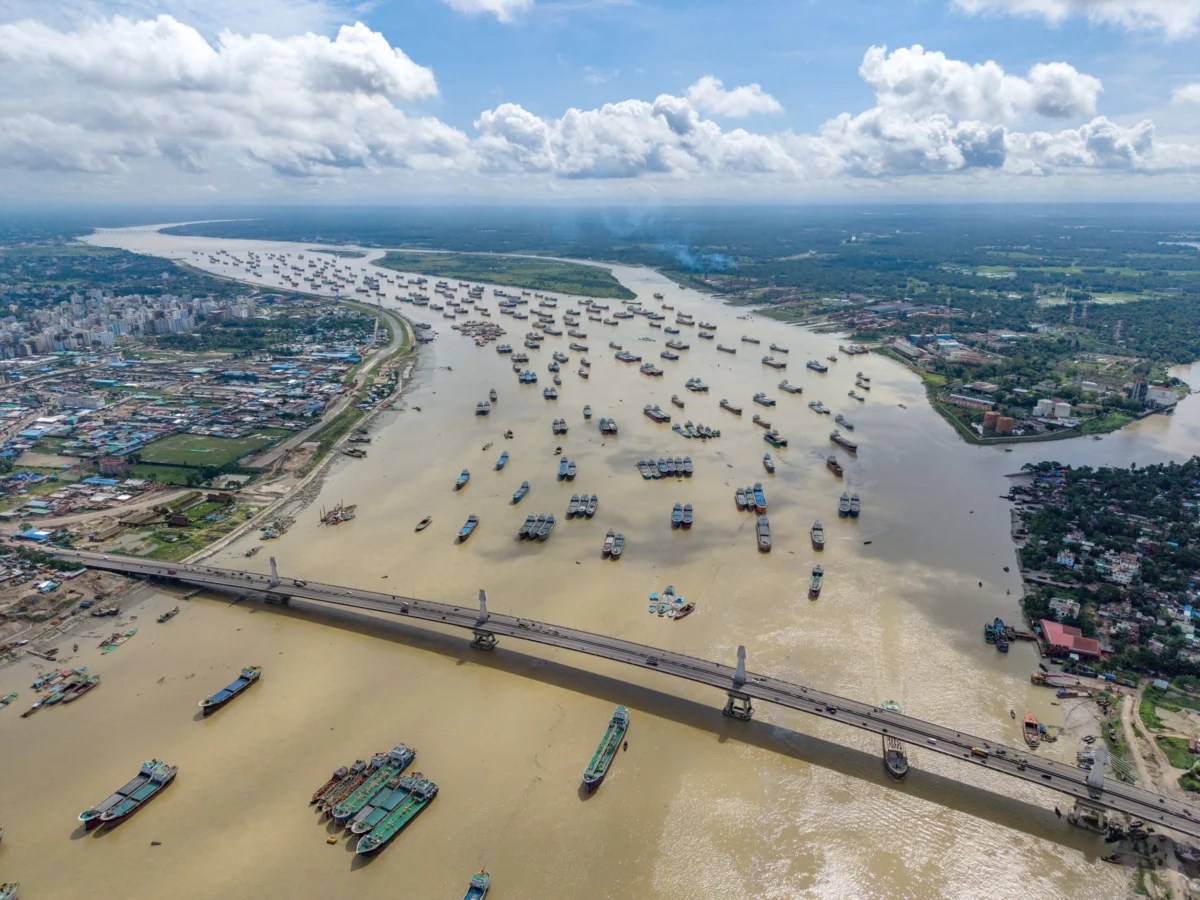
The backbone of the Bangladeshi economy—its multi-billion-dollar apparel manufacturing sector—is facing an existential crisis. Already reeling from a prolonged period of stagnant growth, factory closures, and significant layoffs, the nation’s garment exporters are now grappling with a crippling logistical bottleneck at the Chattogram Port. Following severe flooding between July 5 and July 8, which paralyzed container yards and arterial transport networks, industry leaders are urgently calling for an emergency government intervention to prevent a total collapse in export reliability.
The crisis serves as a grim inflection point for a country that has, for decades, defined itself as the world’s low-cost manufacturing hub. As regional rivals like Vietnam and Cambodia capitalize on shifting trade dynamics, Bangladesh’s inability to maintain a seamless supply chain is no longer just a local logistical headache—it is a signal to global buyers that the country’s competitive edge may be slipping away.
A Chronology of the Crisis: When the Waters Rose
The current disruption originated from heavy, sustained rainfall in early July, which overwhelmed the drainage infrastructure at Chattogram—the gateway for nearly 90 percent of Bangladesh’s international trade.
- July 5–8: Torrential rains caused catastrophic flooding across several container yards within the port and surrounding private inland container depots (ICDs). The flooding rendered major highway corridors impassable, halting the movement of trucks and stalling the delivery of vital cargo.
- July 10: The Chattogram Port Authority (CPA) issued a formal notice absolving itself of liability for cargo damage. Citing "Act of God" clauses, the CPA effectively shielded itself from compensation claims, a move that sparked immediate outrage among the nation’s business chambers.
- Mid-July: A coalition of the country’s most powerful trade associations—including the Bangladesh Garment Manufacturers and Exporters Association (BGMEA), the Bangladesh Knitwear Manufacturers and Exporters Association (BKMEA), the Bangladesh Textile Mills Association (BTMA), and the Chattogram Chamber of Commerce and Industry (CCCI)—united to submit a joint appeal to the Ministry of Shipping.
The trade groups have demanded an immediate restoration of road and rail connectivity, the waiver of demurrage and storage fees for the period of the disruption, and the creation of a "national trade continuity framework" to safeguard against future environmental shocks. To date, the shipping ministry has remained silent, leaving exporters in a state of precarious limbo.
The Financial Fallout: More Than Just Delayed Shipments
The logistical paralysis at Chattogram has affected a wide spectrum of goods, ranging from finished garments and leather goods to essential pharmaceuticals and perishable food items. For the apparel sector, the stakes are particularly high.
Global fashion brands, operating under tight seasonal schedules, have little tolerance for delivery delays. When containers are stuck in flooded depots, exporters face the double threat of financial penalties for late delivery and the looming risk of total order cancellations. Importers, meanwhile, are dealing with the degradation of raw materials like cotton, yarn, and chemical dyes, which are essential for maintaining production timelines.
Mohammad Amirul Haque, president of the CCCI, has been a vocal critic of the port’s lack of preparedness. "The authority earns around 6,000 crore taka ($486.8 million) in annual revenue," Haque noted in recent statements. "Yet, it has failed to build adequate sheds or develop effective disaster preparedness to protect cargo." His argument reflects a growing sentiment among manufacturers: that the infrastructure deficit is no longer just a technical issue—it is a failure of governance that undermines the national interest.
Supporting Data: The Erosion of Market Share
The urgency of the trade groups’ plea is underscored by a sobering reality: Bangladesh is losing its grip on the global apparel market. According to recent World Trade Organization (WTO) data, Bangladesh’s garment exports reached $38.8 billion in 2025, representing a marginal growth of only 0.89 percent over the previous year.
This modest increase is overshadowed by the aggressive gains made by regional competitors. While Bangladesh saw its global market share contract from 7 percent to 6.8 percent, Vietnam increased its market share from 6.2 percent to 6.5 percent on the back of 10.5 percent export growth. Even more striking is the performance of Cambodia, which registered a 16.9 percent surge in exports, signaling a massive shift in how global sourcing managers are diversifying their portfolios.
The trend has continued into 2026. U.S. Office of Textiles and Apparel (OTEXA) data for January through May shows a 8.1 percent year-on-year decline in Bangladeshi garment exports to the United States. While this decline is slightly better than the broader U.S. market contraction of 9.3 percent, it is still a negative indicator for a sector that relies heavily on American consumption. The situation is even more dire in Europe, where Eurostat data indicates that Bangladeshi apparel exports to the EU plummeted by 18.9 percent in the same period—nearly double the overall decline of EU imports from the region.
Official Responses and Industry Tensions
The divide between the state-run port authorities and the private sector is widening. The CPA’s reliance on the "Act of God" defense has been perceived by industry lobbyists as an abdication of duty. By refusing to engage in compensation discussions or acknowledge the need for infrastructural reform, the government risks alienating the very manufacturers that provide the nation with its primary source of foreign currency.
The trade associations are now calling for a multi-pronged relief package. Beyond the immediate waivers and the restoration of transport links, they are seeking low-interest refinancing for businesses that have been hit hardest by the flooding. The argument is that without a state-backed safety net, many small-to-medium-sized garment factories may be forced into permanent closure, exacerbating the trend of mass layoffs that has plagued the industry over the last several months.
Strategic Implications: A Shift in Global Sourcing
The logistical crisis at Chattogram occurs as global fashion giants like H&M begin to re-evaluate their reliance on Bangladesh. In May, reports surfaced that H&M had begun gradually shifting some of its production orders to India, a move that highlights the precarious nature of the "China Plus One" strategy.
Former BKMEA president Fazlul Haque pointed to the competitive vacuum created by the recent global trade climate. "China and Vietnam have pursued aggressive marketing over the past year," Haque observed. "Bangladesh could not match that effort."
The implication is clear: global buyers are no longer willing to prioritize low costs if the cost of doing business includes chronic supply chain instability, unpredictable port performance, and an inability to adapt to environmental challenges. For Bangladesh, the path forward requires more than just recovering from the July floods. It requires a fundamental overhaul of its trade infrastructure and a shift in government policy to treat the apparel sector as a strategic asset rather than a guaranteed revenue stream.
As the industry waits for the Ministry of Shipping to break its silence, the question remains: will the government act to save its most vital industry, or will this moment be remembered as the beginning of the end of Bangladesh’s dominance in global apparel? The answer will likely be written in the trade statistics of the coming year. If the logistics remain bottlenecked and the sector continues to lose market share, the consequences for the millions of workers and the national economy will be severe, irreversible, and far-reaching.
 Neng Nana
  Ali Ikhwan
  Lina Hope