
 By Basiran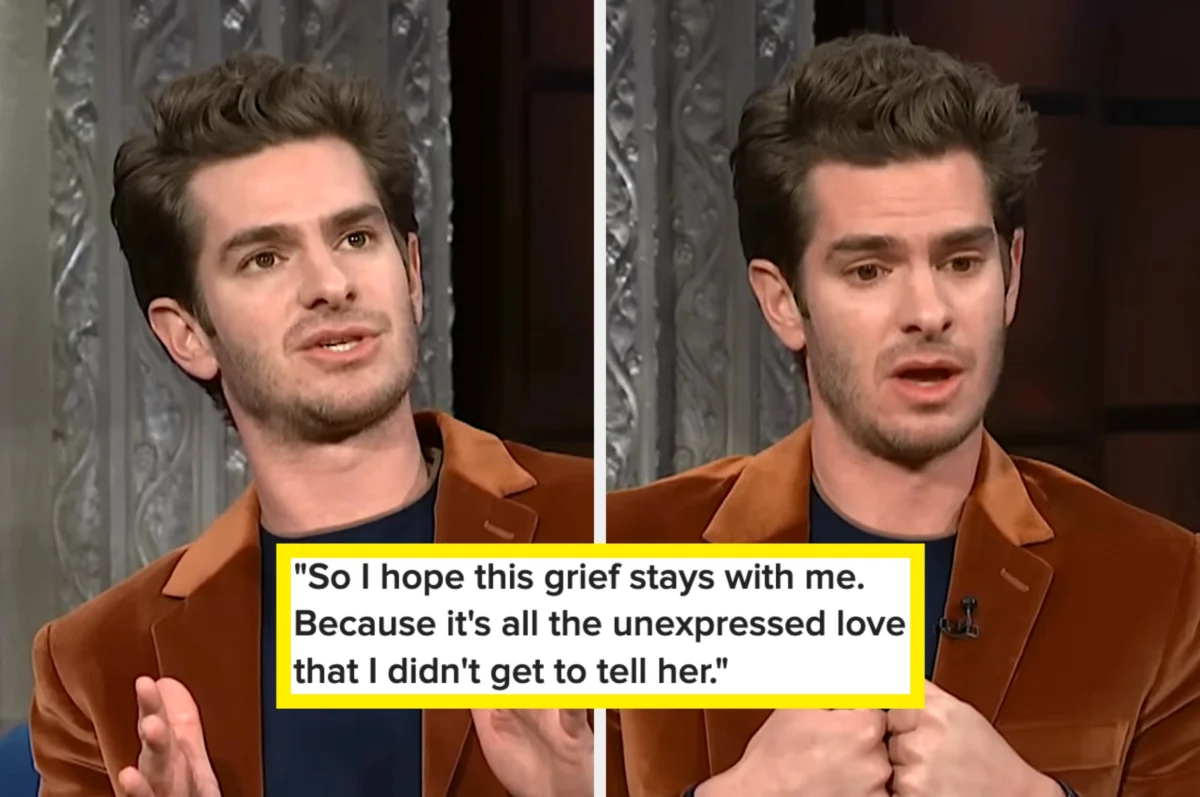
Published: October 15, 2026
Disclaimer: This article contains discussions of death, substance addiction, suicide, and domestic abuse.
Main Facts
The glittering facade of Hollywood and the global entertainment industry often projects a world of perpetual glamour, immense wealth, and unbridled success. However, beneath the red carpets, blockbuster movie premieres, and chart-topping albums lie deeply human stories defined by profound sorrow.
Public figures are frequently viewed through the singular lens of their professional achievements, leaving their private battles with grief, trauma, and family tragedy largely hidden from the public eye.
A comprehensive look at the lives of 15 prominent celebrities reveals that unimaginable loss—ranging from childhood trauma and sudden accidents to generational struggles with substance addiction and domestic violence—frequently shapes the foundational identities of those who entertain us.
Far from being isolated incidents, these stories demonstrate how public figures process grief under the unyielding gaze of the media, often turning their private heartbreaks into outlets for artistic expression, advocacy, and human connection.
Chronology
While grief is a lifelong journey, the timelines of these tragic events span decades, touching childhoods, pivotal career moments, and recent years:
- 1974: Ten-year-old Stephen Colbert loses his father, James, and two brothers, Peter and Paul, in a commercial plane crash.
- 2000: Pedro Pascal’s mother, Verónica Pascal Ureta, dies by suicide at the age of 44, prompting the future actor to adopt her maiden name professionally.
- September 11, 2001: Seven-year-old Pete Davidson loses his father, NYC firefighter Scott Davidson, during the World Trade Center terrorist attacks.
- Late 1980s / Early 1990s: Charlize Theron experiences a defining childhood trauma at age 15 when her mother fatally shoots her abusive, alcohol-dependent father in self-defense.
- 2008: Kieran Culkin loses his 29-year-old sister, Dakota Culkin, after she is struck by a vehicle in Los Angeles.
- 2014: Austin Butler loses his mother, Lori, to cancer when he is 23 years old—a tragedy that mirrors Elvis Presley’s life and later helps secure his breakthrough audition.
- January 2016: Vanessa Hudgens’ father, Greg, passes away from stage 4 cancer mere hours before she takes the stage for a live television broadcast of Grease: Live.
- December 2016: Billie Lourd suffers a catastrophic double loss within 48 hours when her mother, Carrie Fisher, and grandmother, Debbie Reynolds, pass away consecutively.
- 2016–2019: Louis Tomlinson faces immense family tragedy, losing his mother, Johannah Deakin, to leukemia in 2016, followed by the accidental overdose death of his 18-year-old sister, Félicité, in 2019.
- 2019: Andrew Garfield’s mother, Lynn, passes away from pancreatic cancer, deeply influencing his artistic work in Tick, Tick… Boom!.
- 2020: Riley Keough experiences the tragic loss of her younger brother, Benjamin Keough, to suicide.
- 2022: Kevin Hart’s father, Henry Witherspoon, passes away after a long battle with drug addiction, which Hart helped him overcome later in life.
- 2023: Riley Keough suffers a second profound family loss when her mother, Lisa Marie Presley, passes away from small-bowel obstruction complications.
- 2024–2026: Barry Keoghan achieves two and a half years of sobriety following multiple rehabilitation stays, speaking openly about generational addiction that claimed his mother, father, uncles, and cousin.
- September 2026: Kaia Gerber’s older brother, Presley Gerber, passes away at age 27 while at a rehabilitation facility.
Supporting Data & Personal Accounts
The depth of these personal tragedies is best understood through the words of the celebrities themselves, who have increasingly chosen vulnerability over silence to break social stigmas.
1. Presley and Kaia Gerber
In September 2026, Presley Gerber passed away at the age of 27 while residing at a rehabilitation facility. While the Los Angeles County Department of Medical Examiner has not yet officially determined the cause and manner of death, the tragedy has deeply shaken the family. Months prior to his passing, his sister, model and actress Kaia Gerber, spoke candidly about how substance addiction reverberated through their household. "When something like that happens in a family, it kind of levels everyone," Kaia shared, praising her brother for using his platform to speak humanely about a heavily stigmatized disease.
2. Barry Keoghan
Academy Award nominee Barry Keoghan has been unreservedly transparent about his battles with substance abuse and the devastating toll of addiction across multiple generations. Having lost his mother to a heroin overdose when he was just 12—subsequently spending time in the foster care system—Keoghan later revealed that he also lost his father, two uncles, and a cousin to drugs. After enduring three separate rehabilitation stints, Keoghan disclosed that he reached two and a half years of sobriety. "I’m not in denial anymore. I understand that I do have an addiction, and I am an addict," he noted, expressing newfound peace and presence as a father.
3. Stephen Colbert
Late-night television host Stephen Colbert was only 10 years old when his father and two brothers perished in the crash of Eastern Air Lines Flight 212 in 1974. Reflecting on the tragedy decades later in interviews with 60 Minutes, Colbert explained that the immense shock left him "personally shattered," forcing him to shoulder an emotional burden. "My father and two of my brothers died when I was 10, and I think I did my best to cheer mom up," he shared, noting that surviving early grief ultimately cultivated his deep empathy for human suffering and shaped his unique comedic sensibilities.
4. Pedro Pascal
The Last of Us star Pedro Pascal was 24 when his mother, Verónica Pascal Ureta, died by suicide in 2000. In honor of her unwavering support for his artistic ambitions during his early years in New York and California, Pascal transitioned from using his father’s surname to his mother’s maiden name professionally. "She was always incredibly supportive, never a stage mom," Pascal reflected. "I always felt like she knew something that I didn’t. None of [my success] would be real if it weren’t for her."
5. Kieran Culkin
Emmy-winning actor Kieran Culkin has frequently addressed the enduring absence of his older sister, Dakota Culkin, who was tragically struck and killed by a car in Los Angeles in 2008 at age 29. Culkin has admitted that the pain of her loss remains a constant presence. "I only knew who I was because of who my siblings are, so to lose one was losing a big piece of myself," he said, noting that subtle elements of Dakota’s idiosyncratic humor subconsciously bled into his portrayal of Roman Roy in HBO’s Succession.
6. Pete Davidson
Comedian and actor Pete Davidson was only 7 years old when his father, New York City firefighter Scott Davidson, made the ultimate sacrifice while responding to the World Trade Center attacks on September 11, 2001. Davidson has spent his career navigating the public implications of that trauma, integrating elements of his youth and grief into projects like his semi-autobiographical film The King of Staten Island. When asked about the distinct dividing line the event created in his life, Davidson starkly replied, "Oh, yeah, absolutely. One of my best friends is forever gone."
7. Charlize Theron
Academy Award-winning actress Charlize Theron has spoken publicly about a harrowing night in her youth in South Africa. When she was 15, an escalating argument involving her father—who suffered from severe alcoholism—resulted in him firing a shotgun through a bedroom door where Charlize and her mother were sheltering. Neither sustained injuries from the gunfire, but in an act of immediate self-defense, Theron’s mother fatally shot him. Theron has since chosen to speak openly about the incident to dismantle the isolation felt by survivors of domestic abuse, stating, "I’m not haunted by this stuff anymore."
8. Austin Butler
For Austin Butler, the loss of his mother, Lori, to cancer in 2014 at age 23 became an unexpected catalyst for his career. While preparing to audition for Baz Luhrmann’s Elvis, Butler was struck by the historical parallel that Elvis Presley had also lost his mother at the exact same age. Channeling his raw, fresh grief into an emotional piano rendition of "Unchained Melody," Butler secured the role that would earn him an Oscar nomination, living out an artistic dream he shared with his late mother.
9. Riley Keough
As the granddaughter of Elvis Presley, actress and filmmaker Riley Keough has experienced compounded generational grief within a remarkably short window. Her brother, Benjamin Keough, died by suicide at age 27 in 2020. Barely three years later, in January 2023, her mother, Lisa Marie Presley, passed away from surgical complications. Keough has spoken about the permanent shift in her family dynamics, admitting that Benjamin’s death was "something I think about all the time, and I’m trying to make sense of it all the time."
10. Billie Lourd
In December 2016, actress Billie Lourd faced an unimaginable double tragedy. Within 48 hours, she lost both her mother, cultural icon Carrie Fisher, who suffered a cardiac arrest at age 60, and her legendary grandmother, Debbie Reynolds, who passed away from a stroke the following day. At just 24 years old, Lourd publicly thanked fans for carrying her through "a time I thought strength could not exist."
11. Woody Harrelson
Actor Woody Harrelson grew up with a complex family background marked by the abandonment and subsequent criminal infamy of his father, Charles Harrelson. Convicted as a professional hitman, Charles spent decades in federal prison and received two life sentences for assassinating a federal judge. Woody famously learned of his father’s criminal activities via a car radio broadcast. Despite the deep estrangement, Woody eventually reconnected with his father during his incarceration, describing him ultimately "as someone who could be a friend more than someone who was a father."
12. Andrew Garfield
When Andrew Garfield’s mother, Lynn, passed away from pancreatic cancer in 2019, the actor was in pre-production for the musical film Tick, Tick… Boom!. Garfield infused his critically acclaimed performance with raw memories of his mother. During a deeply moving appearance on The Late Show with Stephen Colbert, Garfield articulated a poetic perspective on enduring sorrow: "So I hope this grief stays with me. Because it’s all the unexpressed love that I didn’t get to tell her."
13. Kevin Hart
Comedian Kevin Hart grew up navigating the erratic realities of his father, Henry Witherspoon, whose severe struggles with drug addiction frequently led to incarceration and long absences. In a poignant childhood memory, Hart recalled locking eyes with his father on a subway train while Witherspoon was in the grips of addiction; ashamed, his father fled the car. Hart credits witnessing that struggle firsthand as his primary deterrent against drug use. Notably, Hart supported his father through rehabilitation prior to Witherspoon’s passing in 2022, eventually finding peace with his past.
14. Vanessa Hudgens
In January 2016, actress and singer Vanessa Hudgens received devastating news: her father, Greg Hudgens, had lost his battle with stage 4 cancer just one night before she was slated to star as Rizzo in Fox’s live broadcast of Grease: Live. Choosing resilience over retreat, Hudgens performed through her grief, dedicating her televised performance to his memory and cementing a powerful moment of professional and personal strength.
15. Louis Tomlinson
Former One Direction member Louis Tomlinson has faced profound loss at a remarkably young age. In 2016, his mother, Johannah Deakin, passed away from leukemia. Less than three years later, his 18-year-old sister, Félicité Tomlinson, died following an accidental overdose. Reflecting on how these back-to-back tragedies impacted his perspective on mortality, Tomlinson shared, "I naively thought that, at this point, I’d unfortunately be a little bit more well-versed with grief than other people my age. I thought that might mean something, but it didn’t at all."
Official Responses & Institutional Support
The public willingness of high-profile celebrities to discuss their personal traumas has triggered significant institutional responses across medical, psychological, and advocacy sectors.
Mental health professionals note that when public figures normalize discussions surrounding suicide, domestic violence, substance dependency, and complex grief, it directly correlates with spikes in helpline utilization and a reduction in societal stigma.
Organizations specializing in crisis intervention frequently reference celebrity disclosures as vital cultural touchstones that encourage ordinary individuals to seek help. Public health advocates emphasize that addiction and mental health crises do not discriminate based on socioeconomic status, fame, or professional success, making destigmatization efforts critically important.
Implications
The revelation of these private tragedies carries profound implications for how society consumes media and perceives celebrity culture.
- Redefining Empathy in Entertainment: Audiences are increasingly moving away from toxic parasocial relationships that demand perfection from public figures, recognizing instead that creative output—whether through music, film, or comedy—is frequently a therapeutic mechanism for processing profound trauma.
- Destigmatization of Mental Health: By dismantling the illusion of a flawless celebrity lifestyle, stars who speak openly about suicide, addiction, and domestic abuse help dismantle the shame that often prevents everyday individuals from accessing vital psychological support services.
- The Universal Nature of Grief: Ultimately, these testimonies serve as a sobering reminder that regardless of privilege or platform, grief remains the ultimate equalizer of the human condition.
Need Support?
- United States: Dial 988 to reach the Suicide & Crisis Lifeline, available 24/7/365. For substance abuse concerns, contact SAMHSA’s National Helpline at 1-800-662-4357.
- LGBTQ+ Youth: The Trevor Project is accessible at 1-866-488-7386.
- International: Find confidential global resources and local helplines at befrienders.org.
 Ali Ikhwan
  Ammar Sabilarrohman
  Evan Lee Salim