
 By Layla Zulfa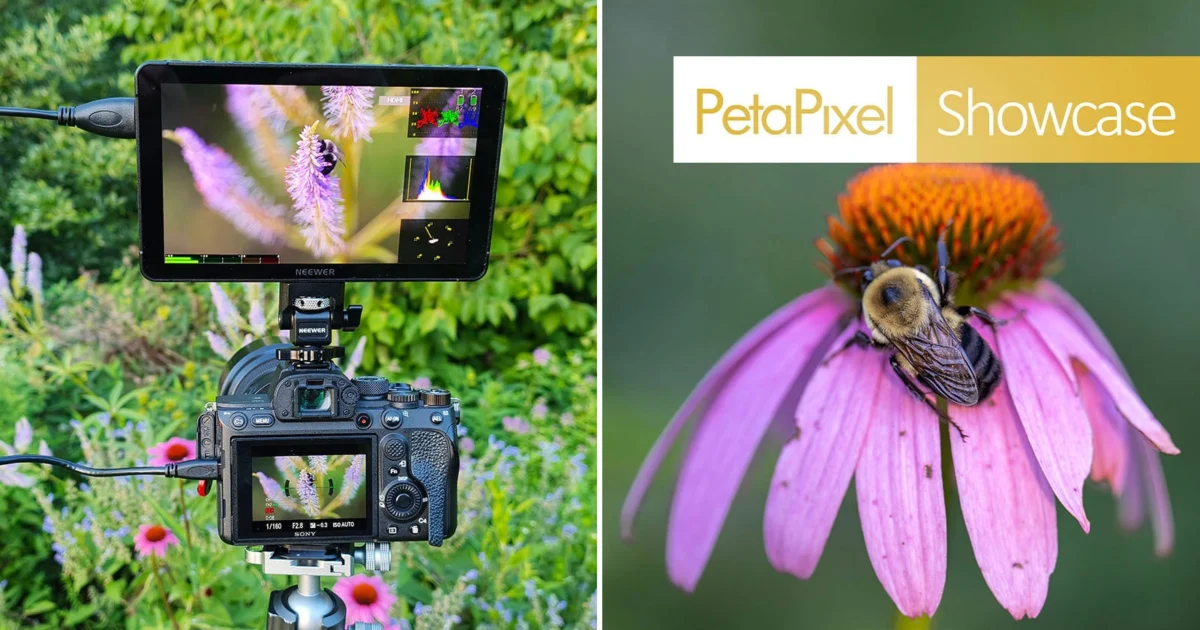
For years, the professional field monitor has been the exclusive domain of the high-end videographer—a bulky, complex accessory tethered to cinema rigs and stabilized setups. However, as the lines between professional photography and video continue to blur, a new wave of creators is questioning whether the standard 3-inch rear LCDs on modern mirrorless cameras are sufficient for the demands of high-resolution, high-stakes imaging.
In this comprehensive review, we examine the Neewer F700U, a 7-inch OLED powerhouse designed to bridge the gap between portable convenience and studio-grade monitoring. After extensive testing across macro photography, landscape work, and video production, we explore whether this device is a genuine workflow evolution or merely a piece of kit destined to gather dust.
Main Facts: The Anatomy of the F700U
At its core, the Neewer F700U is a high-performance 7-inch OLED touchscreen monitor built for versatility. It boasts a Full HD resolution (1920 x 1080) that delivers crisp, pixel-perfect images, essential for checking critical focus in the field.
Key Technical Specifications:
- Display: 7-inch OLED Touchscreen.
- Resolution: 1920 x 1080 (Full HD).
- Brightness: 1,200 nits, ensuring visibility even in harsh, direct sunlight.
- Contrast Ratio: 100,000:1, providing deep, true blacks and vibrant color rendition.
- Color Depth: 10-bit color, essential for accurate color grading and LUT application.
- Viewing Angles: >160 degrees, allowing for off-axis viewing.
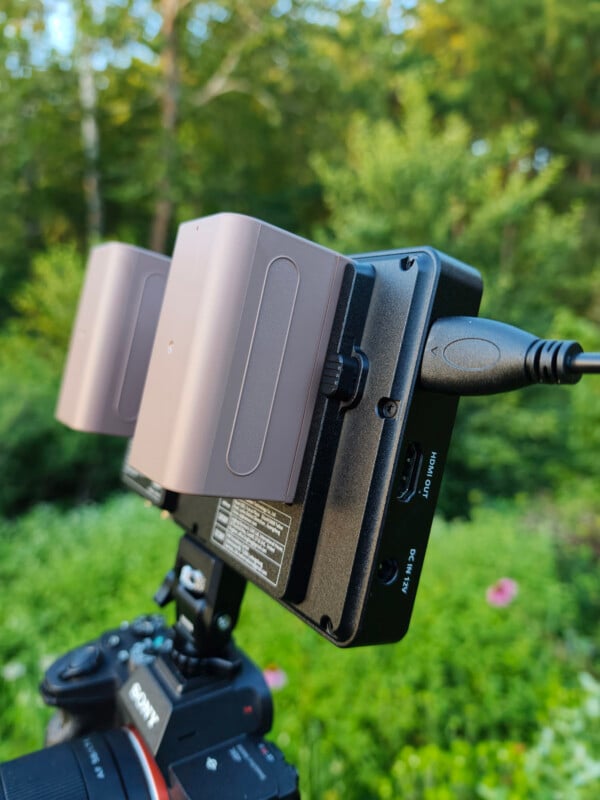
- Connectivity: HDMI (Input/Output) and 3G-SDI (Input/Output).
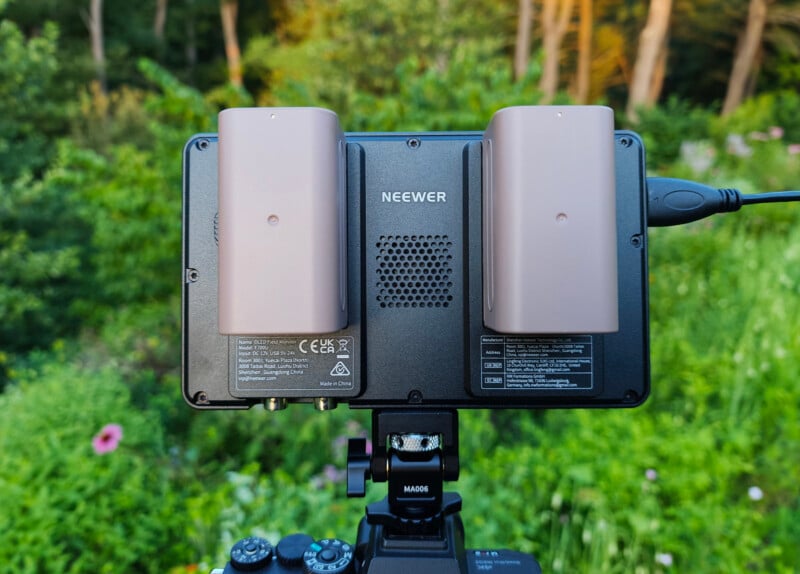
- Power: Dual NP-F battery support, USB-C, or DC input.
These specs position the F700U as a heavy hitter in the sub-$400 market. By offering professional-grade monitoring tools—such as false color, waveform, vectorscope, and custom LUT support—Neewer is targeting both the run-and-gun videographer and the detail-oriented photographer.
Chronology: From Unboxing to Field Integration
The Initial Setup
Upon unboxing the unit, the first impression is one of durability. Measuring 7.1 x 4.2 x 1.1 inches and weighing 15.7 ounces (bare), the device feels substantial. When fully outfitted with two NP-F750 batteries, the weight climbs to roughly 30 ounces. While this is significantly heavier than a standard camera setup, the build quality justifies the mass.
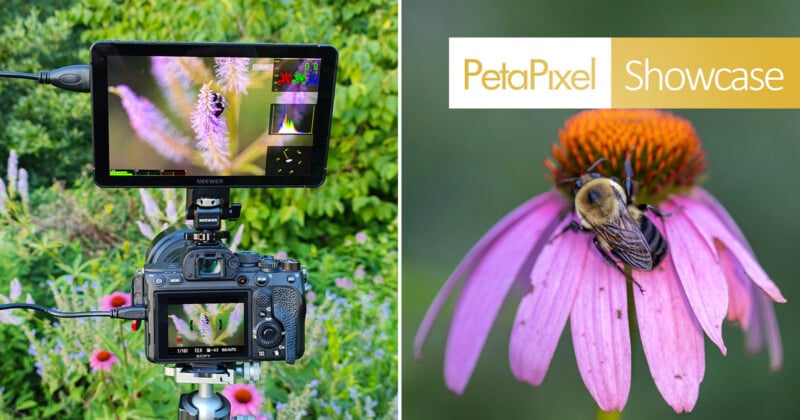
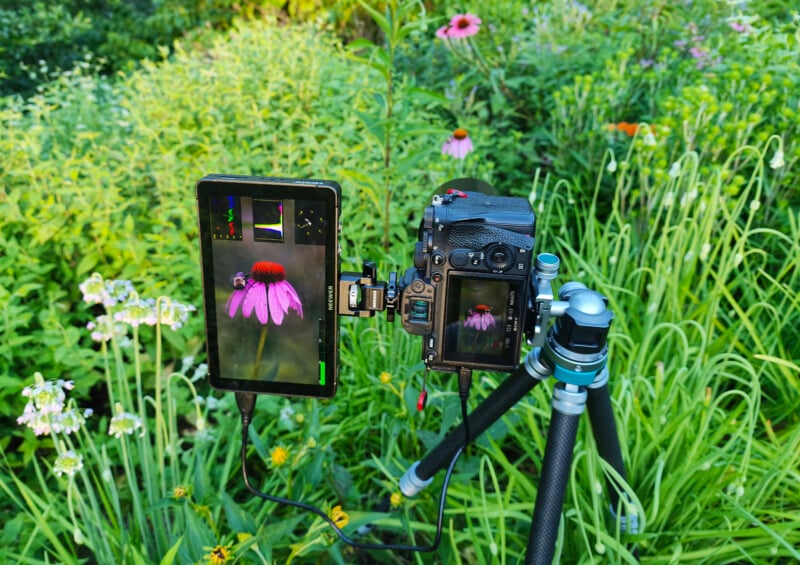
The setup process was intuitive. The F700U includes multiple mounting points on the side and bottom, allowing for both horizontal and vertical orientation. After attaching the unit to the cold shoe of my Sony a7R IV, I was initially concerned about the balance, but the weight proved manageable once mounted on a tripod.
Testing in the Elements
My testing phase lasted several weeks, taking the monitor from climate-controlled studio environments to the humid, 100°F heat of a summer garden.
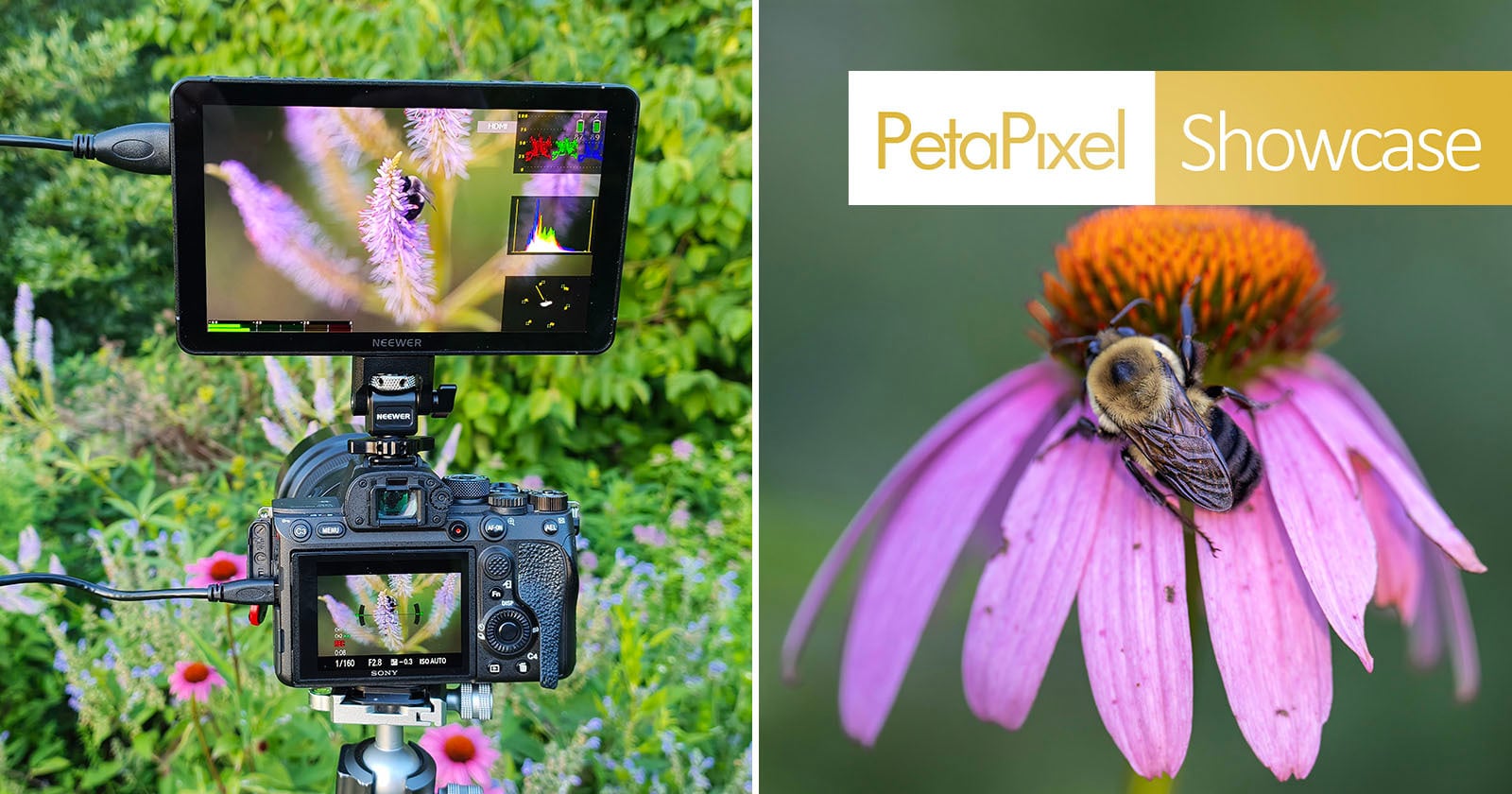
- Phase One: Low-Angle Macro Work: I prioritized macro photography to test the monitor’s screen clarity and response time. Using the monitor to track bumblebees on wildflowers allowed me to maintain a shallow depth of field without straining my neck or eyes on the camera’s rear screen.
- Phase Two: Video Production: I tested the monitor’s cooling efficiency and fan noise. Despite the extreme heat, the internal cooling fan remained virtually silent—a critical feature for videographers recording interviews or sensitive audio.
- Phase Three: Workflow Integration: I spent the final week incorporating the monitor into my daily shooting habit, learning to rely on the focus peaking and waveform tools to reduce my post-processing time.
Supporting Data: Why Size and Clarity Matter
The fundamental argument for an external monitor is the reduction of "post-production surprises." A photographer who discovers a missed focus point after arriving home is a photographer who has lost time and, occasionally, a job.
The OLED Advantage
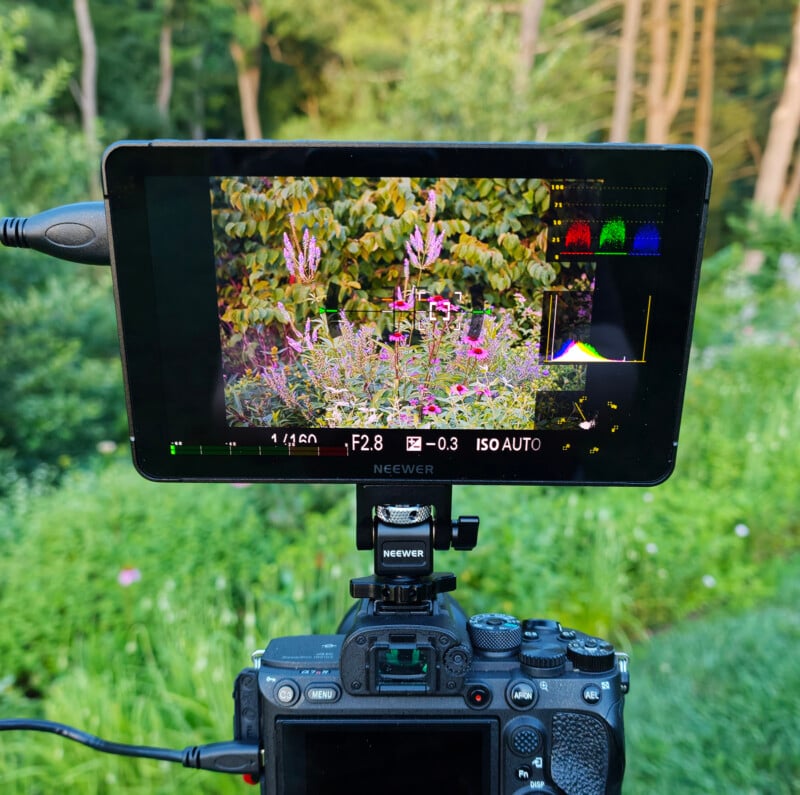
The 100,000:1 contrast ratio is not just a marketing number; it is a functional tool. During my tests, I compared the F700U’s display to my camera’s built-in LCD. The difference in tonal transitions was night and day. Where the camera screen clipped shadows or washed out highlights, the OLED panel retained detail. This allowed me to dial in my exposure settings with much higher accuracy.
Addressing the "Over-Sharpening" Concern
Out of the box, the monitor’s sharpness settings were aggressive. This is a common trait in consumer-facing displays, designed to make the image "pop" at a glance. However, for a professional, this can be misleading. After a quick recalibration in the menu settings, the monitor offered a neutral, natural view that served as a true representation of the captured RAW files.
Connectivity and Professional Standards
The inclusion of 3G-SDI is a major boon. While many hobbyists use HDMI, SDI is the standard for professional productions to ensure a secure, lockable connection. For those who frequently work with mixed-camera setups, the loop-through capabilities of the F700U mean that a director or a client can view the feed on a secondary display simultaneously, turning a one-person show into a more professional production experience.
Official Perspective and Design Considerations
Neewer’s design philosophy with the F700U seems to be "professionalism through accessibility." By including two batteries, a variety of cables, and a comprehensive suite of monitoring tools, they are removing the friction that usually accompanies third-party monitor adoption.
However, the "Professional" tag does not mean the device is without flaws. In my analysis, there are three areas where users should be aware:
- The Cable Dilemma: The included HDMI cables are standard, but for the weight of this monitor, I strongly recommend users purchase a short, coiled HDMI cable. A long or stiff cable adds unnecessary torque to the camera’s delicate port and is prone to accidental snagging.
- The "Blackout" Phenomenon: Like many external monitors, the F700U experiences a momentary signal break when switching between camera modes (e.g., from Live View to Playback). This is a limitation of the HDMI handshake process between the camera and the external device, not a failure of the monitor itself, but it is a nuance that users must adapt to.
- Transport Protection: Neewer does not include a dedicated hard case. Given the fragile nature of an OLED screen, users should factor the cost of a padded protective pouch into their budget.
Implications for the Modern Creator
The shift toward using 7-inch external monitors for still photography has profound implications for the industry. It suggests a movement away from "fast and light" towards "deliberate and precise."

A Shift in Macro Photography
For macro shooters, the F700U is a game-changer. By decoupling the screen from the camera body, you are no longer forced into physically awkward positions. You can place your camera at ground level while the monitor remains at eye level on a magic arm. This level of ergonomic freedom allows for longer shooting sessions and more experimental compositions.
Enhancing Confidence
The ultimate metric of a monitor’s success is the user’s level of confidence. During my field tests, I found myself checking the back of the camera less and less. By relying on the monitor’s waveform for exposure and focus peaking for sharpness, I was able to walk away from a scene knowing that I had nailed the shot. This, in turn, allowed me to move faster, as I spent less time "chimping" at my camera’s display to verify focus.
The Cost-to-Utility Ratio
At a price point of $360, the F700U is competitively positioned. When you calculate the cost of a professional-grade field monitor that provides accurate color, high brightness, and 3G-SDI capabilities, it becomes clear that this is an investment in professional reliability. For the working professional, the cost of one missed shot due to poor focus can easily exceed the cost of this device.
Conclusion: A New Essential?
The Neewer F700U is not a luxury item; it is a productivity tool. While it introduces a bit of extra weight and necessitates a more organized gear bag, the benefits—clearer focus, better exposure management, and the ability to work in awkward physical positions—far outweigh the minor inconveniences of its size.
Whether you are a videographer needing to ensure your audio and color are spot on, or a macro photographer looking to master the thin plane of focus, the F700U offers a high-performance, cost-effective solution. It has successfully moved from my "review pile" into my permanent camera kit, proving that sometimes, the biggest upgrades aren’t in the lens or the sensor, but in how you see the world before you hit the shutter.
Final Verdict
Pros:
- Vibrant, high-contrast OLED display.
- Excellent 1,200-nit brightness for outdoor work.
- Extensive monitoring tools (waveform, LUTs, focus peaking).
- Versatile power options (dual NP-F, USB-C, DC).
Cons:
- Lack of a dedicated carrying case.
- Requires a more thoughtful approach to cable management.
- Minor signal handshake delays when switching camera modes.
Recommendation: For any creator serious about the quality of their output, the F700U is a highly recommended addition to the kit. It turns the guesswork of field shooting into a science, providing the clarity required for modern, high-resolution imagery.
 Raul Delapena Setiawan
  rifanmuazin
  Ammar Sabilarrohman