
 By Muslim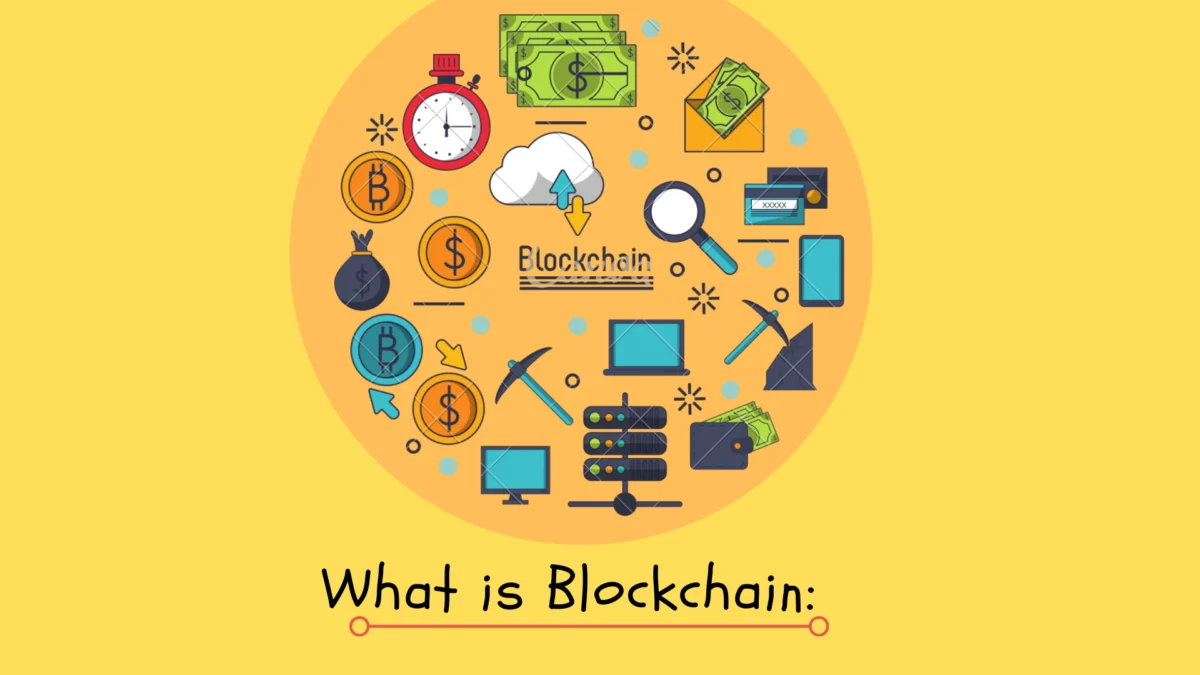
By Global Technology Desk
Published: November 2025
Main Facts
In an era defined by hyper-connectivity, digital transactions remain tethered to centralized institutions. For decades, moving value or verifying data across the internet has required a trusted intermediary—a commercial bank, a government registry, or a major technology conglomerate. However, a foundational shift is underway. Blockchain technology, initially popularized as the underlying architecture of Bitcoin, is rapidly evolving into a standalone structural pillar of the modern digital economy.
At its core, a blockchain is a distributed, decentralized ledger that securely records transactions across a peer-to-peer network of computers, known as nodes. Unlike traditional databases managed by a single administrator, a blockchain distributes identical copies of a continuously updated database across thousands or millions of independent machines. Once information is recorded into a block and cryptographically linked to the preceding chain, it becomes practically immutable. It cannot be altered, retroactively modified, or deleted without the consensus of the network.
This architecture eliminates the need for third-party arbiters, transforming how humanity handles trust, transparency, and data integrity. While global consumer awareness of blockchain is inextricably linked to cryptocurrencies, enterprise-grade implementations are quietly revolutionizing sectors far removed from digital assets, including supply chain management, healthcare, legal contracting, and government identity verification.
Chronology: The Evolution of Distributed Ledgers
While the public boom of digital currencies in the 2010s thrust blockchain into the global spotlight, the conceptual roots of the technology stretch back decades through the work of cryptographers and computer scientists trying to solve the problem of digital trust.
1991: The Timestamping Innovation
The foundational concepts of blockchain technology were first introduced in 1991 by research mathematicians Stuart Haber and W. Scot Stornetta. They published a seminal paper outlining a system designed to cryptographically secure digital documents so that timestamps could neither be backdated nor tampered with. Their work utilized chains of cryptographically secured blocks, laying the structural groundwork that modern distributed ledger technologies (DLTs) rely on today.
1998: The Birth of "Bit Gold"
Nearly a decade later, in 1998, software developer and legal scholar Nick Szabo proposed a decentralized digital currency mechanism called "Bit Gold." Szabo’s concept introduced the use of cryptographic proof-of-work puzzles and secure chain protocols for digital cash. Although Bit Gold was never officially launched, it anticipated the core economic and computational mechanics of modern cryptocurrencies.
2008–2009: The Satoshi Nakamoto Breakthrough
The theoretical frameworks of Haber, Stornetta, and Szabo converged in October 2008, when an anonymous developer operating under the pseudonym Satoshi Nakamoto published the whitepaper titled "Bitcoin: A Peer-to-Peer Electronic Cash System." In January 2009, Nakamoto mined the genesis block of the Bitcoin blockchain, bringing the first functional, decentralized, trustless digital currency and transaction ledger to life.
The 2010s and Beyond: Enterprise Adoption and Smart Contracts
As the decade progressed, developers realized that blockchain’s underlying architecture could do far more than transfer digital coins. The introduction of Ethereum in 2015 brought "smart contracts"—self-executing code stored on the blockchain that automatically triggers agreements when predefined conditions are met. Following this, multinational corporations, logistics giants, and financial institutions began migrating from experimental pilots to production-grade blockchain networks.
Supporting Data: Understanding the Mechanics and Architecture
To appreciate why blockchain is disrupting legacy systems, one must examine the precise mechanical differences between traditional centralized storage and distributed ledger technology.
How Blockchain Works: Step-by-Step
- Transaction Initiation: A user requests a transaction, which can involve transferring cryptocurrency, recording a contract, or logging supply chain data.
- Broadcasting: The transaction is broadcasted to a peer-to-peer network consisting of computers, or "nodes."
- Validation: The network nodes validate the transaction using established algorithmic rules (such as proof-of-work or proof-of-stake).
- Block Formation: Once verified, the transaction is grouped together with other validated transactions to form a new "block" of data.
- Chaining: The new block is cryptographically hashed and linked to the previous block in the sequence, creating an irreversible, chronological chain.
- Consensus and Finality: The updated ledger is automatically synchronized across all network nodes, finalizing the record permanently.
Blockchain vs. Traditional Databases
| Feature | Traditional Database | Blockchain Technology |
|---|---|---|
| Control | Centralized (Managed by a single entity or administrator) | Decentralized (Shared across a distributed network of nodes) |
| Data Modification | Authorized users can edit, delete, or overwrite data. | Data is immutable; historical records cannot be altered or deleted. |
| Transparency | Access is restricted; visibility is controlled by the database owner. | Publicly verifiable across the network (with private/permissioned enterprise exceptions). |
| Trust Model | Relies on institutional trust (trusting the company hosting the data). | Relies on mathematical and cryptographic trust (trusting the code and network consensus). |
Real-World Enterprise Deployments
Major multinational corporations have long since moved past the cryptocurrency hype cycle to deploy private and public-permissioned blockchains for operational efficiency:
- Walmart: Utilizes IBM’s Food Trust blockchain platform to trace the exact farm-to-shelf journey of packaged produce and meats.
- Pfizer and Siemens: Implement ledger-based tracking to secure pharmaceutical supply chains and authenticate sensitive industrial machinery components.
- AIG: Explores smart contracts to automate complex, multinational insurance underwriting and claims processing.
Official Responses and Industry Perspectives
As blockchain adoption scales globally, regulators, corporate executives, and cybersecurity experts offer varied perspectives on its trajectory, balancing enthusiasm for its security with caution regarding its challenges.
Financial regulators and central banks worldwide have consistently emphasized the need for robust compliance frameworks. While institutions like the International Monetary Fund (IMF) and the U.S. Federal Reserve have praised the resilience of distributed ledger networks in mitigating single points of failure, they maintain strict scrutiny over decentralized finance (DeFi) protocols to prevent illicit financial activities and protect retail investors.
Corporate leaders, conversely, point to operational resilience as the primary driver of adoption. Enterprise technology analysts note that while implementing a blockchain is computationally heavier and slower than maintaining a traditional relational database, the elimination of third-party audit costs, reconciliation delays, and data tampering risks yields a positive long-term return on investment.
Security experts acknowledge that while the foundational cryptography of blockchain makes historical data practically unhackable, edge vulnerabilities—such as smart contract coding errors, compromised private keys, and centralized exchange platforms—remain primary vectors for security threats.
Implications: The Future of Trust, Security, and Global Commerce
The widespread integration of blockchain technology carries profound implications for the global economy over the next decade.
Dismantling the Middleman Economy
Traditional industries rely heavily on brokers, clearinghouses, notarization services, and administrative intermediaries to verify transactions. By replacing institutional oversight with mathematical consensus, blockchain drastically reduces transaction fees and settlement times. International trade settlements that historically required days of cross-border banking clearance can now be executed via smart contracts in a matter of seconds.
Data Sovereignty and Security
In an era plagued by massive corporate data breaches, centralized honey-pots of consumer information remain prime targets for cybercriminals. Blockchain’s decentralized structure—where data is validated and stored across disparate nodes—ensures that compromising a single server does not expose or corrupt the wider network. This architecture paves the way for user-controlled digital identities, allowing individuals to share verifiable credentials (such as academic degrees, medical histories, or state identifications) without surrendering control of their raw personal data.
Challenges on the Horizon
Despite its transformative potential, blockchain is not without hurdles. Scalability remains a persistent bottleneck; public networks must balance decentralization, security, and transaction throughput—a trade-off widely known in computer science as the "Blockchain Trilemma." Furthermore, energy-intensive consensus mechanisms, regulatory uncertainty across different jurisdictions, and a steep learning curve for enterprise executives continue to slow universal adoption.
Conclusion
Blockchain technology has transcended its origins as the speculative engine behind Bitcoin. It is maturing into critical infrastructure for the twenty-first-century internet. As corporations, governments, and developers refine distributed ledgers to be faster, greener, and more interoperable, the paradigm of digital trust is undergoing an irreversible transformation. In the near future, interacting with a blockchain will be as invisible—and as indispensable—as navigating the internet is today.
 Basiran
  Suro Senen