
 By Nila Kartika Wati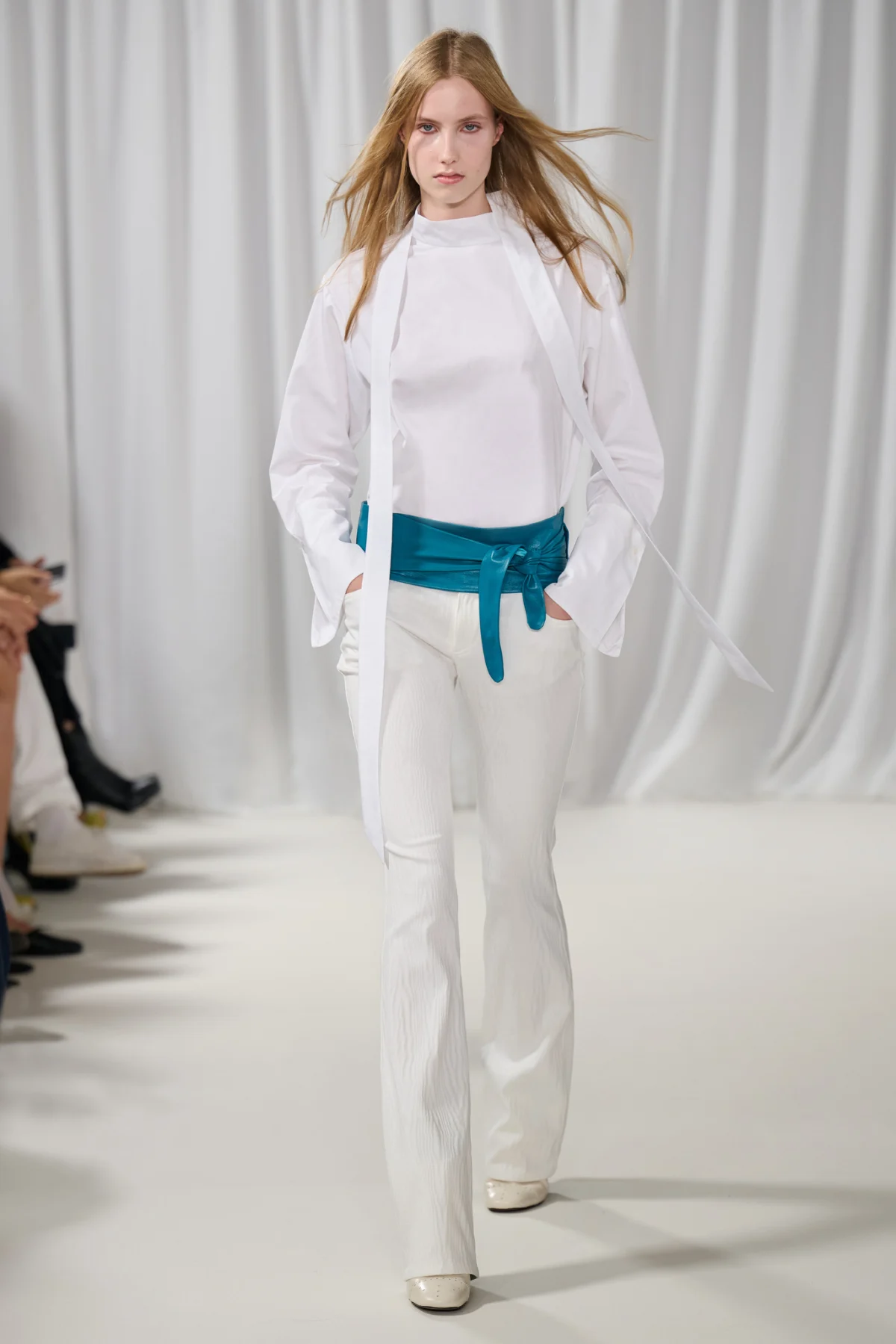
In the heart of London’s Hellenic Centre, Talia Byre unveiled a collection this past Saturday that felt less like a traditional runway spectacle and more like a meditative exhale. Byre, a designer who has carved a distinct niche for herself through architectural precision and a sophisticated understanding of the modern woman’s psyche, presented a spring offering that signaled a deliberate departure from the frenetic pace of seasonal trends. It was a collection defined by a "cleansing" aesthetic—a monochromatic study in whites and creams that challenged her own history of vibrant, saturated palettes.
The Genesis of the Collection: A Departure from Chromatic Complexity
For those familiar with Byre’s previous work, the shift toward a neutral-heavy lineup was a startling, albeit welcomed, pivot. Speaking with WWD following the presentation, Byre revealed that the initial impetus for the collection was born in the solitude of her studio. She entered the design cycle with a singular, radical mandate: to focus almost exclusively on white and cream.
This aesthetic reset was not merely a stylistic whim; it was a professional evolution. Byre’s recent foray into bespoke bridal wear has deeply influenced her design philosophy. Working within the ceremonial, delicate, and often restrained world of bridal design, she found herself craving a "fresh" start. This "cleansing" of the color palette served as a literal and metaphorical blank slate, allowing her to focus on the structural integrity of her garments rather than relying on the emotional crutch of color. By stripping away the visual noise, Byre forced a deeper engagement with silhouette, texture, and the interplay of light on fabric.
The Artistic Dialogue: Placebos and Superpositions
Central to the presentation was the collaboration with artist Dillwyn Smith. As part of an ongoing initiative—a zine produced by Byre that has become an annual accompaniment to her shows—the designer invited ten artists to contribute their perspectives to the ethos of the brand. Smith’s contribution, however, transcended the printed page, becoming the physical foundation of the runway itself.
Two of Smith’s "Placebo Paintings," created through the layering of colorful, translucent fabrics, served as the backdrop for the show. The visual effect was one of depth and ethereal complexity, echoing the layering inherent in Byre’s garments. The "placebo" concept is central to Byre’s current brand philosophy. She posits that clothing should not be a costume that disguises the wearer, but rather a "placebo"—an empowering construct that enhances the wearer’s existing confidence.
This philosophical alignment between the art and the apparel was not accidental. Just as Smith’s paintings rely on the superposition of light and fabric to create something new, Byre’s garments rely on the superposition of personal history and new acquisition. The clothes are designed to act as a psychological support system, allowing the wearer to feel grounded yet evolved.
Chronology of a Collection: From Tailoring to Fluidity
The runway show unfolded with a rhythmic, almost architectural precision. The collection, while expansive in its breadth, felt unified by a clear, chronological narrative of garment construction.
The show opened with a series of sharp, uncompromising tailoring pieces that have become the brand’s calling card. Long, boot-cut trousers paired with razor-sharp jackets in moiré fabric set a tone of structural authority. These were not the oversized, slouchy silhouettes currently dominating the market, but rather tailored pieces that honored the form of the wearer while offering a contemporary edge.
As the show progressed, the focus shifted from the rigid to the fluid. Bias-cut halter dresses, rendered in sheer paisley and held together by delicate grosgrain ties, introduced a sense of movement and vulnerability. Byre masterfully juxtaposed these disparate elements: the stiff cottons of her tailoring brushed against the ethereal transparency of her dresses, while the occasional inclusion of black leather provided a necessary, grounding friction.
Supporting Data: The Economics of the "Loyal Wardrobe"
Byre’s approach is a direct critique of the "fast fashion" cycle that demands a complete overhaul of one’s identity every six months. Her business model is predicated on the idea of the "evolving wardrobe." Rather than courting the impulse buyer who seeks a wholesale transformation, Byre targets the loyalist—the woman who understands the value of investment and the power of continuity.
Her design strategy reflects this: each season, the customer is invited to add one or two key pieces to an existing repertoire. This is not about obsolescence; it is about accumulation. Byre’s design notes suggest that the beauty of her collection lies in its ability to integrate with previous seasons. The shearling vests, which Byre noted have become a "uniform" for her own studio team, were featured again in black, demonstrating the designer’s commitment to refining her favorite silhouettes until they achieve a state of near-perfection.
Official Responses and Industry Implications
The industry response to Byre’s Saturday show has been largely one of admiration for her restraint. In an era where many designers are clamoring for attention through hyper-branding and aggressive maximalism, Byre’s quiet confidence stands out.
"The collection felt like a conversation between the designer and her client," noted one critic. "It wasn’t shouting; it was whispering." Byre’s emphasis on the "cleansing" aspect of her white-and-cream palette is seen by many analysts as a response to the "dopamine dressing" trend that defined the post-pandemic years. As the market shifts toward a preference for "quiet luxury" and longevity, Byre’s approach is not just aesthetically pleasing; it is economically prescient.
By focusing on pieces that feel "fresh" but are rooted in a recognizable history, Byre is insulating her brand from the volatility of fleeting trends. Her work suggests that the future of fashion—at least for the luxury sector—lies in the cultivation of a personal archive.
Implications for the Future of Design
The implications of Byre’s show extend far beyond the Hellenic Centre. Byre is effectively challenging the industry’s reliance on the "new" as the sole metric of value. Her methodology—the "placebo" effect of fashion—suggests that the primary function of clothing is to facilitate a psychological state. When the wearer feels "confident" in a piece that has been refined over several seasons, the value of that garment increases, rather than depreciates, over time.
Furthermore, Byre’s commitment to collaborative art projects and zines indicates a desire to situate her fashion within a broader cultural conversation. By inviting artists like Dillwyn Smith to influence the physical environment of her shows, she is signaling that fashion is not a siloed discipline but an integral part of the visual arts.
Conclusion: The Persistence of Style
Talia Byre’s spring collection was a masterclass in controlled evolution. By embracing a palette that prioritized clarity over chaos, and by grounding her design process in the needs of the actual, living woman, she has created a framework for what fashion can be when it abandons the need for constant, frantic reinvention.
The collection serves as a reminder that the most radical act a designer can perform in the 21st century is to stay the course—to refine, to curate, and to prioritize the relationship between the garment and the person wearing it. As the industry looks toward the next season, Byre’s vision of a "cleansing", additive, and deeply personal wardrobe offers a compelling blueprint for a more sustainable and meaningful future in fashion. Whether it is through the crispness of a white cotton jacket or the subtle movement of a paisley bias-cut dress, Byre continues to prove that the most enduring luxury is the ability to feel like one’s most confident self, season after season.
 Layla Zulfa
  Suro Senen
  Muslim