
 By Ali Ikhwan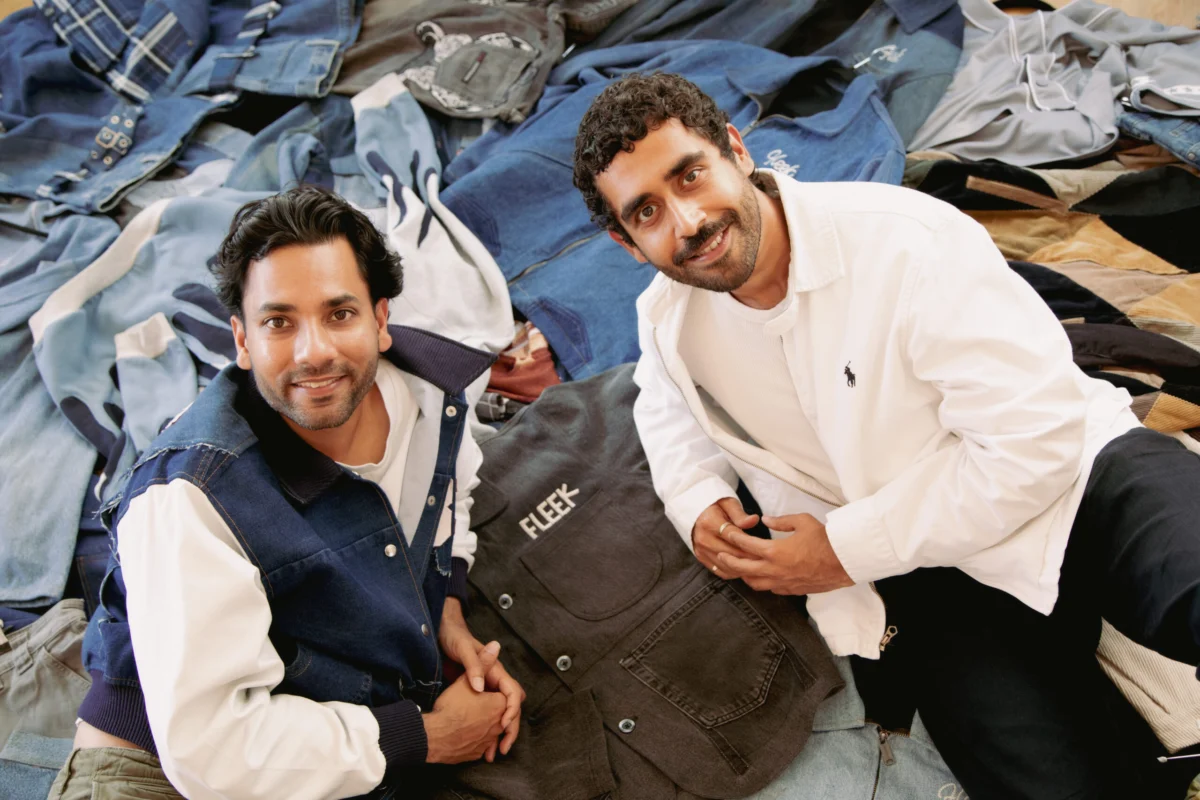
The secondhand fashion market, once a niche corner of the retail industry, has evolved into a global powerhouse. As consumer sentiment shifts toward sustainability and circular economy practices, the sector is projected to reach an staggering $393 billion valuation by 2030. Yet, beneath the surface of this booming industry lies a fragmented, analog infrastructure that has struggled to keep pace with modern demand.
London-based Fleek, a technology company aiming to bridge this gap, announced today that it has secured $25 million in a new funding round. The investment signals a major shift in how the resale industry approaches logistics, grading, and wholesale distribution. By transitioning from a traditional wholesale marketplace into an "AI-native" infrastructure provider, Fleek is attempting to solve the inefficiencies that have historically plagued the movement of pre-loved clothing.
The Funding Milestone: A Vote of Confidence from Industry Titans
The latest $25 million infusion brings Fleek’s total venture capital backing to $45 million. The round was led by Burda Principal Investments—a firm with a proven track record in the resale space, having previously backed the global giant Vinted. The participation of eBay—the original pioneer of online peer-to-peer commerce—alongside FJ Labs and H14, underscores the strategic importance of Fleek’s technology to the broader retail ecosystem. Existing investors, including heavyweights Andreessen Horowitz, HV Capital, and Y Combinator, also contributed, cementing a strong coalition of support for the startup’s ambitious roadmap.
This capital will be primarily deployed to accelerate the development of "Fleek Sort," a proprietary vision-language model (VLM). Unlike generic AI tools, Fleek Sort is trained exclusively on millions of secondhand marketplace transactions processed through Fleek’s global network over the last four years. The goal is to create a digital brain for an industry that has, until now, relied almost entirely on manual labor.
Chronology: From Wholesale Marketplace to AI Pioneer
Fleek’s journey began in 2021, emerging from the Y Combinator accelerator program as a B2B wholesale marketplace. The company’s initial mission was to connect secondhand clothing suppliers and wholesale graders with vintage boutiques and online resellers. By creating a centralized hub, Fleek helped professionalize a segment of the fashion industry that often operated through informal networks and inconsistent spreadsheets.
However, the co-founders—Abhi Arora (CEO) and Sanket Agarwal (CTO)—quickly realized that the bottleneck wasn’t just discovery; it was the inherent lack of data and standardization in the secondhand supply chain.
- 2021: Fleek launches as a wholesale marketplace to digitize the fragmented resale supply chain.
- 2022: The company scales its network, onboarding thousands of verified suppliers and professional resellers across 100+ countries.
- 2023: Fleek begins the development of proprietary computer vision technology to automate the manual grading process.
- 2024: The pivot to an "AI-native" company is formalized. Fleek Sort is deployed in pilot programs across the U.K., Europe, and the U.S., alongside existing hubs in Pakistan, India, and Dubai.
- Late 2024: The company secures $25 million in Series A/B-stage funding to scale its AI infrastructure globally.
The Inefficiency Problem: Why the Secondhand Market Needs a Digital Overhaul
The secondhand clothing market is plagued by a "labor-intensive" paradox. While industry reports from entities like ThredUp suggest the market is growing twice as fast as the traditional apparel sector, the operational reality of processing millions of garments remains stuck in the past.
"Most people have no idea what happens to a piece of clothing after they part with it," says Abhi Arora, co-founder and CEO of Fleek. "It travels thousands of miles, gets sorted by hand in a warehouse in Karachi, and finds its way back to a vintage shop in London or New York, if it’s lucky. We started Fleek because that system is broken, the market it serves is exploding, and nobody is building the technology and infrastructure to fix it."
Currently, the process of bringing a secondhand garment to market involves:
- Manual Assessment: Human graders physically inspect items for quality, brand, and condition.
- Subjective Grading: Standards vary wildly between countries and even between individual warehouses.
- Pricing Opacity: Because there is no standardized catalog for used goods, pricing is often based on gut feeling rather than market demand.
- Disconnected Networks: The supply chain relies on fragmented, localized relationships that prevent global price equilibrium.
Fleek aims to replace this manual, subjective process with objective, data-driven AI assessment.
Fleek Sort: The AI Intelligence Layer
The core of Fleek’s value proposition is "Fleek Sort." This system requires only a photograph or video of a garment to identify, categorize, grade, and suggest a market-accurate price. By training the AI on real-world outcomes—where every successful sale acts as a feedback loop—the model becomes progressively more accurate over time.
How the Technology Functions:
- Computer Vision: The AI analyzes textures, labels, stitching, and signs of wear to grade the quality of an item instantly.
- Predictive Analytics: The model understands regional demand, allowing a supplier in a sorting hub to know exactly which items will move fastest in specific markets like New York, London, or Tokyo.
- Automatic Listing: Once processed, items are seamlessly uploaded to Fleek’s marketplace, complete with AI-generated descriptions and pricing.
"There’s more data locked inside the global secondhand supply chain than almost any other market, yet historically very little of it has been captured," notes Sanket Agarwal, co-founder and CTO. "We’ve built the world’s first AI trained specifically to understand secondhand inventory—what it is, what it’s worth, who wants it, and where demand exists. Every transaction improves that understanding, creating an intelligence layer we believe will become critical infrastructure for the future of the industry."
Implications for the Future of Retail
The implications of Fleek’s technology are significant for both the environmental impact of fashion and the economic viability of small-scale resellers. By making the secondhand supply chain as efficient as the "new" retail supply chain, Fleek effectively lowers the barrier to entry for circular fashion.
1. Supply Chain Transparency
The digitization of secondhand goods allows for better inventory management. If a boutique in Paris knows exactly what kind of vintage denim is being sorted in a warehouse in Pakistan, they can procure inventory with surgical precision, reducing waste and overstock.
2. Standardized Valuation
AI-driven pricing provides a "fair market value" for used goods, reducing the volatility and risk that often keeps traditional retailers from entering the resale space. This democratization of data benefits both the buyer and the seller.
3. Scaling the Circular Economy
The world currently has enough secondhand apparel to clothe the next seven generations. However, the lack of infrastructure is the primary reason much of this clothing ends up in landfills. By increasing the speed and accuracy of the sorting process, Fleek is theoretically increasing the "throughput" of the global circular economy, making it easier for garments to find second, third, or fourth lives.
4. Global Market Integration
With 12 million items already in circulation on its platform and 50,000+ retailers connected, Fleek is creating a truly global marketplace. By integrating AI into this flow, the company is bridging the gap between emerging market supply hubs and high-demand retail destinations in the West.
Conclusion: The Infrastructure of Tomorrow
As the fashion industry faces mounting pressure to address its massive carbon footprint, the transition to circular models is no longer optional. However, as Fleek’s founders point out, desire alone is not enough; the industry requires robust, scalable technology to handle the complexities of pre-loved goods.
With its latest round of funding and a clear vision for an AI-native supply chain, Fleek is positioning itself as the "operating system" for the secondhand market. Whether the company can successfully standardize a global market that has resisted change for decades remains to be seen, but with the backing of industry veterans and a sophisticated AI engine, the odds have never been more favorable. The future of fashion, it seems, is not just in the clothes we wear, but in the intelligence we apply to keeping them in circulation.
 Neng Nana
  Lina Hope