
 By Lina Irawan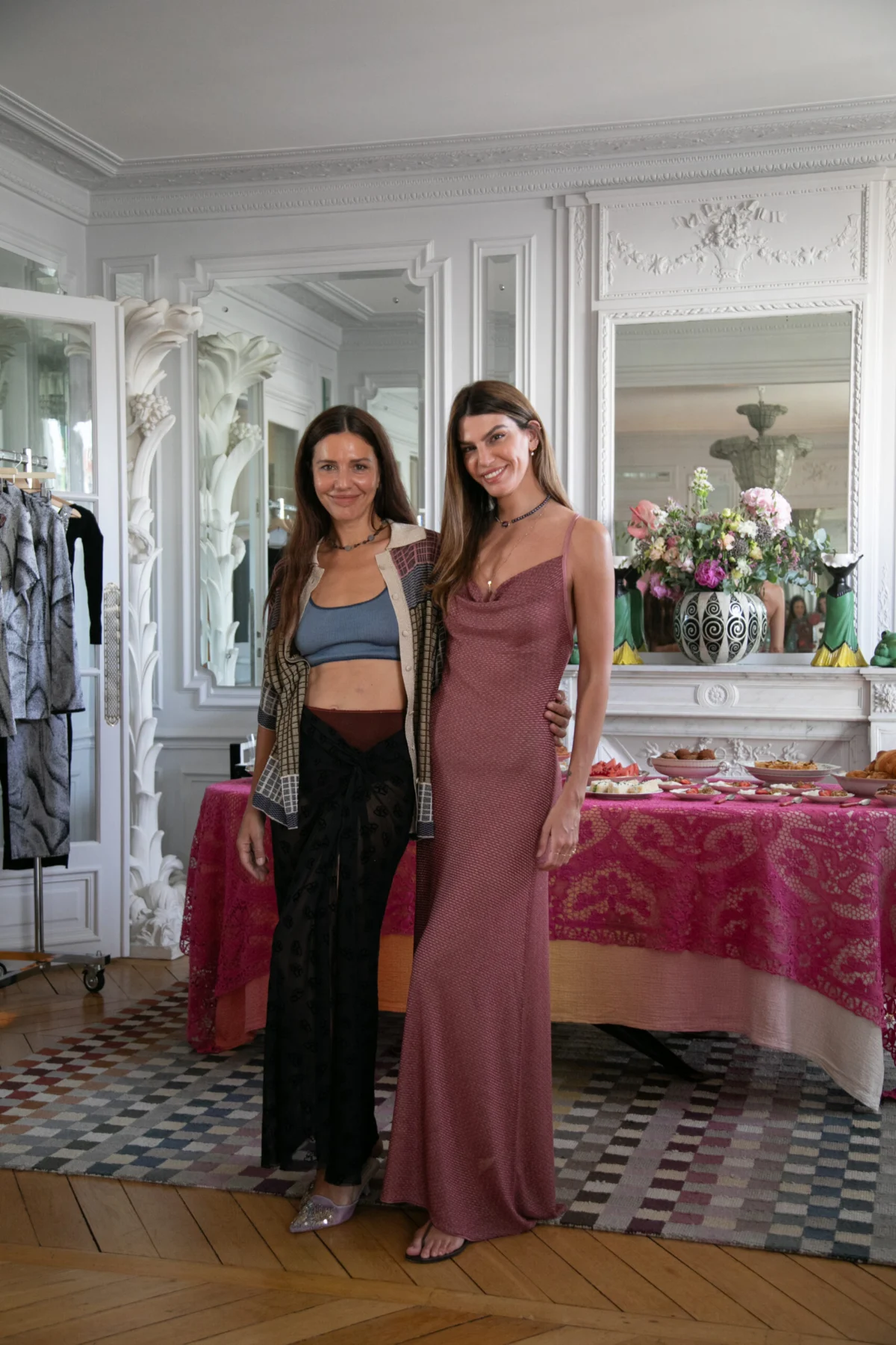
PARIS — As the whirlwind of Paris Fashion Week descends upon the French capital, transforming the city into a theater of high-octane runway spectacles and exclusive, late-night galas, designer Margherita Missoni has carved out a sanctuary of quietude. Eschewing the conventional, high-pressure showroom circuit, Missoni has opted for a decidedly more intimate retail philosophy: the brunch-appointment trunk show.
For two days this July, the designer threw open the doors of her grandmother’s private Paris residence, inviting a select circle of clients into a space that functioned as both a home and a carefully curated boutique. This event, which showcased the latest Maccapani collection alongside a whimsical shark-themed collaboration with Bianca Brandolini, marks a significant departure from the traditional industry playbook, signaling a broader, structural shift in how independent luxury brands are choosing to engage with their consumers in an increasingly digital, yet irony-starved, age.
The Anatomy of the Event: A Study in Hyper-Personalization
The logistics of the event were as understated as the setting. Rather than relying on traditional PR blasts or large-scale wholesale acquisitions, the brand leveraged its direct-to-consumer (DTC) channels. Clients secured their invitations via Instagram or the Maccapani newsletter, transforming the act of shopping into a privileged social engagement.
"We’ve been doing this concept for a few seasons now," Missoni remarked, noting that this was the fourth iteration of the midsummer affair. By timing the event to coincide with the Couture calendar—a period that brings a high-net-worth crowd to Paris while offering a more temperate, reflective pace than the frenetic ready-to-wear season—Missoni successfully avoided the noise of the industry mainstream.

The atmosphere inside the residence was less "retail activation" and more "curated open house." Guests were treated to a seasonal menu by Paris-based private chef Léa of Casa Léa. The culinary experience, featuring fresh, Mediterranean-inspired salads, vibrant fruits, and artisanal baked goods, provided a sensory backdrop to the clothing. This integration of lifestyle, hospitality, and commerce creates a "third space" that many modern consumers now crave—a departure from the sterile, transactional environment of traditional boutiques.
A Chronology of a Shifting Strategy
To understand why Missoni is moving toward this model, one must look at the recent evolution of her brand, Maccapani, which is now in its third year.
- The Inception: Maccapani was launched with a focus on ease, layering, and a celebration of heritage through a contemporary lens. The brand quickly became known for its signature separates: coordinated sets made from repurposed yarns, lightweight jacquard tailoring, and jersey dresses that prioritize movement.
- The Milan Milestone: In March, the brand cemented its retail footprint with its first permanent boutique in Milan. This was not merely a point of sale; it was a manifesto. The store features rotating vintage selections and curated antiques sourced from the Missoni family’s extensive personal archives.
- The Paris Residency: Recognizing the limitations of wholesale—which Missoni has openly identified as a challenging landscape for independent labels—she pivoted to these seasonal Paris pop-ups.
- The Future Horizon: With the success of the Milan boutique and the Paris trunk shows, Missoni is already mapping out a broader expansion, with potential sights set on Venice and, eventually, a permanent Paris home.
Supporting Data: Why Independent Brands are Moving to DTC
The shift toward the "at-home" trunk show is not merely an aesthetic choice; it is a calculated business maneuver. Independent designers are finding that the wholesale model—selling to large department stores or multi-brand boutiques—is becoming increasingly prohibitive due to high margins, inventory risks, and a lack of control over brand storytelling.
The Economics of Intimacy
By bypassing intermediaries, brands like Maccapani can achieve:

- Direct Customer Feedback Loops: Being physically present with the customer allows Missoni to see exactly which garments are tried on, what sizing adjustments are needed, and what the customer’s "pain points" are in real-time.
- Inventory Optimization: The trunk show model allows for a "made-to-order" or "limited-run" approach, significantly reducing the environmental and financial costs of unsold inventory.
- Enhanced Brand Equity: When a customer buys a piece in the designer’s grandmother’s home, they are purchasing a narrative. This "experiential retail" elevates the garment from a commodity to an artifact of a specific, lived moment.
The personalization program offered at the Milan boutique, which allows customers to customize jacquard pieces with ribbons and bespoke patches, further illustrates this trend. Data from recent luxury reports indicate that Gen Z and Millennial consumers are increasingly prioritizing "co-creation" and personalization over off-the-shelf luxury goods.
Official Responses and Creative Vision
The centerpiece of the current collection is the collaboration with Bianca Brandolini. The capsule revisits the brand’s bestselling "Moto Tee"—a silhouette inspired by vintage motorcycle gear—now emblazoned with a shark motif.
"It’s about bringing that energy into the wardrobe," Missoni explained. The shark, chosen for Brandolini’s long-standing affinity for the creature, serves as an example of how personal relationships can drive creative direction. It is a far cry from the cold, data-driven design processes used by larger luxury conglomerates.
On the subject of her business trajectory, Missoni remains pragmatic yet optimistic. "I love having a store," she said. "I love the rhythm of it. It’s more attuned to how I want my life to be." This statement highlights a growing trend among creative directors: the desire to reclaim the pace of the fashion cycle. By controlling the retail environment, Missoni is not just selling clothes; she is dictating the speed and manner in which her brand is consumed.

Implications: The Death of the Traditional Storefront?
The success of the Maccapani Paris residency suggests that the future of luxury retail may not lie in grand flagship stores on busy boulevards, but in "high-touch, low-frequency" environments.
Implications for the Fashion Industry:
- The Rise of the "Private Salon": As luxury becomes more democratic through digital accessibility, true exclusivity is returning to the physical, private realm. Expect more brands to move away from public storefronts toward invitation-only residential showrooms.
- The Culinary-Retail Nexus: The integration of private chefs and hospitality into retail spaces will likely become the standard for high-end pop-ups. If a brand wants to capture a client’s time, it must provide an experience that satisfies multiple senses.
- Wholesale Contraction: As independent brands find success with direct-to-consumer models, we may see a continued exodus of smaller, high-quality designers from traditional wholesale channels, forcing department stores to rethink their value proposition.
Margherita Missoni’s approach is a reminder that fashion, at its core, is a human industry. While technology has allowed for global scaling, the most enduring connections are still forged through conversation, a shared meal, and the tactile experience of a garment in a space that feels like home.
As she looks toward the future—with eyes on Venice and a permanent home in Paris—the designer is not just building a brand; she is building a community. In an industry defined by its constant desire for "the new," Missoni is finding her success by going back to the oldest principle in the book: personal, authentic, and intimate service.
For the fashion crowd in Paris this week, the most important show wasn’t on a runway, but in an apartment, where the clothes were the conversation, and the hospitality was the final, defining touch.
 Neng Nana
  Ali Ikhwan
  Lina Hope