
 By Sagoh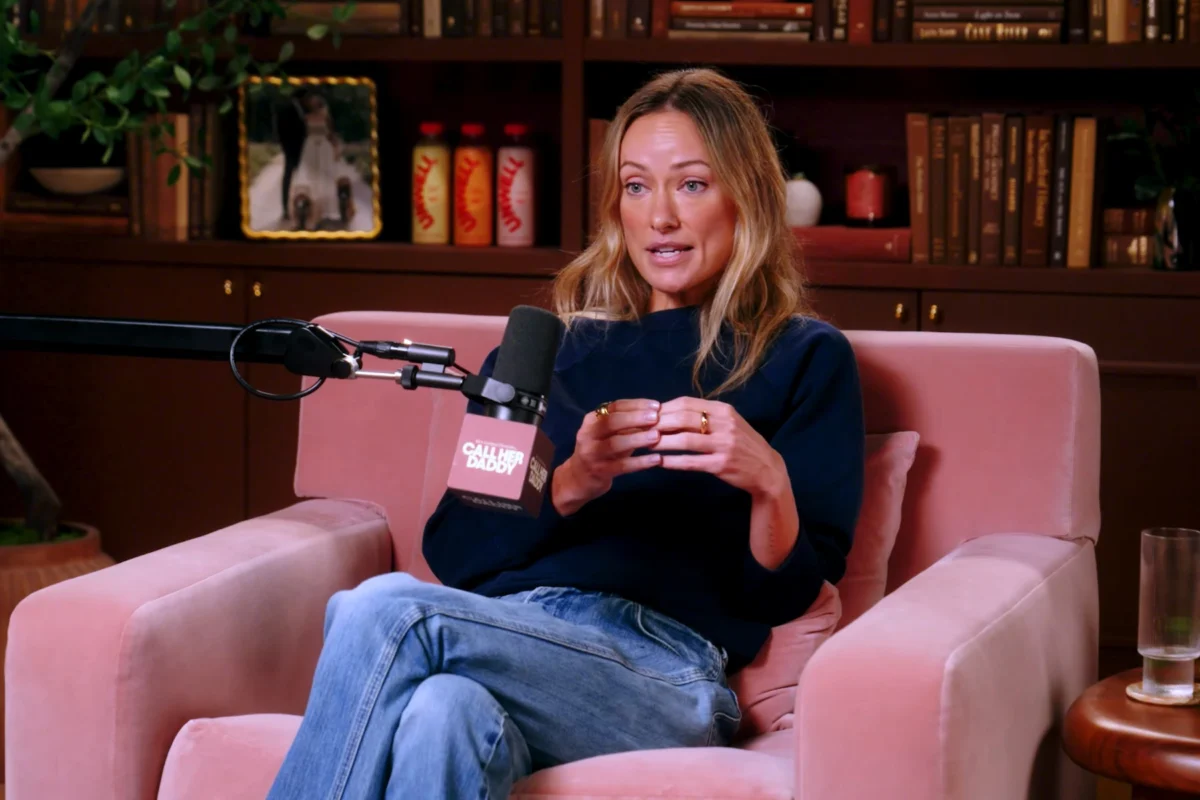
More than four years after the intense public scrutiny surrounding her relationship with pop sensation Harry Styles began to consume the cultural conversation, filmmaker and actress Olivia Wilde is finally pulling back the curtain. In a candid, wide-ranging interview on the June 17 episode of the Call Her Daddy podcast, the Don’t Worry Darling director offered a rare, vulnerable perspective on the chaotic period that saw her private life dissected by tabloid media and anonymous corners of the internet.
For months, Wilde found herself at the center of a firestorm, fueled by everything from age-gap criticisms to unfounded speculation about her maternal responsibilities. As she navigates her current projects and reflects on the past, her account serves as a sobering reminder of the dark, often irrational side of celebrity culture and the toll that parasocial relationships can take on real human lives.
The Genesis of the Backlash
The tension began shortly after production commenced on the 2022 psychological thriller Don’t Worry Darling. As director, Wilde cast Harry Styles—the former One Direction star turned global solo powerhouse—in the film’s lead role. What began as a professional collaboration soon evolved into a romantic partnership, drawing immediate and visceral attention from Styles’ massive, deeply invested fanbase.
“I’ve never felt more disconnected from the person that people were talking about,” Wilde told Call Her Daddy host Alex Cooper. She described the months of relentless tabloid coverage as a surreal experience, noting that she often found herself reading headlines about a version of herself that simply did not exist. “I was like, ‘Who are they talking about? Who is that girl?’”
The criticism was multifaceted. Wilde was targeted for the ten-year age gap between her and the singer, a narrative that critics frequently weaponized to paint her in a derogatory light. Simultaneously, she faced severe public shaming regarding her role as a mother. Despite a pre-existing, amicable custody arrangement with her ex-husband, Jason Sudeikis—which naturally necessitated that she spend time away from their children—the internet framed her relationship with Styles as an act of maternal negligence.
A Chronology of the Public Siege
To understand the weight of Wilde’s recent comments, one must look at the timeline of the "Don’t Worry Darling" era.
- Late 2020: Reports first emerge suggesting a romantic connection between Wilde and Styles on the set of their film.
- 2021: The pair are spotted by paparazzi on various occasions, sparking a frenzy among the "Harries," a segment of the singer’s fanbase known for their intense loyalty and investigative scrutiny.
- September 2022: The film premieres at the Venice Film Festival, surrounded by a whirlwind of rumors regarding cast friction and behind-the-scenes drama, further fueling the public’s desire to vilify the director.
- Late 2022: Shortly after the film’s theatrical run concludes, Wilde and Styles announce their split.
- 2023–2024: Both parties maintain a dignified silence, occasionally touching upon the "cruelty" of the public discourse in various interviews, eventually moving on to new personal chapters.
Supporting Data: The Parasocial Phenomenon
The hostility Wilde faced is not an isolated incident but rather a symptom of the modern "parasocial relationship"—a one-sided psychological bond where fans develop a sense of intimacy and possessiveness toward a celebrity.
Wilde highlighted this during her podcast appearance, noting that the intensity of the reaction had much to do with the audience’s perceived ownership of Styles. “People were f—king pissed,” she admitted. “It also had a lot to do with the parasocial relationship people have with him. He carries it with grace. I think that is an enormous responsibility that all those stars have to carry.”
The phenomenon creates a paradox where any romantic partner of a major pop star is viewed as an interloper or a threat to the fan’s idealized version of the artist. Wilde’s experience of being shamed for simply dancing at a concert—a common human activity—perfectly encapsulates this dynamic. “It’s almost like our happiness made them mad,” she observed. “Like, I would go to his shows and dance, and people were like, ‘Oh, how could she?’”

Official Responses and Reflections
Throughout the ordeal, both Wilde and Styles attempted to set the record straight, albeit sparingly. In a 2022 Rolling Stone cover story, Styles acknowledged the difficulty of his position, noting, “It’s obviously a difficult feeling to feel like being close to me means you’re at the ransom of a corner of Twitter or something.”
Wilde, for her part, has consistently defended the integrity of the fanbase, even when she was the target of their vitriol. During the same 2022 press cycle, she stated, “What I don’t understand about the cruelty you’re referencing is that that kind of toxic negativity is the antithesis of Harry, and everything he puts out there. I don’t personally believe the hateful energy defines his fan base at all.”
Looking back, Wilde’s sentiment remains one of grace. She describes their two-year relationship as “the loveliest relationship—so, so sweet and so beautiful and really actually very domestic and kind and lovely.” She credits the pair’s ability to retreat into a “little bubble” as the only reason they were able to maintain a sense of sanity while the outside world raged.
The Implications for Celebrity Culture
Wilde’s reflection raises significant questions about the ethics of modern fame. When the public discourse shifts from critiquing art to the systematic dismantling of a private individual’s character, the boundary between "celebrity" and "public property" becomes dangerously blurred.
For Wilde, the aftermath of the relationship has been a period of professional growth. She has continued to focus on her filmmaking career, with her latest project, The Invite, set to hit theaters on June 26. Styles, meanwhile, has continued his meteoric rise, having released his fourth studio album, Kiss All the Time. Disco, Occasionally, which dominated the Billboard 200 earlier this year.
The implication of Wilde’s testimony is clear: the "toxic negativity" that defines modern social media discourse is not a natural byproduct of fame, but a choice made by those who engage in it. By choosing to speak out, Wilde is not merely clearing her name; she is challenging the audience to re-evaluate how they treat the humans behind the headlines.
Moving Forward: Resilience in the Face of Scrutiny
In the years since the Don’t Worry Darling cycle ended, the landscape of celebrity reporting has evolved, yet the lessons from Wilde’s experience remain pertinent. She represents a shift in how public figures handle crisis management: by choosing to address the absurdity of the claims with humor and honesty rather than retreating entirely, she has reclaimed her own narrative.
“I don’t know how much I understand it yet,” she said of the hate she received. But by documenting the reality—that her life was “wholesome and sweet” despite the fabricated scandals—she reminds us that there is a vast, unbridgeable chasm between the curated fiction of the internet and the lived reality of an individual.
As both Wilde and Styles continue to thrive in their respective fields, the memory of their relationship serves as a case study for the industry. It stands as a testament to the fact that while fame may be a public-facing endeavor, the right to a private life should remain an inviolable human necessity. In sharing her story, Wilde has provided a rare glimpse into the mechanics of a modern-day celebrity tragedy, offering a path forward that prioritizes personal truth over public consumption.
 Ali Ikhwan
  Suro Senen
  Reynand Wu