
 By Nana Muazin
When a well-known culinary brand recently reached out with an unreleased cocktail shaker, the request was simple: test the product, craft a few drinks, and submit a standard feedback survey. For most, this would be a mundane afternoon task. However, for a creator with a penchant for visual storytelling, a survey felt like a missed opportunity. Instead of filling out a form, the goal shifted to producing a professional-grade promotional video—all within the constraints of a residential dining room.
This project serves as a compelling case study for modern content creators: you do not need a multi-thousand-dollar studio or a Hollywood crew to produce high-end commercial imagery. With a fundamental understanding of light physics, a few pieces of essential gear, and creative problem-solving, world-class results are well within reach.
The Challenge: Sculpting Light on Reflective Surfaces
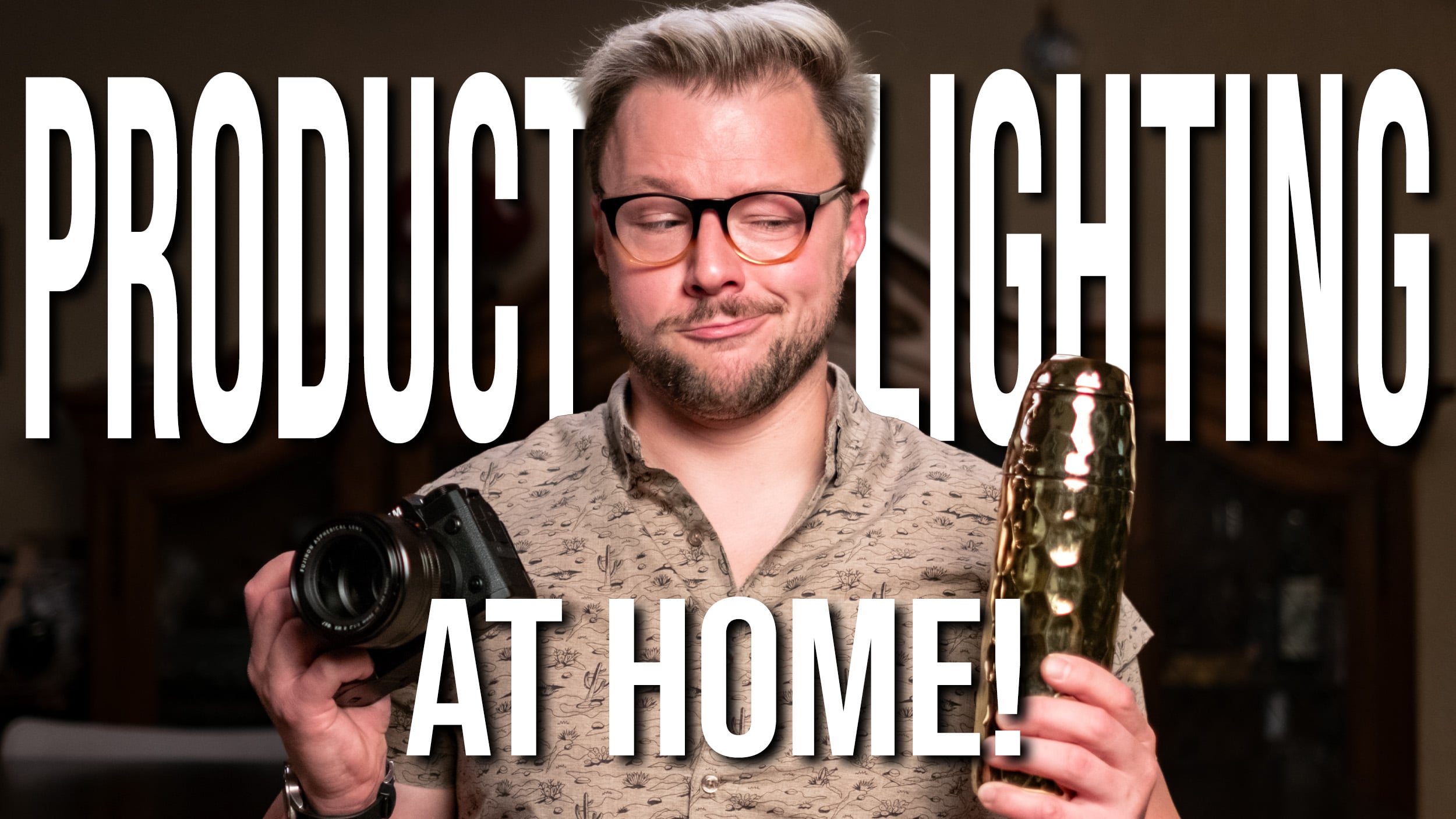
The cocktail shaker in question was a masterpiece of industrial design, featuring intricate gold facets. While beautiful, the metallic surface presented a significant technical hurdle: it was highly reflective. In product photography and videography, managing reflections is the difference between a cheap-looking amateur video and a premium, high-fidelity commercial.
Controlling the Environment
The primary objective was total light control. Ideally, a studio environment provides a "black box" where light can be added or subtracted at will. At home, however, one must contend with the chaotic nature of ambient light.
To achieve a controlled atmosphere, the room was effectively "blacked out" by covering windows with heavy curtains and light-blocking materials. While this was not a sterile laboratory, it was sufficient; by using powerful artificial lighting, the ambient spill became negligible. This allowed for total dominance over the color temperature. Given the warm, inviting aesthetic of the dining room, a color temperature of 2,700 to 2,900 Kelvin was chosen, lending the metallic gold finish of the shaker a rich, luxurious glow.
The Lighting Rig
A three-point lighting setup was employed to define the shape and texture of the product:
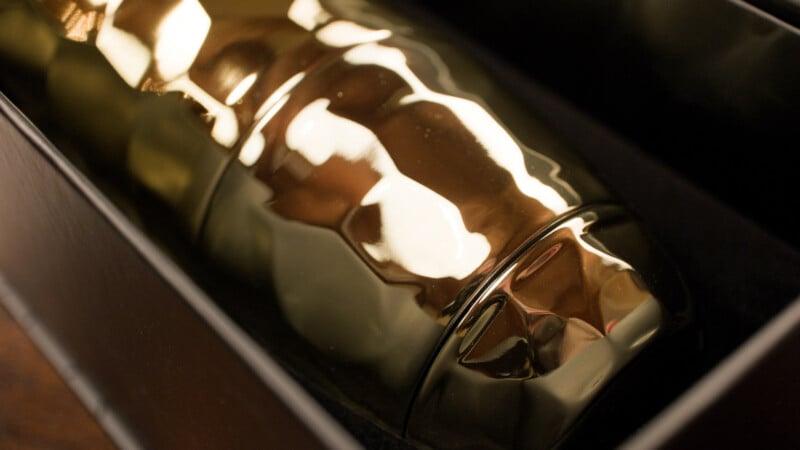
- The Key Light: An Aputure 600 Bicolor LED served as the primary source. It was paired with a medium dome softbox to create a broad, flattering spread. Crucially, a grid was added to the softbox. By narrowing the light beam, the grid prevented unwanted spill onto the background, ensuring the focus remained strictly on the shaker.
- Edge Lighting (Rim Lights): To separate the gold shaker from the dark background, two Nanlite 150s were utilized. One was equipped with a small circular dome, and the other with a compact Godox softbox. These edge lights caught the contours of the shaker, creating "specular highlights"—the bright white reflections that give metallic objects their "expensive" look. Again, grids were essential here to maintain surgical precision.
Chronology of the Shoot: From Concept to Cut
Transforming a dining room into a production set requires a methodical approach. The workflow was divided into three distinct phases: planning the movement, capturing macro details, and executing complex camera tricks.
Phase 1: Establishing the Motion
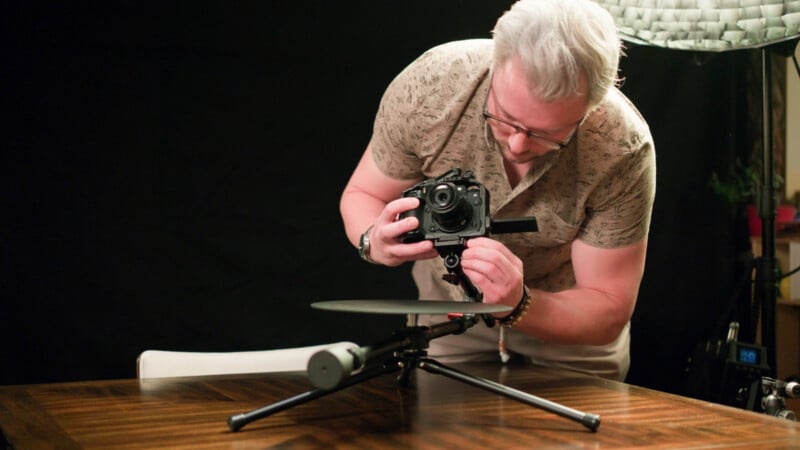
Static product shots are rarely engaging. Modern audiences expect movement—dolly shots, pans, and slow-motion transitions. A 30-inch motorized slider was the workhorse for linear motion, providing a smooth, robotic-like push-in that adds depth to the frame.
To capture the cylindrical geometry of the shaker, a motorized turntable was introduced. By placing the product on a spinning base, the camera could remain stationary while the object rotated, allowing the light to dance across the gold facets. This captured the changing reflections perfectly, emphasizing the premium nature of the materials.
Phase 2: Macro Precision and Storytelling
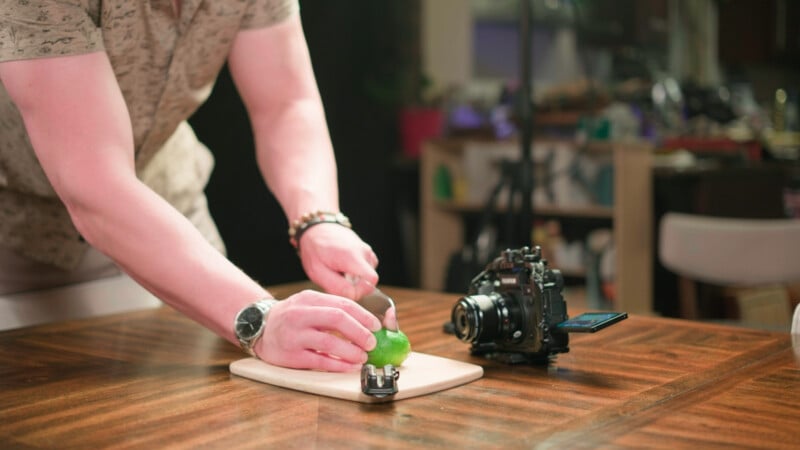
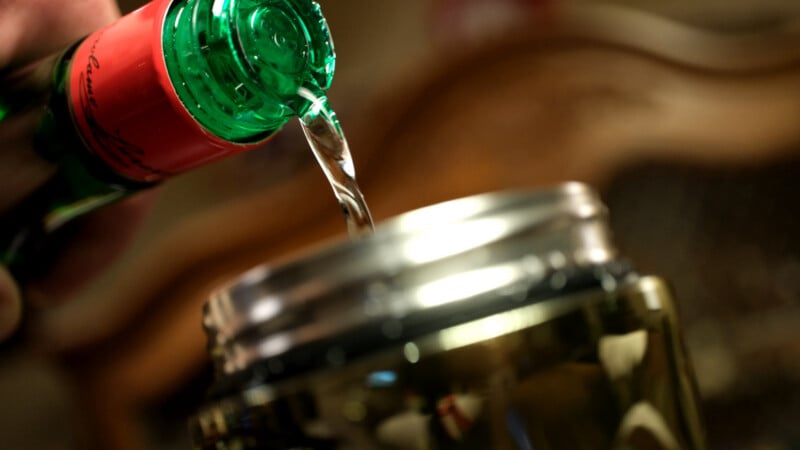
With the hero shots secured, the attention shifted to the "lifestyle" elements. This involved close-ups of the cocktail-making process: the slicing of citrus, the pouring of liquids, and the delicate condensation forming on a coupe glass.
These shots were captured using a tripod placed at various angles—including a top-down configuration—to ensure varied framing. The key here was manual focus. Auto-focus, while impressive in modern cameras, can hunt during critical macro movements. By locking focus on the plane of action, every pour and slice remained crisp, regardless of how quickly the liquid moved through the frame.
Phase 3: The "Magic" of Perspective
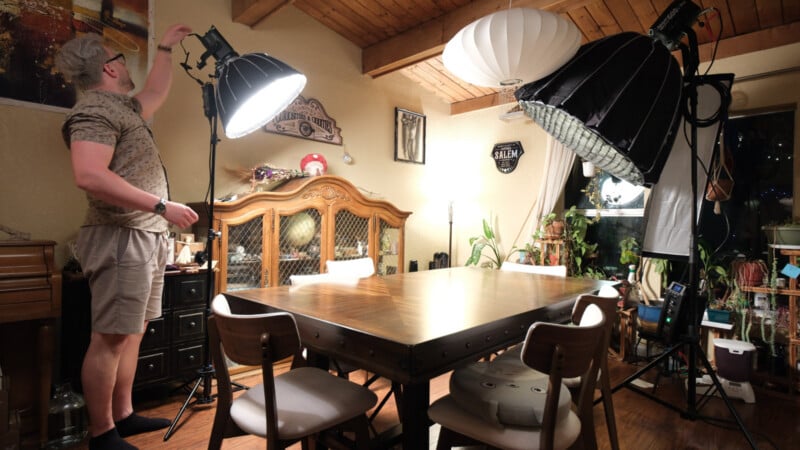
The final challenge involved a creative workaround for the product packaging. To achieve a cinematic shot of a blade gliding across the plastic wrap, the camera was kept stationary while the box itself was placed on the motorized slider. The resulting footage, when played back, tricks the eye into believing the camera is tracking the movement. This "camera-relative" motion is a hallmark of professional product videography and cost nothing but a bit of ingenuity.
Supporting Data: Technical Specifications
For those looking to replicate these results, the technical metadata of the shoot is as follows:
- Frame Rates: The majority of the action-oriented b-roll (pouring, slicing) was captured at 120 frames per second (fps). This allowed for smooth, cinematic slow-motion in post-production, adding a sense of elegance to the final edit.
- Color Temperature: 2,700K – 2,900K (Warm/Golden).
- Lighting Source: Aputure 600 (Key), Nanlite 150 (Edge x2).
- Movement Tools: 30-inch motorized slider, compact motorized turntable.
Official Responses and Industry Context
The culinary brand’s initial response to the "video instead of a survey" approach was overwhelmingly positive. In an era where brands are starving for high-quality, authentic-looking content, the ability for a creator to bypass traditional studio overhead is becoming a highly valued skill set.
Industry experts suggest that "democratized production" is the future of marketing. As camera technology becomes more accessible, the barrier to entry is no longer the gear—it is the knowledge of light and composition. By treating a home environment as a studio, creators provide brands with content that feels organic and "lived-in," yet maintains the technical polish required for commercial viability.
Implications: The Democratization of Commercial Production
The broader implication of this experiment is simple: creative limitations are often self-imposed. We frequently fall into the trap of believing that "good" work is synonymous with "expensive" work. However, this project proves that resourcefulness is the true currency of the digital age.
Challenging Artificial Limitations
Many aspiring videographers stall because they lack a dedicated studio space. Yet, the principles of lighting—the inverse square law, the angle of incidence, and the importance of soft vs. hard light—remain constant regardless of the room size. Whether you are in a dining room or a rented soundstage, the physics of light do not change.
The Path Forward
The takeaway for the creative community is to stop waiting for the "perfect" gear or the "perfect" space. Start by mastering the tools currently at your disposal. If you only have one light, learn how to shape it with flags and grids. If you don’t have a gimbal, learn how to use a slider to achieve steady, controlled motion.
The cocktail shaker video was not successful because of the brand or the equipment; it was successful because it was a deliberate, controlled application of technical skill. By constantly challenging yourself to solve problems—like how to film a reflective object without catching your own reflection in the shot—you grow as a creator.
In conclusion, the next time you are asked to provide feedback on a product, consider if you can offer more than just words. The tools to build a brand—or even a career—are likely already sitting in your dining room. It is time to stop filling out surveys and start creating.
 Raul Delapena Setiawan
  rifanmuazin
  Ammar Sabilarrohman