
 By Nana
In an era of tightening marketing budgets and heightened fiscal scrutiny, the "vibe check" is no longer a viable metric for corporate social media performance. As digital landscapes become increasingly fragmented, the pressure on marketing departments to prove a tangible return on investment (ROI) has reached a fever pitch. According to recent industry data, 68% of marketers report significant anxiety regarding their ability to prove the ROI of their social media efforts to stakeholders.
Yet, while the pressure to perform is high, the potential rewards are staggering. The social commerce market is projected to reach $908.5 billion in 2026, a 10.7% year-over-year increase, and is expected to surpass the $1 trillion mark by 2028. For enterprise-level organizations, social media is no longer a peripheral "awareness" channel; it is a primary driver of the global economy.

The Core Definition: Beyond the Like Button
Social media ROI is defined as the total value a business extracts from its social media marketing and advertising activities relative to the resources—time, money, and effort—invested. Unlike traditional retail ROI, social media valuation is bifurcated into monetary and non-monetary returns.
While monetary returns (direct sales, lead generation, and reduced customer acquisition costs) are the gold standard for CFOs, non-monetary returns (brand sentiment, share of voice, and customer lifetime value) provide the foundation for long-term growth. The classic ROI formula remains the bedrock of this analysis:

Social Media ROI = [(Value Generated – Total Costs) / Total Costs] x 100
However, the modern marketer must go further, assigning proxy dollar values to engagement and awareness to capture the full spectrum of social media’s influence on the balance sheet.

Chronology: The Evolution of Social Media Measurement
The methodology for tracking social media value has undergone three distinct phases of evolution:
- The Era of Vanity Metrics (2008–2015): In the early days of corporate social media, "Reach" and "Follower Count" were the primary indicators of success. Measurement was siloed, and social media was largely viewed as a digital billboard.
- The Direct Attribution Wave (2016–2021): With the refinement of Facebook Pixel and LinkedIn Insight Tags, marketers began chasing "last-click" attribution. If a user didn’t click a link and buy immediately, the social post was often deemed a failure.
- The Multi-Touch & Social Commerce Era (2022–Present): Today, measurement accounts for the complex, non-linear customer journey. This era recognizes "Dark Social" (untrackable shares via DMs) and the rise of native social commerce, where the entire funnel—from discovery to checkout—happens within a single app.
The Strategic Framework: A Five-Step Methodology for Measurement
To accurately report ROI, organizations must move beyond ad-hoc reporting and adopt a rigorous, five-step framework.
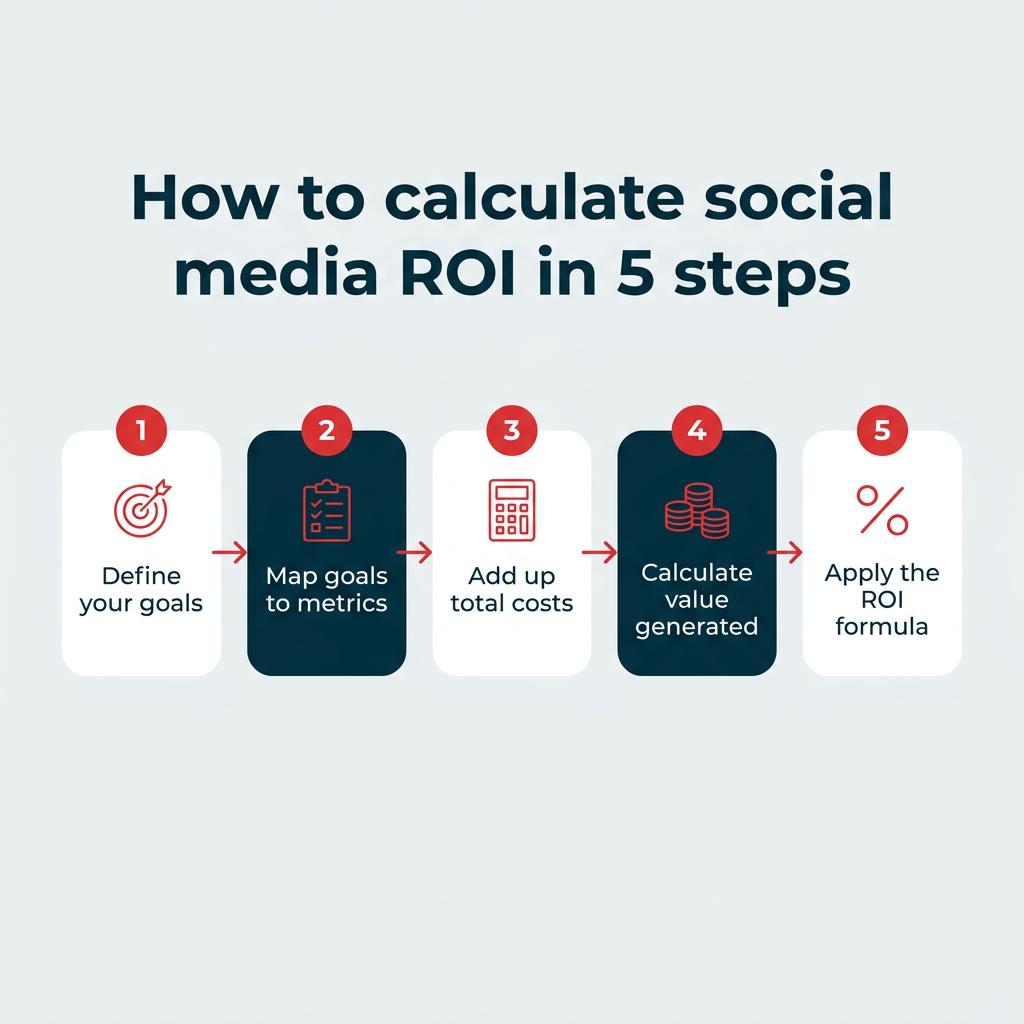
1. Objective Alignment
ROI cannot be measured in a vacuum. Organizations must define whether their social efforts are aimed at top-of-funnel awareness, mid-funnel consideration, or bottom-of-funnel conversion. Eileen Kwok, a veteran Social & Influencer Marketing Strategist, emphasizes the need for agility: "The goals you have set at the start of the year could have already changed. Make sure you are revisiting your goals every quarter to see if any updates need to be made."
2. Metric Mapping
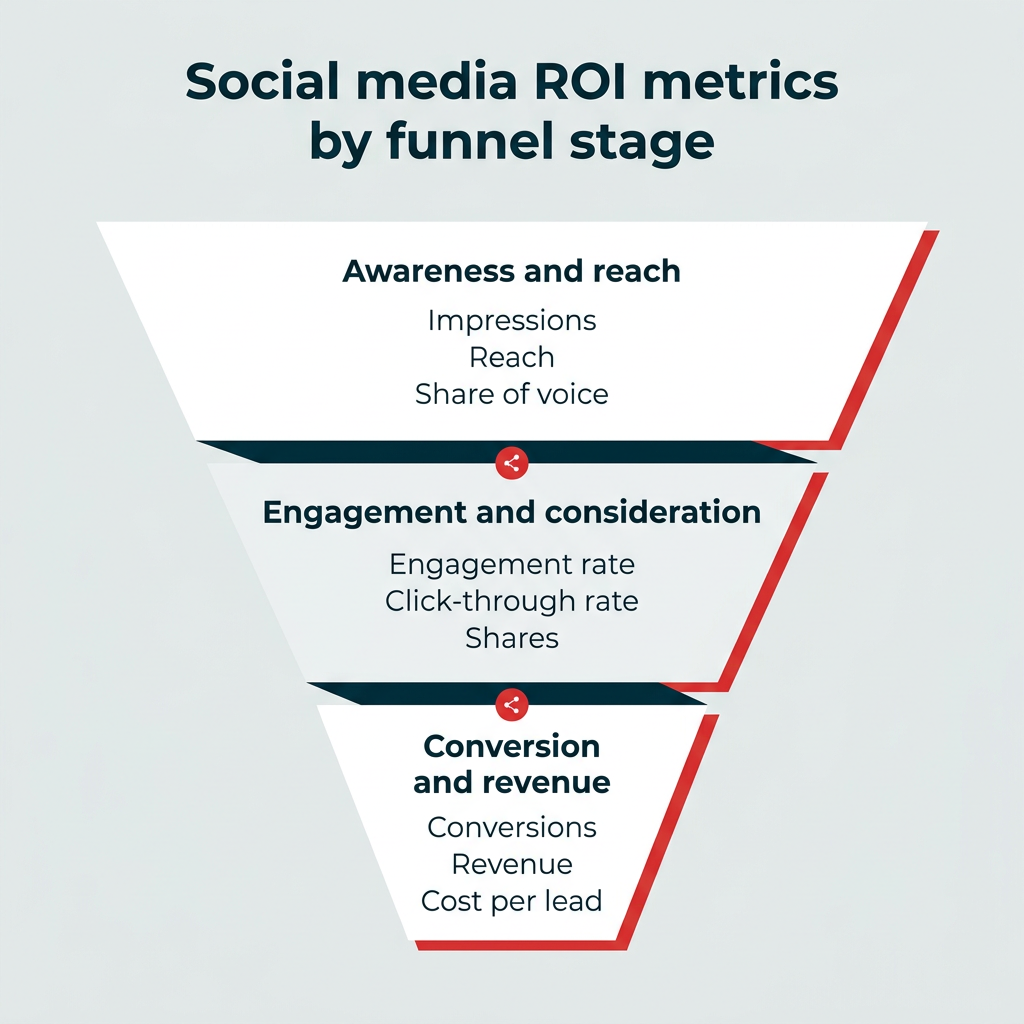
Once goals are established, they must be mapped to specific Key Performance Indicators (KPIs). Awareness goals track impressions and share of voice; engagement goals track saves and comments; conversion goals track cost-per-lead (CPL) and return on ad spend (ROAS).
3. Comprehensive Cost Accounting
A common pitfall in ROI calculation is the omission of "invisible" costs. A true ROI calculation must include:
- Human Capital: Salaries and benefits for social media teams.
- Content Production: Fees for videographers, graphic designers, and influencers.
- Technology Stack: Costs for management platforms (e.g., Hootsuite), CRM integrations, and analytics tools.
- Ad Spend: The literal capital deployed for boosted posts and targeted ads.
4. Valuation of Intangibles
For B2B organizations or high-consideration B2C brands, social media often influences a sale without being the final touchpoint. Marketers must assign value to non-monetary outcomes. For example, if historical data shows that a lead is worth $50, then a social media campaign that generates 1,000 leads has a generated value of $50,000, even before those leads close.
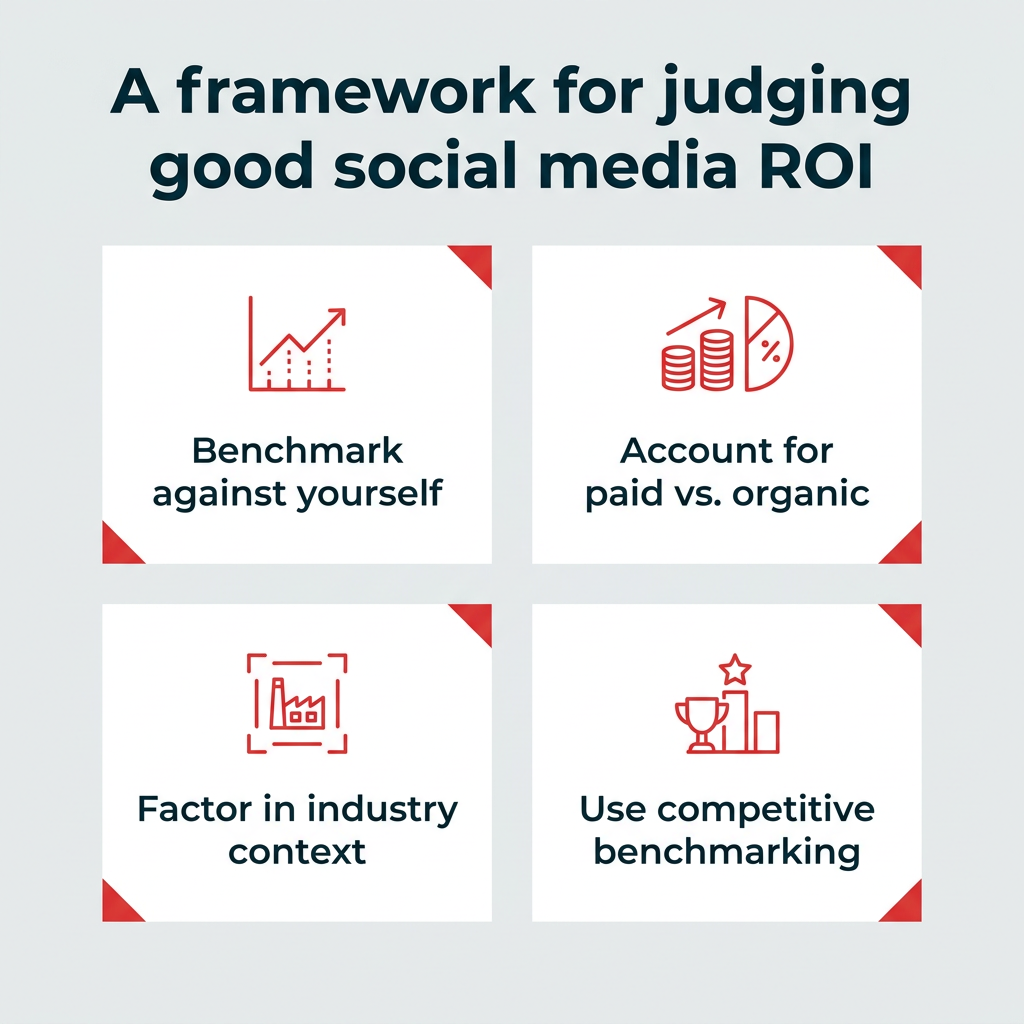
5. Mathematical Application
Applying the ROI formula across different campaigns allows for a comparative analysis, highlighting which platforms and content formats are most efficient.
Supporting Data: The High Stakes of Social Commerce
The urgency of mastering ROI is underscored by the massive shift in consumer behavior. Statista data reveals that nearly 5.75 billion users will be active on social media by 2026.

| Goal Category | Key Metrics | Strategic Insight |
|---|---|---|
| Awareness | Reach, Mentions, SOV | Measures brand "mental availability." |
| Engagement | CTR, Saves, Shares | Measures content resonance and community health. |
| Conversion | Attributed Revenue, ROAS | Measures direct impact on the bottom line. |
Experimental data from Hootsuite further clarifies strategy. In a three-week A/B test comparing Instagram Carousels to Reels, Carousels surprisingly earned higher engagement and reach. This proves that the most resource-intensive format (video) does not always yield the highest ROI, reinforcing the need for continuous testing.
Expert Insights and Official Responses
Industry leaders argue that the "ROI Gap" is often a result of data silos rather than poor performance. Nielsen’s 2025 Marketing Report identifies cross-platform data fragmentation as one of the top barriers to ROI calculation.
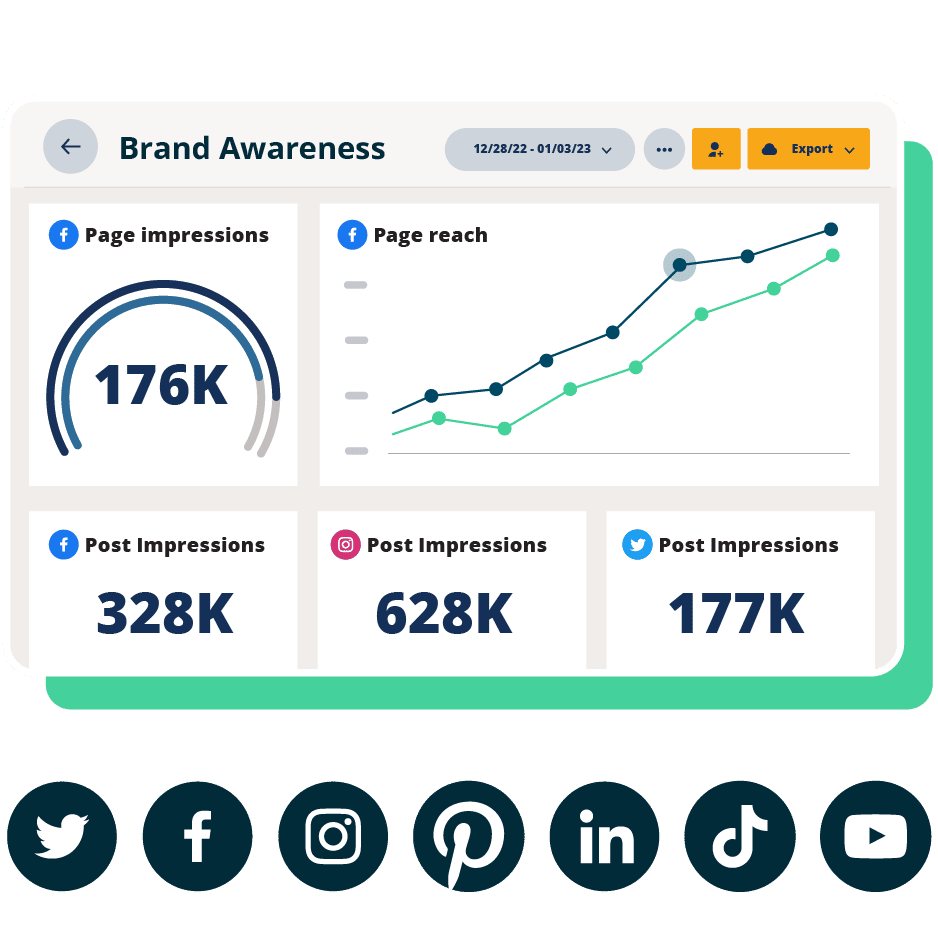
The consensus among strategists is that "last-click" attribution is a flawed metric for social media. Because social media often serves as the "first touch" in a long sales cycle—particularly in B2B—relying solely on same-day conversion data will lead to an undercounting of social media’s true contribution. Multi-touch attribution models are now considered the industry standard for enterprise-level reporting.
Implications: The Future of the Social Media Budget
The inability to prove ROI has dire implications for marketing departments. When budgets are scrutinized during economic downturns, unproven channels are the first to be cut. Conversely, teams that can demonstrate a clear link between social activity and business outcomes—such as a 400% return on LinkedIn lead gen or a 178% return on e-commerce campaigns—are positioned to scale.

The Role of Technology in Bridging the Gap
To combat the "ROI anxiety" reported by 68% of marketers, the adoption of unified analytics platforms has become essential. Tools like Hootsuite Analytics and Advanced Analytics allow for:
- Competitor Benchmarking: Tracking up to 20 competitors to determine if an organization’s ROI is competitive within its specific niche.
- CRM Integration: Linking social media interactions directly to Salesforce or Microsoft Dynamics to track a follower’s journey to becoming a closed-won deal.
- UTM Precision: Using Urchin Tracking Module parameters to tag every URL, allowing Google Analytics to see exactly which LinkedIn post or Instagram Story triggered a website purchase.
The Rise of Closed-Loop Measurement
As platforms like TikTok and Instagram expand their in-app checkout capabilities, the "attribution gap" is narrowing. Social commerce offers a "closed-loop" environment where every action—from the first impression of a shoppable ad to the final checkout—is tracked within a single ecosystem. This makes social media ROI easier to calculate than almost any other marketing channel.

Conclusion: The Strategic North Star
As we move toward 2026, social media ROI has shifted from a "nice-to-have" report to the strategic North Star of the marketing department. Proving value requires a blend of mathematical rigor, sophisticated technology, and a shift in perspective—from viewing social media as a cost center to viewing it as a high-yield investment vehicle.
For the modern enterprise, the question is no longer whether social media works, but how precisely its success can be measured and replicated. Those who master the formula will secure their budgets; those who don’t will find themselves shouting into a digital void they can no longer afford.
 Basiran
  Nana Muazin
  Nila Kartika Wati