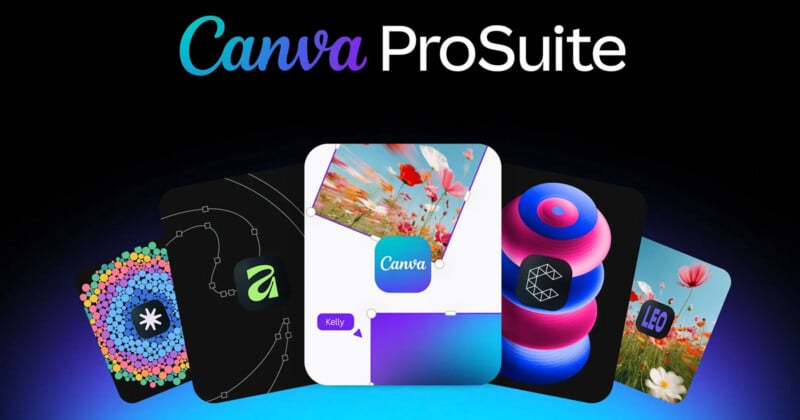
In a sweeping move that challenges legacy creative ecosystems, Canva has officially launched ProSuite, an integrated digital workspace connecting its premier professional design applications—Affinity, Cavalry, Flourish, and Leonardo. Alongside this unified suite, Canva has rolled out over 100 new cross-platform features aimed at designers, animators, and photographers.
The crown jewel of this release for the photography community is Affinity version 3.3. Acting as Canva’s direct competitor to Adobe Photoshop, Affinity remains free to download and use for macOS and Windows, though advanced AI-driven features are tied to Canva’s premium subscription tiers ($18 per month or $144 annually). Version 3.3 introduces a heavily upgraded RAW development engine, hue-preserving curves, independent saturation and hue adjustments, a long-awaited Blend Tool, robust scripting capabilities, and a dedicated Astrophotography Studio.
Chronology: The Evolution Leading to ProSuite
To understand the weight of Canva’s September 2026 announcement, it is helpful to trace the trajectory of the company’s expansion into the professional creative market:
Pre-2024: Canva established itself as the dominant browser-based graphic design tool for casual users, marketers, and small businesses, while traditional professional workflows remained anchored to legacy software suites like Adobe and Maxon.
The Serif Acquisition: Canva made waves across the tech and design industries by acquiring Serif, the developer behind the celebrated Affinity suite (Photo, Designer, and Publisher). This move signaled Canva’s intent to build a bridge between accessible design and heavy-duty, professional-grade desktop applications.
Integration Phase (2024–2025): Following the acquisition, Canva began aligning its product roadmaps. Rather than dismantling Affinity into a web-only toy, Canva maintained its standalone desktop performance while injecting cloud connectivity and AI tools.
September 2026 (ProSuite & Version 3.3 Launch): Canva officially debuts ProSuite, formally grouping Affinity alongside animation tool Cavalry, data visualization tool Flourish, and AI engine Leonardo. Simultaneously, Affinity 3.3 launches, marking the largest single update to the photo editing platform since the Canva acquisition.
Supporting Data and Feature Breakdown
The 3.3 update introduces profound upgrades that directly address long-standing feature requests from professional photographers and digital artists.
1. Advanced RAW Processing Engine
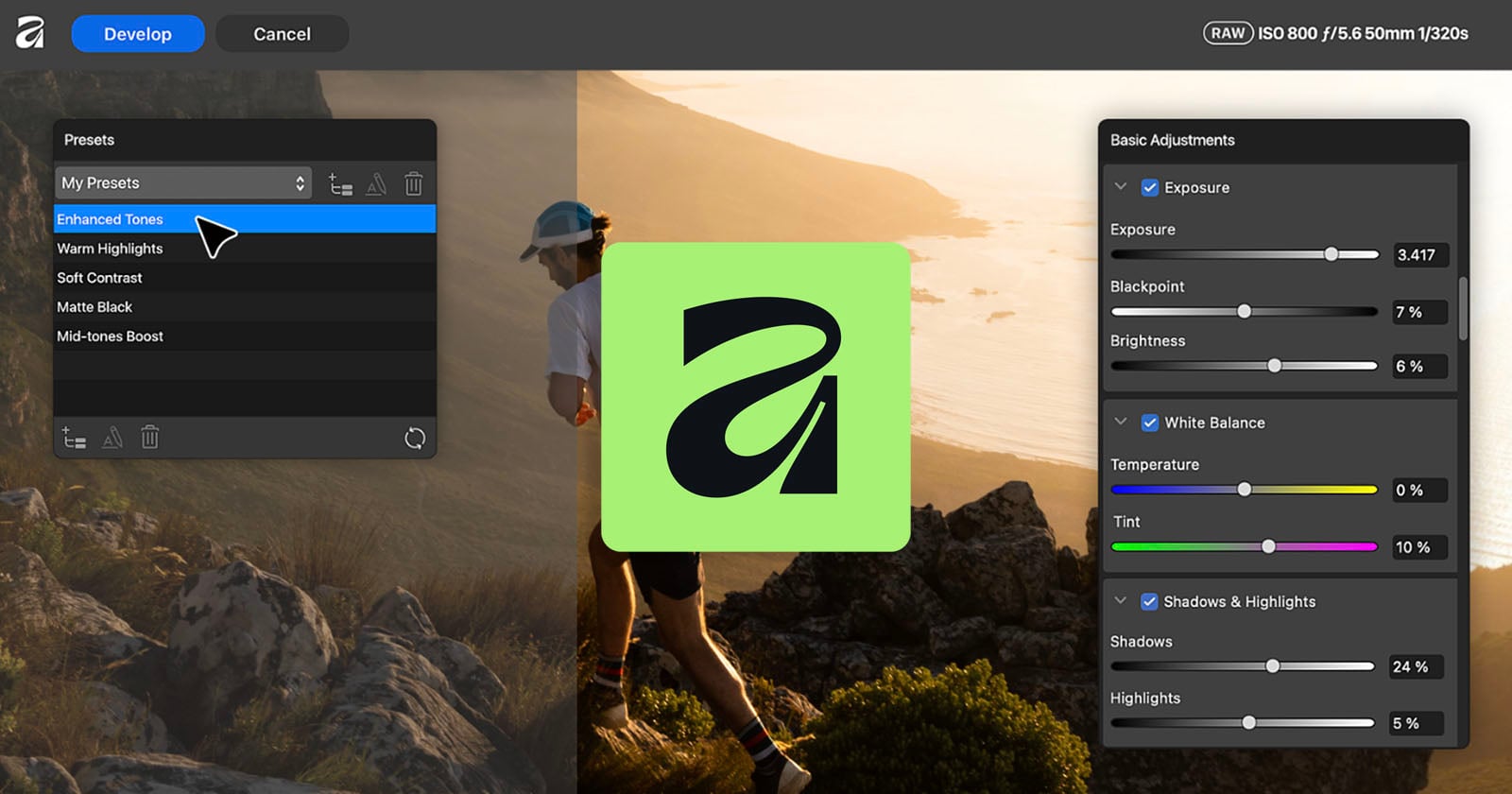
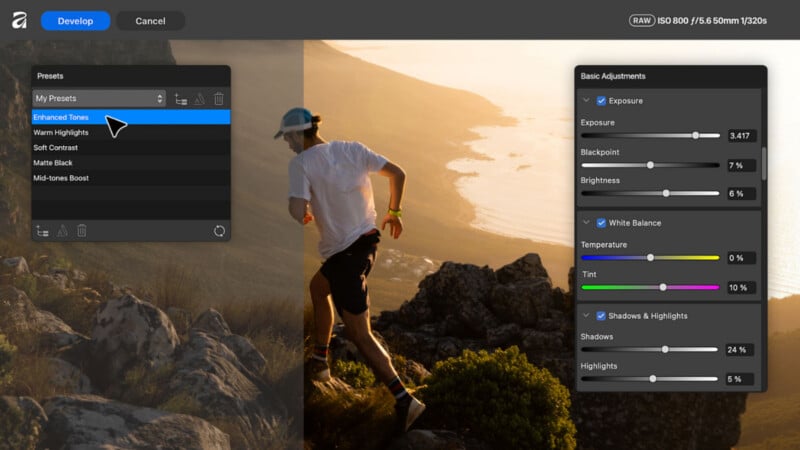
At the core of Affinity Photo 3.3 is a completely overhauled RAW development pipeline. The software now manages exposure, shadow recovery, and highlight roll-offs with dramatically improved speed and mathematical precision. Photographers will notice significantly more natural color transitions and tonal gradations straight out of camera, reducing the time spent fighting digital artifacts or clipped highlights.
2. Hue-Preserving Curves and Color Grading
Traditional curves adjustments often introduce unintended color shifts or saturation spikes when luminance is altered. Affinity 3.3 introduces hue-preserving curves, ensuring that color fidelity remains locked even during aggressive tonal manipulations. Furthermore, the software adopts separate saturation and hue curves—a nod to professional non-linear video editing (NLE) suites—giving colorists and retouchers granular control over their palettes.
3. The New Blend Tool
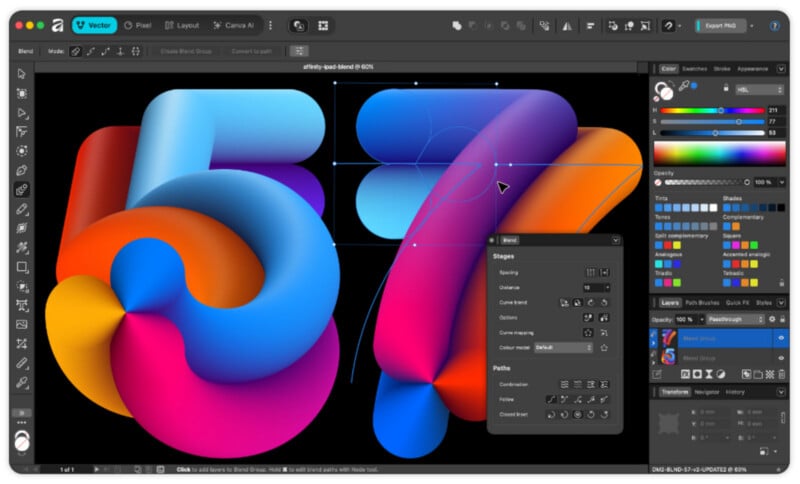
For vector artists and digital illustrators, the addition of the Blend Tool solves a major pain point. Previously, creating smooth, complex, fluid morphing effects between objects required manual node placement and hours of iterative adjustments. The new tool automates this process while retaining real-time interactive sculpting capabilities.
4. Comprehensive Scripting and Automation
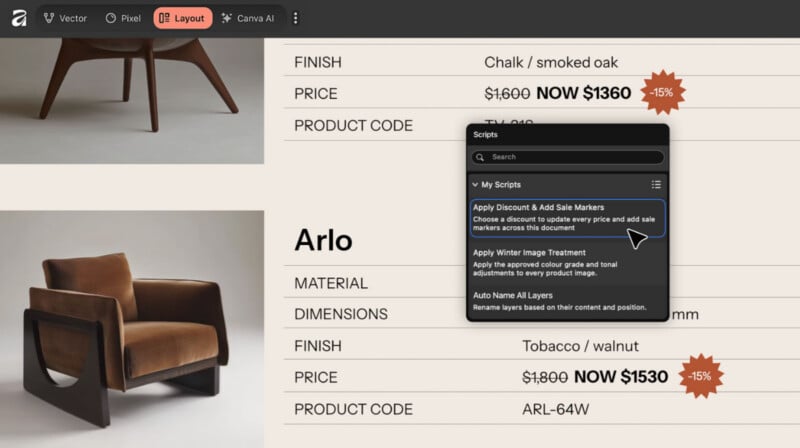
Efficiency is paramount for commercial studios. Affinity 3.3 introduces extensive scripting functionality. Users can now write and execute scripts to automate repetitive pixel-based, vector-based, and layout tasks, drastically cutting down turnaround times for high-volume batch processing and catalog production.
5. Astrophotography Studio
Perhaps the most surprising and specialized addition to version 3.3 is the Astrophotography Studio. Built directly into the workflow, this module handles stacking, calibration frame processing, and deep-sky stretching with a level of robustness typically reserved for specialized niche software. (A dedicated deep-dive review of this feature is expected to follow.)
Official Responses and Industry Perspectives
Canva’s leadership is positioning ProSuite not as a replacement for human creativity, but as an amplifier for professional craft.
"We’re genuinely excited to be releasing such a huge swathe of new tools for professional designers, animators, photographers, and other advanced users," says Duncan Clark, CEO of Pro Design at Canva.
Clark emphasized that user feedback served as the foundation for the 100+ features rolled out across ProSuite.
"Every one of today’s launches exists because we asked professionals what they actually needed to power their creative work—whether it’s tools that introduce new levels of precision or AI that automates the tedious tasks," Clark noted.
Addressing industry-wide anxieties regarding generative AI and automated workflows, Clark pushed back against the narrative that technology will render human artists obsolete:
"There’s a lot of noise right now about AI replacing human creatives, but we believe professional craft matters more than ever. We want the Canva ProSuite to be where that craft lives and thrives."
Implications for the Creative Software Market
The launch of Canva ProSuite and Affinity 3.3 carries significant implications for the broader software ecosystem, particularly for industry giants like Adobe.
1. Intensified Competition in Pro-Grade Editing
By keeping the core Affinity suite free to download while bundling professional-tier features, cloud capabilities, and cross-application integration (via ProSuite), Canva has constructed a formidable value proposition. Photographers and designers who have grown fatigued by subscription-only models for essential desktop tools now have a viable, high-performance alternative that does not compromise on professional depth.
2. Democratization of Specialized Tools
Features like hue-preserving curves, high-end RAW engines, and dedicated astrophotography studios were once locked behind expensive, specialized software packages. By integrating these into a single, cohesive ecosystem alongside Cavalry and Flourish, Canva is lowering the barrier to entry for high-end digital art, scientific imaging, and multimedia design.
3. The Hybrid Model: Free Core vs. Premium Cloud
Canva’s pricing strategy remains one of its greatest competitive advantages. By offering a robust standalone desktop experience for zero cost, while monetizing advanced cloud services, team collaboration, and AI integrations through the Canva Pro subscription ($18/month or $144/year), the company appeals simultaneously to budget-conscious freelancers and enterprise-level creative agencies.
As Affinity 3.3 rolls out globally to macOS and Windows users, the creative software market enters a new phase of competition—one where accessibility, performance, and professional-grade precision are no longer mutually exclusive.

 By Lina Hope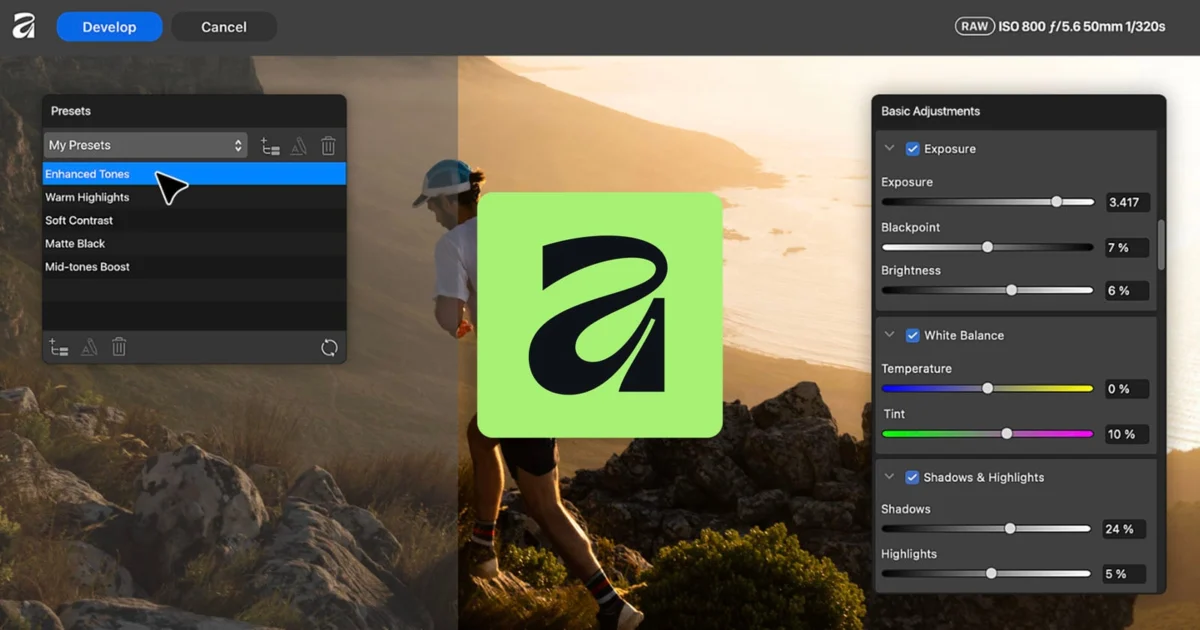
 Dwi Wanna
  Nana Wu