
 By Nana Wu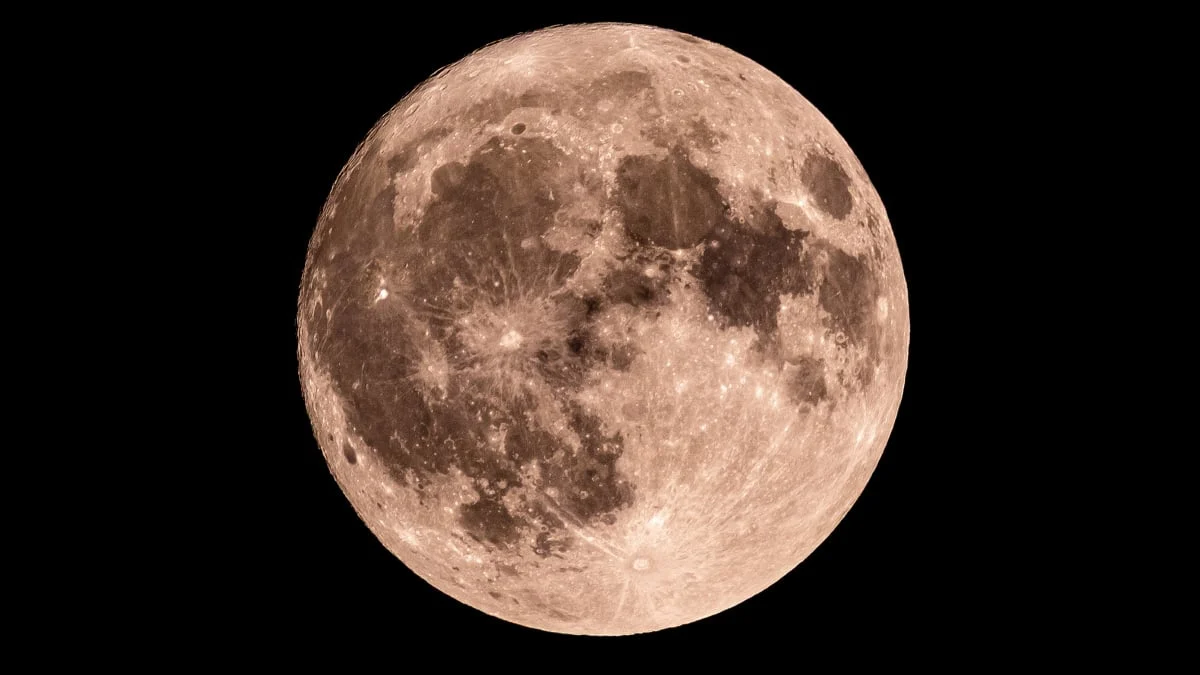
While the technical peak of the Full Moon has passed, the night sky remains dominated by our celestial neighbor. For stargazers and casual observers alike, the post-Full Moon period offers a unique window into the lunar landscape, as the subtle shift into a Waning Gibbous phase provides the perfect conditions for detail-oriented observation.
The Current State of the Lunar Cycle: September 27
As of Sunday, September 27, data from NASA’s Daily Moon Guide confirms that we have transitioned into the Waning Gibbous phase. Despite the technical "Full" status being behind us, the Moon remains 99% illuminated. To the naked eye, the difference is negligible, providing a near-perfect viewing experience for those who may have missed the exact moment of fullness.
This phase is characterized by the slow, graceful retreat of light across the lunar surface. For astronomers, this period is often preferred over the exact Full Moon, as the slight angle of the sun allows for longer shadows to be cast along the "terminator"—the line dividing the day and night sides of the Moon. These shadows provide depth and contrast, making topographical features like craters and mountain ranges significantly easier to resolve.
A Guide for the Naked Eye and Beyond
The beauty of the current lunar phase is its accessibility. You do not need a multi-thousand-dollar observatory to appreciate the complexity of the lunar surface tonight.
Naked-Eye Observation
Even without visual aids, the sheer brilliance of the 99% illuminated Moon allows observers to identify several of the lunar "maria" (the dark, basaltic plains formed by ancient volcanic eruptions). Look for:
- Mare Imbrium: Known as the "Sea of Rains," this is one of the largest impact craters in the solar system, appearing as a dark, expansive circular patch.
- Mare Vaporum: Often referred to as the "Sea of Vapors," this smaller, darker region stands out clearly against the brighter, cratered highlands.
- Kepler Crater: A young, bright crater with a distinct ray system that remains visible even as the Moon begins its waning cycle.
Binocular Astronomy
If you have a standard pair of binoculars, the lunar surface reveals far more detail. Focus your lens on:
- Clavius Crater: One of the largest crater formations on the Moon, visible near the southern limb. Its size allows you to see the smaller craters that have impacted its floor over eons.
- Alphonsus Crater: Located near the center of the Moon, this crater is famous for its dark-halo craters, which are evidence of past explosive volcanic activity.
- Archimedes Crater: A large, circular crater that serves as a landmark for the eastern edge of the Mare Imbrium.
The Telescope Advantage
For those equipped with a telescope, the current Waning Gibbous phase offers a historical look at human space exploration. You can pinpoint the landing sites of the Apollo 14 and 15 missions. Furthermore, the Rima Ariadaeus—a spectacular, long lunar rille (a canyon-like feature)—becomes a primary target, showing the tectonic stresses that have shaped the Moon’s crust over billions of years.
Looking Ahead: The October Calendar
The rhythm of the Moon is relentless, moving in a predictable dance that has governed human timekeeping for millennia. Following this current phase, the lunar cycle will continue its progression through the Third Quarter and Waning Crescent stages before resetting.
Observers should mark their calendars for the next Full Moon, which is set to occur on October 25 or 26, depending on your specific geographical timezone. As the seasons shift, atmospheric conditions often improve for Northern Hemisphere observers, potentially providing even sharper views of the lunar surface during the next cycle.
Understanding the Mechanics: Why the Moon Changes
The Moon does not actually change its shape; it only changes its appearance from our perspective on Earth. This 29.5-day cycle, known as the synodic month, is a result of the Moon’s orbit around our planet. As the Moon moves, the geometry between the Earth, the Moon, and the Sun shifts, altering the portion of the Moon’s sunlit hemisphere that we see.
The Eight Phases of the Lunar Cycle
To understand the celestial mechanics at play, it is helpful to categorize the Moon’s transformation into eight distinct stages:
- New Moon: The Moon is positioned between the Earth and the Sun. The side facing us is shrouded in shadow, rendering it virtually invisible to the naked eye.
- Waxing Crescent: As the Moon moves in its orbit, a thin sliver of light emerges on the right side (in the Northern Hemisphere).
- First Quarter: The Moon has completed a quarter of its orbit. Half of the visible face is illuminated.
- Waxing Gibbous: The light continues to grow, moving past the half-way point toward full illumination.
- Full Moon: The Earth is positioned between the Sun and the Moon, allowing the entire face of the Moon to be illuminated.
- Waning Gibbous: The stage we are currently in. The light begins to retreat, starting from the right side.
- Third Quarter: Often called the "Last Quarter," the left half of the Moon is illuminated.
- Waning Crescent: The final stage before the cycle resets, leaving only a thin sliver of light on the left side.
Scientific and Cultural Implications
The lunar cycle is more than a mere curiosity; it is a fundamental aspect of Earth’s environmental stability. The gravitational pull of the Moon—which varies slightly based on its phase and proximity to Earth—drives our global tides. Furthermore, the study of the Moon’s surface via lunar missions, such as the Apollo program, has provided critical data regarding the history of our solar system.
NASA and other international space agencies continue to utilize the Moon as a "proving ground" for deep-space exploration. By observing features like the craters mentioned earlier, scientists can reconstruct the history of meteoroid impacts that occurred during the "Late Heavy Bombardment," a period billions of years ago that likely shaped the development of life on Earth.
The Future of Lunar Observation
As we move into the coming month, the importance of lunar observation remains high. With the resurgence of interest in lunar exploration—highlighted by missions like the Artemis program—the Moon is no longer just an object of wonder; it is a destination.
For the average citizen, the ability to observe the Moon with basic equipment remains one of the most accessible scientific experiences available. Whether you are using a telescope to trace the history of the Apollo landing sites or simply stepping outside to admire the 99% illuminated disk in the night sky, you are participating in a tradition that spans the entirety of human civilization.
As the Waning Gibbous phase continues over the next few days, take a moment to look up. The Moon is not merely a static light in the sky, but a dynamic, evolving landscape that tells the story of our cosmic neighborhood. Use this week to familiarize yourself with the lunar landmarks, track the subtle changes in the terminator line, and prepare for the next Full Moon in late October. The sky, as always, has much to teach those willing to look.
 Suro Senen
  rifanmuazin
  Muslim