
 By Nila Kartika Wati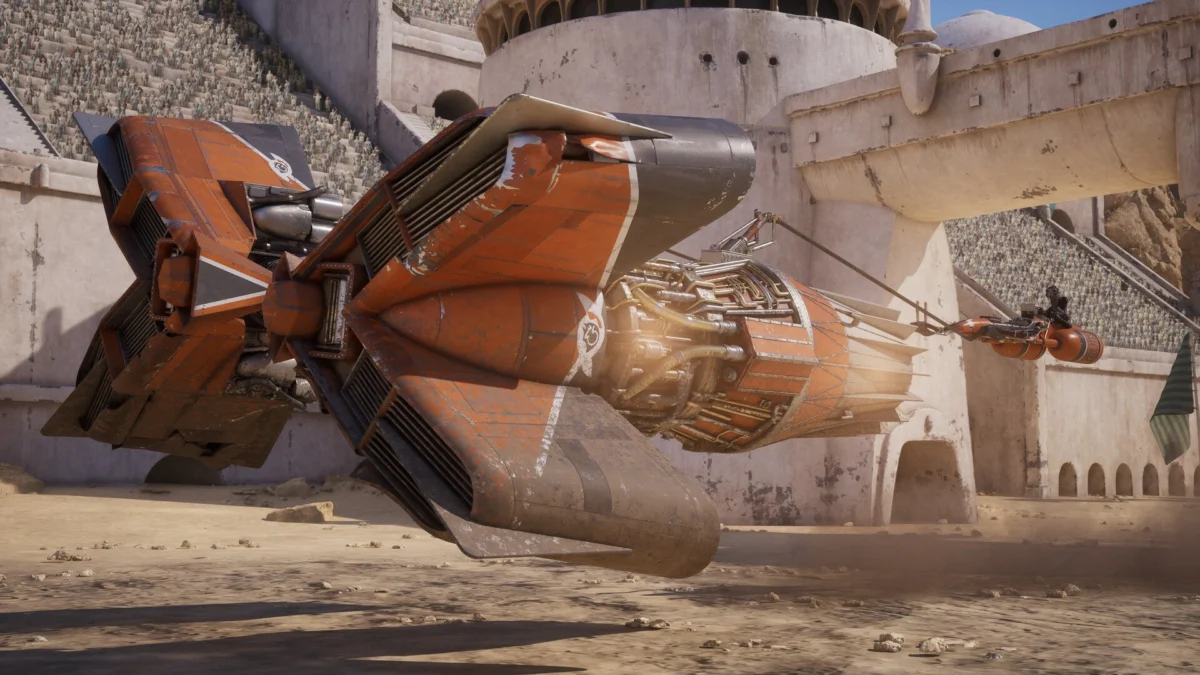
In the pantheon of arcade racing, few titles command the reverence reserved for Burnout Paradise. Released in 2008, Criterion Games’ open-world masterpiece didn’t just set a benchmark for high-speed mayhem; it fundamentally altered how players interacted with digital environments. For over a decade, fans and critics alike have asked a singular, persistent question: Why, in an era of unprecedented graphical fidelity and processing power, has no one managed to capture that same elusive magic?
At this year’s Summer Game Fest, two of the industry’s most qualified individuals finally weighed in on that conundrum. Matt Webster, founder and CEO of Fuse Games, and Creative Director Kieran Crimmins—both veterans of the original Burnout development team—are currently helming the development of Star Wars: Galactic Racer. As they prepare to bring their high-octane pedigree to a galaxy far, far away, they reflect on the chaotic, brilliant history of Burnout Paradise and explain why their new project might finally be the one to shift the paradigm of the racing genre once again.
The Genesis of an Icon: "We Were Making It Up"
To understand the ambition behind Star Wars: Galactic Racer, one must first look back at the "Wild West" atmosphere that birthed Burnout Paradise. According to Webster, the success of the 2008 classic was not the result of a meticulously rigid roadmap, but rather a perfect storm of creative freedom and industry-wide uncertainty.
"We were making it up as we went along," Webster admitted during an interview at Summer Game Fest. At the time, the concept of a seamless, open-world arcade racer was largely untested. The team at Criterion wasn’t just building a game; they were inventing a genre space.
The core of the Burnout experience—the social interaction—was, ironically, born from a lack of traditional structure. "The online multiplayer in Burnout Paradise—you were just dicking about in a car, not playing the game, that was the game," Webster noted. This emergent gameplay, where the player’s freedom to cause carnage in a shared space superseded the objectives themselves, became the blueprint for modern titles like the Forza Horizon series. However, Webster is quick to point out that while Forza has perfected the "social driving experience," the original Paradise offered a raw, untethered energy that remains difficult to replicate.
Chronology of a Legacy: From Criterion to Fuse Games
The professional trajectory of Webster and Crimmins provides a unique vantage point on the evolution of racing games. Their tenure at Criterion Games saw the studio transition from the linear, high-intensity crashes of Burnout 3: Takedown to the expansive, systemic freedom of Paradise City.
After the success of Paradise, the team spent years analyzing what made that specific iteration of the franchise resonate so deeply with the public. The consensus among the developers was that Paradise was a "leap forward." Because of this, they argue that simply remaking or iterating on the formula would be a disservice to the player base.
"You couldn’t just remake that and have the same cultural impact," Crimmins explains. "Everyone tries to make the best game they can possibly make, and the most interesting game, but it is like catching lightning in a bottle. The only way you can get there is to try and do something new, try and do something innovative, and have the player experience at the heart of what you’re doing."
This philosophy has now moved to Fuse Games. With Star Wars: Galactic Racer, the team is taking the lessons learned from decades of racing development and applying them to a franchise defined by speed, high stakes, and a vast, recognizable universe.
Supporting Data: Why "Consequence" is the Missing Piece
If Burnout Paradise defined the era of the "social playground," then Star Wars: Galactic Racer is aiming to define the era of "meaningful stakes." In the contemporary racing landscape, the inclusion of "rewind" mechanics and forgiving physics has arguably sanitized the thrill of the race. For Webster, the modern genre has lost its teeth.
"Consequence is missing," Webster stated. "It’s tough to have consequence when you’ve got a rewind button, right? So, consequences are missing. How do we bring consequence into the structure? How do we have not just the consequence of crashing, but consequence in decision-making?"
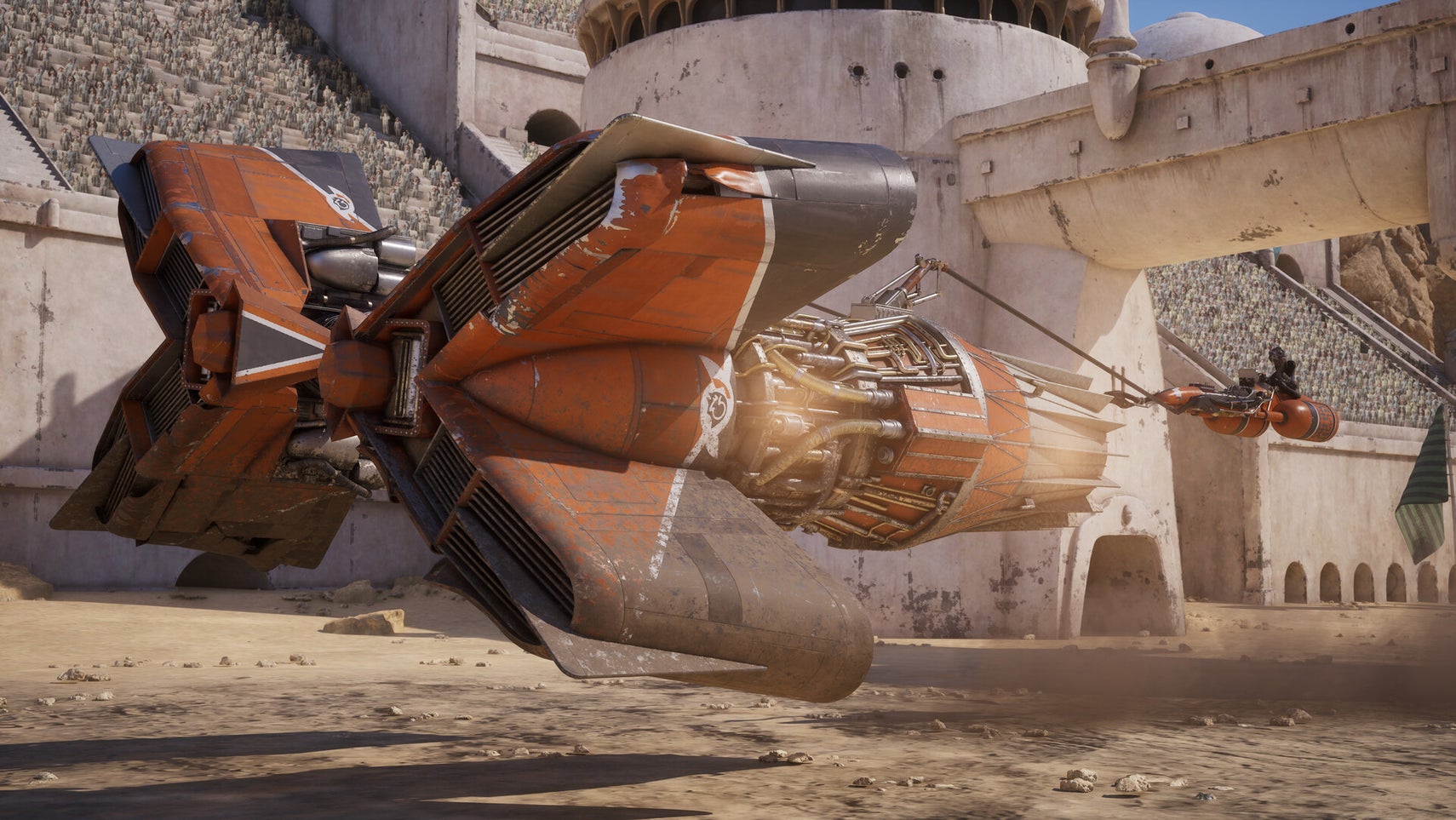
This design philosophy shifts the focus from simple speed to strategic depth. The team at Fuse Games is looking at the vehicle as a multifaceted tool rather than a static avatar. By incorporating a wide variety of ships from the Star Wars lore—each with distinct handling, durability, and performance characteristics—they aim to force players to consider their choices before, during, and after the race.

Crimmins emphasized the "levels of depth" being integrated into Galactic Racer. "It’s why we’ve got the amount of vehicles that we’ve got from the Star Wars universe… we know that we need to take a leap forward to really be a transformative game in the industry."
Official Perspectives: The Philosophy of Bravery
During their discussion, the synergy between Webster and Crimmins was palpable. They represent a rare breed of developer: those who have already reached the mountaintop and are now looking to chart a new peak entirely.
When asked about the risks of injecting "consequence" into an arcade racer—a genre traditionally synonymous with mindless fun—the duo remained steadfast. They argue that bravery is the only way to move the industry forward.
"We want to move the genre forward," Webster said. "There are similarities with Paradise in that regard, in terms of how we are trying to just invent new cool stuff. It just happens to be inside a Star Wars racing game."
Crimmins echoed this sentiment, framing the project as an opportunity to bridge the gap between high-fidelity simulation depth and the pure, kinetic adrenaline of an arcade experience. By utilizing the Star Wars license, they have the ability to leverage a sense of wonder and scale that is rarely seen in standard automotive racing games.
The Implications: A New Era for the Genre?
The implications of the Fuse Games approach are significant. If Star Wars: Galactic Racer succeeds in its goal of introducing genuine consequence without sacrificing the accessibility of the arcade genre, it could force a shift in how major publishers approach racing titles.

Currently, the industry is split between the hyper-realistic simulation (e.g., iRacing, Gran Turismo) and the open-world social racer (e.g., Forza Horizon). By focusing on "decision-making consequence" and "systemic depth," Fuse Games is attempting to create a third pillar.
The industry will be watching closely. While the Star Wars brand ensures a massive audience, the success of the game will ultimately rest on whether Webster and Crimmins can truly capture that elusive lightning for a second time.
As they continue to refine the mechanics of Galactic Racer, the gaming community remains in a state of cautious optimism. If the vision they described at Summer Game Fest holds true, we may be on the verge of the most significant advancement in the racing genre since the gates of Paradise City first swung open sixteen years ago.
For now, the message from the studio is clear: expect the unexpected, prepare for consequences, and get ready for a racing experience that aims to be as brave as it is fast. With more details expected to emerge from Eurogamer and other outlets in the coming months, the countdown to the next evolution of racing has officially begun.
 Laily UPN
  Asro
Asro 