
 By Nila Kartika Wati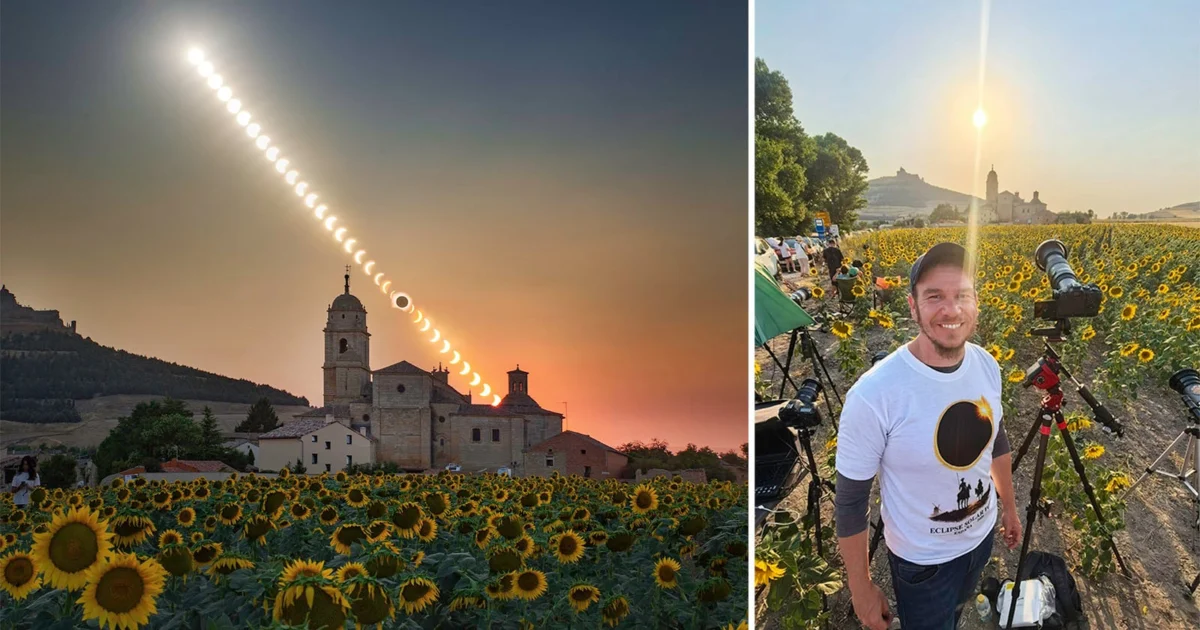
Main Facts: The Intersection of Celestial Mechanics and Artistic Vision
For acclaimed Brazilian astrophotographer Kiko Fairbairn, capturing the total solar eclipse on August 12, 2026, was not merely a matter of pointing a camera at the sky. It was the culmination of more than a year of meticulous planning, thousands of miles of travel, and split-second execution in the rugged terrain of northern Spain.
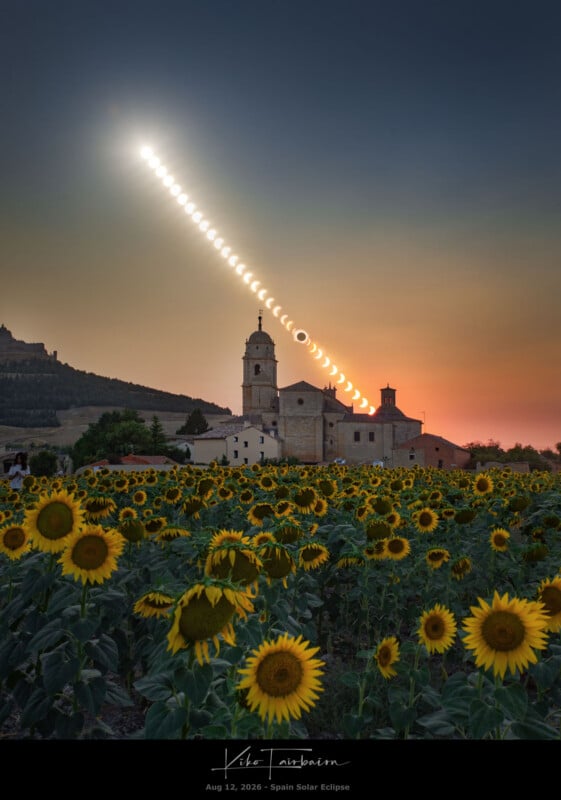
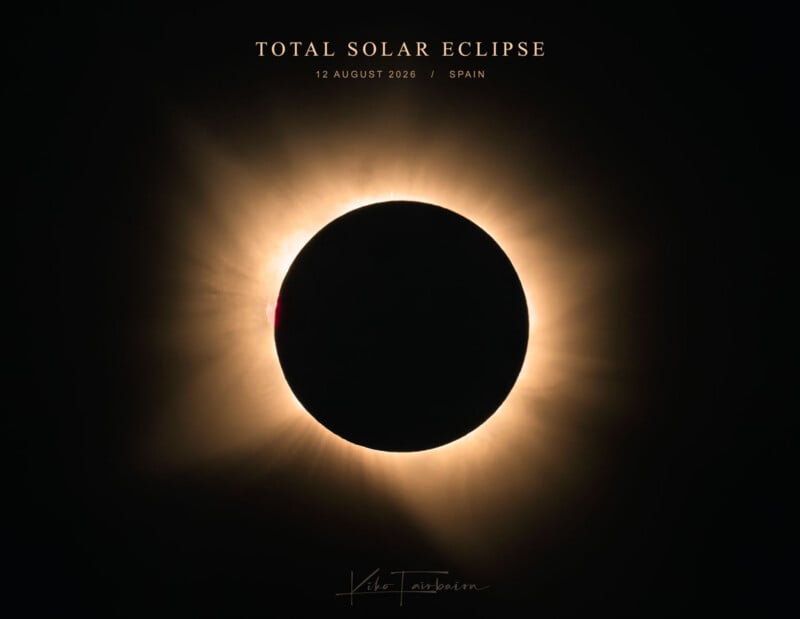
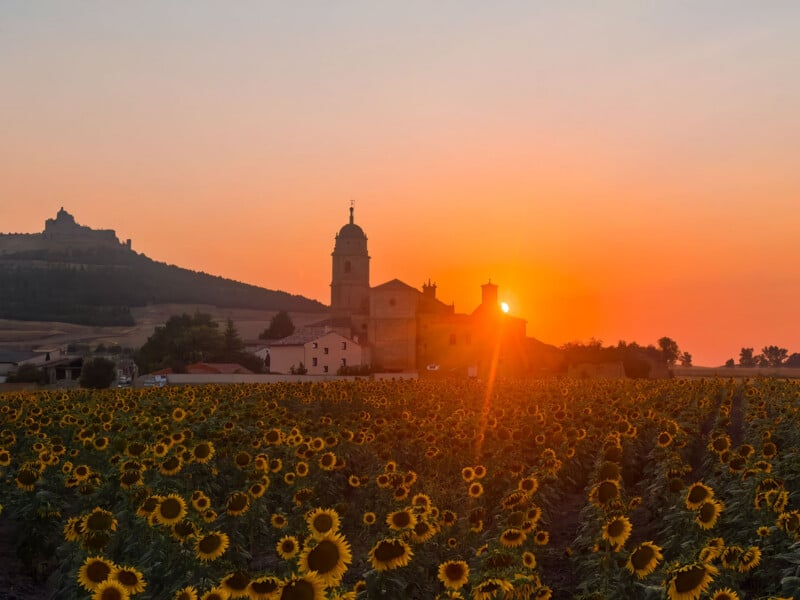
Stationed near the historic town of Castrojeriz in the Burgos province, Fairbairn orchestrated a multi-camera shoot designed to capture both the intimate, microscopic details of the solar corona and a sweeping, poetic terrestrial landscape. His centerpiece image—a striking composite sequence showing the progression of the solar eclipse arching gracefully over a vibrant field of sunflowers, an ancient stone church, and crumbling medieval castle ruins—has captivated the global photography and astronomy communities.
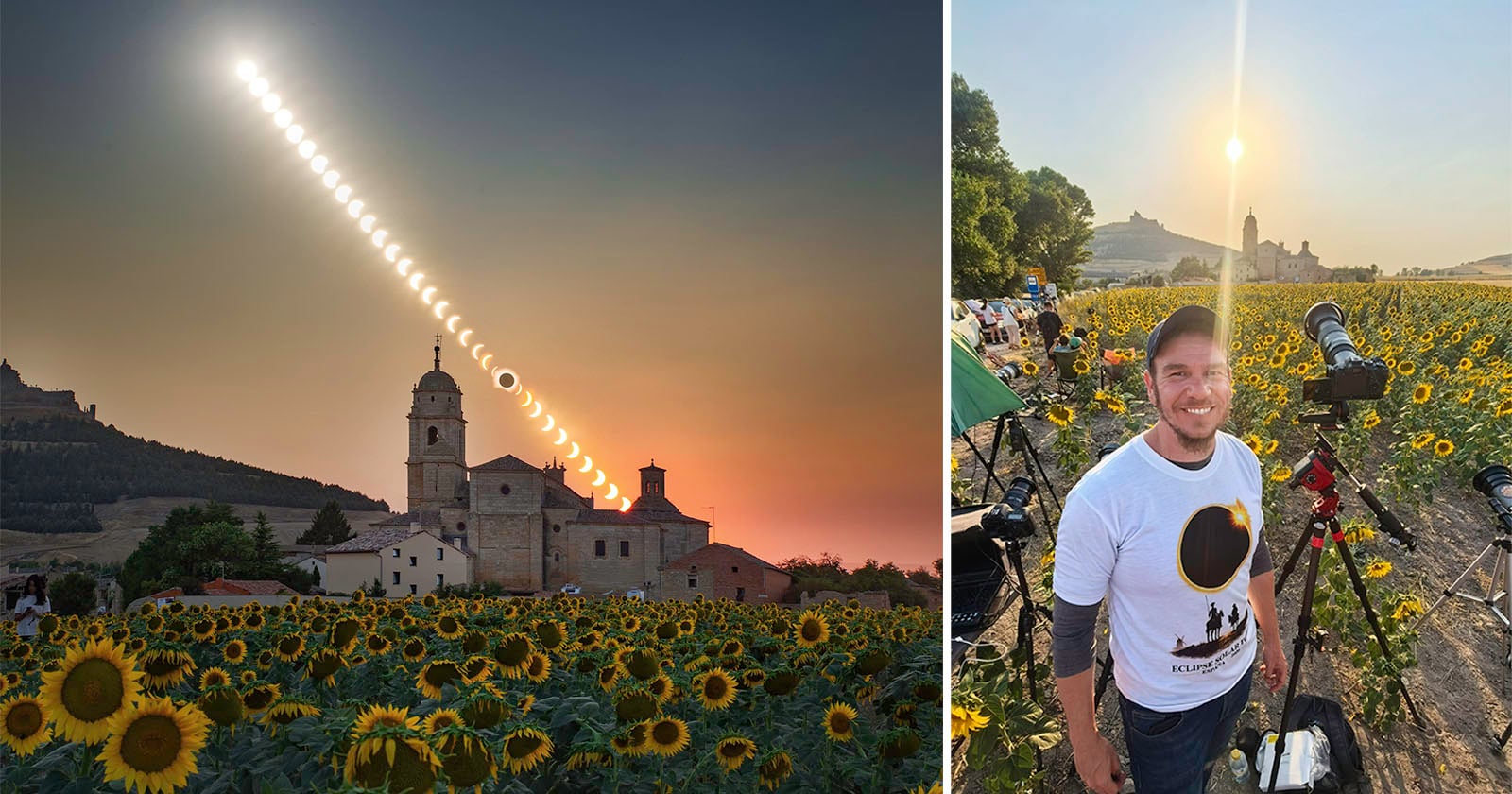
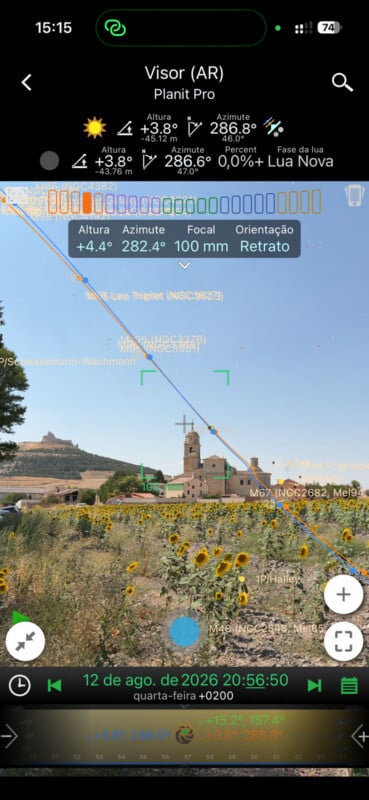
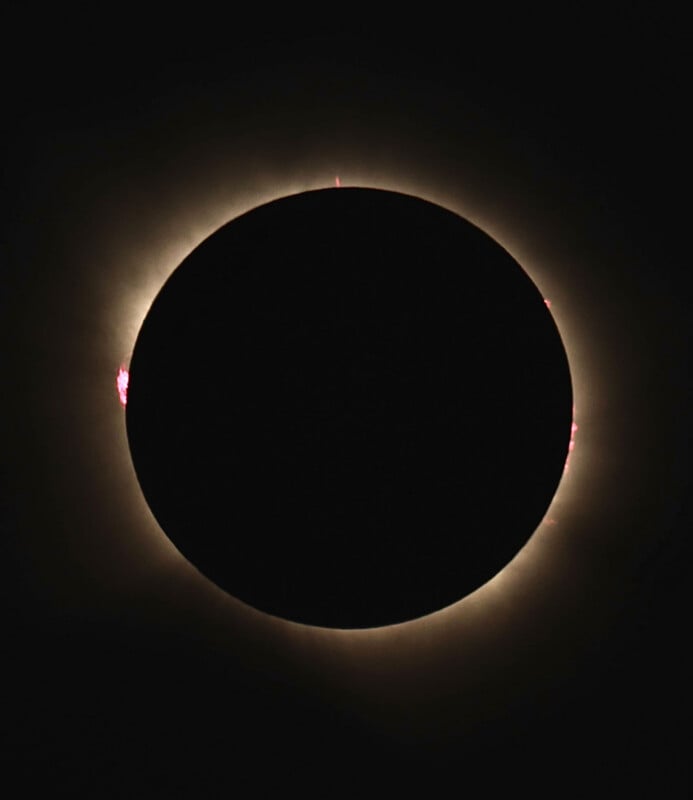
The logistical challenge was immense. While modern astronomy apps and augmented reality tools allow photographers to preview planetary alignments from thousands of miles away, the reality on the ground demands adaptability. Fairbairn utilized a dual-camera strategy: a Canon EOS R6 Mark III paired with a 150-600mm telephoto zoom lens, 2x teleconverter, and a solar filter mounted on a star tracker to record continuous close-ups of the Sun; and a trusted, workhorse DSLR—the Canon EOS 5D Mark III—mated with a 24-70mm lens to document the broader narrative of the changing landscape.
Ultimately, Fairbairn’s efforts yielded nearly 300 bracketed RAW frames using a Haida ND 3.0 filter, powered continuously by a dummy battery connected to an external power bank. During the fleeting 106 seconds of totality, Fairbairn achieved the rare photographic holy grail: he successfully automated his technical capture systems, allowing him to step away from the viewfinder, look up, and experience the awe-inspiring cosmic event with his own eyes alongside his sister and close friends.
Chronology: From Brazilian Skies to the Sunflower Fields of Burgos
Fairbairn’s journey to the Spanish eclipse began long before his boots touched European soil. As an experienced astrophotographer who had previously documented an annular solar eclipse in Brazil, Fairbairn understood the gravity of planning a total solar eclipse expedition. Total solar eclipses are notoriously unforgiving; unlike deep-sky astrophotography, which benefits from hours of open shutter time, totality lasts only a matter of minutes or seconds, leaving zero room for error.
Phase 1: Pre-Planning and Global Calculations (Over One Year Out)
Months prior to the event, Fairbairn utilized specialized planning software to track the precise shadow path of the August 12, 2026 total solar eclipse. He analyzed topography, historical weather patterns, and horizon alignments across the path of totality, ultimately zeroing in on northern Spain for its dramatic blend of historical architecture and expansive rural landscapes.
Phase 2: On-the-Ground Scouting (Days Prior to the Eclipse)
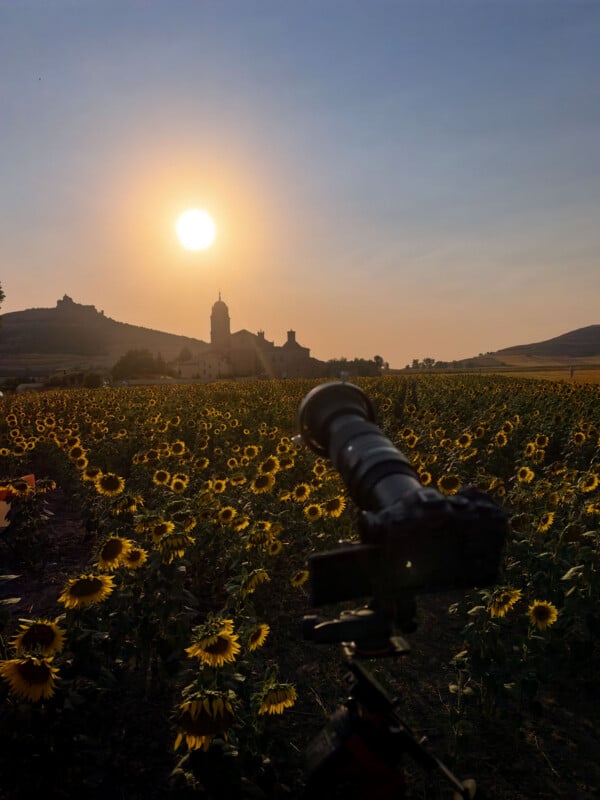
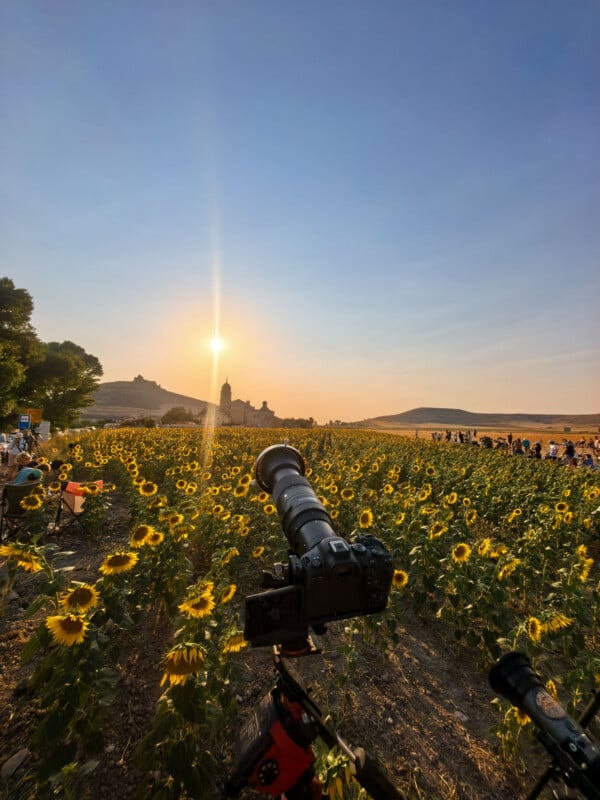
Upon arriving in Spain days before the eclipse, Fairbairn’s theoretical planning transitioned into physical exploration. Scouting near Burgos, he traversed rural roads searching for a foreground element that would elevate the image beyond a standard scientific record.
"Once I arrived near Burgos, the real photographic search began," Fairbairn explains. "That is when I came across this beautiful field of sunflowers near Castrojeriz, with the church and the castle ruins rising behind it. The moment I saw that scene, something clicked."
Phase 3: Compositional Refinement (Hours Before Totality)
Working within the sprawling field, Fairbairn experimented with ultra-wide lenses before settling on a 24-70mm zoom at 38mm. This focal length struck the perfect balance: it maintained the grandeur of the distant church and hilltop castle ruins while framing healthy, expressive sunflowers in the foreground. He secured his Canon 5D Mark III on a sturdy tripod, set up aggressive exposure bracketing (1/50, 1/200, and 1/800s), and locked down his composition.
Phase 4: The 106 Seconds of Totality (August 12, 2026)
As the Moon slid precisely in front of the solar disk, casting an eerie twilight over the Spanish countryside, Fairbairn’s automated setup fired frame after frame. With his primary cameras secured and recording, Fairbairn stepped away from the monitors. Guided by his sister—who captured the behind-the-scenes footage—he experienced the raw, emotional shock of totality firsthand during the 106-second window.
Supporting Data: Technical Specifications and Equipment Breakdown
To achieve a composite image that balances extreme dynamic range, sharp planetary detail, and natural terrestrial lighting, Fairbairn relied on a robust suite of professional gear and rigorous technical parameters:
-
Solar Telephoto Setup:
- Camera Body: Canon EOS R6 Mark III
- Optics: 150-600mm telephoto zoom lens with a 2x teleconverter
- Support & Filtration: Mounted on a dedicated star tracker utilizing a specialized solar filter for continuous close-up recording of the Sun’s corona and prominences.
-
Landscape & Storytelling Setup:
- Camera Body: Canon EOS 5D Mark III (chosen for its legendary reliability as a field workhorse)
- Optics: Canon EF 24-70mm f/2.8 (locked at 38mm)
- Filtration & Power: Haida ND 3.0 filter; continuous power supplied via a dummy battery connected to an external power bank.
- Exposure Strategy: Aggressive exposure bracketing consisting of three-shot sequences (base exposure, two stops darker at 1/800s, and two stops brighter at 1/50s) to safeguard against rapidly shifting ambient light levels as totality approached. Total frames captured: approximately 300 RAW files.
Official Perspectives: The Philosophy of an Astrophotographer
For Fairbairn, whose extensive resume includes having his work published by NASA, National Geographic, the BBC, and Scientific American, photography is deeply intertwined with science education. In 2019, his dedication to the medium was recognized when he won the Sir Patrick Moore Prize in Astronomy Photographer of the Year. He has since shared his insights on major global stages, including TEDx talks, schools, and observatories.
Despite his technical mastery, Fairbairn remains deeply philosophical about the emotional weight of witnessing celestial mechanics in real time. He frequently emphasizes the mathematical marvel that makes total solar eclipses possible:
"The Sun is roughly 400 times larger than the Moon, but it is also roughly 400 times farther away from us, so from Earth they appear almost exactly the same size in the sky," Fairbairn notes. "It is this extraordinary coincidence of angular size that allows the Moon to cover the brilliant surface of the Sun so precisely during totality, revealing the solar corona around it."
Furthermore, Fairbairn issues a gentle caution to fellow visual artists chasing cosmic events:
"One of the biggest mistakes we can make as photographers during an eclipse is becoming so focused on capturing it we forget to actually experience it… Take the photograph, absolutely — but make sure you look up. Some photographs stay with you because of the image you bring home. Others stay with you because you remember exactly what it felt like to be standing there when you made them."
Implications: Bridging Art, Science, and Shared Human Experience
Kiko Fairbairn’s successful capture of the August 2026 Spanish total solar eclipse highlights several evolving trends and takeaways within modern astrophotography:
1. The Power of Terrestrial Context in Space Photography
As consumer astrophotography equipment becomes increasingly accessible, capturing isolated images of the Moon, Sun, or deep-sky nebulae against a flat black background is no longer enough to stand out. Fairbairn’s work underscores the rising demand for "scape" astrophotography—integrating rich, culturally significant, or natural foregrounds (such as European architecture and sunflower fields) to ground astronomical phenomena in human scale and storytelling.
2. Automation as a Tool for Presence
The technical rigor required to shoot an eclipse often risks turning the photographer into a stressed technician. By investing heavily in pre-event scouting, precise framing, and automated interval/bracketing systems (powered by external battery banks), Fairbairn proved that modern gear can liberate the artist. His decision to step back and share the moment with his sister and close friends emphasizes that human memory and shared communal awe supersede any single frame on a memory card.
3. Community and Collaborative Exploration
Astrophotography is frequently perceived as a solitary pursuit carried out in dark fields under midnight skies. However, Fairbairn’s expedition to Spain highlights the vital role of community. Traveling alongside his sister and fellow members of the Brazilian astronomy and astrophotography community provided essential emotional support, troubleshooting resources, and shared triumph in weathering pre-eclipse anxieties. Ultimately, Fairbairn’s masterwork stands as a testament to what happens when rigorous scientific preparation meets unbridled creative passion.
 Lina Irawan
  rifanmuazin