
 By Laily UPN
Main Facts: The Botanical Reality and Lifespan of Cucumbers
Cucumbers and their briny counterparts, pickles, are culinary staples across the globe. They appear regularly in crisp summer salads, stacked high on deli sandwiches, and preserved in jars to add crunch to countless recipes. Yet, despite their ubiquitous nature in kitchens and grocery stores, many home gardeners and consumers know surprisingly little about the plant itself.
From a botanical perspective, cucumbers are not vegetables at all; they are fruits. Specifically, they belong to the Cucurbitaceae family, making them close cousins to squashes, pumpkins, and melons. Furthermore, the world of cucumbers is remarkably diverse, encompassing dozens of distinct varieties tailored for slicing, pickling, greenhouse growing, and even specialty culinary uses.
For those venturing into home horticulture, one of the most fundamental questions to ask is: How long do cucumber plants actually live?
On average, the lifespan of a healthy cucumber plant ranges from 60 to 90 days. Because cucumbers are classified as tender annuals rather than perennials, they complete their entire life cycle—from germination to fruit production and eventual decline—within a single growing season. They must be replanted year after year.
Despite their relatively short lifespan, cucumbers remain one of the most popular and rewarding choices for home gardeners. They are relatively easy to cultivate and possess a generous growth habit that yields multiple harvests over a single season, which typically spans from June to November, depending heavily on regional climate conditions. Typically, these plants begin producing harvestable fruit roughly 50 to 70 days after planting, leaving a window of active production before the plant naturally reaches the end of its lifecycle.
Chronology: The Lifecycle of a Cucumber Plant
Understanding the chronological development of a cucumber plant helps gardeners optimize their care routines and anticipate critical milestones from seed to harvest.
Phase 1: Germination and Seedling Stage (Days 1 to 14)
The journey begins underground. Cucumber seeds require warm soil—ideally between 70°F and 85°F—to germinate successfully. Within 3 to 10 days of sowing, the seed coat cracks, and the embryonic shoot pushes through the soil. During the first two weeks, the seedling focuses on establishing its root system and unfurling its first set of embryonic leaves (cotyledons), followed shortly by the first true leaves.
Phase 2: Vegetative Growth and Vining (Days 15 to 45)
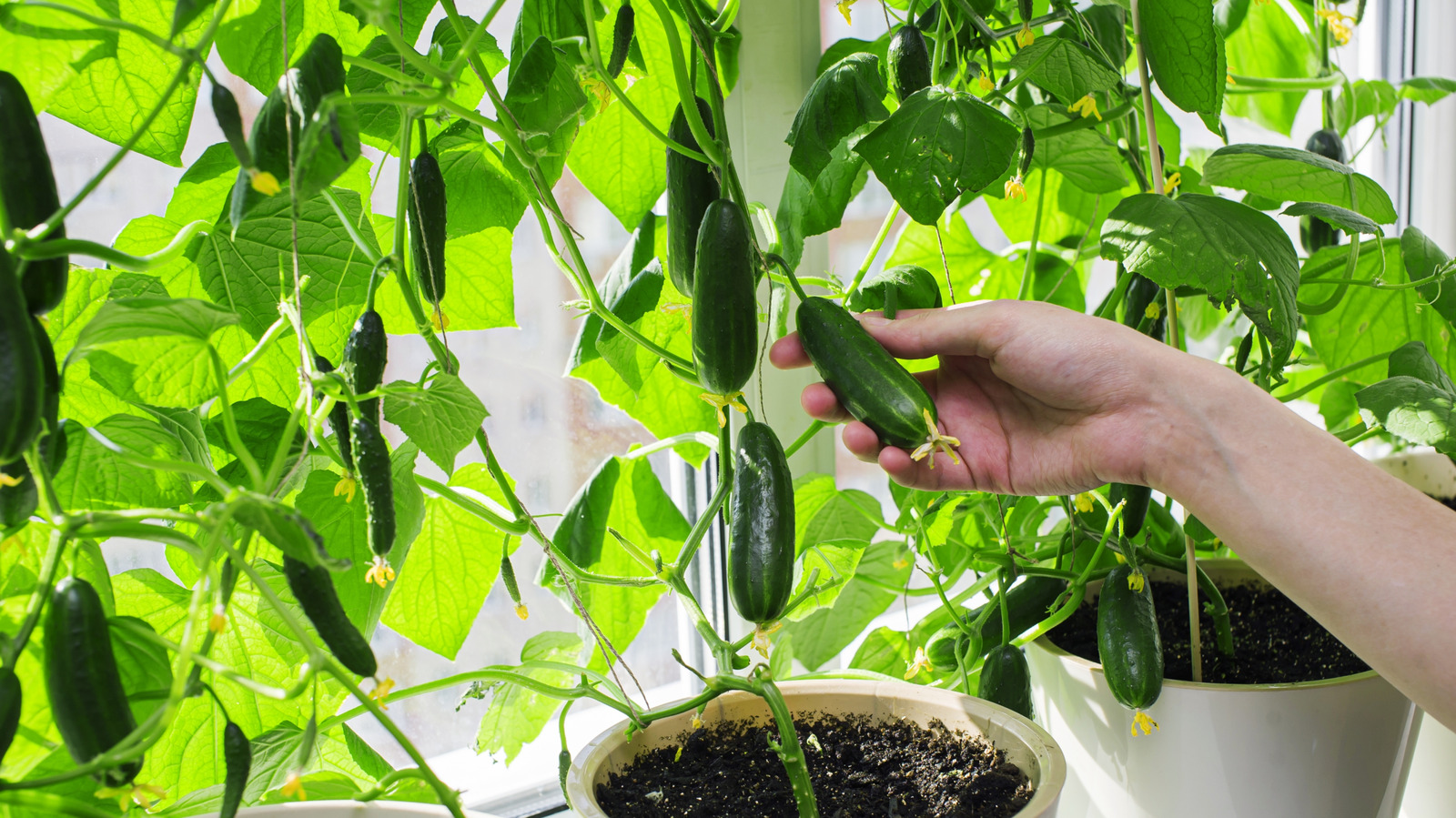
During this phase, the plant accelerates its growth. Vines begin to stretch, supported by tendrils that grasp onto nearby trellises, fences, or stakes. The plant invests heavily in foliage, developing broad green leaves designed to capture maximum sunlight for photosynthesis. Gardeners must provide adequate water, nitrogen-rich soil amendments, and structural support during this period to ensure the vines remain healthy and upright.
Phase 3: Flowering and Pollination (Days 40 to 60)
Cucumbers produce distinct male and female flowers on the same plant. The early flowers are typically all male, serving to attract pollinators like bees and butterflies to the garden. Shortly thereafter, female flowers appear, easily identifiable by a tiny, miniature cucumber visible at the base of the petals. Successful pollination—facilitated by insects or hand-pollination in greenhouse settings—is vital for fruit set. Unpollinated female flowers will simply wither and drop off the vine.
Phase 4: Fruiting and Multiple Harvests (Days 50 to 90+)
Once pollinated, the tiny ovary at the base of the female flower swells rapidly, transforming into a full-sized cucumber within just a few days. Depending on the variety, harvest readiness is achieved around days 50 to 70. Because the plant is an annual programmed to reproduce before dying, regular harvesting signals the plant to continue producing more fruit. As the season progresses past the 90-day mark, the vine’s productivity naturally wanes, leaves begin to yellow, and the plant completes its life cycle.
Supporting Data: Environmental Variables and Cultivation Metrics
While the baseline lifespan of a cucumber plant is two to three months, numerous environmental variables can extend or truncate this window. Mastery of these metrics dictates the success of any home garden.
- Temperature Thresholds: Cucumbers are exceptionally sensitive to thermal extremes. Temperatures dipping below 65°F (18°C) can severely stunt growth, shock the root system, or kill the plant outright. Conversely, prolonged heatwaves exceeding 95°F (35°C) cause blossom drop, reduce pollination rates, and accelerate plant exhaustion.
- Water Requirements: As a fruit composed of roughly 95% water, cucumber plants demand consistent moisture. They require approximately 1 inch of water per week, increasing during peak summer months. Irregular watering leads to shallow root systems and bitter-tasting fruit.
- Sunlight Exposure: Cucumbers are full-sun plants. They require a minimum of 6 to 8 hours of direct sunlight daily to fuel the heavy energy demands of flowering and fruiting.
- Soil Composition: Optimal soil pH ranges between 6.0 and 6.8. Well-draining, nutrient-rich loam amended with organic compost provides the ideal structural environment for root expansion.
Horticultural Best Practices: Ensuring Your Cucumber Plants Thrive
To extract the maximum possible lifespan and yield from your cucumber plants, adherence to proven gardening practices is essential.
1. Implement a Rigorous Harvesting Schedule
One of the most common mistakes made by novice gardeners is leaving cucumbers on the vine too long. Slicing varieties should generally be harvested when they reach 6 to 7 inches in length, while pickling varieties should be picked even smaller (around 3 to 4 inches).
- Why it matters: Leaving fruit on the vine signals to the plant that its evolutionary mission—producing seeds for the next generation—has been accomplished. This triggers senescence, causing the plant to shut down flower production and die prematurely. Regular harvesting tricks the plant into continuous production.
2. Disease Prevention and Management
Cucumbers are vulnerable to several fungal pathogens, most notably powdery mildew and Alternaria leaf blight.
- Pruning for Airflow: Thinning out dense foliage and clipping away early signs of diseased or yellowing leaves prevents fungal spores from propagating across the canopy.
- Fungicides: Applying organic or copper-based fungicides proactively during humid weather can safeguard the plant’s health and preserve its productive lifespan.
3. Temperature Regulation
Because temperature fluctuations heavily impact the health of annuals, utilizing row covers during unexpected late-spring cold snaps and providing afternoon shade cloths during blistering summer heatwaves can protect delicate vines from thermal shock.
Implications: The Broader Impact of Home Gardening and Sustainable Food Practices
The growing popularity of cultivating cucumbers at home carries significant implications for modern consumer habits, sustainability, and food security.
Economic and Environmental Impacts
As global supply chain vulnerabilities and inflation impact the cost of fresh produce, home vegetable and fruit gardening has transitioned from a nostalgic hobby to an economically savvy practice. Growing high-yield crops like cucumbers reduces household grocery expenditures and cuts down on the carbon footprint associated with commercial agricultural transport, refrigeration, and plastic packaging.
Nutritional and Culinary Benefits
Harvesting cucumbers at peak ripeness ensures optimal nutritional value. Cucumbers are rich in hydration, vitamins K and C, magnesium, and potassium, while remaining exceptionally low in calories. Furthermore, engaging in home gardening fosters a deeper appreciation for seasonal eating. Gardeners learn to utilize bumper crops through creative culinary applications—ranging from traditional refrigerator pickles and gazpacho to refreshing infused waters and salads—thereby reducing household food waste.
Ultimately, understanding the humble cucumber plant—from its rapid 90-day lifecycle to its specific environmental needs—empowers individuals to cultivate healthier gardens, foster sustainable habits, and enjoy the unmatched satisfaction of farm-to-table dining right from their own backyards.
 Iffa Jayyana
  Lina Hope
  Ali Ikhwan