
 By Raul Delapena Setiawan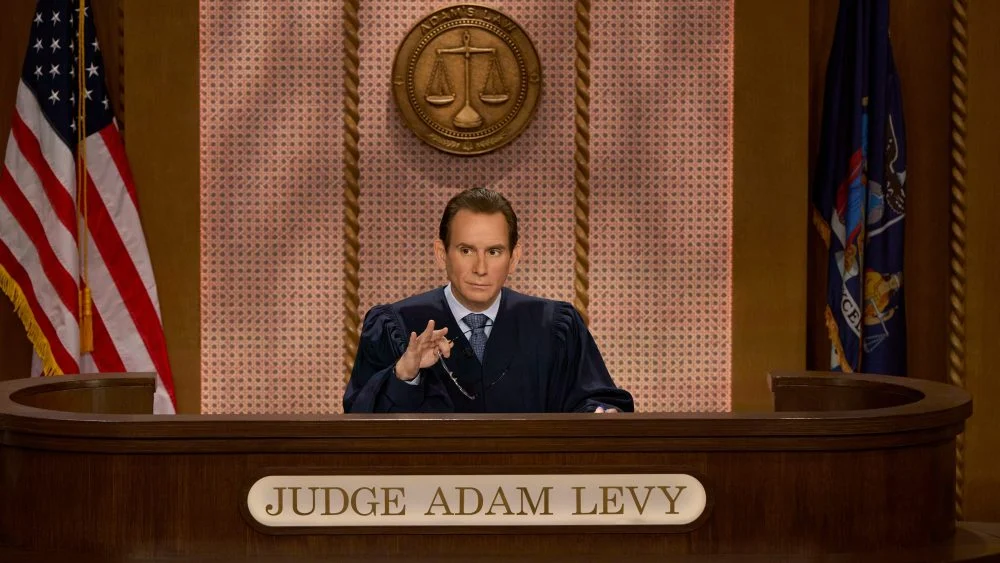
"Don’t lie and don’t cry." It is a directive as blunt as a gavel strike, and after just one week on the air, it has become the unofficial mantra of Adam’s Law. As the syndicated landscape shifts, CBS is placing a significant bet on the longevity of the court-show genre by introducing a fresh, yet remarkably seasoned face to the bench. Judge Adam Levy, a man whose professional pedigree is etched in the hard-nosed reality of the American legal system, is stepping into the spotlight with a mandate to modernize a format that has long been dominated by the towering legacy of his mother, Judith Sheindlin—the icon known to millions simply as Judge Judy.
The Foundation: A Career Forged in the Courtroom
Judge Adam Levy, 57, does not arrive at his Stamford, Connecticut studio as a novice looking for a television break. His resume reads like a roadmap of the American justice system. Before he ever stepped onto a set, Levy spent years as a prosecutor and District Attorney for New York’s Putnam County, where he earned a reputation as a no-nonsense litigator who favored evidence over theatricality. His tenure in private practice further sharpened his ability to dissect complex disputes, from contentious landlord-tenant battles to intricate employment and business litigation.
Levy’s transition to television was preceded by his stint on the Amazon Prime Video series Tribunal Justice, where he tested his ability to command a courtroom in front of a digital-first audience. However, Adam’s Law represents a distinct evolution. It is a daily, syndicated platform that demands not only legal acumen but the charisma to anchor a Monday-through-Friday broadcast.
A Legacy of Law: The Sheindlin Influence
It is impossible to discuss Adam’s Law without acknowledging the elephant in the room: the "nepo baby" discourse. Levy is the son of Judith Sheindlin, the most recognizable jurist in television history. His stepfather, Jerry Sheindlin, is a titan in his own right, having served with distinction as a lawyer and a judge on the iconic The People’s Court between 1999 and 2001.
For some, the pedigree might be an anchor; for Levy, it is merely a fact of life. He remains undaunted by the inevitable comparisons. "Despite all of the naysayers who will cast aspersions simply because I am the son of a famous person, it doesn’t bother me," Levy told Variety. "I’ve tried many cases. I know I was good at it. I have the skill set to do this job. I haven’t put in place these unrealistic expectations for myself, like becoming more famous or better than Judy was—ever. We’re different."
Levy views his mother’s shadow not as a cage, but as a blueprint for professional excellence. As Sheindlin pivots toward her role as an executive producer—effectively handing over the gavel while continuing to shape the genre behind the scenes—Levy is positioned to carry the torch of "common-sense law" into a new generation.
Methodology: The "Adam’s Law" Approach
If Judge Judy was defined by a spontaneous, "surprised" reaction to evidence to ensure authenticity, Adam’s Law represents a pivot toward rigorous academic preparation. Levy’s process is deliberate and exhaustive. He spends days in deep-dive research before a single camera rolls, analyzing the nuances of the disputes, the history of the litigants, and the evidentiary trail presented by both sides.
"No other court shows do that," Levy notes. "That was my requirement if I was going to do this type of a show, where the litigants were waiving their right to proceed in small-claims court in order to have me adjudicate the case. I had to make sure that my adjudication was based upon facts."
This commitment to preparation manifests in the show’s structure. Each episode is effectively a "mini-trial." The workflow is meticulous:
- Opening Statement: Levy lays out the core of the dispute for the viewer.
- Direct Examination: A structured Q&A session designed to extract the truth.
- Cross-Examination: A sharp, aggressive testing of claims against independent evidence.
- Verdict: A summary of findings and a final, binding decision.
By filming between five and eight cases a day, totaling nearly 20 per week, the show moves at a brisk pace, yet the depth of the adjudication remains the central pillar of the production.
The Philosophy of Truth: No Feelings, Only Facts
The hallmark of Adam’s Law is a refreshing, albeit harsh, detachment from emotional manipulation. Levy is famously unmoved by displays of distress, viewing them as secondary to the objective reality of the law.
"You were stupid enough to sue her for it," Levy remarked during a recent taping, addressing a plaintiff whose case involving CashApp payments for alleged sexual favors fell apart under scrutiny. It is this brand of candor that defines his courtroom presence.
Levy believes that the modern litigant—and the modern television audience—is suffering from a lack of legal literacy. He views the show as an educational tool. "The audience will have an opportunity watching Adam’s Law to see how cases really should be tried," he says. "My decisions are based upon facts, not feelings."
This philosophy was forged in the crucibles of New York City in the 1980s and 90s, an era that demanded quick character assessment and logical survival skills. "You had to size people up relatively quickly to know that if you were in danger or not," he recalls. "I found that law was a perfect place for me."
Official Perspectives and Industry Implications
The debut of Adam’s Law coincides with a major moment for CBS. The network is simultaneously airing a special titled Judge Judy: Unfiltered, Unforgettable, marking a transition period where the network honors the past while aggressively building the future.
The industry implications are significant. As streaming services continue to erode traditional broadcast viewership, the "daytime court show" remains a durable, high-volume staple. By bringing a practitioner with Levy’s specific background—one who prioritizes forensic evidence over the "personality-first" reality TV model—CBS is betting that viewers are hungry for a more grounded, intellectually rigorous form of entertainment.
For the participants, the stakes are high. Levy’s advice is straightforward: "The dos are: Be prepared, get your evidence together to help the court make a decision in your favor. The don’ts are: come in unprepared, exaggerate your claim, and most certainly: don’t lie."
The Future: A Legacy Reimagined
As the inaugural season of Adam’s Law progresses, the question remains whether the audience will embrace a judge who prides himself on being "immune" to tears. In an era often accused of being overly sensitive, Levy’s cold, analytical approach offers a stark contrast to the emotional volatility typical of the genre.
He acknowledges that his style is not for everyone, but he remains steadfast in his commitment to the courtroom’s sanctity. For Levy, it is not about winning popularity contests or chasing the fame that defined his mother’s career. It is about the pursuit of truth. If he can bring a measure of clarity to the messy, often illogical disputes of ordinary people, he will have succeeded.
"I don’t have emotions when it comes to trying cases," he states plainly. In a landscape that often prioritizes the spectacle of the fight, Judge Adam Levy is betting that the audience is ready for something a bit more cerebral: a trial where the evidence, not the performance, earns the final word.
Adam’s Law currently airs on weekdays in national syndication. Viewers are encouraged to check their local listings for exact broadcast times, as the show continues to establish its footprint in the competitive world of daytime television.
 Dwi Wanna
  Siti Muinah
  Azzam Bilal Chamdy