In the fast-paced landscape of digital marketing, where US social ad spending is projected to surpass $121 billion, the margin for error has shrunk to nearly zero. Enterprise marketing teams, fast-growing agencies, and brands managing multi-platform campaigns are finding themselves drowning in a sea of fragmented metrics. The solution? Centralization.
A modern social media dashboard has evolved from a simple data-viz novelty into an indispensable command center. By pulling real-time performance indicators from Instagram, LinkedIn, Facebook, TikTok, and X into a single interface, these tools allow organizations to track, analyze, and report on campaigns without the exhausting ritual of logging into multiple native apps individually.
The Main Facts: What is a Social Media Dashboard?
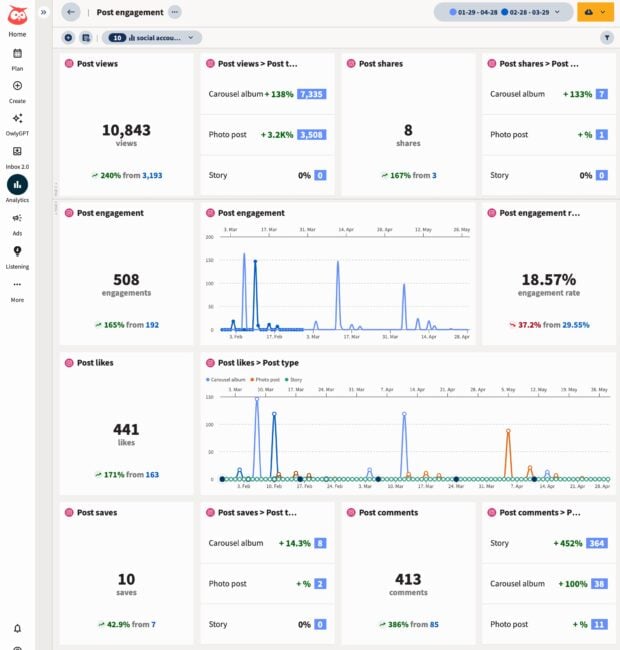
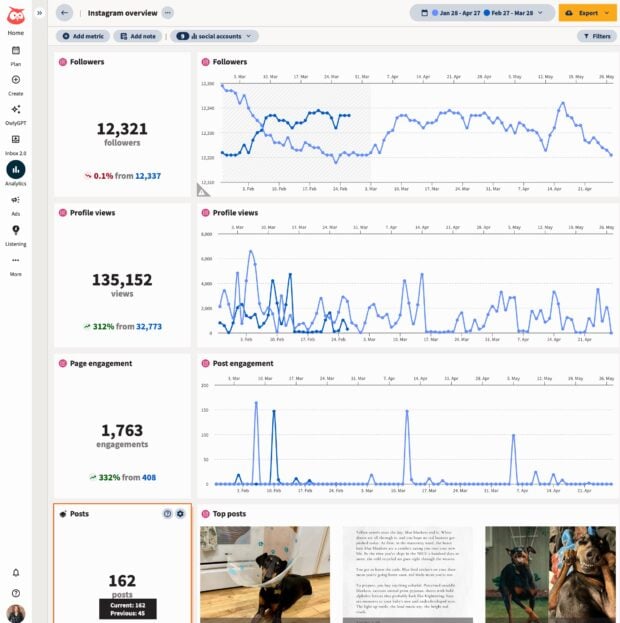
At its core, a social media dashboard is a unified software interface designed to aggregate performance metrics from all of a brand’s social accounts. Rather than treating networks as isolated silos, a dashboard consolidates data to provide a comprehensive view of what is working, what is failing, and how social efforts tie directly into broader business objectives.
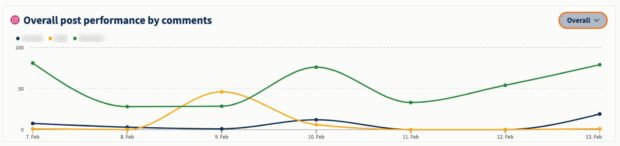
Most contemporary dashboards feature real-time or near-real-time data streams, customizable charts, graphs, and tables, and robust filtering options by platform, campaign, date range, or specific metric.
While free, entry-level solutions like Google Looker Studio offer a blank canvas for custom setups, fully integrated systems like Hootsuite Social OS combine scheduling, publishing, AI-powered insights, and cross-platform analytics under one roof.
The Four Pillars of Dashboard Architecture
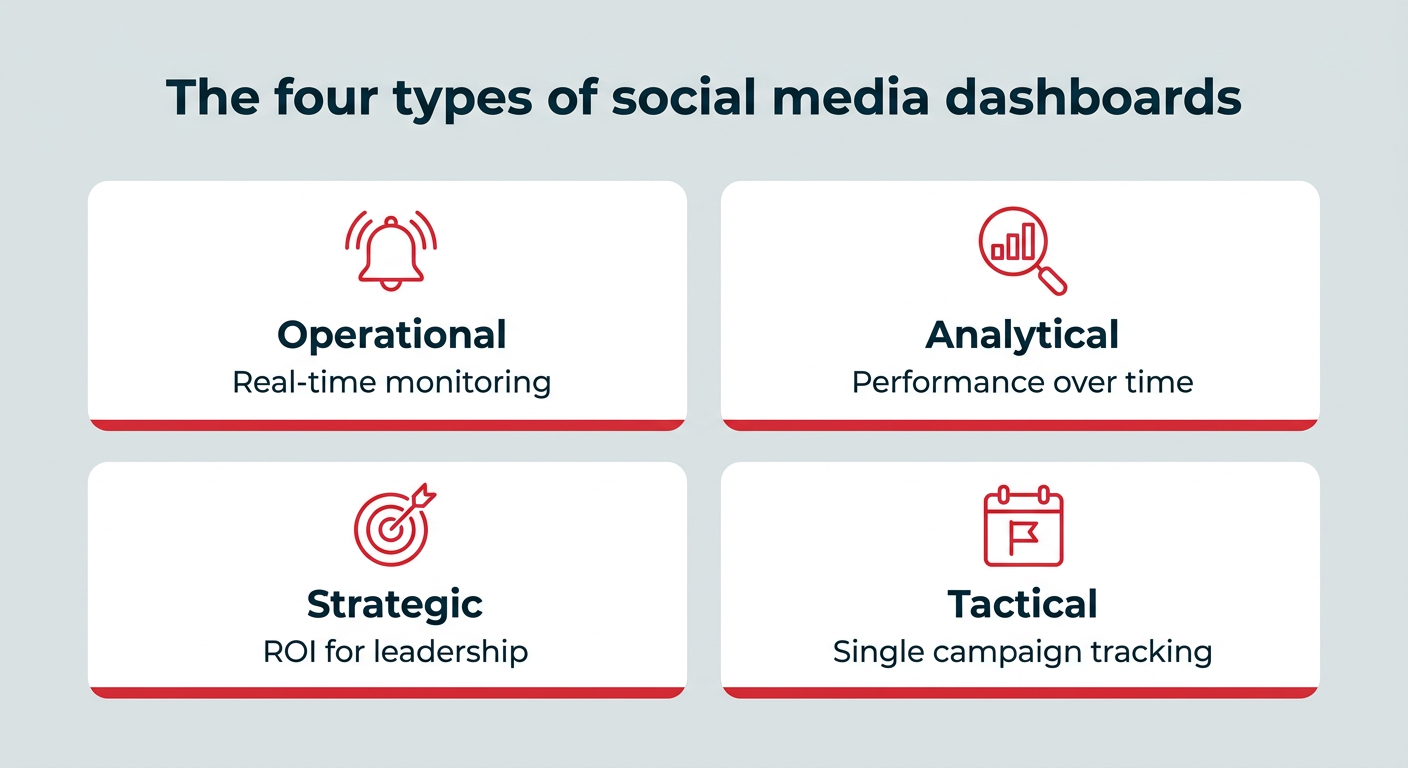
To avoid the common trap of metric clutter—cramming every available data point into a single screen—industry experts categorize dashboards into four distinct operational buckets:
Operational Dashboards: Designed for community managers, customer care teams, and social coordinators to monitor real-time activity, incoming mentions, and response needs.
Analytical Dashboards: Built for social media managers and data analysts to deep-dive into content and audience performance over extended timelines.
Strategic Dashboards: Tailored for Chief Marketing Officers (CMOs), VPs, and directors to report high-level Return on Investment (ROI) and progress against core corporate goals.
Tactical Dashboards: Focused on campaign managers and paid social specialists who need to track a specific campaign from its initial launch to its final wrap-up.
Chronology and Evolution: From Native Silos to Unified Social OS
The necessity for unified reporting tools has developed in lockstep with the maturation of social media marketing itself.
Phase 1 (The Siloed Era): In the early days of brand-consumer social interaction, marketers relied exclusively on native analytics tools provided by individual platforms. Compiling a monthly report meant manually pulling CSVs from Facebook, Twitter, and early-stage LinkedIn, consuming hours of valuable strategy time.
Phase 2 (The Rise of BI Tools): As budgets expanded, data-driven teams began utilizing business intelligence (BI) tools and custom-built spreadsheets—such as Google Looker Studio—to stitch multi-channel data together manually. While effective for budget-conscious organizations, these setups required continuous manual maintenance and broke frequently as platform APIs evolved.
Phase 3 (The Integrated Social OS): Today, the industry has shifted toward connected ecosystems. Modern enterprise platforms integrate publishing, social listening, customer care, and advanced analytics into a single dashboard. Instead of merely reporting on past performance, today’s dashboards leverage AI to surface anomalies, predict trends, and connect social behavior directly to customer relationship management (CRM) systems.
Supporting Data and Metrics That Matter
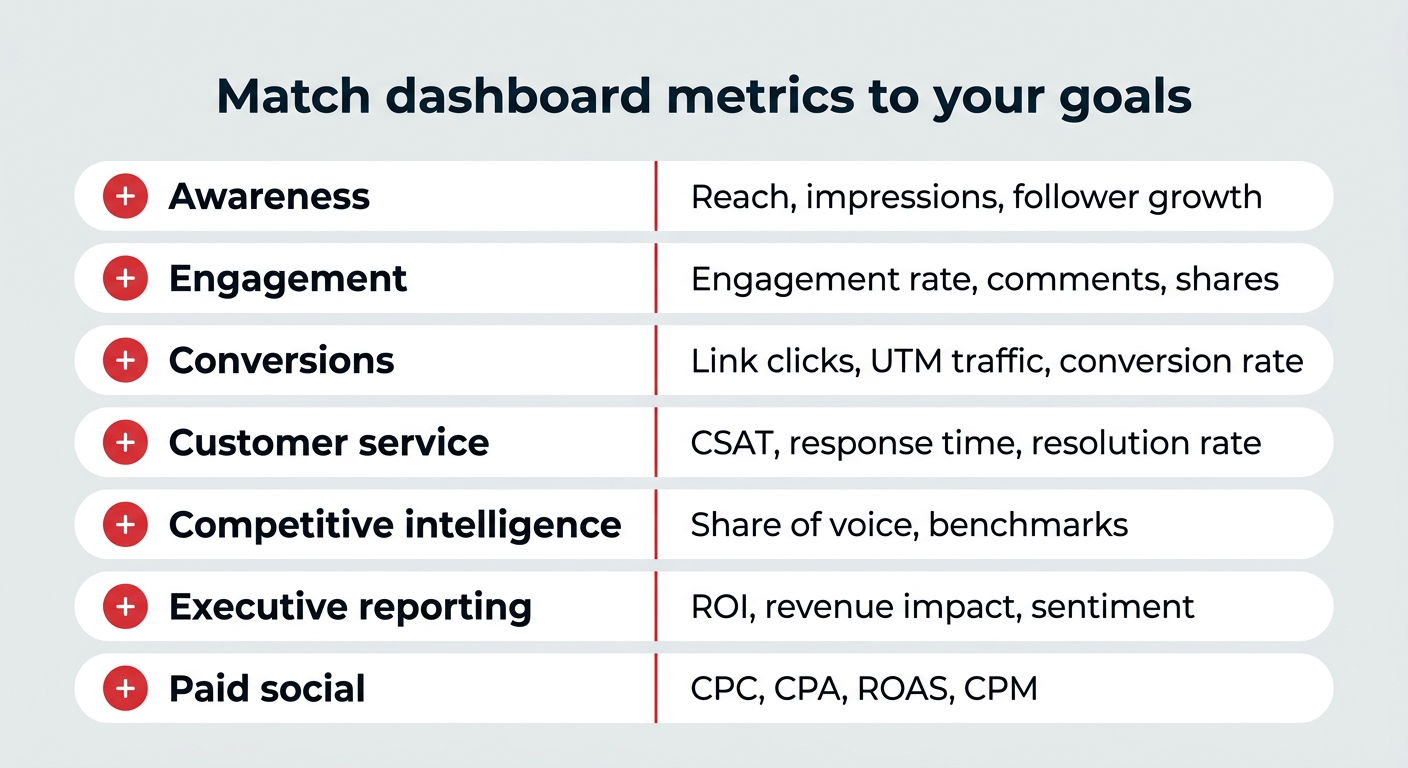
Tracking everything leads to dashboard noise; tracking the right metrics leads to profitability. Establishing clear alignment between overarching business goals and dashboard metrics is essential for modern marketing success.
Goal
Key Metrics to Track
Recommended Dashboard Type
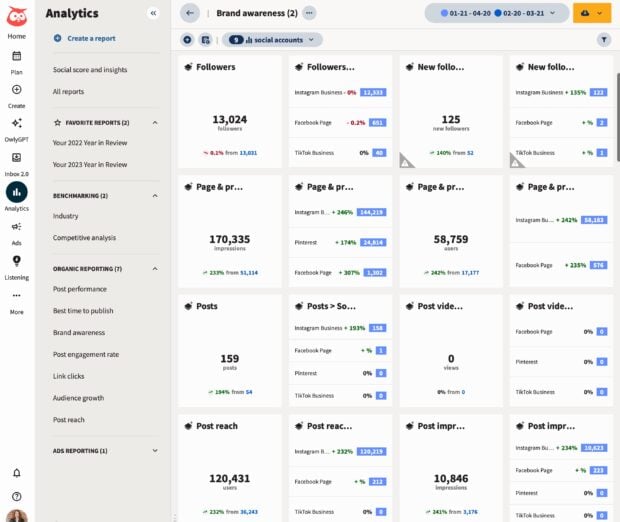
Awareness
Reach, impressions, follower growth
Brand Awareness Dashboard
Engagement
Engagement rate, likes, comments, shares, saves
Content & Engagement Dashboard
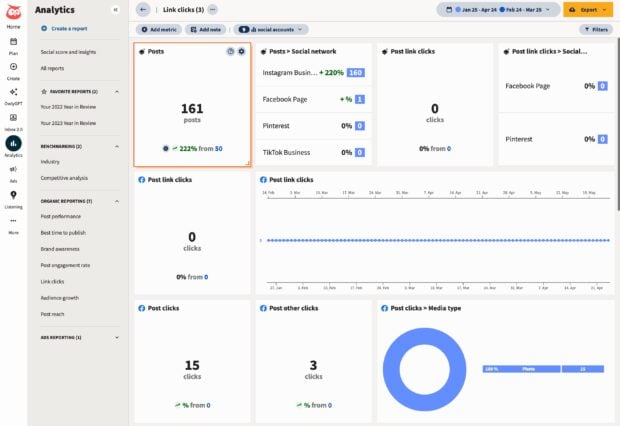
Conversions
Link clicks, UTM-tracked traffic, conversion rate
Conversions & Traffic Dashboard
Customer Service
CSAT score, response time, resolution rate
Social Customer Service Dashboard
Competitive Intel
Share of voice, competitor engagement benchmarks
Competitive Analysis Dashboard
Executive Reporting
ROI, revenue impact, goal progress, sentiment
Executive Summary Dashboard
Paid Social
CPC, CPA, ROAS, CPM
Advertising & Paid Social Dashboard
Proving Social ROI in a Flat Budget Climate
One of the most persistent hurdles for modern social teams is bridging the gap between social engagement and hard revenue metrics. According to recent Gartner research, marketing budgets have flatlined at roughly 7.8% of overall company revenue, with 59% of CMOs reporting insufficient resources to execute their full strategies.
In this climate, dashboards serve as a vital defensive and offensive tool. By presenting performance data in context with historical trendlines rather than isolated monthly snapshots, social leaders can vividly demonstrate revenue impact, lead generation, and brand health.
Furthermore, with marketing leaders allocating over 15% of their budgets toward AI initiatives, the ability to utilize AI-driven insights within dashboards to pinpoint optimal content formats has never been more critical.
Official Industry Responses and Strategic Perspectives
Industry leaders emphasize that dashboards must be customized to fit specific organizational stakeholders rather than serving a one-size-fits-all purpose.
Trish Riswick, Social Media Lead at Hootsuite, underscores the importance of granular categorization in analytics:
"We tag our posts according to which of our three pillars they belong to, then pull analytics reports for each of those tags. That allows us to track performance by pillar and goal, as well as all the overall, built-in reports."
Meanwhile, analysts note that the rise of social customer service has turned dashboards into frontline operational tools. With 81% of consumers demanding faster service as digital technologies advance, tools that consolidate customer inquiries—such as Hootsuite’s Nest app—ensure that brand reputation is protected in real time. Failure to monitor these channels adequately risks severe customer experience (CX) degradation, particularly when poorly implemented AI self-service tools frustrate users.
Implications for Enterprises and Agencies
The choice of dashboard infrastructure carries profound implications for organizational efficiency, cross-departmental alignment, and bottom-line profitability.
1. Time Reclamation
Manual data compilation steals hours from strategic execution. Automated dashboards free up teams to focus on creative ideation, campaign optimization, and community building rather than data entry.
2. Agility in Decision-Making
When market trends shift overnight, waiting until the end of the month to review metrics is a recipe for irrelevance. Real-time dashboards allow brands to pivot active campaigns mid-flight, capitalizing on viral moments or mitigating PR risks instantly.
3. Justifying Increased Investment
As global social media ad spending races toward a projected $530 billion by 2030, leadership demands transparent accountability. Dashboards equipped with side-by-side organic and paid performance tracking provide the clear-cut proof required to secure future budget allocations.
Choosing the Right Dashboard Tool
Organizations generally face two paths when establishing a dashboard ecosystem: deploying a fully integrated enterprise suite like Hootsuite Social OS for seamless publishing, listening, and analytics, or opting for a free, custom-configured BI solution like Google Looker Studio.
For agencies and specialized analysts managing multi-client accounts at scale, alternatives such as DashThis, Whatagraph, Databox, and Klipfolio offer specialized reporting, automated white-labeled delivery, and deep visualization controls.
When evaluating potential solutions, teams should apply a strict set of evaluation criteria:
Data Integration Depth: Does the tool connect seamlessly to all active social networks and third-party data sources (like GA4 and CRMs)?
Customization and Filtering: Can views be tailored easily for different stakeholder tiers (executives vs. tactical managers)?
Real-Time Capabilities: Is data updated automatically, or does it require manual intervention?
Actionability: Does the dashboard merely display numbers, or does it offer AI-driven insights and workflow execution capabilities?
Conclusion
Ultimately, the right social media dashboard turns raw, overwhelming data into an actionable narrative. Whether you choose the zero-cost route of manual spreadsheet building or invest in a robust, all-in-one social operating system, your dashboard must speak the universal language of leadership: clear context, measurable growth, and undeniable business ROI.

 By Siti Muinah





 Basiran
 Nana Muazin
 Nila Kartika Wati
