Twenty-five years after its debut, the opening sequence of FinalFantasy X remains one of the most daring and disruptive moments in interactive entertainment. For a franchise built on the back of whimsical synth-orchestrations and classical themes, the sudden intrusion of roaring guitars and raw, screamed vocals was more than a surprise—it was a revolution. At the center of this sonic pivot was Bill Muir, a straight-edge hardcore singer living in Tokyo, who lent his voice to "Otherworld," a track that would challenge the boundaries of what video game music could be.
As the landmark RPG celebrates its 25th anniversary, the legacy of "Otherworld" continues to resonate across digital culture, streaming platforms, and the broader gaming landscape, proving that its uncompromising spirit is as potent today as it was in 2001.
1. Main Facts: The Paradigm Shift of Spira
When players booted up Final Fantasy X on the PlayStation 2, they were initially greeted by the gentle, melancholic piano chords of "To Zanarkand." It was familiar territory for fans of composer Nobuo Uematsu. However, within minutes, this tranquility was shattered.
As the cinematic cutscene transitions to a futuristic, neon-drenched metropolis, the protagonist, Tidus, takes the field for a high-stakes game of blitzball. Suddenly, "Otherworld" explodes through the speakers. Driven by pounding industrial-metal riffs and the ferocious, guttural vocals of Bill Muir, the song accompanies a sequence of utter devastation as a colossal, god-like entity known as "Sin" obliterates the city.
The main facts of this historic musical release include:
The Vocalist: Bill Muir, then-frontman of the Tokyo-based straight-edge hardcore punk band xtillidiex (pronounced "Till I Die"), was unexpectedly hired to provide the track’s vocals.
The Composers: The track was composed by legendary series composer Nobuo Uematsu, with English lyrics penned by translator and writer Alexander O. Smith.
The Technical Leap:Final Fantasy X was the first game in the series to utilize the PlayStation 2’s advanced audio capabilities, which supported 48 audio channels (double that of the PlayStation 1), allowing for live vocals and uncompressed instrumental tracks.
The Anniversary Release: To mark the 25th anniversary of the game’s Japanese release (July 19, 2001), Square Enix is releasing a remastered version of Final Fantasy X and its sequel Final Fantasy X-2 for the Nintendo Switch 2 on July 23, 2026.
2. Chronology: From a Tokyo Restaurant to RPG History
The journey of "Otherworld" from an underground punk demo to a multi-million-selling video game soundtrack is a story of chance, cultural collision, and creative stubbornness.
1999–2000: The 200-Yen Demo Tape
Around the turn of the millennium, Bill Muir was living in Tokyo, deeply embedded in the local hardcore punk scene. While hanging out at a local Japanese restaurant with his bandmates, Muir was introduced to Alexander O. Smith through a mutual friend. Smith, who was working as a translator for Square, expressed interest in hearing Muir’s band, xtillidiex.
In a move Muir now recalls with amusement, he charged Smith 200 yen (roughly two dollars) for a copy of their cassette demo tape. "If I had really put together how important this would be in my life, I would have given him the tape," Muir recalled in an interview. "Instead, I charged him."
Late 2000: The Audition and the Rejection of Rap
A few months later, Smith contacted Muir, inviting him to the Square Enix headquarters. Muir arrived for the formal corporate meeting carrying his skateboard, dressed in a band T-shirt and ripped jeans.
During the meeting, Square’s production team played a basic keyboard demo of "Otherworld." Because of the song’s aggressive rhythm, they asked Muir if he would be willing to rap over the track. Muir immediately declined, stating that hip-hop was not his style. Instead, he offered a different proposition: "I’m good to go for screaming, yelling, and maybe some angry muttering, and growling." Surprisingly, the developers accepted.
2001: The Recording and the Ringtone Revelation
Muir was brought to a basement studio in Tokyo to record the vocals. Working with Uematsu’s team, Muir was given immense creative freedom. The process was highly hands-off, allowing Muir to bring his raw punk energy to the mic. Near the end of the song, Muir sneaked in a subtle tribute to his band, shouting: "Straight edge / til I die / my lost cause, lost cause, lost cause in this world."
Final Fantasy X was released in Japan on July 19, 2001. A few months later, as Muir was preparing to leave Japan after a final show with xtillidiex, he heard "Otherworld" playing as a ringtone on someone’s phone in the crowd. It was his first real indication that the game—and his voice—had become a cultural phenomenon.
The Mid-2000s: The Limewire Mythos
In the years following the game’s international release, "Otherworld" became the subject of widespread internet rumors. In the pre-Shazam era of peer-to-peer file-sharing networks like Limewire, the track was frequently mislabeled. Millions of gamers downloaded the song believing it was performed by the German industrial metal band Rammstein or Uematsu’s own rock side-project, The Black Mages (which was not formed until 2002).
2014–2026: Remasters and the 25th Anniversary
In 2014, Square Enix released Final Fantasy X/X-2 HD Remaster, introducing the game and its groundbreaking soundtrack to a new generation. By July 2026, the game’s legacy remains secure, culminating in the upcoming release of the remaster on the Nintendo Switch 2.
3. Supporting Data: The Quantitative Impact of a Classic
The commercial and critical success of Final Fantasy X is heavily tied to its presentation, with "Otherworld" serving as its primary stylistic thesis. The enduring popularity of the game and its soundtrack is reflected in key industry metrics:
Metric
Figure
Source / Context
Combined Franchise Sales
20 Million+ units
Lifetime sales of FFX and FFX-2 (Square Enix)
"Otherworld" Spotify Streams
~9 Million
Cumulative streams as of July 2026
Remastered Opening Views
1.5 Million
YouTube views of the 2014 cinematic sequence
Audio Channel Capacity
48 Channels
PlayStation 2 hardware (vs. 24 channels on PS1)
Beyond streaming metrics, the song continues to thrive via user-generated content. On platforms like TikTok and YouTube, musicians regularly upload drum, guitar, and piano covers of "Otherworld," keeping the 25-year-old track active in modern social media algorithms.
4. Official Responses and Creative Perspectives
The longevity of "Otherworld" lies in the creative alignment of its authors, who viewed the song as a necessary departure from the established rules of the JRPG genre.
Nobuo Uematsu’s "Rebellion"
For Nobuo Uematsu, "Otherworld" was a deeply personal triumph. Often pigeonholed as a classical or orchestral composer due to his iconic work on early Final Fantasy titles, Uematsu had long harbored a passion for progressive rock and heavy metal.
In a 2011 interview with RPGamer, Uematsu joked that while the broader Final Fantasy brand did not entirely represent his personal musical tastes, "Otherworld" absolutely did. He explained that the technological jump to the PlayStation 2 finally gave him the bandwidth to express rock music in its truest, most uncompressed form.
Bill Muir: From Punk Frontman to "Sergeant Vegan"
Today, Bill Muir leads a life far removed from the smoky basement venues of Tokyo’s punk scene, yet his commitment to his principles remains unchanged. Muir works as a registered nurse caring for military veterans and has built a prominent online platform as "Sergeant Vegan," advocating for physical fitness, nutrition, and animal rights.
Reflecting on his contribution to Final Fantasy X, Muir expresses immense gratitude:
"Seeing those visuals and the story and the music, it was like nothing else that was on the market at the time… To be a part of something that big, it just feels really, really good."
Critical Analysis from Creators
Digital creators within the RPG community emphasize how the song’s genre choice served the game’s narrative. The Night Sky Prince, a prominent Final Fantasy content creator, notes that the aggressive nature of metal was a perfect thematic fit:
"I feel like that genre choice is very interesting, in part because it can kind of represent rebellion, which I feel represents the dynamic of Tidus and Jecht’s relationship quite a lot too."
5. Implications: Redefining the JRPG Landscape
The legacy of "Otherworld" extends far beyond nostalgia; it fundamentally altered how developers approached video game music and narrative framing.
The Deconstruction of the JRPG Hero
Historically, JRPGs of the 1990s began with whimsical, high-fantasy openings designed to evoke a sense of wonder. Final Fantasy X shattered this expectation. By utilizing an aggressive, abrasive soundtrack during the opening sequence, the game signaled that Spira was a world defined by trauma, anxiety, and existential dread. It prepared players for a story that would openly tackle heavy themes such as religious corruption, generational grief, and systemic cycle-of-violence dynamics.
The Full-Circle Narrative Bookend
"Otherworld" is not merely an opening hype-track; it is a vital narrative device. The song makes its second and final appearance during the game’s climax, playing during the battle against Braska’s Final Aeon—who is revealed to be Tidus’ estranged father, Jecht.
By reprising the song in this context, the developers transformed a track associated with youthful, chaotic energy into a tragic battle hymn. It represents the cyclical nature of the conflict between father and son, bringing the narrative to a devastating, full-circle resolution.
Architectural Influence on Modern Soundtracks
The success of "Otherworld" paved the way for future experimental soundtracks within the Square Enix ecosystem and the broader gaming industry. The blending of heavy vocal tracks with orchestral arrangements became a staple of games like NieR: Automata, Final Fantasy XIII, and Final Fantasy XVI. By proving that players would embrace extreme vocal genres within a fantasy setting, Uematsu and Muir expanded the vocabulary of video game music forever.
Twenty-five years later, as players prepare to return to the world of Spira on modern hardware, "Otherworld" stands as a monument to a time when a corporate gaming giant took a chance on an underground punk singer—and made history in the process.

 By Asep Darmawan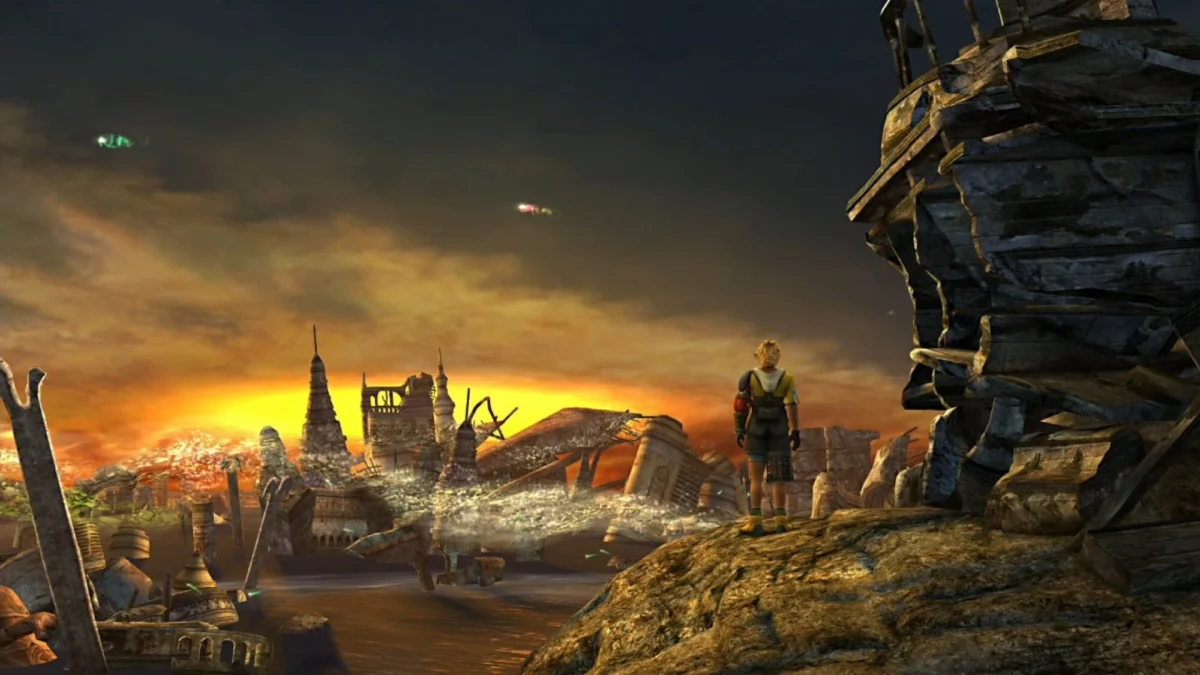


 Raul Delapena Setiawan
  Ali Ikhwan
  Evan Lee Salim