
 By Lina Hope
For four decades, the humble, plastic-bodied disposable camera has served as a cultural touchstone, bridging the gap between professional photography and the candid, ephemeral nature of memory-making. As Fujifilm’s legendary "QuickSnap" line celebrates its 40th anniversary, the company is not merely reflecting on its heritage but actively expanding the horizon of analog photography. With the launch of two new iterations—the QuickSnap Black and White and the QuickSnap Active—Fujifilm is leaning into the surging global interest in film, offering modern creators a tactile, filter-free alternative to the digital saturation of the smartphone era.
The Evolution of an Icon: A Brief Chronology
The story of the QuickSnap began in 1986, a time when the photographic landscape was dominated by complex 35mm SLRs and expensive film processing. Fujifilm’s introduction of the "one-time-use" camera was a revolutionary act of democratization. It removed the barrier to entry for casual users, allowing anyone to capture high-quality images without the need for technical expertise or an expensive hardware investment.
Throughout the 1990s and early 2000s, QuickSnap cameras became synonymous with weddings, summer vacations, and school trips. They were the primary tools for "disposable" storytelling—an irony not lost on the modern user, as these cameras paradoxically created some of the most enduring, cherished physical archives of a generation.

Despite the digital revolution of the mid-2000s, which nearly crippled the analog industry, the QuickSnap survived. In recent years, it has seen a dramatic resurgence, fueled by a younger generation of Gen Z and Millennial photographers who are rejecting the hyper-curated, algorithmic nature of social media in favor of the grain, unpredictability, and authenticity of analog film.
The New Vanguard: Black and White and Active
To celebrate the 40th anniversary, Fujifilm has introduced two distinct models designed to cater to both the artistic sensibilities and the adventurous spirits of today’s analog enthusiasts.
The QuickSnap Black and White: The Artistic Choice
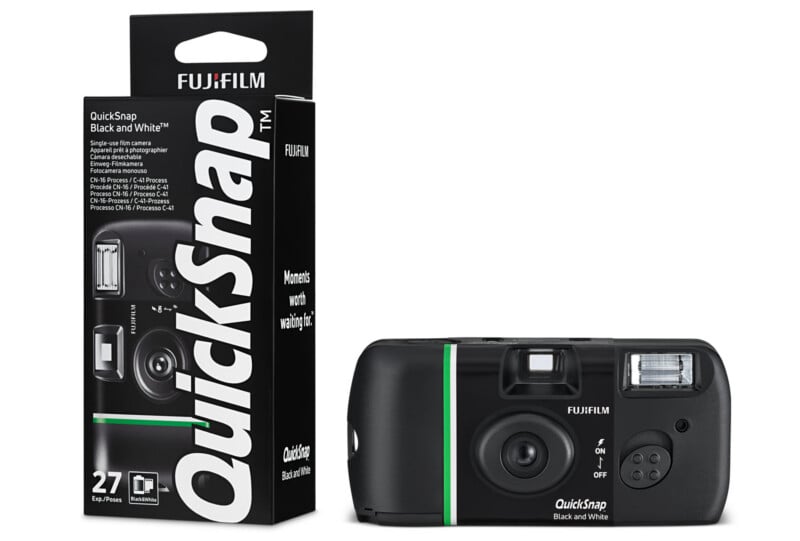
The new Black and White variant is a nod to the timeless aesthetic of monochromatic photography. Preloaded with a 27-shot roll of ISO 400 black-and-white negative film, the camera invites users to focus on light, shadow, and texture rather than color.

Technically, the camera mirrors the reliable performance of the classic color QuickSnap. It features a 32mm f/10 fixed-focus plastic lens, providing a sharp enough image for standard prints while retaining the characteristic "lo-fi" aesthetic that has become a stylistic choice for street photographers. With a fixed shutter speed of 1/140s and an integrated flash effective for subjects one to three meters away, it is a streamlined machine built for simplicity. It is an intentional tool, forcing the photographer to consider composition before the shutter click.
The QuickSnap Active: Built for the Elements
The QuickSnap Active replaces the outgoing waterproof model, positioning itself as a rugged, all-terrain companion. Designed for "unpredictable, all-weather, all-terrain adventures," this model is housed in a robust, protective casing that allows it to be submerged up to 35 feet (approximately 10 meters) below the surface.
Unlike its black-and-white sibling, the Active model is loaded with ISO 800 color negative film, providing the necessary sensitivity to capture vibrant images in the lower-light conditions often found underwater or in overcast environments. Fujifilm has notably omitted the flash on this model to maintain the integrity of the waterproof seal, emphasizing its role as a daylight and aquatic action camera. It includes a convenient wrist strap, acknowledging the active lifestyle of its target demographic.

Official Perspective: The Philosophy of Analog
Bing Liem, Division President of the Imaging Division at Fujifilm North America Corporation, views these new releases not just as consumer electronics, but as a response to the "digital fatigue" currently plaguing modern society.
"For 40 years, Fujifilm QuickSnap cameras have been trusted companions for people making images on the go," says Liem. "In the age of endless smartphone imagery, one-time use cameras have always offered something unique—intentionality."
Liem argues that the rise of the smartphone has created a landscape of constant digital distraction. The modern photographer is bombarded by notifications, alerts, and the pressure to share content instantly. "A dedicated device in your hand, solely used for image-making, is a departure from the constant beeping and buzzing of our electronic devices," he notes. "QuickSnap reminds us to take a breath, be authentic, and capture a raw moment, filter-free."
By releasing these two specific variants, Fujifilm is signaling a bifurcated strategy: providing an "artistic flair" for those who want to explore the nuances of monochrome, and "go-anywhere capability" for those who want to document their lives without worrying about the fragility of their gear.
Implications for the Industry
The decision to invest in new film camera hardware in 2026 speaks volumes about the current state of the photography market.
The Persistence of Analog
The continued success of the QuickSnap series suggests that analog photography is no longer a "trend" or a fleeting nostalgia trip. It has matured into a permanent, albeit niche, segment of the photography industry. Fujifilm’s move serves as a validation that manufacturers still see value in physical film, despite the manufacturing complexity compared to digital sensors.

The Market Gap
There is a clear market gap between the professional-grade analog cameras (which are often prohibitively expensive or complex) and the high-end digital mirrorless cameras. By pricing the Black and White model at $22.90 and the Active model at $24.75 in the U.S., Fujifilm keeps the barrier to entry low. These cameras act as an "on-ramp" for new photographers to experience the satisfaction of developing film.
Sustainability Concerns
While the term "disposable" has been the industry standard for 40 years, it has drawn scrutiny in an era of heightened environmental awareness. Fujifilm has historically operated recycling programs for these cameras, where the plastic shells are recovered and reprocessed. As the company pushes these new models, the conversation around the lifecycle of these plastics will likely intensify. The success of the "Active" model, which encourages outdoor exploration, will likely be tied to how effectively Fujifilm communicates its commitment to environmental stewardship and the circular economy of its camera bodies.
Pricing and Availability
For those eager to get their hands on these anniversary editions, the rollout begins in early September.

- QuickSnap Black and White:
- United States: $22.90
- Canada: $34.99
- QuickSnap Active:
- United States: $24.75
- Canada: $36.99
These price points position the cameras as accessible lifestyle accessories—ideal for parties, trips, or as a creative gift for the aspiring photographer.
Conclusion: A Future in the Past
As the QuickSnap enters its fifth decade, it remains an anomaly in a tech-driven world. It is a product that thrives on its limitations—fixed focus, limited exposures, and the absence of a screen to "chimp" the results. Yet, in those limitations, Fujifilm has found a timeless appeal. By introducing the Black and White and Active models, the company is betting that people will always crave the tangible, the permanent, and the raw. In a digital world of infinite, ephemeral data, the QuickSnap offers the one thing money usually cannot buy in the tech sector: the ability to pause, look through a viewfinder, and capture a moment exactly as it was, with no undo button.
 Laily UPN
  Reynand Wu