
 By Neng Nana
Introduction and Main Facts
In the modern landscape of high-stakes entrepreneurship, the prevailing cultural narrative often glorifies venture-backed tech startups, Silicon Valley incubators, and software-as-a-service (SaaS) platforms that promise rapid scalability via lines of digital code. Yet, a quieter, far more lucrative class of wealth generation is unfolding in industries that most elite-degree holders wouldn’t touch with a ten-foot pole.
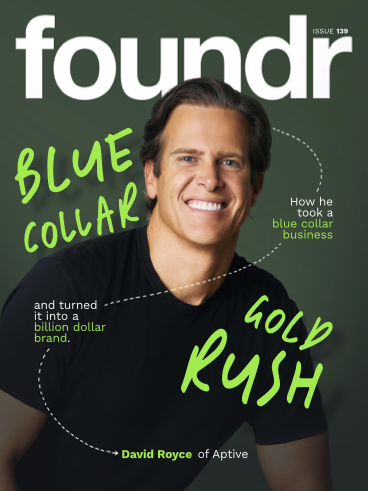
David Royce, the founder and chairman of Aptive Environmental—currently the third-largest residential pest control service provider in North America—stands as a prime example of this phenomenon. Royce’s journey defies conventional business orthodoxy. It is a masterclass in proving that monumental corporate success is rarely a function of picking the trendiest industry or leveraging an Ivy League pedigree. Instead, it is the result of a singular, grueling formula: a willingness to execute the tasks that others actively avoid, doing so consistently enough to become the absolute best.
Across his career, Royce has engineered four multi-million and multi-billion-dollar corporate exits, culminating in Aptive, a titan that generates over $500 million in annual revenue. In a comprehensive interview with Foundr CEO Nathan Chan, Royce broke down the foundational principles, cash flow realities, cultural design choices, and leadership pivots that transformed him from an insecure adolescent struggling with undiagnosed ADHD into one of the stealthiest wealth builders in American business.
Chronology: From McDonald’s Floors to Boardroom Ceilings
The trajectory of David Royce’s life is defined by a series of unlikely stepping stones, early failures, and high-pressure crucibles that forged his entrepreneurial resilience.
The Formative Years and Overcoming Insecurities
Long before building a national enterprise, Royce struggled profoundly in traditional academic environments. Unable to focus on subjects that failed to capture his deep, immediate interest, he developed a persistent internal narrative that he simply "wasn’t smart." This changed in the sixth grade when a teacher named Mrs. Luft recognized his potential and offered genuine encouragement, instilling a work ethic that propelled his academic turnaround.
It was not until adulthood that Royce was diagnosed with ADHD. Rather than viewing the condition as a lifelong hindrance, he recontextualized it as a powerful psychological mechanism: in unstimulating environments, it is debilitating; in high-stakes, hyper-focused arenas like sales and entrepreneurship, it operates as a distinct competitive advantage.

Royce’s exposure to the realities of labor began early. Fired from a job at a local pizza parlor at age fifteen, he found employment at McDonald’s—an experience he now credits with teaching him the immense value of operational best practices and structured efficiency.
The Accidental Sales Prodigy
Royce’s entry into the pest control industry happened entirely by chance during his college years. Motivated by a friend’s claim of earning $25,000 over a single summer, Royce drove to Sacramento to sell pest control door-to-door.
The beginning was brutal. Operating on a strict commission-only structure, Royce failed to make a single sale during his entire first week, enduring five straight days of zero-production while watching peers successfully close deals. Rather than packing his bags, Royce spent the weekend studying sales literature for 90 minutes a day. By the end of the summer, fueled by sheer stubbornness and an unwillingness to accept public failure, he emerged as the top sales rookie out of 200 representatives, grossing $225,000 in a single season (equivalent to roughly half a million dollars today).
Building and Scaling the Empire
Armed with $300,000 in savings originally earmarked for an MBA—and following the advice of a mentor who noted that Wall Street 80-hour workweeks paled in comparison to the profit potential of home services—Royce launched his first enterprise.
Utilizing his finance degree to optimize operations, he navigated a harrowing near-bankruptcy in Los Angeles during his first year. Surpassing his own aggressive projections of 4,000 new customers by hitting 7,500, Royce faced a severe cash flow crisis: the business model required paying out hefty upfront sales commissions before the recurring subscription revenue had actually materialized. By negotiating extensions with his sales leaders and offering a 10% premium on their bonuses, he survived the crunch.
This lesson—that revenues are vanity, profits are sanity, but cash flow is reality—became the structural bedrock for three subsequent companies, all of which were successfully acquired by the same strategic buyer while preserving his core operational teams. This eventually led to the creation of Aptive, which scaled rapidly to over half a billion dollars in annual revenue.
Supporting Data and Industry Insights
Royce’s philosophy on blue-collar entrepreneurship is heavily backed by macroeconomic trends and shifting demographic realities within the United States.
The "Stealth Wealth" of Blue-Collar Sectors
According to data cited from The Wall Street Journal, the profile of the ultra-wealthy in America is frequently misunderstood. Among the top 0.1% of income earners—individuals pulling in upwards of $2.3 million annually—approximately 43% operate within traditional, unsexy, blue-collar industries.
These sectors possess several distinct structural advantages:
- Recession Resistance: Economic downturns fluctuate, but essential home maintenance needs do not. As Royce aptly notes, "Bugs don’t read The Wall Street Journal."
- The Silver Tsunami: Millions of Baby Boomer business owners are reaching retirement age, the vast majority lacking a succession plan or internal buyer. This creates a massive window of opportunity for acquisitions and market consolidation.
- AI-Proof Operations: While artificial intelligence rapidly automates white-collar tasks, code writing, and legal analysis, it cannot physically unclog a pipe, scale a roof, or treat a structural termite infestation.
Operational Metrics and Sales Frameworks
Royce’s monumental scaling speed—growing seven to ten times faster than the industry average—was driven by systemic codification of the sales process:
- Option Closes: Replacing standard yes-or-no inquiries with binary choices that both favor the business (e.g., "We’ll be in your area tomorrow at three or five, which works better?").
- The RAC Protocol: Resolve the doubt, lay down an Ace (an impressive feature or statistic the homeowner hasn’t heard), and Close again using a different angle.
- Physiology in Sales: Training representatives to understand that non-verbal body language and facial expressions communicate confidence or fear long before a script is ever spoken.
Official Responses and Leadership Philosophy
Beyond sales metrics, Royce’s career highlights a profound evolution in leadership, cultural architecture, and the delicate art of letting go.
Culture as Design, Not Perks
Inspired by Tony Hsieh’s foundational text Delivering Happiness, Royce recognized that corporate culture cannot be left to organic chance. While Aptive headquarters became famous for high-end amenities—including an NCAA basketball court, golf simulators, and international team retreats to Thailand and Egypt—Royce maintains that perks are merely "sugar, not protein."

The true anchor of employee retention was twofold: a world-class training program that consistently outperformed competitors, and a commitment to broad-based equity. Royce distributed 25% of the company to his employees. At the billion-dollar exit valuation, this initiative transferred nine-figure sums to team members, resulting in employees paying off mortgages, eliminating student debt, and securing financial independence.
+-----------------------------------------------------------------+
                 THE APTV CUSTOMER ACQUISITION FLYWHEEL
+-----------------------------------------------------------------+
  [ Rigorous Sales Training ] ---> [ 70% Higher Productivity ]
               |                               |
               v                               v
  [ Proprietary Gamified App ] ---> [ 30% Peak Productivity Lift ]
               |                               |
               v                               v
  [ Employee Equity Sharing ] ---> [ Life-Changing Team Exits ]
+-----------------------------------------------------------------+
The Transition from Operator to Architect
One of the most painful lessons in Royce’s career occurred during a planned sale process of Aptive. Seeking to prepare the company for a valuation between $1 and $1.6 billion, Royce hired a seasoned CFO from a billion-dollar tech enterprise.
On paper, the hire was flawless. In practice, the executive was unaccustomed to the hyper-specific expense dynamics of a fast-growing home services organization. As forecasts were missed month after month, prospective buyers withdrew, collapsing the acquisition process.
The experience taught Royce critical lessons regarding executive hiring:
- Resumes do not run companies; cultural alignment and operational context do.
- Missing forecasts during a corporate sale process destroys leverage.
- Trust must always be verified with rigorous oversight.
Ultimately, Royce mastered the hardest transition an entrepreneur faces: stepping out of the way. Having spent a decade grooming a protégé to take over the CEO seat, Royce learned to stop acting as the "hero" who jumps in to fix every micro-problem. He transitioned into the role of an architect, allowing others to succeed—even if they chose a different path to get there.
Implications for the Future of Entrepreneurship
David Royce’s journey offers a profound roadmap for the next generation of business builders. It challenges the cultural obsession with prestige, venture capital dilution, and tech-sector saturation.
For aspiring entrepreneurs, the implications are clear:
- Embrace the Unglamorous: The highest margins often hide in industries dismissed as boring or blue-collar.
- Prioritize Cash Flow Over Vanity Metrics: Rapid top-line revenue growth without disciplined working capital management is a direct path to insolvency.
- Build People, Not Just Valuations: True legacy is measured not solely by enterprise valuation multiples, but by the intellectual capital, character, and financial freedom passed down to the team members who helped build the enterprise.
As Royce reflects on two decades of building market leaders, his ultimate takeaway remains grounded in personal evolution: "Entrepreneurship isn’t really about a big exit or financial freedom. It’s the expertise, discipline, and character you develop along the way. If you don’t enjoy the climb, the summit is going to disappoint you."
 Iffa Jayyana
  Asep Darmawan
  Ali Ikhwan