
 By Asro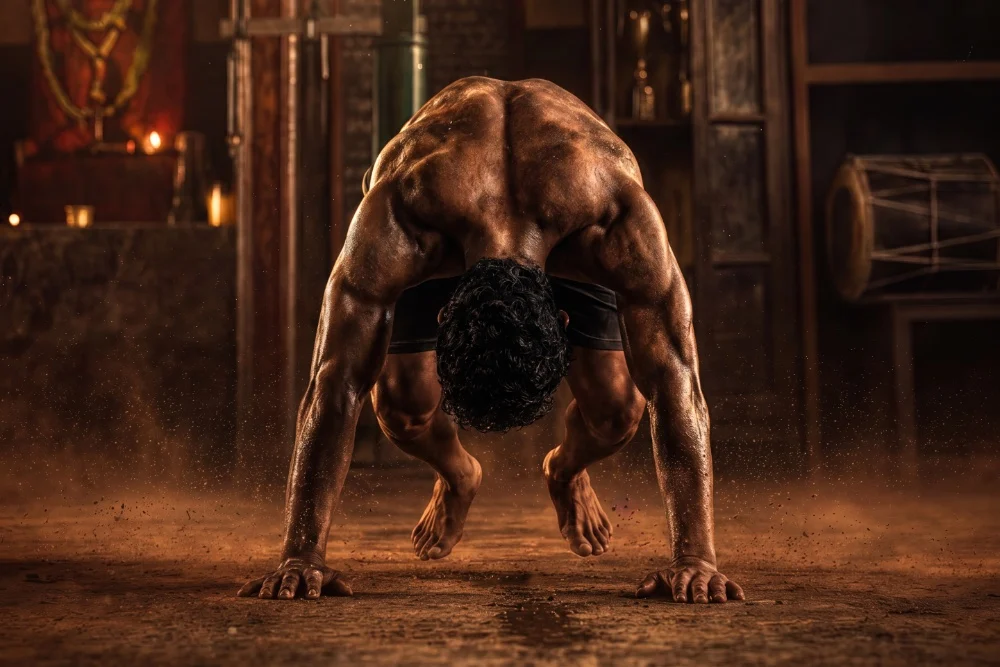
In a move that has electrified the Indian film fraternity, Jio Studios and Aatpat Productions have officially unveiled the teaser and global release date for Khashaba, the highly anticipated biographical sports drama helmed by visionary filmmaker Nagraj Manjule. The film, which is slated to hit theaters worldwide on January 1, 2027, promises to be a magnum opus that chronicles the life of Khashaba Dadasaheb Jadhav—the wrestler who etched his name into the annals of history by becoming independent India’s first individual Olympic medalist.
The announcement serves as a homecoming of sorts for Manjule, who returns to his roots in Marathi-language cinema. Having redefined the landscape of regional and national storytelling with his gritty, soul-stirring narratives, Manjule’s latest project is poised to be both a cultural milestone and a cinematic spectacle.
The Man Behind the Legend: A Chronology of a Sporting Icon
To understand the weight of Khashaba, one must understand the man who inspired it. Khashaba Dadasaheb Jadhav was born in 1926 in the village of Goleshwar, Maharashtra. His story is not merely one of athletic prowess, but of profound resilience against the constraints of colonial and post-colonial India.
The Rise of a Pioneer
Before the glitz of international stadiums, there were the akharas—the traditional mud-pits of Maharashtra. It was here, amidst the sweat and soil of his ancestral homeland, that Jadhav honed the skills that would eventually take him to the global stage.
- 1948 London Olympics: Jadhav made his international debut, finishing a respectable sixth. Despite the lack of institutional support or professional training, his performance signaled that Indian wrestlers could compete with the world’s elite.
- The Road to Helsinki (1952): The crux of the film captures the grueling journey to the 1952 Helsinki Olympics. Fighting against the odds—both financial and logistical—Jadhav secured a bronze medal in the bantamweight category. It was a victory that transcended sport; it was a psychological win for a nation that had only recently emerged from decades of British rule.
- Post-Olympic Legacy: Despite his historic achievement, Jadhav’s later years were marked by a struggle for recognition. His story, often relegated to the footnotes of Indian sporting history, is now being brought to the forefront by Manjule, who is known for his penchant for highlighting the lives of the marginalized and the unsung heroes of society.
The Visionary: Nagraj Manjule’s Cinematic Trajectory
Nagraj Manjule’s career is a study in evolution. From his breakout debut Fandry (2013), which explored the intersection of caste and childhood innocence, to the seismic cultural phenomenon that was Sairat (2016), Manjule has consistently challenged the status quo.
His transition to Hindi-language features with the 2022 film Jhund, starring Bollywood legend Amitabh Bachchan, proved that his storytelling prowess could transcend linguistic and regional boundaries. Following his recent foray into digital storytelling with the Prime Video series Matka King (starring Vijay Varma), Khashaba marks a return to the language and the socio-cultural terrain that made him a household name.
The collaboration with Jio Studios—a powerhouse that has already demonstrated its commitment to high-stakes Marathi cinema through the Dhurandhar duology and the historical epic Raja Shivaji—suggests that Khashaba will benefit from significant production muscle, ensuring that the film reaches a global diaspora hungry for authentic, homegrown stories.
Production Insight: Casting, Composition, and Craft
One of the most intriguing aspects of the film’s production is the casting process. In an industry often reliant on established A-list stars, Manjule opted for a rigorous, exhaustive audition process. Seeking to capture the raw, untainted intensity required for the role, the production team reviewed thousands of candidates before selecting a lead performer whose identity remains a closely guarded secret. This "mystery lead" strategy is expected to heighten anticipation as the release date approaches.
A Stellar Supporting Ensemble
While the lead remains shrouded in mystery, the supporting cast represents the crème de la crème of Marathi and Indian cinema. The production has confirmed the involvement of:
- Jitendra Joshi: Known for his transformative performances in both theater and film.
- Mahesh Manjrekar: A veteran actor and director who brings a gravitas necessary for a period drama.
- Girish Kulkarni: A frequent collaborator with Manjule, known for his nuanced acting.
- Vaibhav Mangale, Chhaya Kadam, and Gargee Kulkarni: These performers, who have been staples of critically acclaimed Marathi cinema, add a layer of authenticity to the ensemble.
The film’s auditory landscape will be crafted by the legendary musical duo Ajay-Atul. Their ability to fuse traditional Maharashtrian rhythms with orchestral intensity makes them the perfect choice for a film that balances local grit with the grandeur of an Olympic milestone.
Official Responses and Industry Implications
The announcement has triggered a wave of optimism among industry analysts. Jyoti Deshpande, a key figure in the production, has emphasized that Khashaba is not just a sports movie, but a "tribute to the spirit of independent India."
"We wanted to tell a story that felt both intimate and epic," a representative for Jio Studios stated during the teaser launch. "Nagraj’s vision for Khashaba is one of uncompromising authenticity. We are not just making a film; we are documenting a piece of history that has been overlooked for too long."
Implications for Regional Cinema
The decision to release Khashaba in theaters worldwide on January 1, 2027, signals a growing trend: the "Mainstreaming of the Regional." Marathi cinema has long been the intellectual engine of Indian film, and projects like this—backed by major corporate investment—suggest that the industry is moving away from the "Hindi-first" mindset.
Furthermore, the focus on a biographical sports drama aligns with a broader global trend of audience interest in historical underdogs. Much like international hits such as Chariots of Fire or Dangal, Khashaba aims to utilize the universal language of struggle and triumph to bridge cultural divides.
A New Year, A New Standard
As we look toward 2027, the anticipation for Khashaba is set to grow. The teaser, which offers a visually stunning glimpse into the dust-swept akharas of early independent India, suggests that Manjule is focusing heavily on production design and period-accurate atmosphere.
By centering the narrative on the transition from the mud-pit to the international wrestling mat, the film promises to be a visceral experience. It is a story of a man who fought not for fame, but for the validation of a nation that was still finding its identity.
For Nagraj Manjule, this is the ultimate challenge: to take a historical figure, stripped of the layers of myth, and present him as a human being whose strength of character was as formidable as his physical presence. As the clock ticks toward the January 1, 2027, release date, one thing is certain: Khashaba is poised to be more than just a biopic; it is a declaration of the power of Indian storytelling on the global stage.
The stage is set. The mud is ready. The world is watching. And if history is any indication, Nagraj Manjule is about to give us another classic that will be remembered for decades to come.
 Siti Muinah
  Ammar Sabilarrohman
  Layla Zulfa