
 By Neng Nana
When embarking on a kitchen remodel or building a custom home from the ground up, few decisions carry as much visual weight—or financial investment—as selecting your countertop material. Among natural stone options, granite and marble remain the undisputed titans of luxury and durability. Yet, despite their shared status as high-end surface materials, they react drastically differently to the daily chaos of cooking, cleaning, and entertaining.
Understanding the fundamental differences between granite and marble goes far beyond aesthetic preference. These two stones possess entirely different geological origins, structural hardness levels, chemical compositions, and maintenance demands. Whether you are an avid home baker, a busy parent managing high-traffic family meals, or a design enthusiast chasing a specific architectural aesthetic, evaluating these materials against your lifestyle is the key to a successful kitchen renovation.
Main Facts: The Core Differences at a Glance
At their core, granite and marble are both natural stones mined from the earth, cut into thick slabs, polished, and installed to transform domestic spaces. However, their geological distinctions dictate everything from how they handle a hot skillet to how they react to a spilled glass of wine.
- Geological Composition: Granite is an igneous rock formed from slowly cooling magma deep beneath the Earth’s crust, resulting in a dense, interlocking crystal structure. Marble is a metamorphic rock that originates from limestone subjected to intense heat and pressure, meaning it contains high levels of calcium carbonate.
- Hardness and Durability: Granite ranks roughly a 6 or 7 on the Mohs hardness scale, making it exceptionally resilient against scratches, structural impacts, and heat. Marble is significantly softer—typically a 3 or 4 on the Mohs scale—making it much more susceptible to scratching, chipping, and chemical surface damage.
- Reactivity to Acids: Granite is generally inert when exposed to common kitchen acids. Marble, due to its calcium carbonate content, reacts violently on a microscopic level with acids, leading to a phenomenon known as "etching."
- Porosity and Maintenance: Both stones are porous to varying degrees and typically require sealing upon installation. However, granite boasts a much lower absorption rate, making it inherently more forgiving of oil, grease, and liquid spills. Marble requires vigilant, regular sealing and immediate spill management.
Chronology: The Journey From Geological Formation to Kitchen Island
To truly appreciate why granite and marble behave so differently under kitchen conditions, it helps to trace their lifecycles—both natural and domestic.

Phase 1: Geological Genesis (Millions of Years Ago)
- Granite: Formed millions of years ago through the slow crystallization of magma underneath the Earth’s surface. This prolonged cooling process gives granite its characteristic speckled, multidimensional appearance, packed with quartz, feldspar, and mica crystals.
- Marble: Originally sedimentary limestone composed of skeletal fragments of marine organisms, marble undergoes metamorphism. Over eons, extreme geological heat and pressure recrystallize the limestone, weaving mineral impurities into sweeping, dramatic veins.
Phase 2: Fabrication and Installation (Modern Day)
- Raw blocks of stone are quarried globally—from the quarries of Brazil, India, and Italy—and sliced into standard three-centimeter or two-centimeter slabs.
- Fabricators cut the stone to match precise kitchen blueprints, polishing the edges and applying initial sealants. Because granite and marble are heavy, natural products, professional installation requires specialized reinforcement cabinetry to support their immense weight.
Phase 3: The Lifecycle of Daily Kitchen Use
- The Early Years: Freshly installed, both stones look pristine, seamless, and breathtaking. However, within the first few months of heavy cooking, the divergence begins. Granite shrugs off minor impacts, while unsealed or unprotected marble begins to accumulate its first battle scars—soft scratches from heavy pots or dull spots from citrus splashes.
- The Long-Term Evolution: Over decades, granite maintains a remarkably consistent, factory-new look if properly maintained. Conversely, well-loved marble develops a "patina"—a collection of soft etches, faint stains, and smoothed edges that tell the story of countless family meals, embraced by traditional designers for its lived-in, historic charm.
Supporting Data: Performance, Maintenance, and Practicality
When evaluating kitchen renovation materials, homeowners must weigh aesthetic desires against practical realities. Here is a detailed breakdown of how granite and marble compare across key performance metrics.
Durability and Heat Resistance
Granite is widely regarded as a workhorse in the kitchen. Because it is formed under extreme subterranean heat and pressure, it possesses exceptional thermal stability. Placing a hot pan straight from the burner onto a granite countertop will generally not damage the stone. Furthermore, its high density makes it difficult to scratch with standard kitchen knives, though cutting directly on granite is still discouraged because it will aggressively dull your knife blades.
Marble, while also heat-resistant, demands greater caution. Extreme thermal shock can occasionally crack softer stones, and localized high heat can compromise surface sealants. More importantly, marble’s softness means that dropping a heavy cast-iron skillet near an edge can result in a catastrophic chip or crack that requires professional stone restoration.
Porosity and Stain Management
All natural stones are porous, meaning liquids can seep into microscopic capillaries if left unsealed. Granite features a low absorption rate. While certain lighter-colored granites require periodic sealing every few years, dark granites are often so dense they require little to no maintenance. Water droplets left on granite will bead up rather than sink in immediately.

Marble is notoriously more porous and vulnerable. Oils, red wine, coffee, and dark juices can easily penetrate unsealed marble, leaving deep-set stains. Furthermore, marble is uniquely vulnerable to etching. Etching is not a stain; it is physical damage caused when acids (such as lemon juice, vinegar, tomato sauce, and white wine) dissolve the calcium carbonate at the surface. This creates dull, milky, or roughened patches that disrupt the polished finish, visible even when the surface is entirely clean.
Aesthetic Variability and Seam Visibility
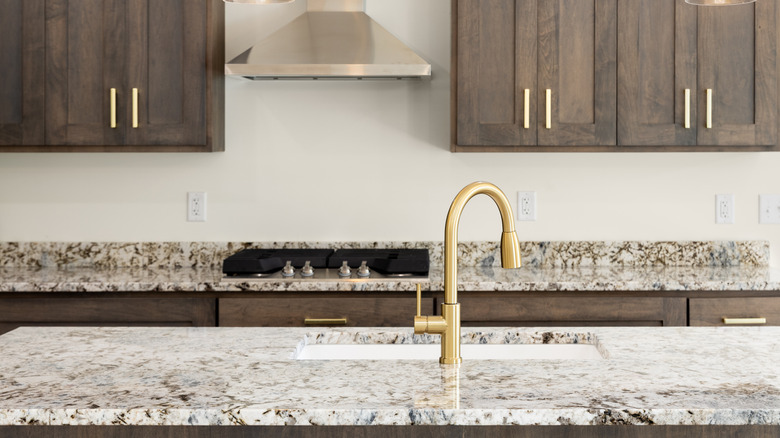
- Granite: Offers a vast spectrum of designs, ranging from uniform, speckled commercial patterns to exotic, sweeping slabs with dramatic quartz deposits. Because granite is quarried in slightly smaller blocks than some synthetic alternatives, large kitchen islands may require multiple pieces, making seams potentially more noticeable depending on the pattern complexity.
- Marble: Renowned globally for its unparalleled elegance, luxury, and classic appeal. Iconic varieties like Carrara, Calacatta, and Statuary feature striking gray or gold veining against pristine white or cream backgrounds. Marble’s aesthetic is timeless, frequently commanding higher property resale value perceptions among luxury home buyers.
Official Industry Insights and Professional Recommendations
Kitchen designers, stone fabricators, and architectural experts generally agree that neither stone is universally "better" than the other; rather, they serve entirely different demographic profiles and functional philosophies.
The Case for Granite: The Pragmatic Choice for Busy Families
Industry professionals frequently recommend granite for high-traffic kitchens where cooking is a daily, vigorous activity. Contractors note that clients who enjoy heavy meal preparation, canning, baking with sticky doughs, or entertaining large groups without constantly worrying about surface spills find immense peace of mind in granite.
"Granite is the ultimate forgiving material," notes a veteran stone fabricator. "It allows homeowners to focus on the joy of cooking rather than hovering over the island with a microfiber cloth, terrified that someone might set down a wedge of lemon."
The Case for Marble: The Artisan’s Choice for Bakers and Aesthetes
Conversely, pastry chefs, professional bakers, and dedicated design purists almost universally champion marble. The physical properties of marble make it the gold standard for pastry work: the stone naturally remains several degrees cooler than ambient room temperature. This cold surface prevents butter from melting prematurely when laminating croissant dough, keeps pie crusts flaky, and prevents chocolate from seizing during tempering.
Interior designers emphasize that for clients willing to embrace the philosophy of wabi-sabi—the beauty of imperfection and aging—marble offers an unmatched sensory and visual depth. Scratches and etches are viewed not as defects, but as living history etched into the home.
Implications: Making the Right Choice for Your Kitchen
Choosing between granite and marble ultimately forces a lifestyle audit. Before committing thousands of dollars to a stone slab, consider the following strategic implications:
- Assess Your Cooking Habits: If your kitchen is a high-energy zone where meals are rushed, children do homework, and acidic ingredients like citrus and tomatoes are constantly flying, granite offers the low-stress durability you need. If you view cooking as an artisanal, slow-paced ritual and are meticulous about cleaning up spills immediately, marble rewards your care with breathtaking beauty.
- Evaluate Your Tolerance for Maintenance: Granite requires basic cleaning with mild soap and water, with occasional resealing tests (the "water drop test"). Marble requires a dedicated maintenance protocol: pH-neutral specialized cleaners, immediate containment of acid spills, protective cutting boards, trivets, and annual or semi-annual professional-grade sealing.
- Consider Long-Term Property Value: Both materials add substantial equity to a home, but they appeal to different buyers. Granite appeals to practical buyers seeking turnkey durability, while marble captures the imagination of design-forward buyers who prioritize luxury aesthetics over pristine maintenance.
By carefully aligning the unique chemical and physical profiles of granite and marble with your personal culinary style, you can select a countertop material that not only stands the test of time but elevates the heart of your home into a functional work of art.
 Laily UPN
  Azzam Bilal Chamdy
  Evan Lee Salim