
 By Laily UPN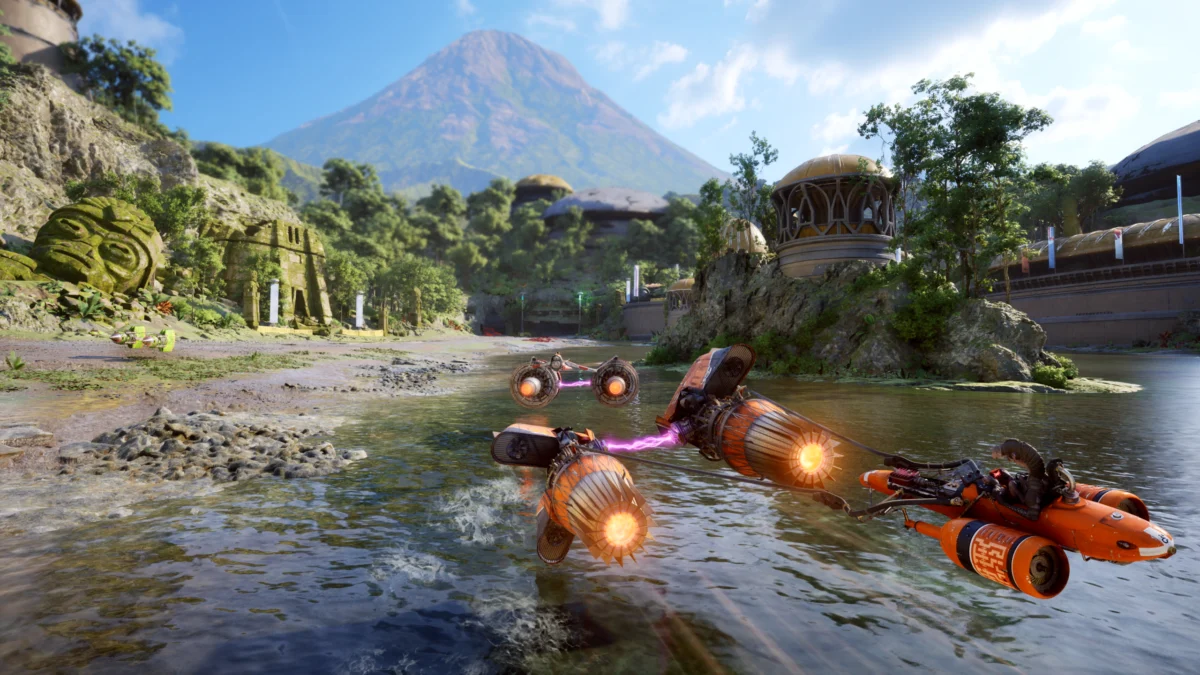
In the modern landscape of racing games, the "rewind" button has become an industry standard—a digital safety net that allows players to erase their mistakes with a single button press. For Matt Webster, founder and CEO of Fuse Games, this convenience has come at a steep price: the loss of consequence.
"Racing is crying out for a bit of consequence," Webster argues, drawing on his deep-rooted expertise as the former general manager at Criterion, the studio that defined the Burnout and Need For Speed eras. "Crashing is consequence—not just the visual and the audio spectacle of it; we learn something from it. It’s tough to have consequence when you’ve got a rewind button."
This philosophy serves as the beating heart of Star Wars: Galactic Racer, an upcoming title that seeks to disrupt the arcade racing genre by embracing the very thing most developers try to eliminate: failure. By blending the high-octane DNA of classic Star Wars racing with the high-stakes, runs-based structure of a roguelite, Fuse Games is betting that players are ready to embrace the debris field.
The Roguelite Twist: Why Crashing is the Point
At its core, Star Wars: Galactic Racer is not your typical circuit-based racer. It is a "runs-based game," where progression is transient and mortality is permanent. In this universe, your journey through the Galactic League is tethered to a race token. Lose your lives—typically three per race—or fail to place in the top three, and your run comes to a screeching, fiery halt. You are sent back to the start, left with only the lessons learned and a sliver of meta-progression to carry into your next attempt.
This structure transforms every turn and straightaway into a high-pressure decision. Do you play it safe to ensure you survive the league, or do you channel your inner Sebulba and ram your opponent into a canyon wall to secure the win? As Webster and creative director Kieran Crimmins explained during Summer Game Fest, the game is designed to reward this "rough and tumble" approach. In the galaxy far, far away, racing is less of a sport and more of a bar fight on wheels.
A Chronology of Chaos: From Burnout to the Outer Rim
The development of Star Wars: Galactic Racer is the culmination of years of experience in creating visceral, speed-focused experiences. Fuse Games’ leadership team, comprised of industry veterans, has spent decades perfecting the art of the collision.

The studio’s vision for the game draws direct inspiration from the "bar fight" aesthetic of the podracing sequences in Star Wars: Episode I – The Phantom Menace. While many racing games strive for sterile perfection, Fuse is aiming for the gritty, criminal underbelly of the Star Wars universe—a world of syndicates, scrap heaps, and brutal, elbows-out competition.
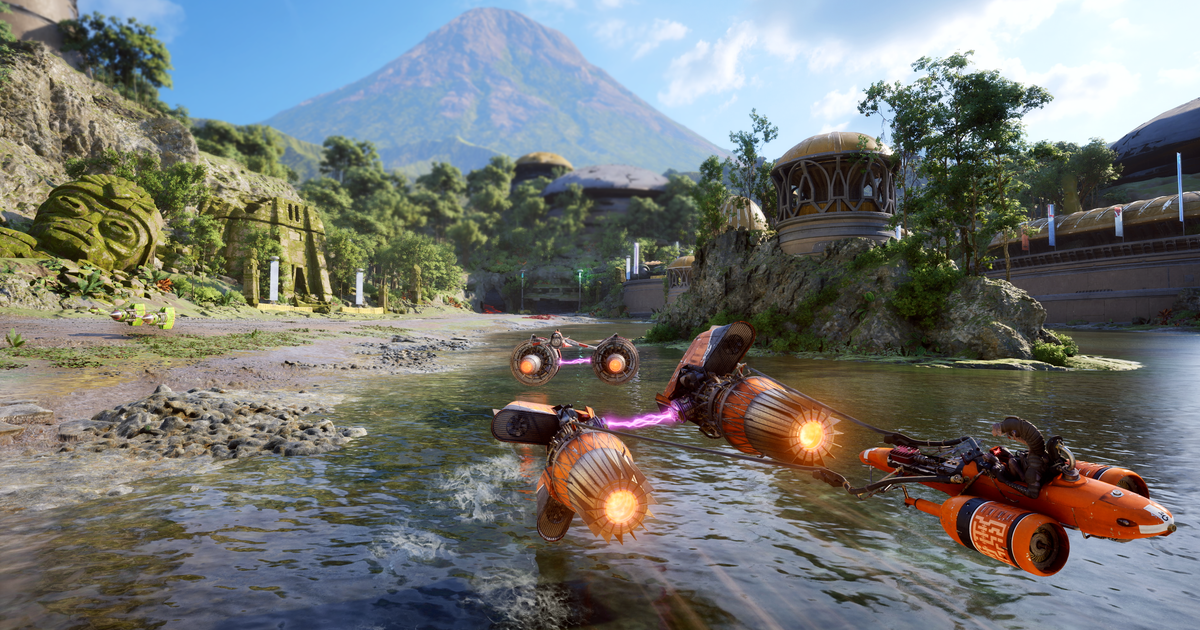
This vision is supported by a robust mechanical framework. The game features a variety of vehicle types, ranging from traditional landspeeders and speeder bikes to the iconic pods. New to the roster is the "skim speeder," a craft capable of shifting from a horizontal to a vertical orientation, allowing players to navigate narrow gaps or pull off aggressive maneuvers.
The Anatomy of an Arcade Renaissance
The arcade racing genre has experienced a resurgence recently, with titles like Forza Horizon establishing a "hangout" vibe, and retro-inspired projects like Crazy Taxi and Stuntman finding new life. However, Fuse Games believes that "arcade" should never be synonymous with "simple."

"I think in many ways it’s the purest expression of gaming," Webster notes, referencing his love for classic titles like Bomb Jack. "It’s the approachability, it’s the fantasy fulfillment, very quickly—but it’s not the absence of depth."
Star Wars: Galactic Racer achieves this depth through a complex system of build customization. With trillions of potential combinations of parts, upgrades, and abilities, players can fine-tune their machines to match their driving style and the specific environmental challenges of the planet they are traversing. Whether it is adjusting a flywheel or swapping out a propulsion unit, the customization depth echoes the granular mechanics of Gran Turismo 2, applied to a chaotic, high-speed arcade framework.
Official Perspectives: The "Lightning in a Bottle" Philosophy
The team at Fuse Games is acutely aware of the shadow cast by their own history, particularly the legacy of Burnout Paradise. When asked about the difficulty of surpassing such a genre-defining title, Webster remains humble yet ambitious.

"When we were making Burnout games, we were always trying to push something forward, do something new," says Webster. "There was a wonderful ‘opportunity space’ for us to be creative inside. That’s what we’re trying here, it just happens to be inside a Star Wars game."
Creative Director Kieran Crimmins emphasizes that the aggression inherent in the game is not a bug—it’s the feature. "We’ve designed this game for aggressive racing," Crimmins explains. "It isn’t something you can mess up the game with. It’s part of the mechanics, it’s part of the abilities that you can have; it’s a legitimate playstyle that actually makes that kind of play really, really fun."
By integrating these mechanics, the developers hope to recapture the "lightning in a bottle" that made their past projects so successful, while pushing the genre forward through a campaign structure that feels both fresh and nostalgic.

Implications: The Return of Galactic Conquest
Perhaps the most intriguing aspect of the game’s structure is the campaign map. By utilizing a horizontally branching tree of events—reminiscent of the strategic navigation in FTL: Faster Than Light—the game forces players to make meaningful choices about their path through the galaxy.
This brings a sense of "Galactic Conquest" to the experience, a mode that has been historically underutilized in the Star Wars gaming canon since the days of the original Battlefront series. This isn’t just about driving fast; it’s about resource management, tactical pathfinding, and surviving long enough to reach the final event.
The environmental variety also plays a crucial role. Players will visit iconic locales like Jakku, navigating unpredictable weather and terrain that demands constant adaptation. The synergy between the vehicle build and the environment adds a layer of strategy that keeps the gameplay from becoming repetitive, even across multiple runs.

Conclusion: Why Failure is the Best Teacher
As players lean in to navigate the debris of a high-speed collision, they will find that Star Wars: Galactic Racer demands their full attention. The "consequence" that Webster speaks of is palpable—when a crash results in the end of a long, hard-fought run, the sting of failure becomes a powerful motivator to try again, to optimize the build, and to race smarter.
The game is a love letter to the arcade classics of the past, specifically Star Wars Episode I: Racer and Racer Revenge. By taking the DNA of these titles—the sense of speed, the boost mechanics, and the sheer audacity of the podracing spectacle—and injecting it with a modern, roguelite-inspired structure, Fuse Games has positioned itself to deliver something truly unique.
"We want people to hit people. We want them to crash in amazing ways. We want to make failure fun," says Crimmins. If the early demos at Summer Game Fest are any indication, they have succeeded. By turning the act of crashing into a visceral, cinematic, and strategic event, Star Wars: Galactic Racer might just be the shot in the arm the racing genre has been waiting for. It is a game that doesn’t just ask you to drive; it asks you to survive, adapt, and eventually, master the chaos.
 Nila Kartika Wati
  Asro
Asro 