
 By Muslim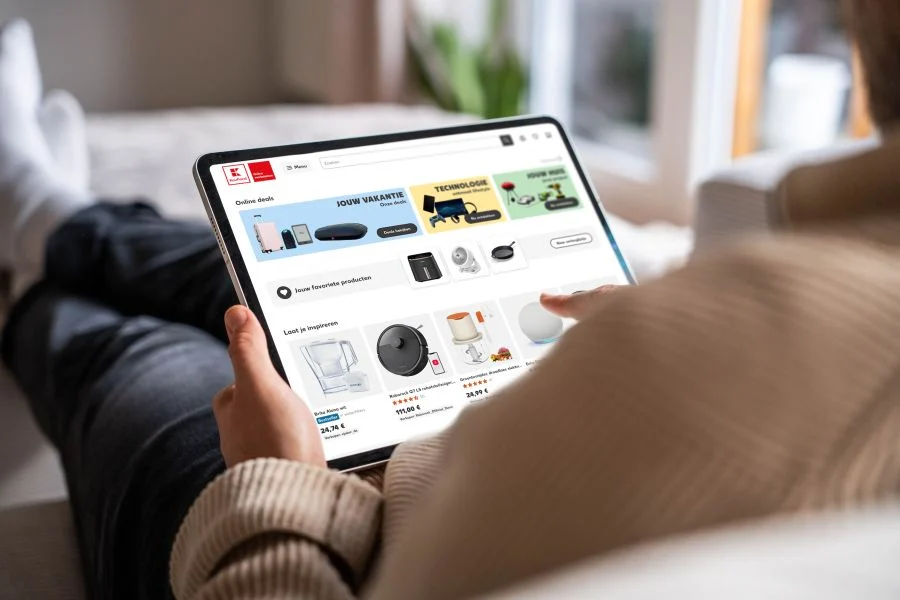
In a strategic move that underscores the ongoing consolidation of the European e-commerce landscape, Kaufland—the retail juggernaut under the Schwarz Group umbrella—has announced a significant expansion of its digital marketplace. By the conclusion of this summer, the platform will officially launch in the Netherlands and Spain, bringing its total operational footprint to nine countries. This rapid scaling, initiated just three years ago, positions Kaufland as arguably the most formidable European-origin competitor to global incumbents.
Main Facts: The New Frontier of European Retail
The announcement signals a major milestone for the Schwarz Group, which also operates the discount powerhouse Lidl. By extending its digital reach to the Netherlands and Spain, Kaufland is not merely entering two new territories; it is cementing a unified, pan-European ecosystem that aims to simplify cross-border trade for thousands of third-party merchants.
For online sellers, the platform is already accepting registrations for these new markets. A defining feature of the Kaufland ecosystem is its "all-in" approach: once a seller registers, their inventory becomes eligible for listing across all nine of the company’s marketplaces. This integrated infrastructure is designed to strip away the complexities traditionally associated with cross-border selling—namely, linguistic barriers, currency fluctuations, and localized legal compliance.
To support this ambitious growth, Kaufland has invested heavily in automated localization tools. Merchants utilizing the platform gain access to sophisticated translation software that handles product descriptions, legal disclaimers, and customer correspondence. Furthermore, the company provides centralized first-line customer support in local languages and manages payment processing in local currencies, effectively acting as a bridge for small-to-medium enterprises (SMEs) looking to scale beyond their domestic borders.
Chronology: A Rapid Trajectory of Digital Transformation
Kaufland’s journey from a traditional brick-and-mortar giant to a digital marketplace heavyweight has been characterized by aggressive, well-calculated milestones.
The Foundation (2021)
The digital strategy was officially unveiled in 2021 with the launch of the Kaufland marketplace in its home market, Germany. Leveraging its existing brand recognition and a legacy of over 1,600 physical hypermarkets, the company quickly established a digital beachhead, capitalizing on the shift toward omnichannel retail during the post-pandemic era.
The Growth Phase (2022–2023)
Recognizing the potential for scalability, Kaufland accelerated its rollout. The company successfully entered the markets of Slovakia and the Czech Republic, followed closely by strategic launches in Poland and Austria. These expansions were not merely geographic; they were experiments in regional adaptation, proving that the marketplace model could thrive in both emerging and mature retail environments.
The Global Ambition (2023–2024)
Last year, the momentum shifted to Western Europe with entries into France and Italy. These launches were pivotal, as they placed Kaufland in direct competition with local retail titans and established international marketplaces. The upcoming entry into the Netherlands and Spain, scheduled for late summer 2024, represents the final step in this current cycle of expansion, pushing the platform into the ranks of the largest marketplace networks of European origin.
Supporting Data: By the Numbers
The success of the Kaufland marketplace is best quantified by its rapid adoption rates and the sheer volume of its digital ecosystem.
- Traffic and Reach: In its home market of Germany, the platform boasts a staggering 32 million monthly visitors. Across its current seven active markets, it serves a combined audience of 139 million consumers.
- Expansion Potential: With the inclusion of the Spanish and Dutch markets, Kaufland anticipates its total potential consumer reach will climb to 220 million people by the end of the summer.
- Growth Metrics: The performance data from its more established "newer" markets is particularly telling. In Austria, the marketplace saw an astronomical revenue increase of 439 percent compared to 2024, while Poland recorded a 322 percent revenue surge over the same period.
- Inventory Depth: The platform currently hosts over 45 million products, spanning 6,400 distinct categories. This breadth of assortment has been critical in transitioning Kaufland from a grocery-centric chain to a comprehensive retail destination.
Official Responses and Strategic Vision
While the Schwarz Group is traditionally private and measured in its public communications, the data released alongside these expansion plans speaks to a clear mandate: the digitization of European consumption.
Industry analysts observe that the company’s strategy relies heavily on the "Schwarz ecosystem." By leveraging the logistics network and supply chain expertise inherent to the Schwarz Group, Kaufland has managed to keep customer acquisition costs lower than many pure-play e-commerce startups.
"We are building a bridge for the European merchant," a representative indicated during the announcement, emphasizing that the focus is on enabling small businesses to compete on a continental scale. By automating the "pain points" of international trade—such as VAT calculations, legal text translation, and multi-currency payment handling—Kaufland is effectively commoditizing the logistics of cross-border commerce. This allows the company to differentiate itself from competitors that may require merchants to manage their own localization efforts.
Implications: The Shift in the Competitive Landscape
The entry into Spain and the Netherlands is set to disrupt the status quo in several ways.
1. Strengthening the "European" Marketplace
For years, the European e-commerce landscape has been dominated by American and Asian entities. Kaufland’s rise represents a rare, successful attempt by a European incumbent to build a dominant, pan-European digital marketplace. By maintaining a centralized, European-origin platform, the company appeals to both merchants and consumers who prioritize local data privacy standards and regional business models.
2. A Boon for SMEs
The primary implication for the European merchant community is the simplification of market entry. Traditionally, a German or Polish SME looking to sell in Spain would face significant legal, linguistic, and logistical hurdles. By offering a "one-stop-shop" platform, Kaufland is lowering the barrier to entry, which is likely to increase the diversity of products available to European consumers and stimulate competitive pricing.
3. The Omnichannel Synergy
Unlike pure-play marketplaces, Kaufland retains the advantage of its brick-and-mortar heritage. The potential for future "click-and-collect" models, or integrating the marketplace with the group’s vast physical store network, remains a potent weapon in its arsenal. As the retail sector continues to blur the lines between online and offline, Kaufland is uniquely positioned to offer an integrated experience that few digital-only competitors can match.
4. Market Consolidation
The rapid revenue growth seen in markets like Poland and Austria suggests that there is still significant room for growth in European e-commerce. Kaufland’s entry into the Netherlands and Spain will undoubtedly put pressure on incumbent local marketplaces. This will likely trigger a new wave of innovation in customer service, shipping speeds, and seller support tools as competitors attempt to match the robust, automated infrastructure that Kaufland has introduced.
Conclusion
Kaufland’s expansion into the Netherlands and Spain is a testament to the maturation of the European e-commerce market. By scaling its marketplace model to nine countries and potentially reaching 220 million consumers, the company is not just chasing growth—it is actively architecting the future of European retail.
For the Schwarz Group, the marketplace model has proven to be a highly scalable and profitable extension of its retail empire. As the company prepares for its late-summer launch, the industry will be watching closely to see how the marketplace adapts to the nuances of the Dutch and Spanish retail landscapes. If the performance in Poland and Austria is any indicator, Kaufland is well-prepared to secure its position as a cornerstone of the European digital economy for years to come.
 Ali Ikhwan
  rifanmuazin
  Nana Muazin