
 By Layla Zulfa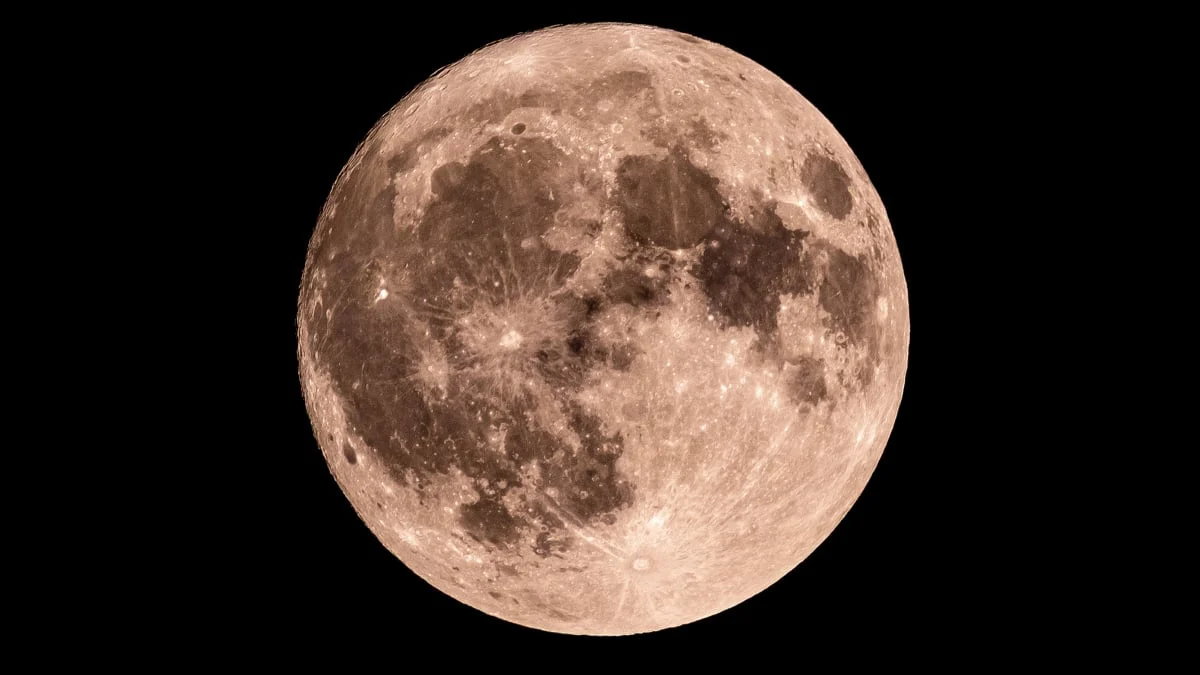
As of Friday, September 18, the night sky offers a compelling view for amateur astronomers and casual observers alike. According to NASA’s Daily Moon Guide, our celestial neighbor has reached the First Quarter phase. With approximately 45% of its lunar surface illuminated and visible from Earth, the Moon serves as a primary focal point for night-sky enthusiasts, signaling the midpoint of the transition toward the upcoming Full Moon.
Main Facts: The First Quarter Phenomenon
The First Quarter Moon is a distinct astronomical phase occurring when the Moon has completed exactly one-quarter of its orbit around Earth. During this period, the sunlight striking the lunar surface creates a sharp division between the illuminated and shadowed regions, known as the "terminator line." This line is of particular interest to observers, as the harsh, angled light creates long shadows that highlight the topographical complexity of the lunar surface, including craters and mountain ranges that are otherwise flattened by the direct overhead light of a Full Moon.
Current projections indicate that the Moon will continue its waxing phase, increasing in illumination night by night, until it reaches its full capacity on September 26. This period is often cited by astronomers as the "sweet spot" for observation, as the Moon is high in the sky during the early evening hours, providing optimal viewing conditions before the glare of a Full Moon begins to wash out fainter deep-sky objects like nebulae and distant galaxies.
Chronology: The Lunar Cycle in Motion
The lunar cycle is a rhythmic, predictable 29.5-day journey known as a synodic month. This cycle begins at the New Moon—a phase where the Moon is positioned between the Earth and the Sun, rendering its face invisible to observers on the ground. From this dark inception, the Moon begins its "waxing" or growing phase.
- New Moon: The starting point, where the Moon is lost in the Sun’s glare.
- Waxing Crescent: A thin, sliver-like appearance on the right side of the lunar disk in the Northern Hemisphere.
- First Quarter: The phase we currently occupy, where a perfect "half-moon" appearance emerges.
- Waxing Gibbous: The transition where more than half, but less than all, of the Moon is illuminated.
- Full Moon: The apex of the cycle, scheduled for September 26, where the Earth stands between the Sun and the Moon.
- Waning Gibbous: The cycle of decline begins, with the right side of the Moon beginning to shadow.
- Third Quarter: A return to the half-moon appearance, though with the left side illuminated.
- Waning Crescent: The final sliver of light before the Moon resets to the New Moon phase.
This 29.5-day interval, known as the synodic period, differs slightly from the Moon’s orbital period around the Earth (the sidereal month, which is approximately 27.3 days) because the Earth is simultaneously moving around the Sun. This celestial dance requires the Moon to travel slightly further to reach the same relative position, resulting in the month-long cycle that has dictated human calendars and agricultural practices for millennia.
Supporting Data: Observing the Surface
For those looking to move beyond casual observation, the First Quarter phase provides an excellent map of lunar geology. With the naked eye, observers can distinguish several maria—the vast, dark basaltic plains created by ancient volcanic eruptions. These include:
- Mare Crisium: The "Sea of Crises," a distinct, isolated circular basin.
- Mare Serenitatis: The "Sea of Serenity," characterized by its relatively smooth, flat expanse.
- Mare Fecunditatis: The "Sea of Fecundity," a large basin located in the eastern portion of the Moon.
Equipped with a basic pair of binoculars, the level of detail increases significantly. Observers can resolve the Endymion Crater, a large lunar impact crater located near the Moon’s northeastern limb, and the Posidonius Crater, which features a complex, fractured floor. The Mare Nectaris, or "Sea of Nectar," also becomes prominent, showcasing the history of meteorite bombardment that has scarred the lunar surface over billions of years.
For those with access to a telescope, the First Quarter is an opportunity to trace human history. Specifically, the Apollo 11 and Apollo 17 landing sites—the locations where humanity first stepped onto the lunar surface—can be identified by experienced observers. Furthermore, the Rupes Altai, a massive lunar mountain range or "escarpment" that stretches for nearly 300 miles, provides a breathtaking sight under the side-lighting of the terminator.
Official Perspectives: NASA’s Guidance
NASA emphasizes that the perceived phase of the Moon is purely a matter of perspective, governed by the relative positions of the Earth, the Moon, and the Sun. There is no physical change to the Moon itself; rather, we are seeing the changing geometry of the sunlight as it interacts with the Moon’s sphere.
NASA’s Daily Moon Guide serves as a critical resource for both scientists and the public, reinforcing the importance of lunar literacy. By tracking these phases, space agencies can better plan lunar missions, as illumination levels directly impact landing site safety, communication windows, and solar power generation for robotic landers. As commercial interests in the Moon increase—exemplified by recent private lander missions—the ability to accurately predict and observe these phases remains a fundamental aspect of space exploration.
Implications: The Science of Lunar Influence
The implications of the lunar cycle extend far beyond the aesthetic beauty of the night sky. The Moon’s gravity is the primary driver of Earth’s oceanic tides. While the Full Moon and New Moon exert the strongest tidal forces (spring tides), the First Quarter and Third Quarter Moons generate what are known as "neap tides." During these phases, the gravitational pull of the Sun and the Moon are at right angles, partially canceling each other out and resulting in a smaller difference between high and low tide.
Furthermore, the study of lunar phases is foundational to our understanding of planetary science. By observing how light reflects off the lunar surface, astronomers can calibrate sensitive instruments used to study exoplanets. The Moon acts as a "standard candle" or a reference point in the vast darkness of space, allowing researchers to refine their methods for identifying planets outside our solar system.
Culturally and historically, the transition from First Quarter to Full Moon has served as the basis for the development of the month. Many ancient civilizations relied on the visible movement of the Moon to track the passage of time, schedule planting and harvesting, and organize religious ceremonies. Even today, the Full Moon remains a subject of intense public interest, as it represents a moment of alignment where the entire "face" of the Moon is revealed, a stark contrast to the shadowy, mysterious landscape visible during the First Quarter.
As we move toward September 26, the gradual illumination of the lunar surface serves as a reminder of our place in the solar system. Whether you are using a professional telescope to map the Apollo landing sites or simply glancing upward on a clear night, the Moon remains our most accessible gateway to the cosmos. Understanding its phases is more than a simple exercise in astronomy; it is a way of connecting with the celestial mechanics that have shaped our planet, our history, and our future in space.
For those eager to capture the best view, keep an eye on the weather forecast as we approach the Full Moon. While the First Quarter offers the best high-contrast shadows for crater spotting, the Full Moon provides a different, albeit more uniform, view of the lunar "Man in the Moon" features. Regardless of your equipment level, the coming week offers a perfect opportunity to engage with the night sky and appreciate the rhythmic beauty of our nearest celestial neighbor.
 Ammar Sabilarrohman
  Nila Kartika Wati
  Evan Lee Salim