
 By Pevita Pearce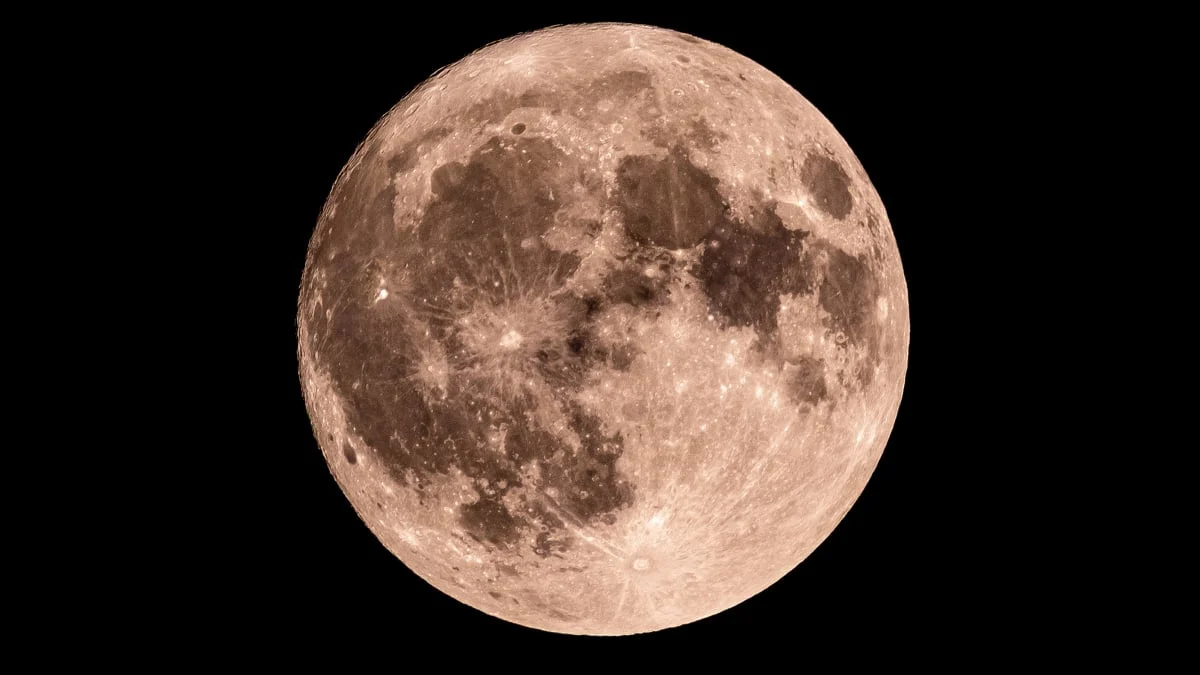
As the dust settles on the recent Full Moon, skywatchers are treated to an extended period of celestial brilliance. While the astronomical peak has passed, the Moon remains a formidable presence in the night sky. For casual observers and amateur astronomers alike, the current phase offers a unique opportunity to explore lunar topography without the overwhelming glare of a 100% illuminated disk.
Main Facts: The Current Lunar State
As of Monday, September 28, the Moon has transitioned into the Waning Gibbous phase. According to data provided by NASA’s Daily Moon Guide, the lunar surface currently boasts a 97% illumination level. To the naked eye, the difference between last night’s Full Moon and tonight’s display is negligible, providing an ideal window for those who missed the official peak to experience the grandeur of our natural satellite.
The Waning Gibbous phase marks the beginning of the lunar descent toward the next New Moon. During this time, the illumination on the right side (as viewed from the Northern Hemisphere) begins to subtly recede, casting longer, more pronounced shadows across the lunar landscape. This play of light and shadow is what transforms the flat, bright appearance of a Full Moon into a high-contrast terrain rich in detail for observers with optical aids.
Chronology: The Lunar Cycle and Upcoming Events
The Moon’s appearance is governed by a rhythmic, repeating cycle that spans approximately 29.5 days—a period known as the synodic month. This cycle dictates the transition from the invisible New Moon to the brilliant Full Moon and back again.
Looking Ahead: The October Full Moon
For those planning future observations, the next Full Moon is slated for October 25 or 26, depending on the observer’s specific geographical timezone. This upcoming event will mark the culmination of the current lunar cycle, resetting the clock for the subsequent month of celestial movement.
Understanding the Eight Phases
The progression of the Moon is categorized into eight distinct phases, each defined by the Moon’s orbital position relative to the Earth and the Sun:
- New Moon: The Moon sits between the Earth and the Sun. The side facing us is shrouded in shadow, rendering it virtually invisible to the naked eye.
- Waxing Crescent: As the Moon moves in its orbit, a thin, curved sliver of light begins to appear on the right side of the lunar disk.
- First Quarter: The Moon reaches a point in its orbit where half of the disk is illuminated on the right side.
- Waxing Gibbous: The illumination continues to grow, exceeding 50% but falling short of full, circular brilliance.
- Full Moon: The Earth resides between the Sun and the Moon, allowing the entire face of the lunar surface to be illuminated.
- Waning Gibbous: The phase we are currently experiencing; the light begins to retreat from the right side of the disk.
- Third Quarter (Last Quarter): The Moon appears as a half-disk again, but the illumination is now restricted to the left side.
- Waning Crescent: The final stage of the cycle, where only a thin sliver of light remains on the left side before the Moon returns to the New Moon phase.
Supporting Data: Exploring the Lunar Surface
Tonight provides a premier opportunity for lunar mapping. Even without specialized equipment, the human eye can distinguish large-scale "Maria"—the dark, basaltic plains formed by ancient volcanic eruptions.
Naked-Eye Targets
The most prominent features visible tonight include:
- Mare Imbrium (Sea of Rains): A vast impact basin located in the Moon’s northwestern quadrant.
- Mare Serenitatis (Sea of Serenity): A circular basin that provides a stunning contrast to the brighter surrounding highlands.
- Mare Tranquillitatis (Sea of Tranquility): Famous as the landing site of the Apollo 11 mission, this region is easily identifiable as a large, dark patch.
Binocular Observations
For those with standard binoculars, the depth of the lunar surface becomes more apparent. Key targets include:
- Clavius Crater: One of the largest crater formations on the Moon, located in the southern highlands.
- Alphonsus Crater: A complex crater near the center of the Moon’s disk, which often shows interesting shadows during the waning phases.
- Gassendi Crater: Situated on the edge of Mare Humorum, this crater is renowned for its complex floor fractures.
Telescope-Specific Landmarks
Observers equipped with telescopes can venture into smaller, more intricate geological features:
- Apollo 12 & 16 Landing Sites: While the landing modules themselves are not visible, the geographical context of these historic sites can be explored in high detail.
- Rima Caucasus Mountains: These rugged peaks provide a dramatic silhouette, especially as the sunlight hits them at an angle during the waning phases.
Official Responses and Scientific Context
NASA continues to emphasize the importance of consistent lunar observation for both educational and scientific purposes. The agency’s Daily Moon Guide serves as a critical resource, bridging the gap between complex orbital mechanics and public curiosity.
"The phase of the Moon we observe is a direct consequence of the Sun’s position relative to the Earth-Moon system," explains a NASA spokesperson. "When we see the Moon waning, we are witnessing the gradual transition of the lunar day-night terminator line. It is this line—the border between light and shadow—that allows us to perceive the topography of the craters and mountains."
Beyond the aesthetic pleasure of watching the Moon, these observations contribute to a deeper public understanding of planetary science. By tracking the lunar cycle, citizens gain a tangible grasp of the mechanics that dictate our solar system’s rhythm.
Implications: The Cultural and Scientific Significance
The study of lunar phases is more than a hobby; it is a foundational element of human history. From the ancient lunar calendars that dictated agricultural cycles to the modern navigation systems that rely on celestial mechanics, the Moon has been our constant companion.
The Role of Amateur Astronomy
The current 97% illumination phase highlights the accessibility of astronomy. Unlike deep-space objects that require long-exposure photography or specialized filters, the Moon is a "gateway" object. By encouraging the public to identify features like Mare Tranquillitatis or the Clavius Crater, organizations like NASA are fostering a generation of enthusiasts who understand the value of scientific literacy.
Impact on Navigation and Ecology
While the current Waning Gibbous phase does not exert the same extreme tidal forces as a Full Moon, the Moon’s gravitational pull continues to dictate the ebb and flow of Earth’s oceans. Furthermore, the nocturnal light provided by a nearly full moon influences the behavior of various nocturnal species, affecting migration patterns, predation, and mating rituals across the globe.
Final Thoughts for the Observer
As the Moon moves toward its Third Quarter phase, the shadows will continue to lengthen, revealing new details each night. Observers are encouraged to document these changes, noting how the terminator line shifts across the craters. Whether you are using a high-powered telescope or simply looking up from your backyard, the current lunar display is a reminder of the dynamic, ever-changing nature of the universe we inhabit.
Ensure you check your local weather forecasts and find a location with minimal light pollution to maximize your viewing experience. As the Moon enters the final stretch of its cycle, take a moment to appreciate the silent, orbiting giant that has guided humanity for millennia. The next chapter of this cycle—the October Full Moon—awaits, but for tonight, the Waning Gibbous offers more than enough beauty to captivate the imagination.
 Evan Lee Salim
  Layla Zulfa
  Suro Senen