
 By Iffa Jayyana
In the fast-paced digital ecosystem of 2026, raw posting frequency and vanity metrics are no longer enough to secure a brand’s market share. With over 51% of content marketing professionals now relying heavily on artificial intelligence to accelerate output, platform algorithms have shifted drastically. They now reward hyper-relevance and authentic engagement over sheer volume.

Without deep competitive context, social media performance data remains nothing more than a disconnected scorecard. Understanding how to conduct a meticulous social media competitor analysis has become a non-negotiable operational imperative for digital marketers, enterprise strategists, and brand leaders aiming to justify return on investment (ROI) in an increasingly crowded marketplace.

Main Facts: The Modern Imperative of Competitive Benchmarking
A social media competitor analysis involves the systematic evaluation of rival brands’ digital content, audience interactions, and overarching strategies to benchmark performance against your own. When executed with precision, it informs critical decisions on content budget allocation, format prioritization, and real-time crisis management.
Key Drivers of 2026 Social Media Competition:
- The AI Content Boom: Over half of all content creators utilize AI generation tools, raising the baseline bar for distinction and forcing brands to find creative edge cases.
- Shifting Algorithmic Priorities: Networks increasingly penalize spammy posting schedules, instead elevating content that captures genuine user sentiment and community dialogue.
- Justifying Digital Budgets: With digital channels accounting for roughly 61.1% of total marketing expenditure—and social advertising claiming approximately 12.2% of budgets—marketing leaders must rely on data-driven benchmarking to validate spend.
Chronology: The 5-Step Social Media Competitor Analysis Framework
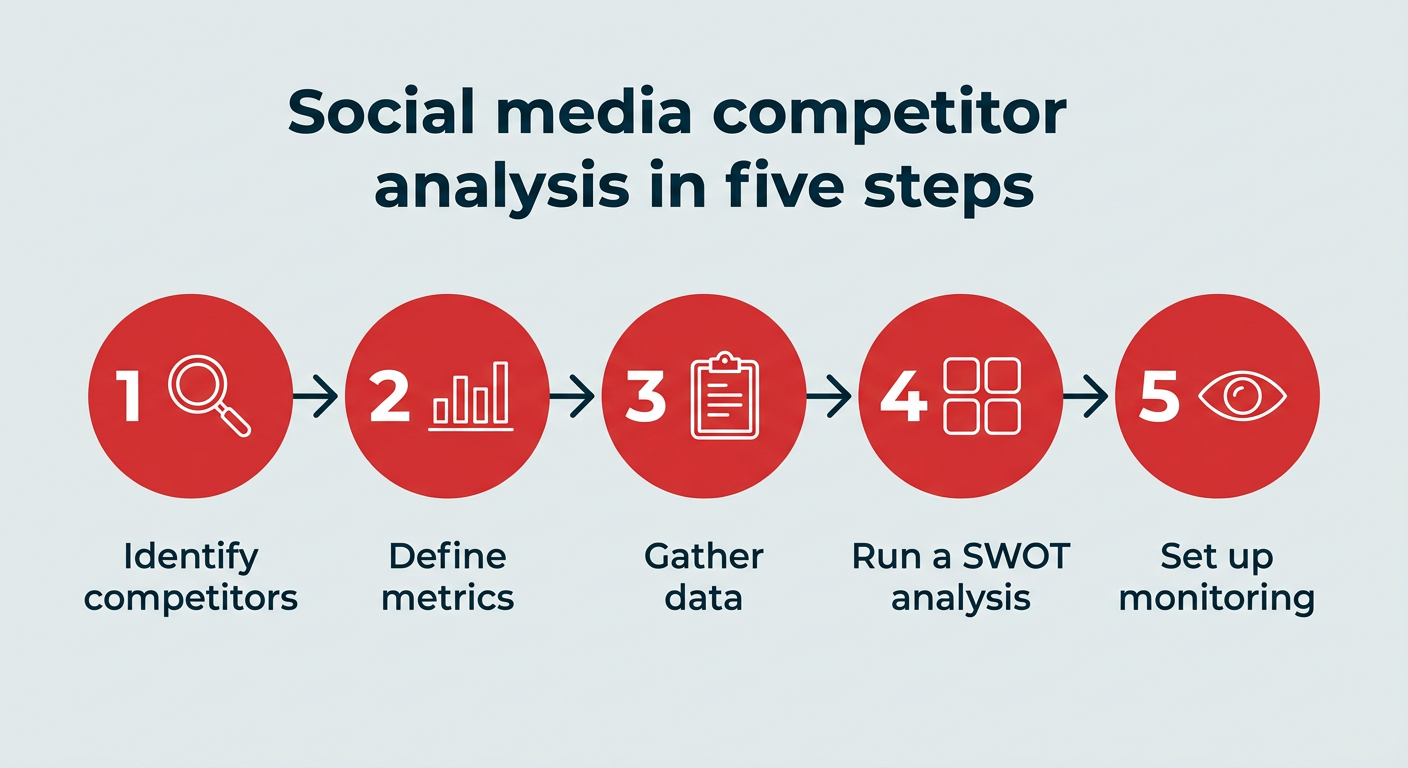
To move from basic observation to actionable insights, marketing teams should follow a structured five-step evaluation process on a recurring quarterly or monthly basis.

[ Step 1: Identify Competitors ] ➔ [ Step 2: Define Metrics ] ➔ [ Step 3: Gather Data ] ➔ [ Step 4: SWOT Analysis ] ➔ [ Step 5: Ongoing Monitoring ]Step 1: Identify Your Competitors
Begin by mapping out your landscape through multiple lenses:

- Keyword Analysis: Utilize search tools like Google Search Console and Keyword Planner to discover which brands rank for your core industry terms.
- Search Engine Mapping: Search your top 5 to 10 product terms on Google and take note of who dominates the top organic results.
- Social Native Search: Check social-first search engines (TikTok, Instagram Reels, and YouTube Shorts) to see which brands capture visibility among younger, search-driven consumer segments.
- Audience Overlap: Review your native analytics suites (such as Meta Business Suite or TikTok Analytics) to see which exterior brands your existing followers frequently interact with.
- Shortlist Formulation: Narrow your findings down to 3–5 direct competitors who share your target demographic and product categories.
Step 2: Define the Metrics You Will Track
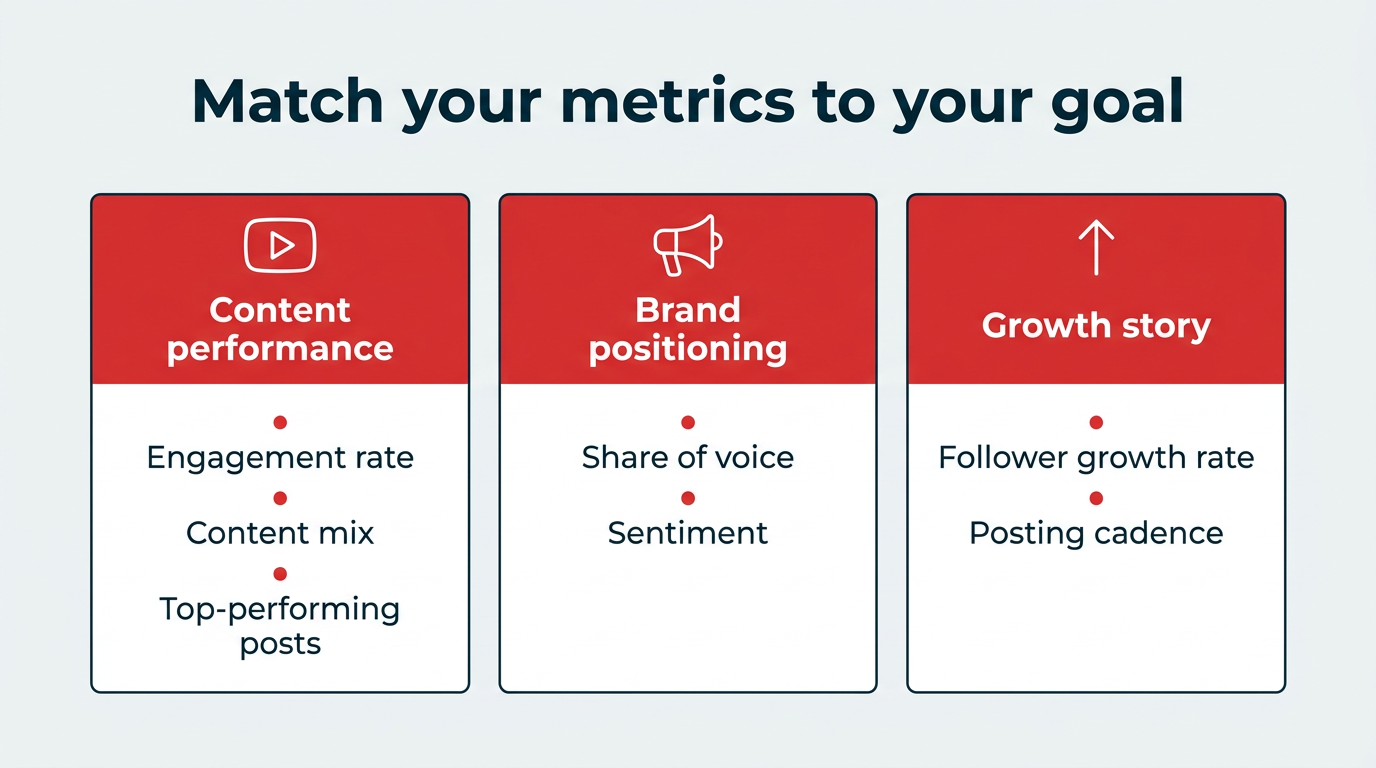
Select 5 to 7 core performance indicators that map directly to your overarching business objectives. If your primary goal is content resonance, prioritize engagement rates and content mix. If your focus is corporate reputation, lean into share of voice and audience sentiment.

Step 3: Gather Competitor Data
Conduct a methodical scan of your shortlisted competitors’ profiles. Look beyond basic follower counts to evaluate their content strategy, cadence, and recurring themes. Assess whether engagement spikes are organic or driven by paid media spend by reviewing platform ad libraries and sponsored disclaimers.
Step 4: Run a SWOT Analysis
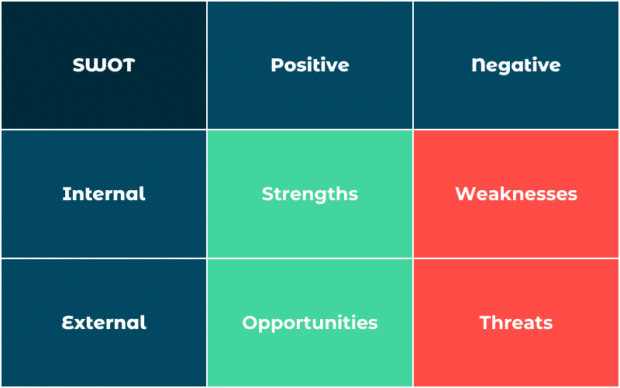
Synthesize your gathered data into a formal SWOT matrix:

- Strengths: Metrics where your brand outpaces the competition.
- Weaknesses: Areas where your channels lag behind industry standards.
- Opportunities: Unmet consumer demands, ignored demographics, or gaps in competitor content strategies.
- Threats: Emerging market entrants, shifting algorithm rules, or negative sentiment trends within your category.
Step 5: Set up Ongoing Monitoring
A competitive analysis should never be a static, one-off project. Establish a monitoring cadence—quarterly for most B2B and service brands, or monthly for fast-paced retail and tech sectors—to capture shifts before they impact your market share.
Supporting Data: Core Metrics and Industry Tools
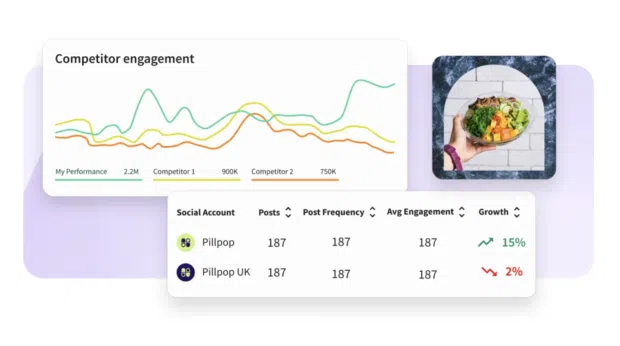
Tracking the right metrics prevents analysis paralysis. The table below outlines the primary data points required for a comprehensive benchmark:
| Metric | What It Tells You | Where to Find It |
|---|---|---|
| Engagement Rate | How well content resonates independently of audience size. | Native platform analytics, specialized benchmarking apps. |
| Follower Growth Rate | Whether a competitor’s audience is accelerating or stalling over time. | Platform insights, analytics dashboards. |
| Share of Voice | The percentage of category conversations owned by your brand versus rivals. | Social listening suites (e.g., Lumen, Mentionlytics). |
| Sentiment Analysis | Whether public mentions skew positive, neutral, or negative. | Integrated listening tools, reputation management software. |
| Content Mix | The distribution of video, image, text, and carousel formats. | Manual profile auditing, benchmarking software. |
Top Tool Picks for 2026
- Hootsuite: Combines competitive benchmarking (
Perch), social listening (Lumen), and publishing scheduling into a single connected operating system. - Rival IQ: Specialized for head-to-head competitive reporting and industry average comparisons.
- Socialinsider: Excellent for granular content performance breakdowns across different media formats.
- Synapview: Ideal for tracking brand mentions and niche hashtags across external discussion platforms like Reddit and blogs.
- Mentionlytics: Offers comprehensive web and social mention tracking paired with advanced sentiment evaluation.
- Sprout Social: Integrates traditional social media management with competitive analytics and keyword word clouds.
Official Responses and Industry Perspectives
Digital marketing leaders increasingly emphasize that competitive intelligence must transcend raw data collection to influence product and brand strategy directly.
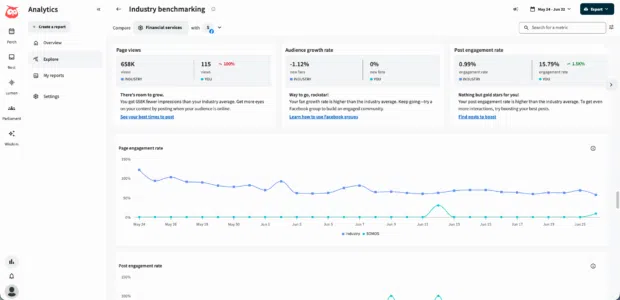
According to enterprise marketing analysts, the integration of AI tools into content pipelines has democratized high-volume publishing, making authenticity and community management the primary differentiators. Industry standard-setters underscore that tracking qualitative metrics—such as comment section sentiment and audience responsiveness—allows brands to pivot messaging long before official quarterly reports reflect market turbulence.
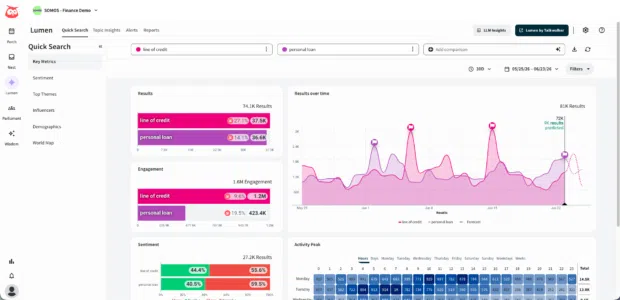
Furthermore, product development teams are leveraging social listening data to capture customer complaints directed at competitors, turning rival shortcomings into immediate product innovation opportunities.

Implications: Translating Insights Into Action
An analysis that does not result in a changed business decision is merely research. To convert competitive insights into tangible growth, marketing departments must operationalize their findings through clear procedural adjustments:

- Reallocate Resources: Shift ad spend and creative hours away from low-performing formats and double down on the content mixes proving successful for category leaders.
- Update the Content Calendar: Directly address the content gaps discovered during your SWOT analysis by building campaigns that speak to underserved audience segments.
- Refine Brand Positioning: Use sentiment tracking to capitalize on competitor missteps, positioning your brand as the preferred alternative in areas where rivals face negative public feedback.
- Establish Accountability: Assign clear timelines and ownership to specific team members for implementing audit takeaways before the next reporting cycle begins.
By treating competitor analysis as a dynamic, continuous practice rather than an annual checklist, organizations can future-proof their social strategies, maintain a competitive edge, and consistently prove business value to executive stakeholders.
 Azzam Bilal Chamdy
  Evan Lee Salim
  Jia Lissa