
 By Iffa Jayyana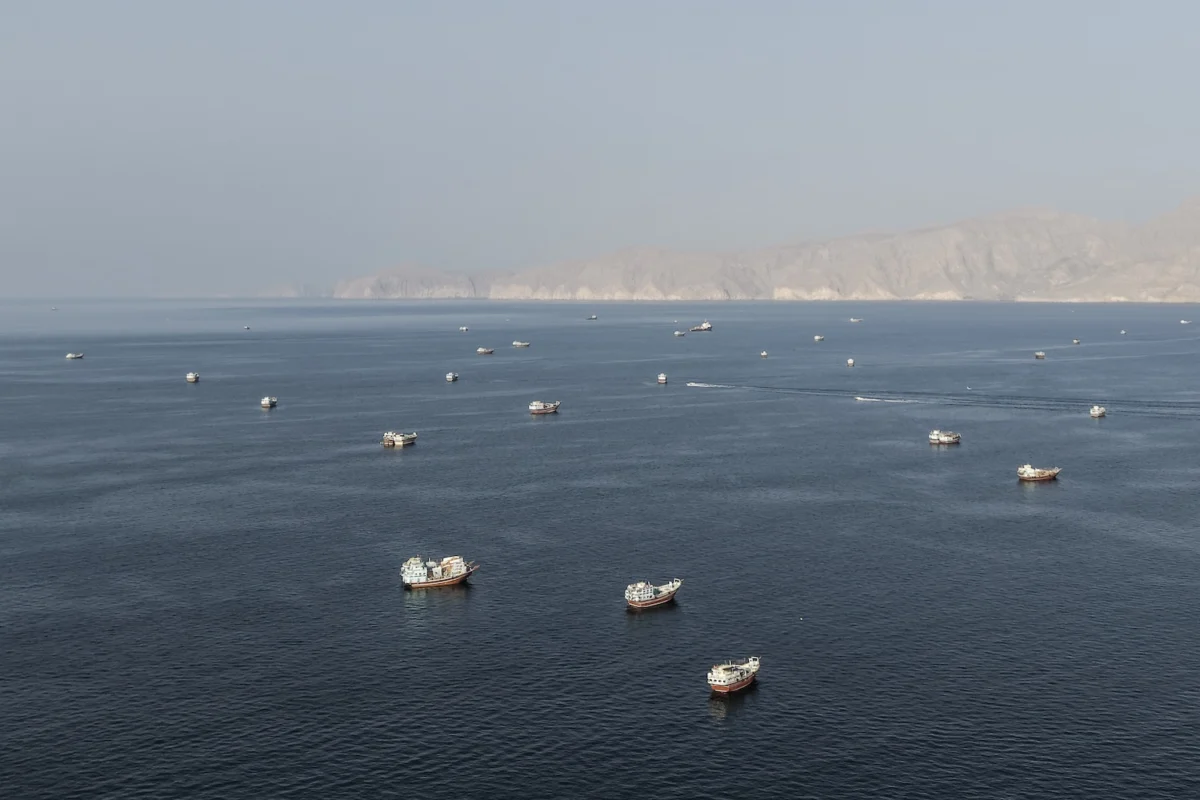
The geopolitical landscape of 2026 continues to be defined by the high-stakes confrontation in the Middle East, with the Strait of Hormuz serving as the epicenter of a global logistics crisis. As oil and container freight markets grapple with the volatility of ongoing conflict, industry analysts are beginning to see signs of a stabilization in shipping costs, even as the maritime security situation remains perilous.
While the "worst" of the freight rate surges appears to be in the rearview mirror, the global supply chain is settling into a "new normal" of elevated costs and complex, rerouted supply lines. The narrative of 2026 is no longer one of runaway inflation in shipping, but rather one of adaptation to a fractured maritime security environment.
The State of Global Freight: A Plateau in Price Escalation
For months, the logistics industry has been battered by extreme rate hikes. According to data released by Xeneta, the ocean and air freight benchmarking platform, container prices from China to the U.S. West and East Coasts have experienced staggering increases of 344 percent and 335 percent, respectively, since February 28. However, recent trends suggest that the market has finally reached its post-Hormuz crisis peak.
Peter Sand, chief analyst at Xeneta, noted in a recent update that while the market is unlikely to experience a collapse in rates, it is equally unlikely to see further drastic increases. "We can say with a level of confidence that the market has reached its post-Hormuz crisis peak in 2026," Sand stated. "Demand is not strong and rates have now peaked, but they will not collapse, so shippers should expect to pay elevated freight costs for the remainder of the year."
The economic impact is starkly visible in the widening spread between U.S. East and West Coast shipping rates. Before the crisis, the difference in cost for a 40-foot equivalent unit (FEU) was a modest $772. Today, that gap has surged to $3,177. East Coast-bound containers now average $11,523, while West Coast-bound boxes hover around $8,346.
Sand anticipates a narrowing of this spread over the next quarter, driven by a sharper decline in East Coast rates as they correct from their exceptionally high starting point. Projections suggest that within three months, spot rates into the East Coast could settle between $6,000 and $7,000, with West Coast rates cooling to the $4,500-$5,500 range.
Chronology of Escalation: A Week of Unprecedented Maritime Hostility
Despite the plateau in market rates, the tactical situation on the water has deteriorated significantly. The period between September 28 and October 5 witnessed the highest density of vessel attacks since the conflict began. Maritime security sources cited by Reuters confirmed at least 12 strikes on oil, LNG, and LPG tankers during this seven-day window. The International Maritime Organization (IMO) corroborated this surge, verifying nine distinct incidents, surpassing the previous record of eight incidents recorded in mid-July.
A Timeline of Recent Hostilities:
- Sunday, October 4: Two tankers were targeted in separate incidents. An inbound LPG carrier and the product tanker Lipsi were struck. Simultaneously, the U.K. Maritime Trade Operations (UKMTO) reported that the Islamic Revolutionary Guard Corps (IRGC) forced a tanker operating near Oman to turn back.
- Monday, October 5: The IRGC continued to demonstrate an aggressive posture. The U.S. Navy-led Joint Maritime Information Center reported that the IRGC is actively asserting control over transit lanes through persistent drone overflights and tactical surveillance.
- Tuesday, October 6: The Panama-flagged tanker On Peace was struck by an unknown projectile, resulting in injuries to 12 crew members.
This kinetic activity has effectively decimated vessel traffic through the strait. Windward, a maritime intelligence firm, reported that total daily vessel crossings dropped to just 11 in a 24-hour period ending Tuesday—a stark contrast to the pre-war daily average of approximately 125 vessels.
The Logistics of Resilience: Bypassing the Strait
While the Strait of Hormuz is largely paralyzed, the flow of global energy has not stopped; it has merely evolved. Kpler’s latest intelligence briefing indicates that total regional clearance of oil currently sits at 11.5 million barrels per day (bpd) on a seven-day average—a significant reduction from the 17.1 million bpd pre-war baseline.
However, the "strait-only" metric is misleading. By utilizing terminals at the UAE’s Port of Fujairah and orchestrating ship-to-ship transfers in the Gulf of Oman, regional energy exports have effectively bypassed the bottleneck. When these alternate routes are factored in, the total regional average reaches 21.7 million bpd, only 7 percent below the pre-war baseline.
Locally, however, the "cost of safety" remains high. The UAE’s National Association of Freight and Logistics reports that the total cost of moving cargo into the Persian Gulf remains three to five times higher than pre-war levels. These costs are not merely reflections of ocean freight rates but are the result of compounding surcharges, mandatory rerouting, and the necessity of expensive land-transport alternatives.
Official Responses and Diplomatic Friction
The rhetoric between Washington and Tehran has reached a fever pitch, characterized by contradictory claims regarding the status of the waterway.
U.S. Secretary of State Marco Rubio, speaking from Athens, asserted that Iran has effectively "lost complete control" of the strait, citing the success of alternative shipping routes that have brought export levels near pre-war norms. Conversely, General Mohammad Reza Naqdi, an adviser to the IRGC, declared to Fars News Agency that the strait is "closed" and under the full control of the Islamic Republic, explicitly threatening to shut down the "illegal routes" currently hugging the Omani coast.
Adding a layer of diplomatic complexity, Vice President JD Vance signaled a potential shift in U.S. policy regarding Iran’s nuclear program. Vance stated that Iran must make a "meaningful" reduction in uranium enrichment capacity—a comment analysts interpret as a potential move toward a more pragmatic, less absolutist diplomatic framework compared to previous demands for a total cessation of enrichment.
Implications for the Global Economy
The economic ramifications of this ongoing impasse are felt most acutely in the energy markets. Brent crude futures have held steady around $101 per barrel, while WTI has fluctuated between $89 and $90. These prices are currently caught in a tug-of-war: upward pressure is being applied by Houthi-led strikes on Saudi infrastructure, while downward pressure is provided by the relative recovery of Gulf exports and the release of strategic petroleum reserves by G7 nations.
For the logistics sector, the implications are clear: the era of "just-in-time" efficiency and predictable shipping costs through the Persian Gulf is suspended. Businesses reliant on these trade lanes must factor in a permanent "risk premium" for the foreseeable future.
As we look toward the remainder of 2026, the global supply chain has shown a remarkable, if expensive, ability to adapt. While the Strait of Hormuz remains a flashpoint for conflict, the international community has successfully developed a bypass architecture that prevents a total energy blackout. The plateau in freight rates provides a small measure of relief, but the volatility of the region suggests that the "Hormuz Crisis" will continue to dictate the rhythm of global commerce for many months to come. The challenge for shippers now is not just managing costs, but navigating the unpredictable intersection of high-stakes diplomacy and maritime security.
 Siti Muinah
  Lina Irawan
  Basiran