
 By Iffa Jayyana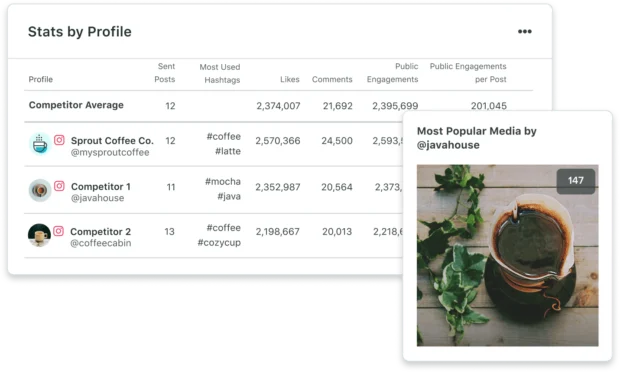
In the hyper-competitive digital ecosystem of 2026, where global social media ad spend is projected to reach an unprecedented $338.75 billion, marketing without competitor intelligence is akin to navigating a high-stakes race blindfolded. A 2% engagement rate means drastically different things depending on whether your industry baseline sits at 0.8% or 4%. Without accurate context, marketing leaders cannot decipher whether a dip in performance stems from their own creative choices or a massive macroeconomic shift across the entire category.

Social media competitor analysis has evolved far beyond casual profile-stalking. Today, it is an essential operational discipline. By systematically tracking how rival brands perform, evaluating their content mixes, and measuring audience sentiment, brands can transform raw data into a reliable baseline for strategic growth.

Main Facts: What is Social Media Competitor Analysis?
At its core, social media competitor analysis is the systematic practice of tracking, evaluating, and benchmarking how rival brands perform across digital channels to shape your own marketing strategy. Unlike broader market research—which examines macro-level consumer demand, purchasing behavior, and target demographics—social media competitor analysis stays laser-focused on the platforms themselves.
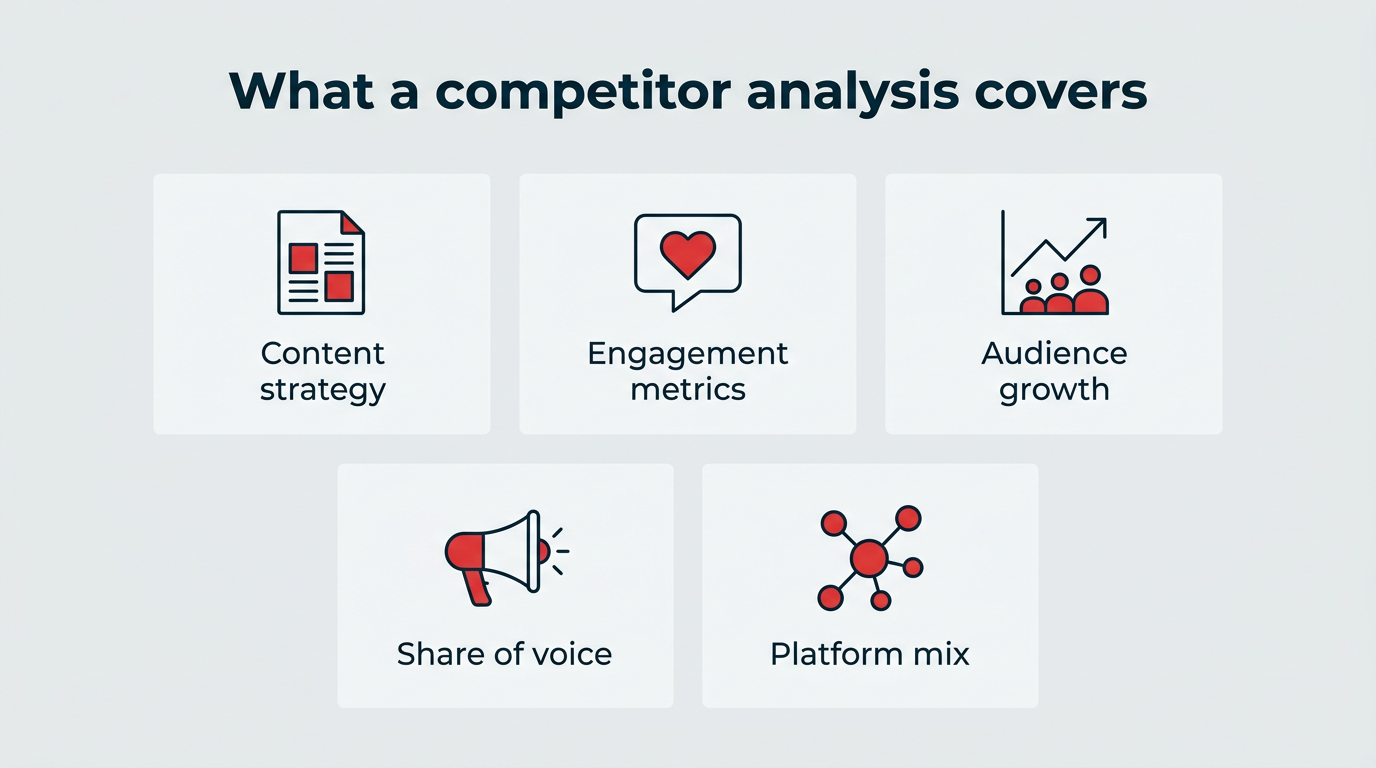
A comprehensive analysis typically evaluates:
- Content Formats & Cadence: What types of media (video, carousels, text) do competitors deploy, and how frequently do they post?
- Audience Growth & Engagement: How rapidly are competitors gaining followers, and what kind of interactions are they driving?
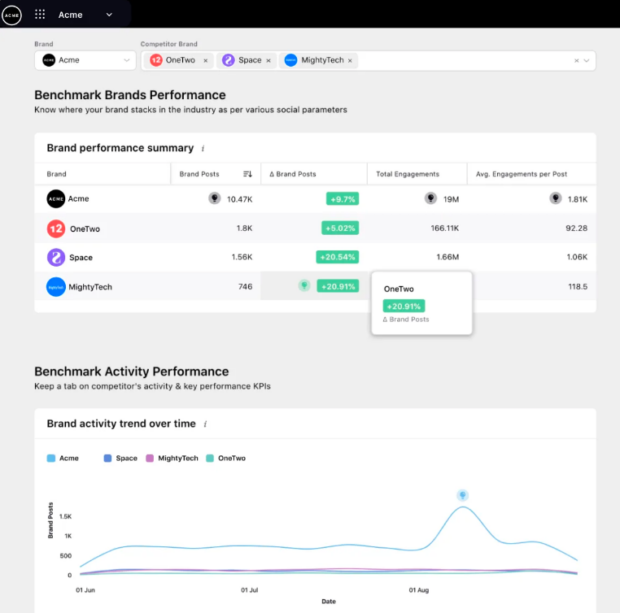
- Share of Voice: What percentage of total category conversation belongs to your brand versus your rivals?
- Sentiment & Community Management: How do audiences feel about competitor content, and how fast do those brands respond to inquiries?
With social media consumption peaking globally, monitoring competitor activity serves as an early-warning radar system, highlighting shifts in audience preferences, algorithmic updates, and emerging content trends before they hit the mainstream.
Chronology: The Evolution of Benchmarking Tools
The tooling landscape for competitive intelligence has undergone a rapid metamorphosis over the past decade.
- The Early Era (Pre-2015): Social media tracking was largely manual. Marketers relied on spreadsheets, counting likes, shares, and follower counts by hand on a weekly or monthly basis.
- The Rise of Dedicated Point Solutions (2015–2020): As social media matured into a primary revenue driver, specialized tools emerged. Platforms focused heavily on single-channel insights (such as Instagram-specific growth tracking or Twitter hashtag monitoring) to help brands evaluate specific campaigns.
- The Enterprise Integration Era (2020–2025): Brands began demanding unified ecosystems. Social media management suites integrated listening engines, consumer intelligence, and competitor tracking into singular dashboards, allowing enterprise teams to correlate social metrics with SEO and web traffic.
- The Modern AI-Driven Landscape (2026 and Beyond): Today, competitive intelligence platforms leverage artificial intelligence to automate reporting, provide plain-language data queries, and surface predictive insights. Modern tools like Perch by Hootsuite allow marketers to ask complex data questions in natural language, eliminating the need to manually construct multi-platform reports from scratch.
Supporting Data: The Top Competitor Analysis Tools Compared
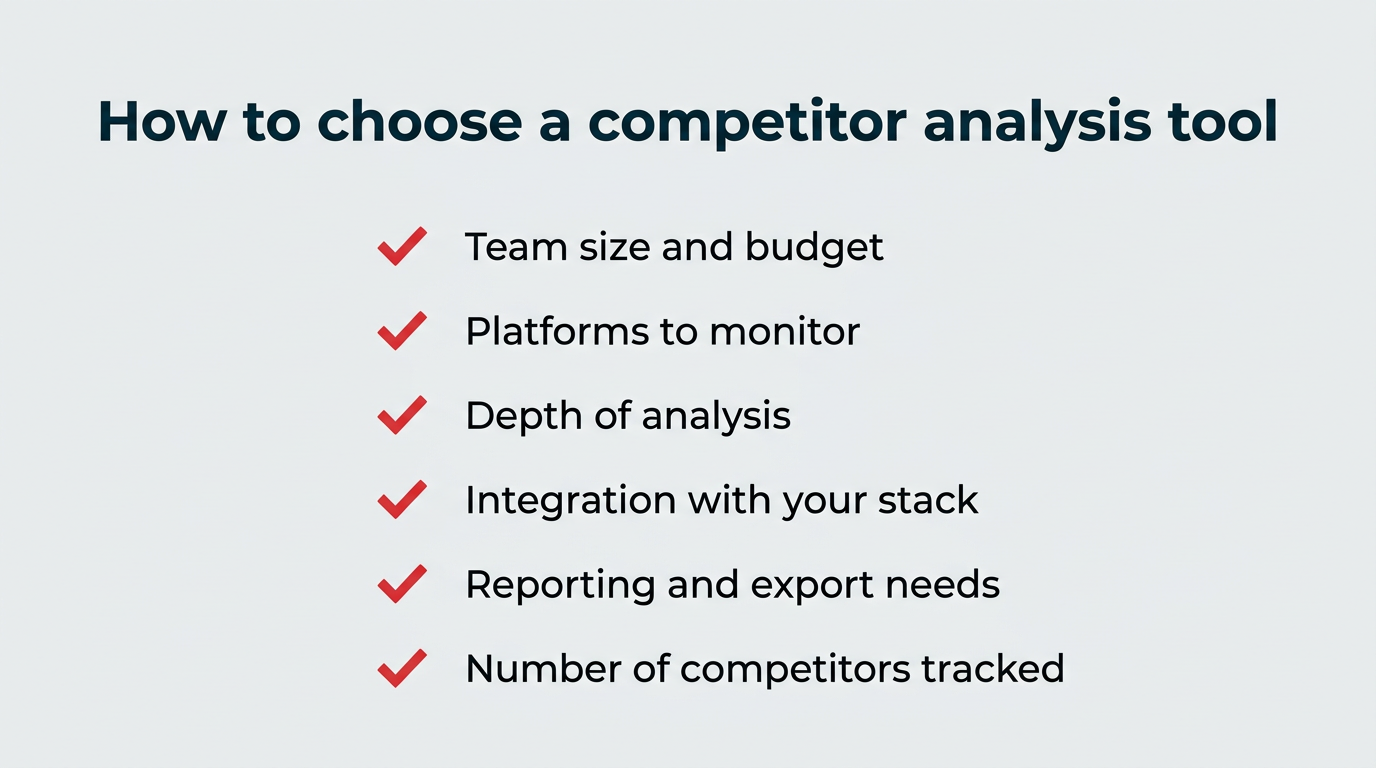
Choosing the right tool depends heavily on organizational structure, platform priorities, and budget. Below is a breakdown of the leading social media competitor analysis platforms available on the market.
| Tool | Best For | Platforms Supported | Starting Price | Target Audience |
|---|---|---|---|---|
| Perch by Hootsuite | Full social media management, competitor analysis, & benchmarking | Facebook, Instagram, X, LinkedIn, TikTok, Bluesky | $99/user/month | Mid-market to enterprise teams |
| Brandwatch | Consumer intelligence & share of voice analysis | X, Instagram, Facebook, Reddit, blogs, forums | Contact for pricing | Large enterprises |
| Sprinklr | Deep competitor insights & sentiment tracking | Facebook, Instagram, X, YouTube | Contact for pricing | Large enterprises |
| SEMrush | Combining SEO and social competitor insights | Facebook, Instagram, X, LinkedIn | $139.95/month (Pro) | Integrated marketing teams |
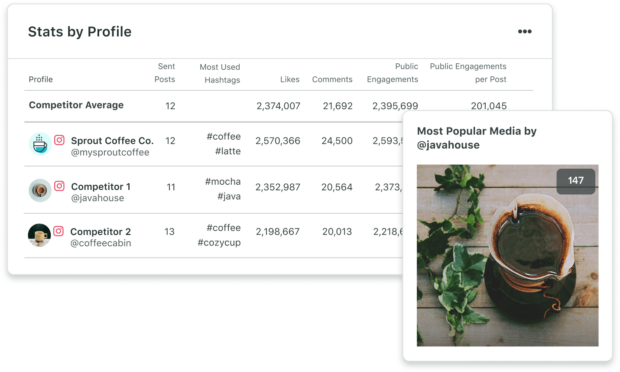
| Sprout Social | Advanced analytics & reporting | Facebook, Instagram, X | $199/seat/month | Agencies & growing teams |
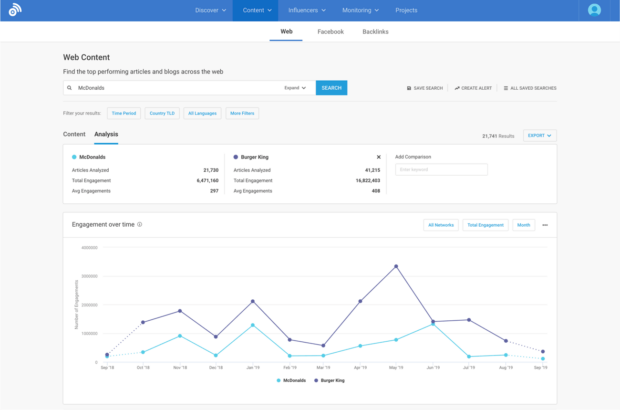
| BuzzSumo | Analyzing top-performing content & trends | Facebook (primary) + web | $199/month | Content-focused teams |
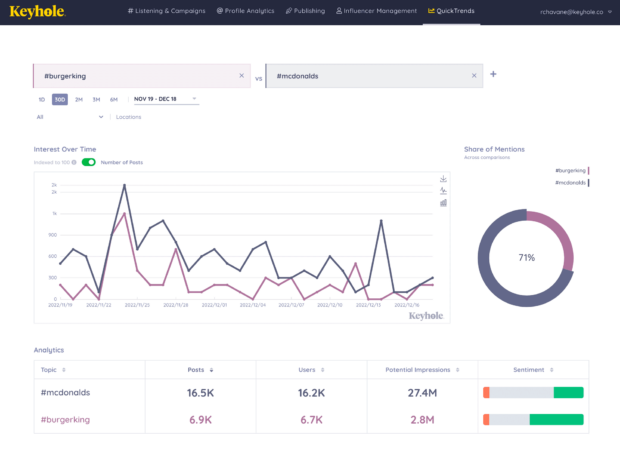
| Keyhole | Hashtag and keyword tracking | X, Instagram, Facebook, YouTube, web | Contact for pricing | Campaign & influencer teams |
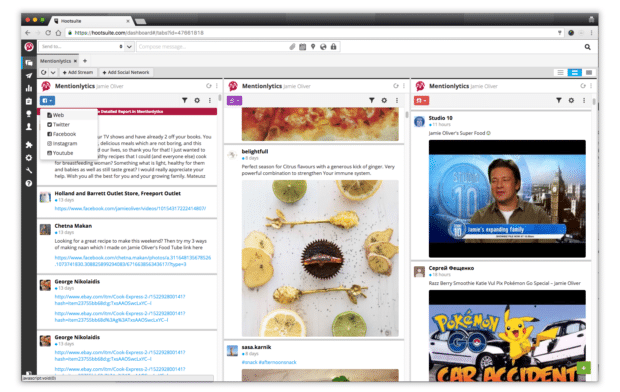
| Mentionlytics | Brand monitoring & sentiment analysis | X, Instagram, Facebook, YouTube, Pinterest, web | Contact for pricing | Small to mid-sized teams |
| Phlanx | Quick engagement comparisons | Instagram, YouTube, X, Twitch | Free tools available | Creators & solo marketers |
| Later | Instagram-led benchmarking & scheduling | Instagram + additional networks | Publicly listed tiers | Creators & small businesses |
| Social Blade | High-level, free performance tracking | YouTube, Instagram, TikTok, Twitch, Facebook | Free | Creators & small businesses |
| Similarweb | Understanding social traffic within the customer journey | Facebook, Instagram, YouTube, web | Contact for pricing | Analytics & growth teams |
Deep-Dive Analysis of Leading Platforms
1. Perch by Hootsuite
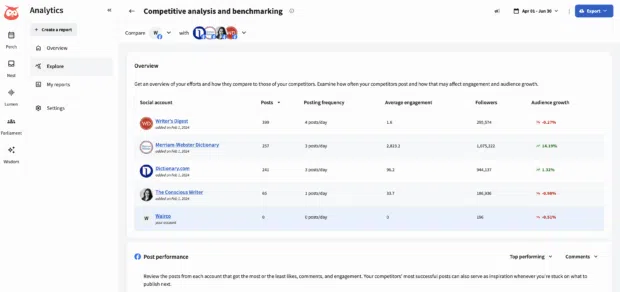
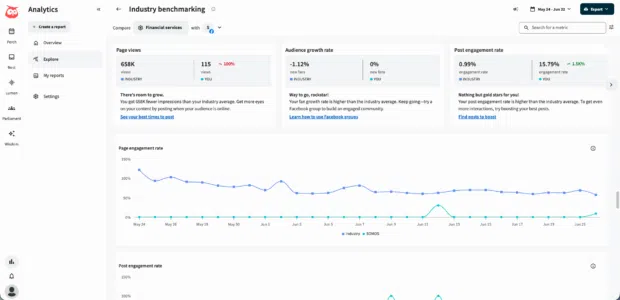
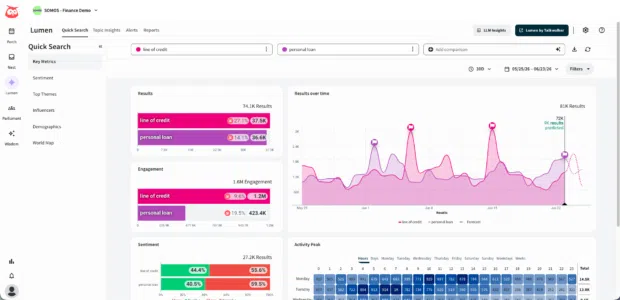
Built directly into the Hootsuite ecosystem, Perch connects competitive data directly to your publishing and content workflows. With integrated apps like Lumen for social listening and Wisdom for natural-language data queries, Perch enables mid-market and enterprise teams to monitor up to 20 competitor accounts simultaneously. It stands out for its robust industry benchmarking features, which automatically compare a brand’s performance against industry averages across major networks.

2. Brandwatch
An enterprise-grade consumer intelligence powerhouse, Brandwatch is exceptional at mapping out a brand’s social share of voice. By aggregating data from social networks, Reddit, blogs, and niche forums, it provides deep visibility into how much online conversation belongs to your brand versus your competitors.

3. SEMrush
Traditionally known as an SEO titan, SEMrush bridges the gap between search engine optimization and social media monitoring. It allows digital marketing teams to track competitor performance across major social channels while analyzing how search and social traffic interact across the broader digital ecosystem.
Official Responses and Industry Perspectives
Marketing leaders and industry analysts agree that competitive intelligence is no longer optional in an environment where user attention spans are shrinking and algorithm updates occur without warning.
According to product strategy experts, the integration of generative AI into analytics platforms has fundamentally changed how data is consumed. Rather than spending hours scrubbing spreadsheets and filtering pivot tables, marketing executives now demand real-time, synthesized insights that directly dictate budget allocation and content experimentation.
Furthermore, data privacy shifts and API restrictions implemented across major social networks have made first-party and third-party competitive monitoring tools essential. Because manual observation is increasingly limited by algorithmic feeds that only show content a user already interacts with, enterprise-grade listening tools provide the objective transparency needed to maintain a competitive edge.
Implications for Modern Marketers
Implementing a structured competitor analysis framework yields profound strategic advantages. Here are seven ways marketing teams leverage competitor intelligence to drive real business results:
- Setting Realistic Performance Goals: When launching new channels or entering unfamiliar markets, historical data is scarce. Competitor benchmarks establish achievable Key Performance Indicators (KPIs) from day one.
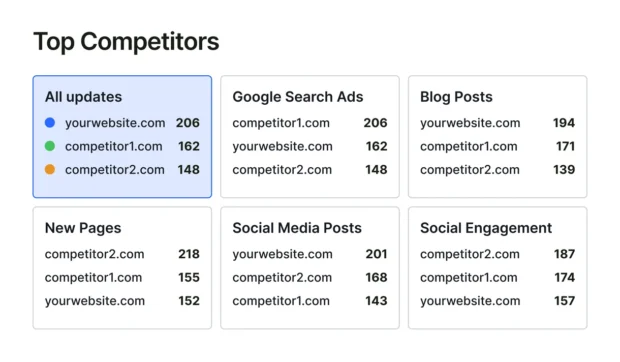
- Contextualizing Results: When engagement fluctuates, competitor data reveals whether the drop is isolated to your brand or symptomatic of a wider industry trend or algorithm change.
- Discovering Fresh Content Inspiration: Monitoring high-performing competitor posts highlights emerging memes, formats, and trends without requiring you to manually follow every rival account.
- Defining Your Unique Selling Proposition (USP): By analyzing what competitors do well—and where they fall short—brands can sharpen their unique market positioning and protect their turf.
- Deepening Audience Understanding: Reviewing how audiences engage with competitor content offers critical demographic and psychographic insights, helping refine audience personas.
- Expanding Reach via Social SEO: Analyzing competitor keywords and high-performing hashtags feeds directly into social search optimization strategies, ensuring content reaches new audiences beyond existing followers.
- Executing Robust SWOT Analyses: Comprehensive competitor data provides the external inputs needed to accurately map out industry opportunities and threats.
Conclusion: Turning Data Into Action
Conducting a social media competitor analysis should be a continuous, repeatable process rather than a one-off project. By committing to monthly check-ins for ongoing tactical adjustments and deeper quarterly reviews for strategic pivots, marketing teams can ensure their social media strategy remains agile, competitive, and firmly grounded in market reality.
Whether you are a solo creator utilizing free tools like Social Blade and Phlanx or an enterprise marketing department leveraging Perch by Hootsuite or Brandwatch, the path forward is clear: measure consistently, benchmark intelligently, and let data-driven insights guide your brand to the top of your industry.
 Suro Senen
  Raul Delapena Setiawan
  Evan Lee Salim