
 By Jia Lissa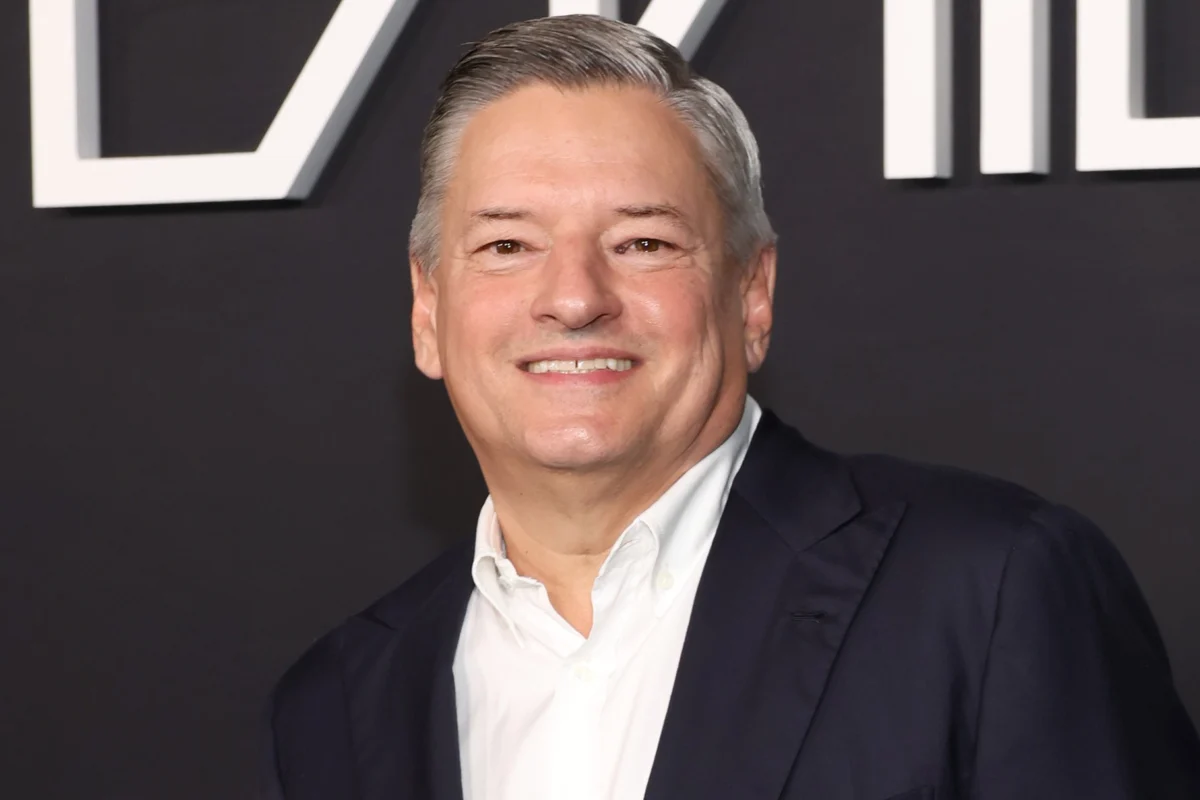
The State of the Streamer: A Strategic Overview
In an expansive appearance at the Bloomberg Screentime conference this Wednesday, Netflix co-CEO Ted Sarandos offered a rare, candid glimpse into the current state of the global streaming landscape. As the industry grapples with the seismic potential of a Paramount/Warner Bros. merger, Sarandos maintained a posture of practiced indifference, signaling that Netflix remains focused on its own internal benchmarks rather than the defensive consolidation strategies of its competitors.
With Netflix’s own year-over-year user engagement growth slowing to a 2% increase in the first half of 2026, the executive addressed the "headwinds" facing the company. Despite the cooling growth, Sarandos emphasized the company’s financial health, noting that Netflix achieved double-digit revenue growth across every global region in the most recent quarter. He dismissed concerns regarding his rivals’ potential union, noting that in the world of media mergers, "one plus one" rarely equals two—it could result in synergy, or it could lead to dilution.
The Paramount-Warner Bros. Merger: A Wait-and-See Approach
The media landscape stands on the precipice of a monumental shift following a judge’s final approval of the Paramount/Warner Bros. Discovery merger this Wednesday. Industry insiders expect the formal announcement of the new corporate structure—including the widely anticipated ascension of HBO/HBO Max content chairman Casey Bloys—to drop as early as next week.
When pressed on rumors regarding his own recruitment efforts to court Bloys for a position at Netflix, Sarandos deftly steered the conversation away from corporate poaching. "He’s a good guy," Sarandos said, referring to their well-publicized lunches. "He’s going to be in a very good position wherever he does. He’s a super talented guy."
The merger represents a direct challenge to the dominance of incumbents like Netflix. However, Sarandos remains unbothered by the narrative of a new, combined rival. He framed his own past pursuit of Warner Bros. Discovery assets as a calculated exercise in fiscal discipline. "We won the deal at some point, so we priced it right," Sarandos explained. "At our scale, that was the top price point where I thought we could return value to our shareholders. Any more than that, I thought we’d be taking into negative territory." He acknowledged that while the attempt to acquire the assets risked upsetting the "business narrative" for investors, the decision was driven by long-term strategic viability rather than short-term market optics.
Political Ties and the Push for Federal Incentives
Perhaps the most notable portion of Sarandos’s discussion involved his relationship with President Donald Trump and the pursuit of federal production tax incentives. In a departure from the typical Hollywood skepticism toward the former president, Sarandos defended Trump’s interest in the entertainment industry.
"For everything else you might think, he is a guy who really cares about the entertainment business," Sarandos stated. "He cares about protecting the industry and creating jobs, and he loves creating jobs in the entertainment business in America."
Sarandos revealed that he and the former president have held substantive discussions regarding the viability of federal production tax credits. The executive argued that the U.S. is currently losing a significant share of its domestic production to the United Kingdom, where aggressive tax incentives make filming far more cost-effective for public companies beholden to fiduciary duties.
"We’ve shot in all 50 states, so we understand where it works and where it doesn’t," he noted. "The federal incentive would be a layer of incentive that would go on top of the states’ incentives, which would compete with other countries and keep those jobs back in America."
The "Complacency" of California
While advocating for federal help, Sarandos offered a stinging critique of California’s current infrastructure and regulatory environment. Despite the state’s historical role as the epicenter of global entertainment, Sarandos warned that Los Angeles is failing to keep pace with more competitive regions like New Jersey.
"I just think over the years, California got complacent that the talent was here," Sarandos said. "They let the infrastructure age. They make it very difficult to shoot in the city of Los Angeles." He cited the recent production of David Fincher’s The Further Mis-Adventures of Cliff Booth, describing the filming process in the city as "no walk in the park."
This critique highlights a growing tension between major production houses and the traditional production hubs of the West Coast. As Netflix and other streamers look to optimize their budgets, the friction in Los Angeles is increasingly viewed as an unnecessary operational cost.
Evolving Content Strategies: From Live Events to Theatrical Windows
Sarandos also addressed the changing content mix at Netflix. While live programming has become a centerpiece of the company’s recent expansion—notably with high-profile sports and comedy events—the executive acknowledged that the investment is still in a maturation phase.
"When we do live programming on Netflix… we spend about 5% of our content budget on live events. They generate about 1% of our watching," he noted. Despite this current disparity, Sarandos remains committed to the strategy, viewing it as a long-term lever to keep the platform dynamic.
Furthermore, Netflix is undergoing a radical shift in its theatrical distribution philosophy. The company is moving away from a one-size-fits-all streaming release model toward a bespoke strategy that maximizes the theatrical window for specific types of content.
This October, the release of La Bola Negra will mark the longest theatrical runway in the streamer’s history. Looking toward 2027, Greta Gerwig’s Narnia: The Magician’s Nephew will pioneer a conventional 49-day theatrical rollout before its April 2 streaming debut.
"What we’re doing is looking at this model and saying, ‘OK, how do we serve movie lovers who may want to see this movie in a theater, and how do we not harm value to Netflix?’" Sarandos explained. The strategy classifies films into two distinct buckets: the "art house" films, which benefit from long-tail theatrical play, and the "four-quadrant" family blockbusters, which require a massive, wide-scale opening to build cultural momentum. Future titles, including a new Charlie and the Chocolate Factory installment and a sequel to K-pop Demon Hunters, are expected to receive similar, broad theatrical treatments.
Implications for the Future of Streaming
The broader implications of Sarandos’s comments suggest that Netflix is entering a period of "mature stabilization." The company is moving past the phase of hyper-growth at any cost and is now focused on optimizing its existing assets through:
- Strategic Theatricality: Utilizing cinema windows to build brand prestige and maximize the cultural footprint of major franchises.
- Regulatory Lobbying: Leveraging relationships with political figures to secure federal tax support, effectively shifting the burden of production costs from the studio to the state.
- Regional Diversification: Moving production away from high-cost, high-friction hubs like Los Angeles toward more business-friendly states and countries.
- Fiscal Discipline: Rejecting the "merger mania" that has gripped the rest of the media industry in favor of a conservative approach to asset acquisition.
As Netflix navigates this transition, the pressure remains on Sarandos to prove that the company can continue to grow its user base even as it experiments with new revenue streams, from ad-supported tiers to live event broadcasting. While the market waits to see how the new Paramount/Warner Bros. entity will perform, Netflix seems content to let the rest of the industry consolidate, confident that its own scale and long-term vision are sufficient to maintain its lead in the streaming wars.
For investors and industry observers alike, the message from Sarandos is clear: the era of the "everything-at-once" growth strategy is over. In its place is a more calculated, surgical approach to content, distribution, and government relations that prioritizes shareholder value over the vanity of industry rivalry. Whether this strategy will be enough to satisfy the demands for faster growth remains the primary question for the coming fiscal year.
 Lina Irawan
  Asep Darmawan