
 By Dwi Wanna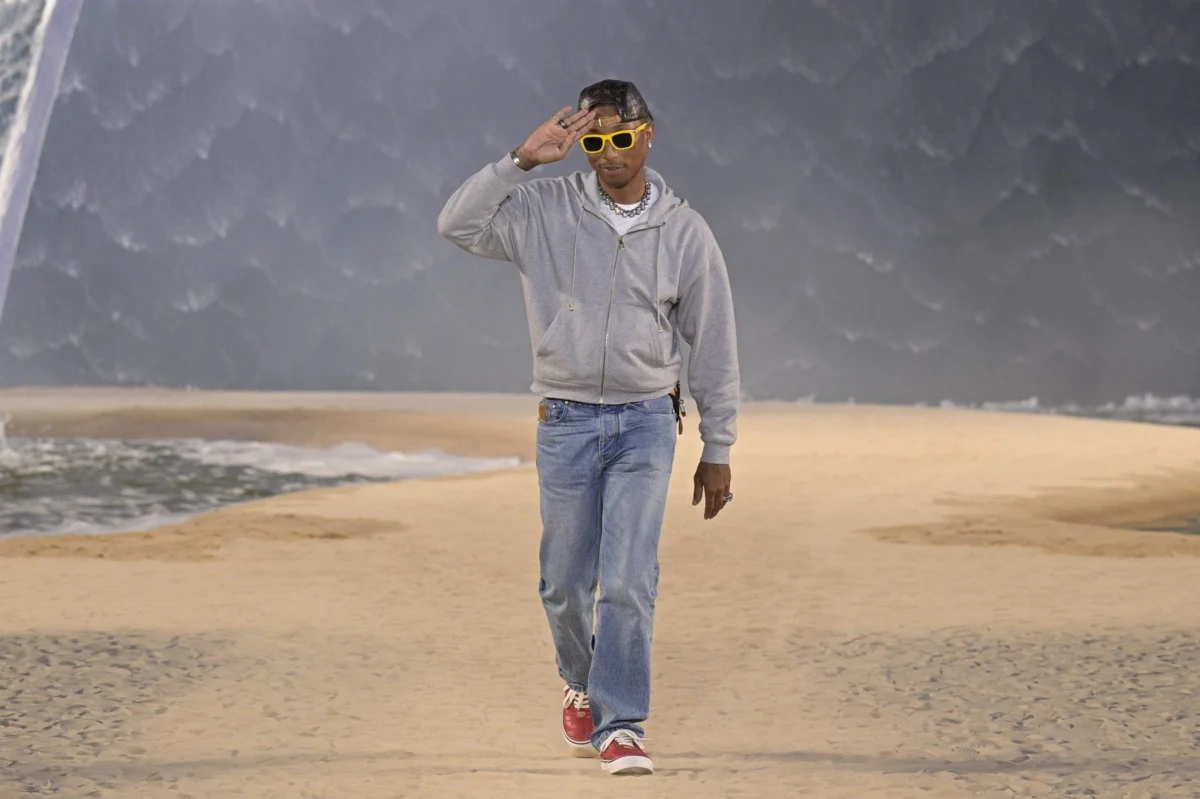
The intersection of high fashion and global hip-hop reached a new zenith on Tuesday, June 23, 2026, as Pharrell Williams unveiled his latest collection for Louis Vuitton at the Cité Internationale Universitaire de Paris. As the maison’s creative director for menswear, Williams has consistently sought to blur the lines between traditional luxury tailoring and the rhythmic pulse of modern culture. This season, however, the designer—known to many as "Skateboard P"—did more than just debut a "beachy" spring/summer collection; he effectively turned the runway into an exclusive listening session for his upcoming musical endeavors.
The Main Event: A Star-Studded Convergence
The event was, by all accounts, a masterclass in cultural curation. The front row served as a "who’s who" of the entertainment and sports worlds, highlighting the immense gravity Williams commands within the industry. Attendees included rap heavyweights Future, Missy Elliott, Lil Baby, and Quavo, alongside rising stars like Coco Jones and Lola Young. The presence of UK rap icon Skepta and the towering figure of NBA superstar Victor Wembanyama—the latter a symbol of the global, boundary-pushing ethos Pharrell fosters—underscored the event’s reach across geography and genre. Actor Jeremy Allen White was also among the notables taking in the presentation, which was staged against a backdrop of flowing water and sandy landscapes.
The show was not merely a visual spectacle. The auditory experience was driven by L’Orchestre du Pont Neuf, led by the visionary Thomas Roussel, joined by the soul-stirring harmonies of The Voices of Fire. This ensemble provided the orchestral scaffolding for what would become the most talked-about element of the afternoon: a series of unreleased, Pharrell-produced collaborations.
Chronology: A Runway of Unreleased Anthems
The integration of music into the show was seamless, with the runway playlist acting as a narrative arc for the collection.
- The Opening Volley: As the first models hit the sand, the atmosphere was immediately anchored by the track "Haavin," featuring Quavo. The production was classic Pharrell: futuristic, synth-heavy, and rhythmically complex. Quavo’s bars were characteristically sharp, touching on his evolution from the streets to global stardom: "Having too much stuff I ain’t imagine / I’m suburban now, I’m Kodak Blacking / Trying to be perfect now, shooters in the mansion / Went bigger, I’m global now, trying to speak Spanish."
- The Mid-Show Surge: The intensity shifted with a haunting, string-laden track titled "Simulation," a collaboration between Pharrell and YoungBoy Never Broke Again. This marked a significant milestone, as it is the first time the two have collaborated without the presence of a third-party artist. The track featured Pharrell’s own vocal contributions, layered over his signature "screeching" string arrangements.
- The Finale: The energy peaked with "Dead Fresh," a collaboration with Lil Baby. The track, characterized by hard-hitting, aggressive trap percussion, saw Baby flexing his status with a lyrical flow that felt perfectly calibrated for the summer months.
Supporting Data: The Pharrell Williams Effect
Pharrell’s tenure at Louis Vuitton, which began in 2023, has been defined by a relentless output of creative projects. Since taking the helm of the men’s division, he has navigated the brand away from the rigid structures of legacy fashion and toward a more fluid, pop-culture-integrated identity.
His success is not just anecdotal; it is backed by a proven track record of musical and commercial performance. Notably, his 2025 reunion with the Clipse to produce the entirety of the brothers’ comeback album, Let God Sort Em Out, served as a litmus test for his ability to mobilize the industry. The project debuted at No. 4 on the Billboard 200, proving that his production chops remain as sharp as his eye for textiles and silhouettes.
Furthermore, the involvement of artists like Quavo—who confirmed via social media on May 26 that he had finalized a full collaborative project with Williams—indicates that the Paris show was not just a one-off performance, but a strategic rollout for a larger, multi-media ecosystem.
Official Responses and Industry Context
While Louis Vuitton has remained tight-lipped regarding the specific release dates for the tracks heard on the runway, the buzz surrounding the show was instantaneous. Quavo’s public confirmation of his project with Pharrell, recorded at the Louis Vuitton headquarters in Paris, highlights the deep integration between the brand’s creative process and the recording studio.

For many industry analysts, this represents a new model for brand identity. By utilizing the runway as a distribution channel for exclusive music, Williams is bypassing traditional radio and streaming rollouts, creating an "eventized" consumption experience. This strategy is not without precedent, but the scale at which Williams is operating—collaborating with artists as diverse as YoungBoy Never Broke Again, Lil Baby, and the Clipse—suggests he is positioning the Louis Vuitton menswear platform as a modern-day Motown: a creative hub where sound and aesthetic are inextricably linked.
Implications: The Future of Luxury Marketing
The implications of the Spring/Summer 2027 show extend far beyond the clothes themselves. By embedding unreleased music into the very DNA of the runway, Williams is redefining the "value" of a fashion show.
1. The Death of the "Static" Runway
Traditional fashion shows are often criticized for being removed from the cultural zeitgeist. By integrating live music performances and premiering exclusive tracks, Williams has ensured that the show remains relevant long after the last model leaves the runway. The YouTube views of the full show are expected to surge as fans parse through the background tracks for snippets of lyrics or production tags.
2. The Celebrity as Creative Partner
The presence of figures like Victor Wembanyama alongside rappers like Future and Missy Elliott signals a move toward a "poly-cultural" audience. Williams is not designing for a specific "type" of person; he is designing for a demographic that values excellence across all creative fields.
3. The Shift to "Pharrell-as-Curator"
Perhaps the most significant takeaway is the shift in Pharrell’s role. He is no longer just a designer; he is a creative director in the truest sense of the word. Whether he is selecting the fabric for a summer coat or the snare drum sound for a Lil Baby track, the vision is singular. This total-brand-control approach creates a cohesive, immersive world that is increasingly difficult for competitors to replicate.
As the industry looks toward the remainder of the year, the questions are twofold: when will these collaborations hit streaming platforms, and what is the next frontier for the LV-Williams partnership? If history is any indicator, the answer will be found on a runway in Paris, likely accompanied by a sound that will define the upcoming year in music.
The Spring/Summer 2027 collection, with its waterfall motifs and beach-inspired palettes, may have been the nominal focus, but the real story was the sound of the future. Pharrell Williams has once again proven that he is not just setting trends; he is setting the tempo for an entire industry.
 Ali Ikhwan
  Suro Senen
  Reynand Wu