
 By Evan Lee Salim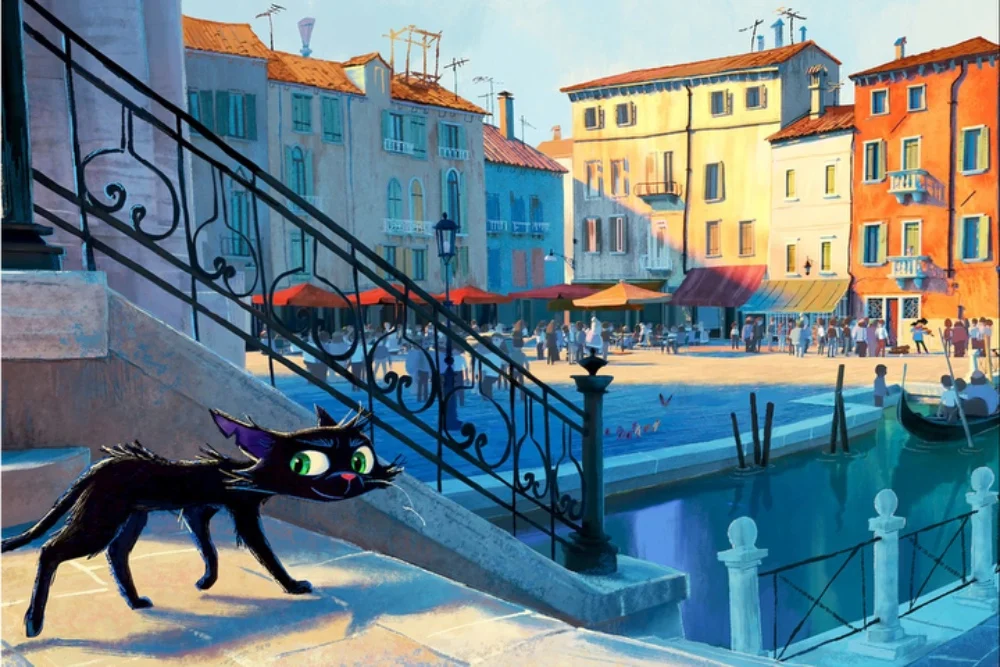
The world of animation is currently abuzz following the prestigious Annecy International Animation Film Festival, where Pixar Animation Studios pulled back the curtain on its latest creative endeavors. Known for pushing the boundaries of technological innovation and emotional storytelling, Pixar has signaled a return to beloved characters while simultaneously exploring new, painterly aesthetic territories. The studio’s presentation focused on two distinct projects: the whimsical theatrical short Loving Dory and the ambitious, atmosphere-heavy narrative project Gatto.
Main Facts: A Dual Showcase of Pixar’s Creative Range
Pixar’s latest presentation at Annecy served to demonstrate the studio’s dual focus: maintaining the emotional legacy of its most recognizable intellectual properties while fostering experimental, visually distinct narratives.
Loving Dory, directed by Lou Hamou-Lhadj, marks a return to the colorful, aquatic world of Finding Nemo. However, rather than rehashing previous storylines, the short offers a humorous and poignant new chapter for the famously forgetful regal blue tang. The narrative centers on an unexpected romantic pursuit—Dory finds herself enamored with a common plastic bag.
Conversely, Gatto represents a departure into the gritty, atmospheric streets of Venice. Directed by Enrico Casarosa—the visionary behind Luca—the project introduces a black cat named Nero, whose life of survival and petty crime within a feline criminal syndicate highlights a darker, more stylistic approach to storytelling. With a star-studded cast featuring Mark Ruffalo and Laurence Fishburne, Gatto is shaping up to be one of the studio’s most visually daring projects to date.
Chronology of Development: From the Drawing Board to Annecy
The journey toward these projects reflects the cyclical nature of Pixar’s creative pipeline. Following the massive success of Luca, Casarosa began conceptualizing a project that would return him to his Italian roots but through a drastically different lens. While Luca was a sun-drenched, coming-of-age fantasy, Gatto was born from the specific, almost mythic observation of Venice’s street cat population.
Development on Gatto began in earnest shortly after the completion of Luca. The team spent months analyzing the "secret life" of Venetian cats, studying their territorial behaviors and the superstitions surrounding black cats in European folklore. The narrative evolved from a simple animal observation piece into a noir-inspired crime caper, blending the harsh realities of the "feline underbelly" with the whimsical nature of an animated feature.
Simultaneously, the team behind Loving Dory sought to find a way to revisit the Nemo universe that felt fresh and character-driven. Hamou-Lhadj noted that Dory’s unique psychological makeup allowed for a playful exploration of perception, leading to the bizarre and delightful premise of her romance with a piece of inanimate debris. Both projects were fast-tracked for their Annecy debut, serving as a progress report on the studio’s ongoing commitment to shorts and experimental feature development.
Supporting Data: The "Painterly" Aesthetic Shift
One of the most significant takeaways from the Annecy presentation is Pixar’s deliberate move away from hyper-realism toward a "handcrafted" aesthetic. Casarosa described the visual language of Gatto as an "immersive, painterly look," explicitly drawing comparisons to the post-impressionist movement.
"Imagine walking into a Van Gogh painting," Casarosa stated during the presentation. This represents a massive shift in rendering technology for the studio. Traditionally, Pixar has been the industry standard for light-accurate, physically-based rendering. Gatto utilizes a proprietary technique that favors texture, brushstroke-like shading, and expressive color palettes over photorealism.
The studio’s technical leads emphasized that this "heightened version of Venice" required a complete overhaul of their lighting engines. The goal was to ensure that the environment felt emotional—responding to the internal state of the characters—rather than simply providing a static backdrop. By layering these textures, the team hopes to evoke a sense of intimacy that standard 3D animation often loses in its pursuit of precision.
Official Responses and Creative Vision
The directors involved in these projects were vocal about the challenges and joys of their respective narratives. Lou Hamou-Lhadj, speaking on Loving Dory, emphasized that the short is essentially a study in Dory’s psyche. "It’s a new chapter in Dory’s story because she allows us to have fun," Hamou-Lhadj explained. "By giving her a partner—even a plastic bag—we see the purity of her optimism, which remains one of the most compelling traits in the Pixar canon."
Enrico Casarosa provided deep insight into the thematic core of Gatto. He highlighted the interplay between the human world and the secret feline hierarchy. "In Venice, there used to be tons of cats around the streets. They seemed to rule the place," Casarosa noted. "We loved the idea of showing the secret life of cats of Venice. Nero has to fend for himself, and he hasn’t had it easy, because he’s a black cat and everyone is superstitious."
The inclusion of high-profile talent such as Mark Ruffalo and Laurence Fishburne suggests that Gatto is a high-priority project. The involvement of these actors provides a gravitas that elevates the "cat mob" premise from a mere gimmick to a character-driven drama. Casarosa himself will provide the voice for the comedic relief, a goofy pigeon named Saverio, who serves as a counterweight to the intense, high-stakes atmosphere of the Venetian underworld.
Implications for the Future of Pixar
The implications of these announcements are twofold. First, they signal that Pixar is doubling down on its "short-form" storytelling as a laboratory for feature-length innovation. By testing the "painterly" style in Gatto, the studio is likely gauging audience reaction for potential future feature films that prioritize artistic expression over technical photorealism.
Second, the projects reflect a pivot toward more mature, genre-bending narratives. The "gangster life" plot of Gatto—complete with an "art-collecting" mob boss, a reluctant thief seeking an exit, and the complications of a burgeoning friendship—is a significant departure from the standard "buddy-comedy" template that characterized much of Pixar’s early history.
If successful, this direction could redefine the studio’s output for the next decade. By blending the emotional resonance of the Finding Nemo universe with the noirish, textured world of Gatto, Pixar is effectively expanding its demographic reach, appealing to both the children who grow up with their films and the adults who appreciate the stylistic and narrative maturity of their newer works.
As the industry looks toward the upcoming release cycle, all eyes remain on these projects. Whether it is the simple, humorous innocence of Dory’s new romance or the complex, atmospheric streets of a feline-dominated Venice, Pixar continues to prove that, even after decades in the spotlight, it remains a master of reinventing its own legacy. The studio’s willingness to experiment with aesthetics—moving from the crisp, clean lines of Toy Story to the brush-stroked, Van Gogh-inspired vistas of Gatto—confirms that for Pixar, the medium of animation is still a wide-open frontier, limited only by the imagination of its directors.
 Asep Darmawan
  Azzam Bilal Chamdy