
 By Nana Wu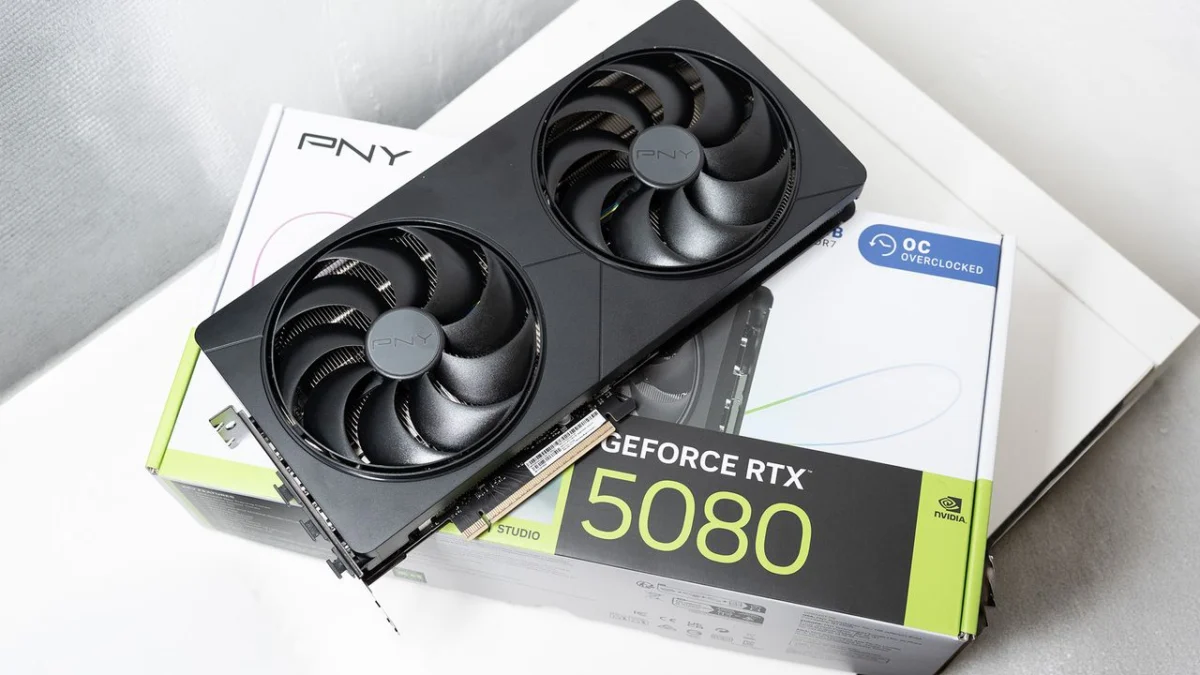
If you are a professional creator or a high-end enthusiast, you know that the "pixel bottleneck" is the ultimate enemy. Whether you are rendering complex 3D scenes in Blender, scrubbing through multi-layered 8K video timelines in Premiere Pro, or training local AI models, the limitations of integrated graphics or aging hardware become painfully apparent. The PNY GeForce RTX 5080 OC Slim enters the market as a high-performance solution designed to obliterate these limitations, offering a refined, overclocked experience that promises to transform your desktop workstation or eGPU-equipped setup.
The Evolution of Power: Main Facts and Context
The arrival of Nvidia’s Blackwell architecture has sent ripples through the creative and gaming communities. At the heart of this revolution is the RTX 5080, a powerhouse chip that bridges the gap between high-end enthusiast performance and professional-grade workstation capabilities. PNY, long a trusted partner in the graphics industry, has taken this silicon and crafted the "OC Slim" variant.
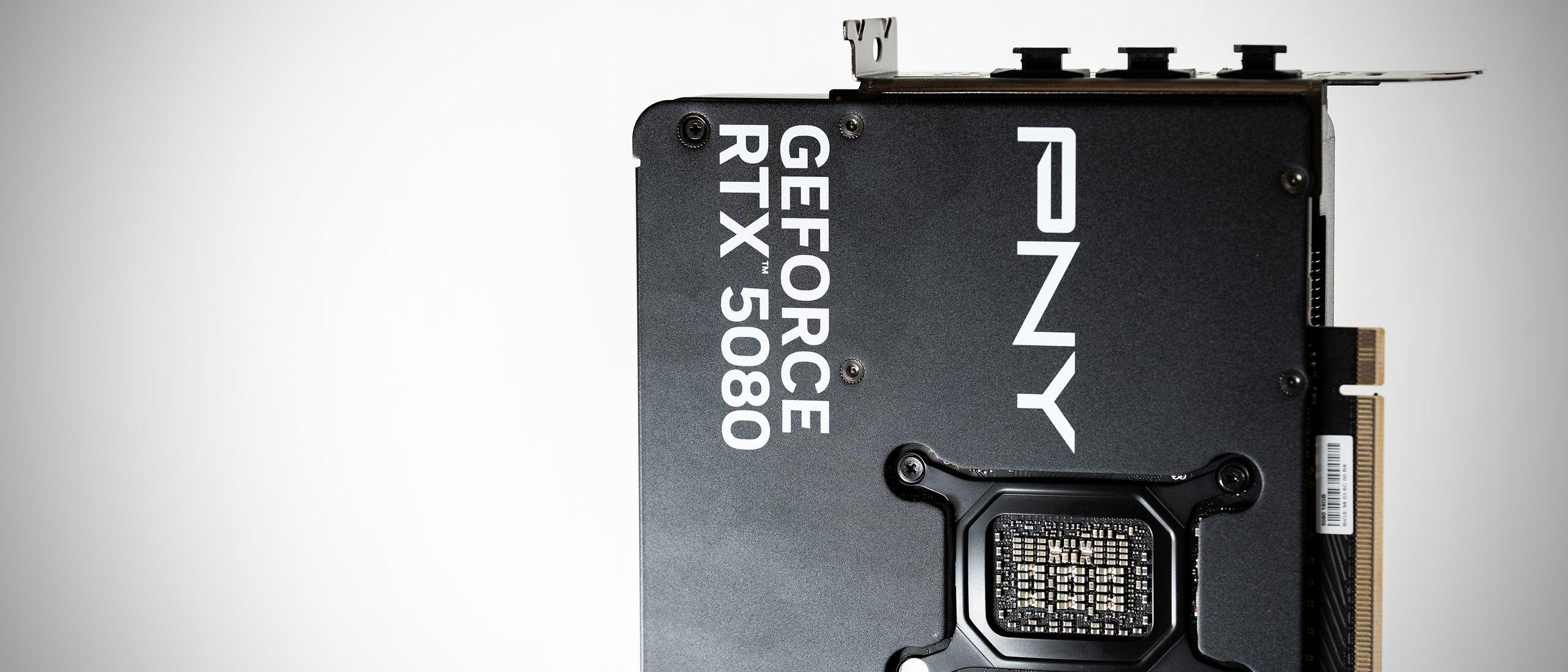
The card is equipped with 16GB of lightning-fast GDDR7 memory, providing a massive bandwidth of up to 960 GB/s. With 10,752 CUDA cores and the latest 5th generation Tensor cores, the PNY RTX 5080 OC Slim is not just a gaming toy; it is a compute-heavy beast. By slightly overclocking the factory boost clock to 2730MHz—a noticeable jump over the reference Founders Edition (FE) model—PNY has ensured that this card is tuned for maximum throughput in demanding creative workflows.
A Chronology of Performance: From Integration to Innovation
To understand why the RTX 5080 is a paradigm shift, we must look at the trajectory of desktop computing over the last few years. Historically, creators were forced to choose between massive, power-hungry workstation cards or consumer-grade hardware that lacked the specific optimization for rendering tasks.
By 2025, the industry had hit a plateau where standard GPUs were struggling to keep pace with the explosion of local AI applications. The release of the Blackwell architecture marked a turning point. Our testing, conducted under controlled conditions, reveals that the PNY 5080 OC Slim isn’t just an iteration—it’s a leap. During our stress tests in late 2025 and early 2026, the card consistently outperformed its predecessors in every category, particularly in AI-enhanced video workflows, where it demonstrated an 11% improvement in cycle times compared to previous-generation hardware.
Technical Specifications: The Anatomy of a Beast
The PNY GeForce RTX 5080 OC Slim is a feat of engineering, balancing high thermal output with a compact two-slot form factor.
| Feature | Specification |
|---|---|
| Architecture | Blackwell |
| CUDA Cores | 10,752 |
| Memory | 16GB GDDR7 |
| Boost Clock | 2730MHz |
| Memory Bandwidth | 960 GB/s |
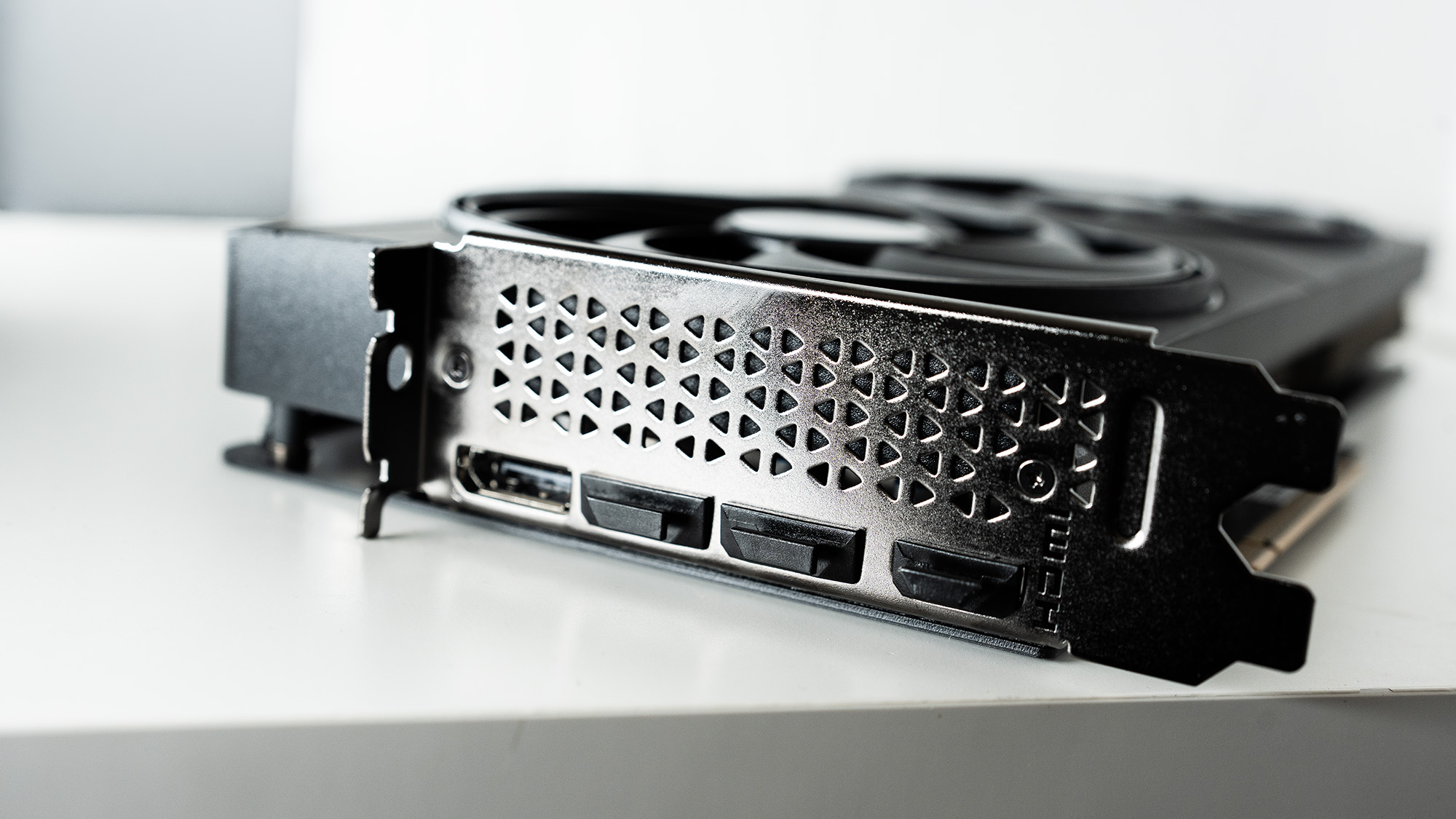
| Ports | 3x DisplayPort 2.1b, 1x HDMI 2.1b |
| PCIe Version | 5.0 x16 |
| Dimensions | 300 x 150 x 40mm |
These numbers translate into real-world utility. The inclusion of 16GB of GDDR7 memory is perhaps the most vital statistic here. For 3D artists, VRAM is the ceiling of creativity; once you exceed it, rendering speeds plummet. The 5080 raises that ceiling significantly, allowing for more complex textures, higher-resolution geometry, and larger AI datasets to be processed entirely on the GPU.
Design Philosophy: Form Meets Function
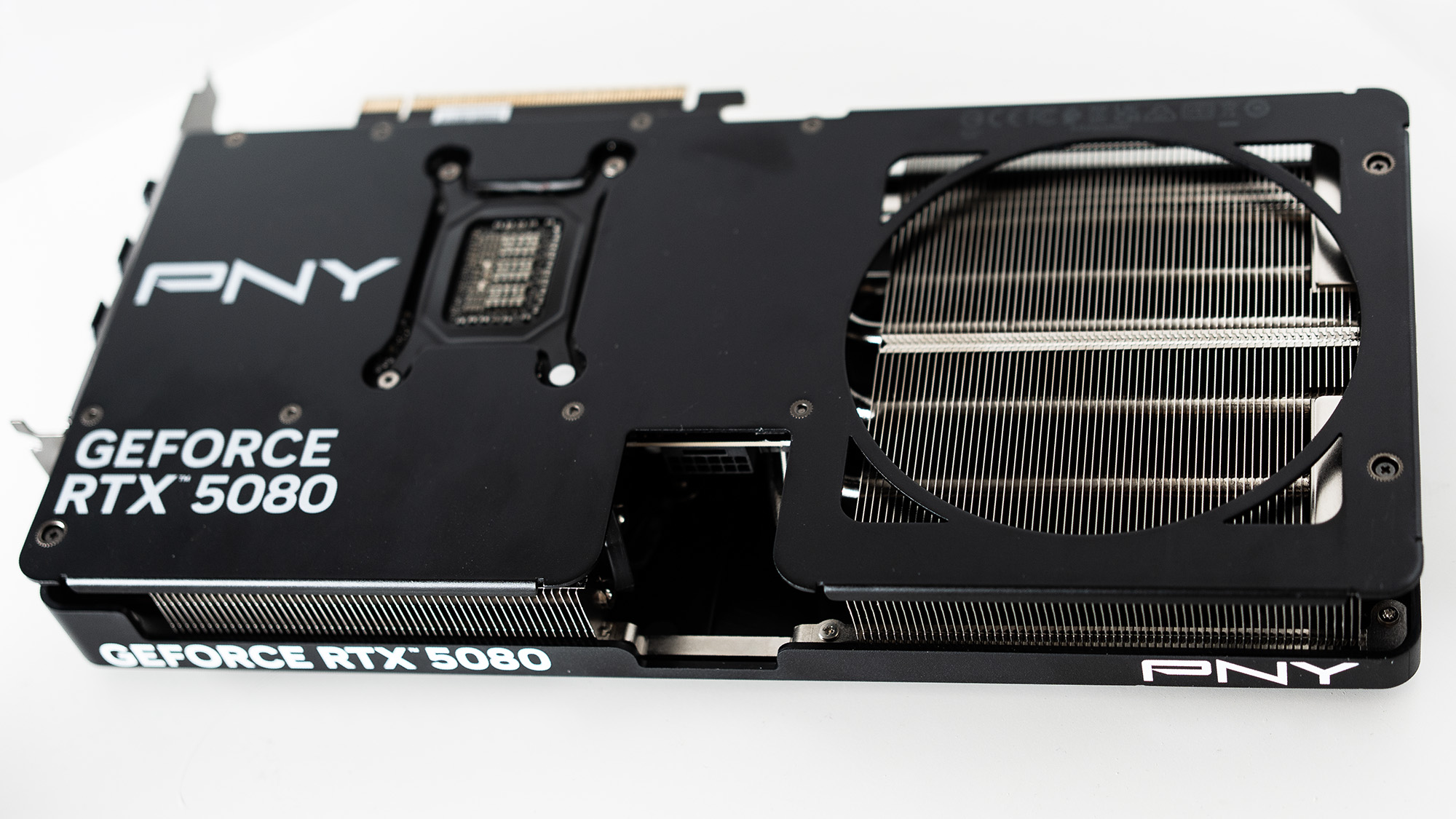
PNY’s design choice for the "Slim" branding is a direct response to the market’s cry for smaller form factor (SFF) builds. In a world where PC cases like the Fractal Terra are becoming increasingly popular, the ability to fit a flagship-tier card into a two-slot chassis is nothing short of miraculous.
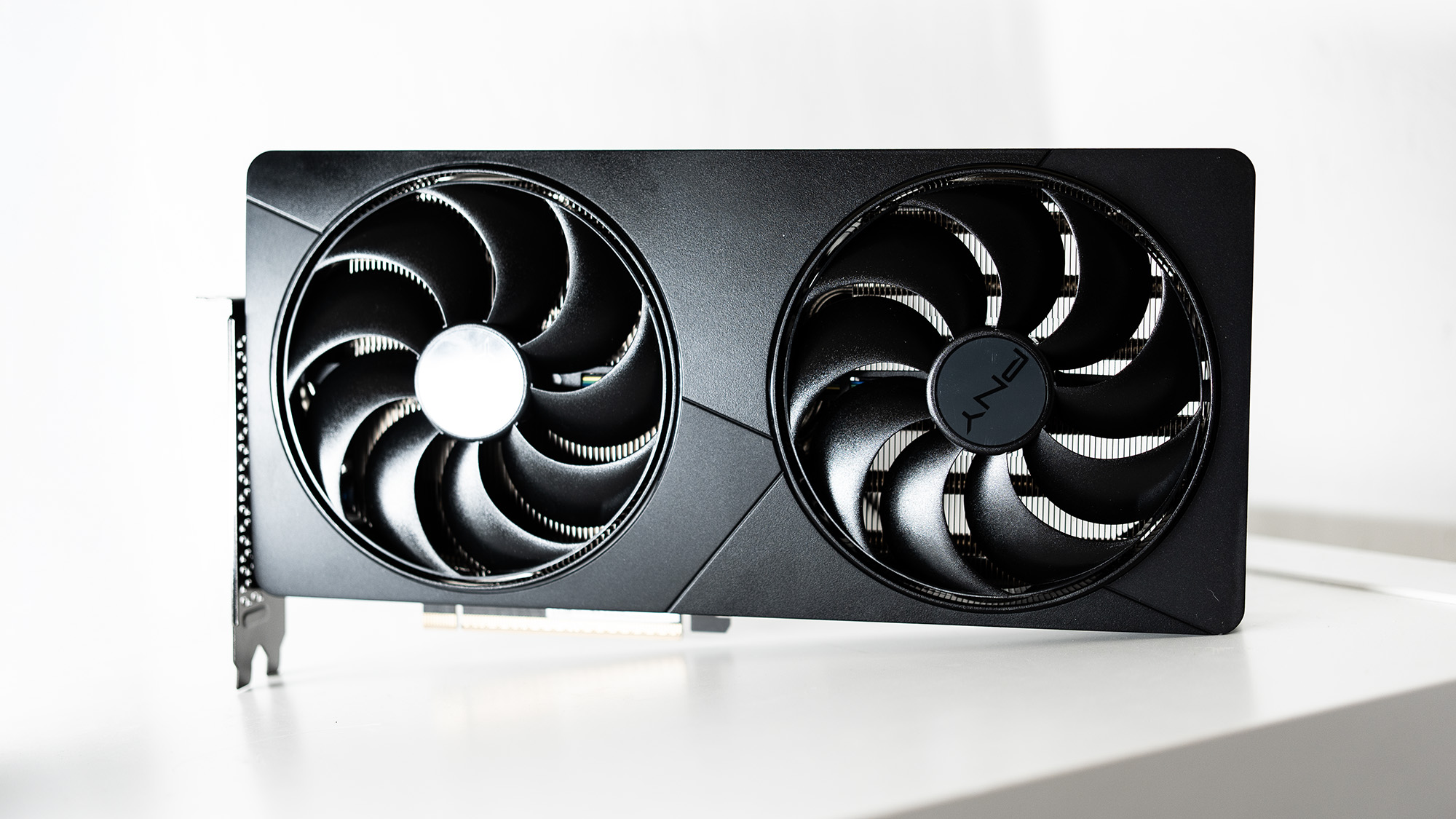
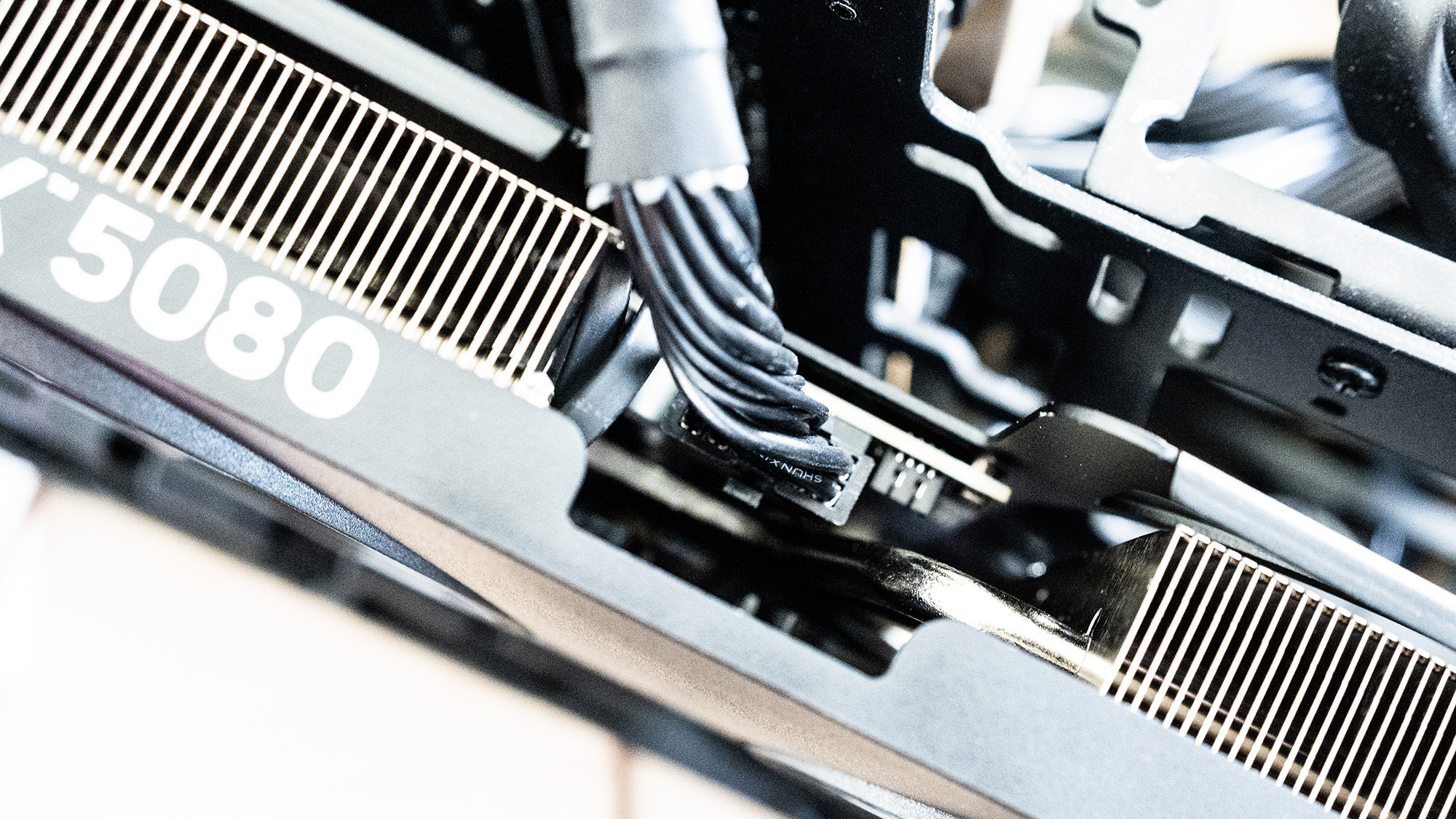
However, this comes with considerations. While the dual-fan cooling system is highly efficient, it is not silent. Under heavy rendering loads, the fans do their work to keep the Blackwell silicon within safe operating temperatures. Furthermore, the 12VHPWR power connector is tucked between the cooling lobes, making cable management a tactical exercise. PNY does include a 3×8-pin to 16-pin adapter, which is a thoughtful inclusion for those upgrading from older systems, but users should ensure they have at least an 850W power supply to handle the transient spikes this card can produce.
Comparative Benchmarking: The Numbers Game
When compared to the Nvidia Founders Edition, the PNY card’s overclocking shows in the data. In the Geekbench 6 GPU benchmark, the PNY variant nudged ahead with a score of 285,965, compared to the FE’s 285,963. While a two-point difference is statistically negligible, the Cinebench 2026 rendering test painted a clearer picture: the PNY card achieved 114,112 points, a 1% lead over the reference board.
Beyond raw synthetic benchmarks, the real-world performance in Topaz Video AI showed the PNY card dominating. By accelerating the enhancement and slow-motion synthesis of 1080p footage, the 5080 turned a time-consuming task into a near-real-time experience. These results suggest that while the underlying architecture is similar across all 5080 cards, PNY’s factory overclock provides a consistent, reliable edge for professionals who cannot afford downtime.
Official Perspectives and Market Positioning
Market analysts have noted that the 5080 series occupies a "Goldilocks" zone. It is significantly more powerful than the 5060, yet far more accessible—both in price and physical size—than the monolithic RTX 5090. PNY has positioned this card for the "prosumer"—the designer, editor, or developer who views their computer as an investment rather than an expense.
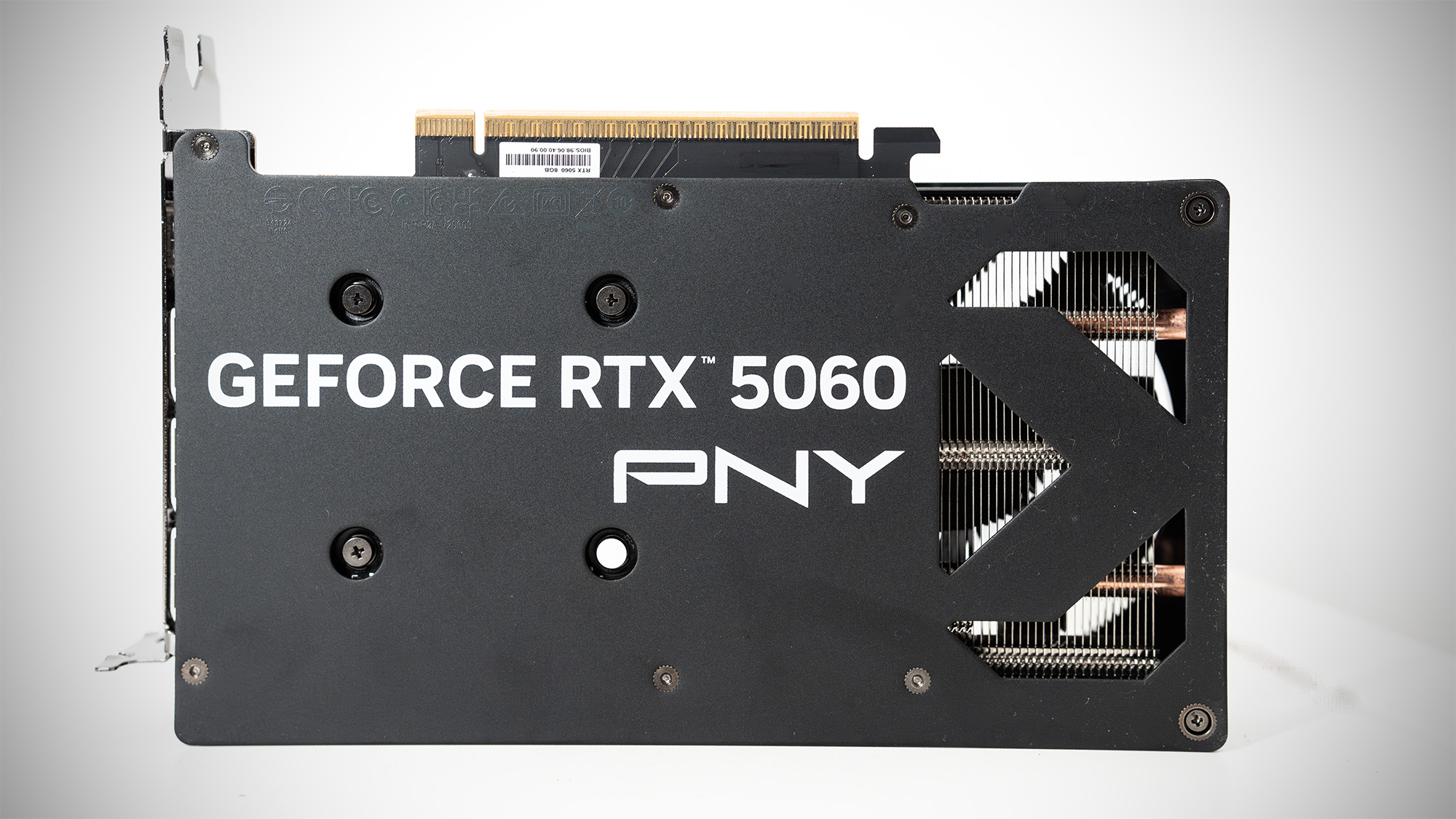
While the retail price of approximately $1,377.99 (or £1,279.99) is a significant investment, it remains competitive when compared to "boutique" cards like the ASUS ROG Astral, which can command prices nearly $500 higher. PNY is banking on the idea that creators want high-end performance without the "over-engineered" aesthetic and footprint of more expensive flagship variants.
Implications for the Creative Industry
The availability of such high-density compute power in a standard consumer format has profound implications for creative studios. Small-to-medium-sized production houses can now build workstation clusters using SFF cases, drastically reducing their office footprint while increasing their rendering throughput.
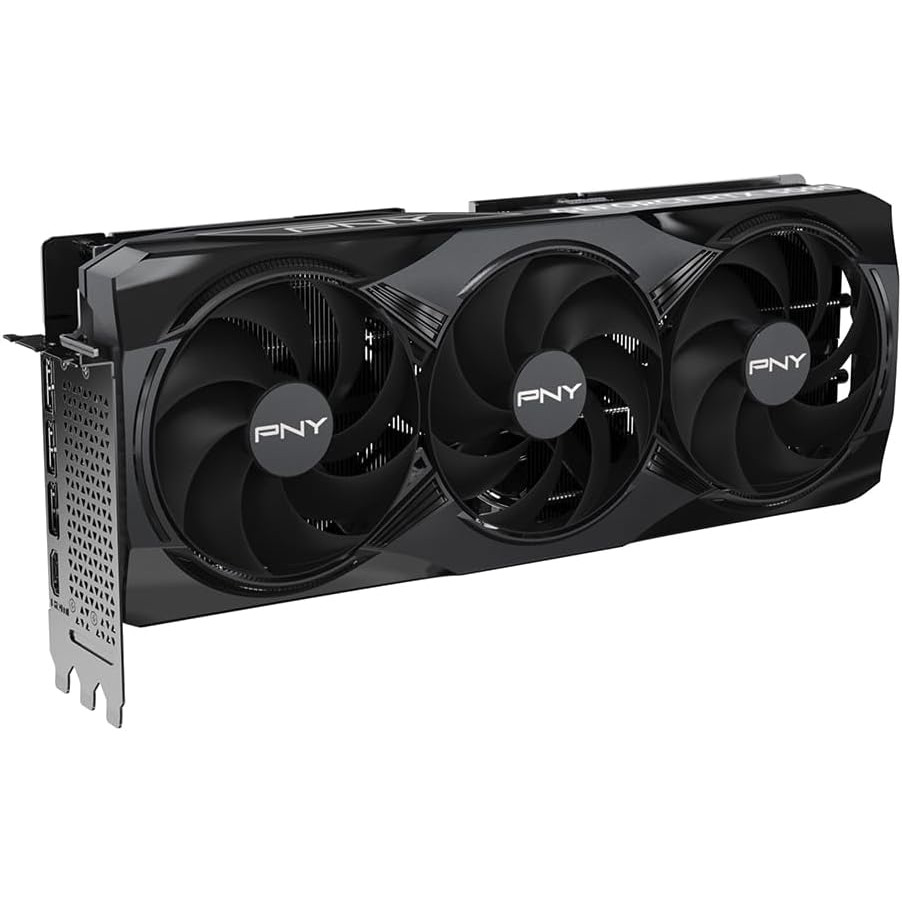
For the freelance artist, the PNY RTX 5080 OC Slim represents a democratisation of high-end rendering. Features that were once the exclusive domain of server-grade hardware are now accessible to anyone with a PCIe 5.0 motherboard. The ability to run local AI models—such as Stable Diffusion or local LLMs—without relying on cloud subscriptions is a massive win for data privacy and long-term project viability.
Expert Verdict: Is It Worth the Upgrade?
The PNY GeForce RTX 5080 OC Slim is a triumph of utility. It does not boast excessive RGB lighting or massive, unnecessary cooling shrouds; instead, it offers a refined, high-performance experience that fits into the modern, compact workspace.
Why You Should Buy It:
- Unmatched Performance-to-Size Ratio: It is arguably the most powerful card that can comfortably fit into a two-slot, SFF-friendly enclosure.
- AI Readiness: The 1801 AI TOPS provided by the 5th generation Tensor cores makes this an essential tool for the modern creative workflow.
- Future-Proofing: With GDDR7 memory and PCIe 5.0 support, this card is built to handle the software demands of the next three to five years.
The Trade-offs:
- Thermal Management: Because it is slim, it runs warmer than its larger, three-slot counterparts. Ensure your case has excellent airflow.
- Price Point: It is a premium product. If your work does not heavily involve GPU-accelerated tasks, the cost may be difficult to justify over a mid-range card.
Final Thoughts
In our testing, we found that the PNY GeForce RTX 5080 OC Slim isn’t just another graphics card; it is a vital upgrade for anyone currently bottlenecked by their hardware. While the price reflects the premium nature of the Blackwell architecture, the time saved in rendering and the increased capability in AI-driven creative suites make it a sound investment.
For the professional who demands efficiency, performance, and a compact footprint, the PNY GeForce RTX 5080 OC Slim stands out as one of the most practical and powerful options on the market today. It proves that you don’t need a massive, tower-sized workstation to achieve professional-grade results—you just need the right silicon in the right package.
 Raul Delapena Setiawan
  Ammar Sabilarrohman
  Muslim