
 By Evan Lee Salim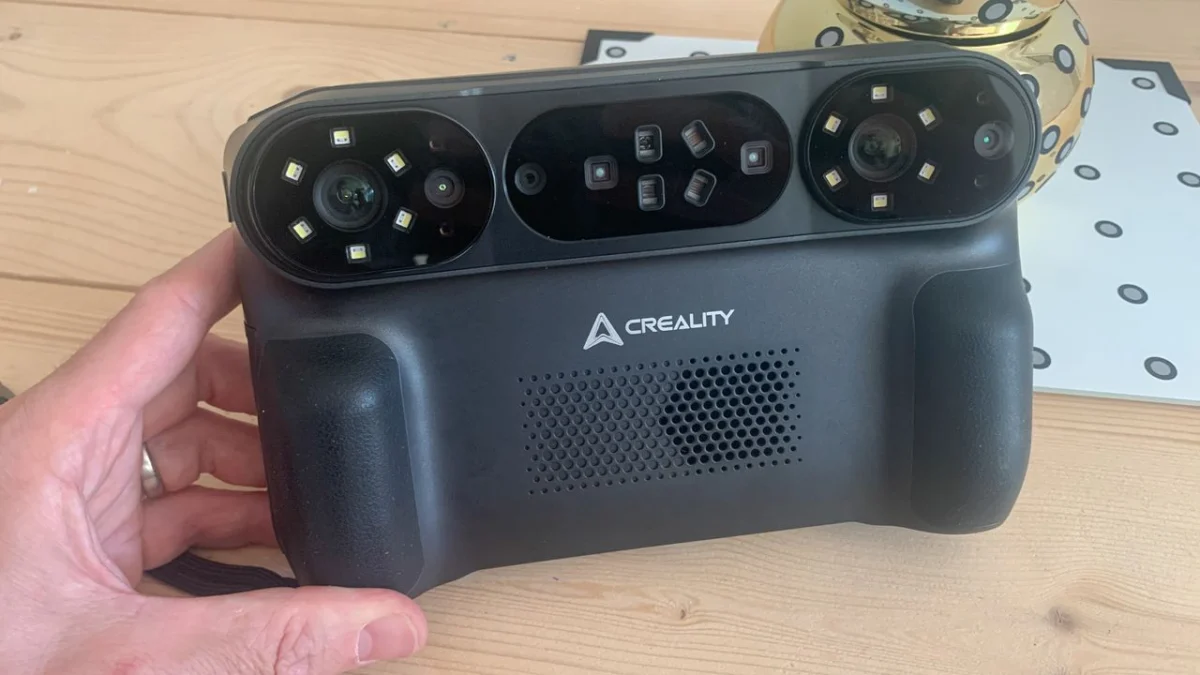
In the rapidly evolving landscape of additive manufacturing and digital design, the bridge between physical objects and their virtual counterparts has never been more critical. Creality, a titan in the desktop 3D printing space, has set its sights on dominating the 3D scanning market with its latest release: the Sermoon P1. Positioned as a professional-grade, fully standalone scanner, the P1 represents a significant pivot for the company, aiming to challenge established industry rivals like Revopoint and industrial-grade scanning manufacturers.
Main Facts: Redefining Professional Portability
The Creality Sermoon P1 is designed to occupy the "prosumer" sweet spot—a tier that sits comfortably above entry-level hobbyist equipment but below the eye-watering cost of dedicated industrial metrology rigs. The defining characteristic of the Sermoon P1 is its uncompromising independence.
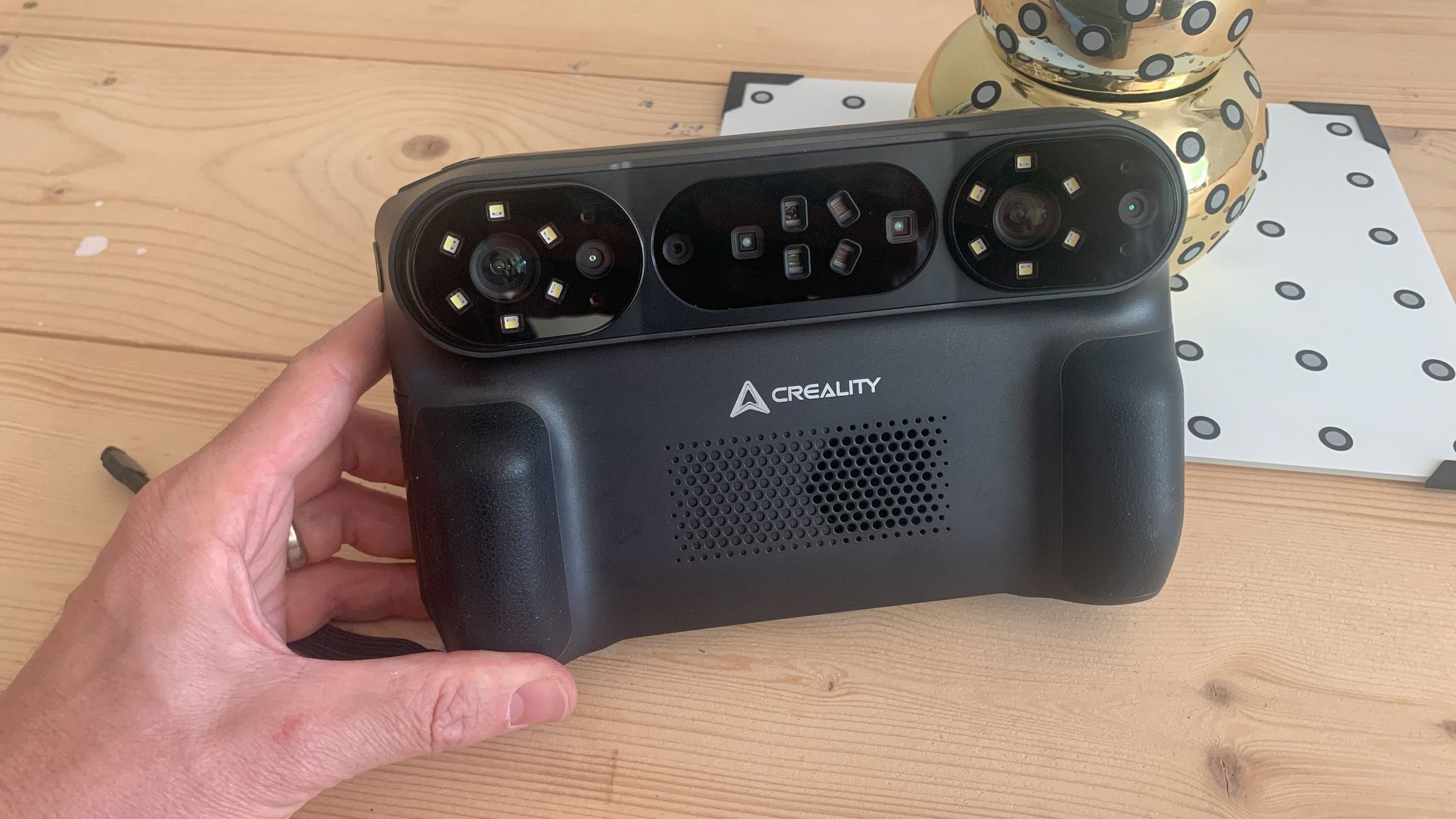
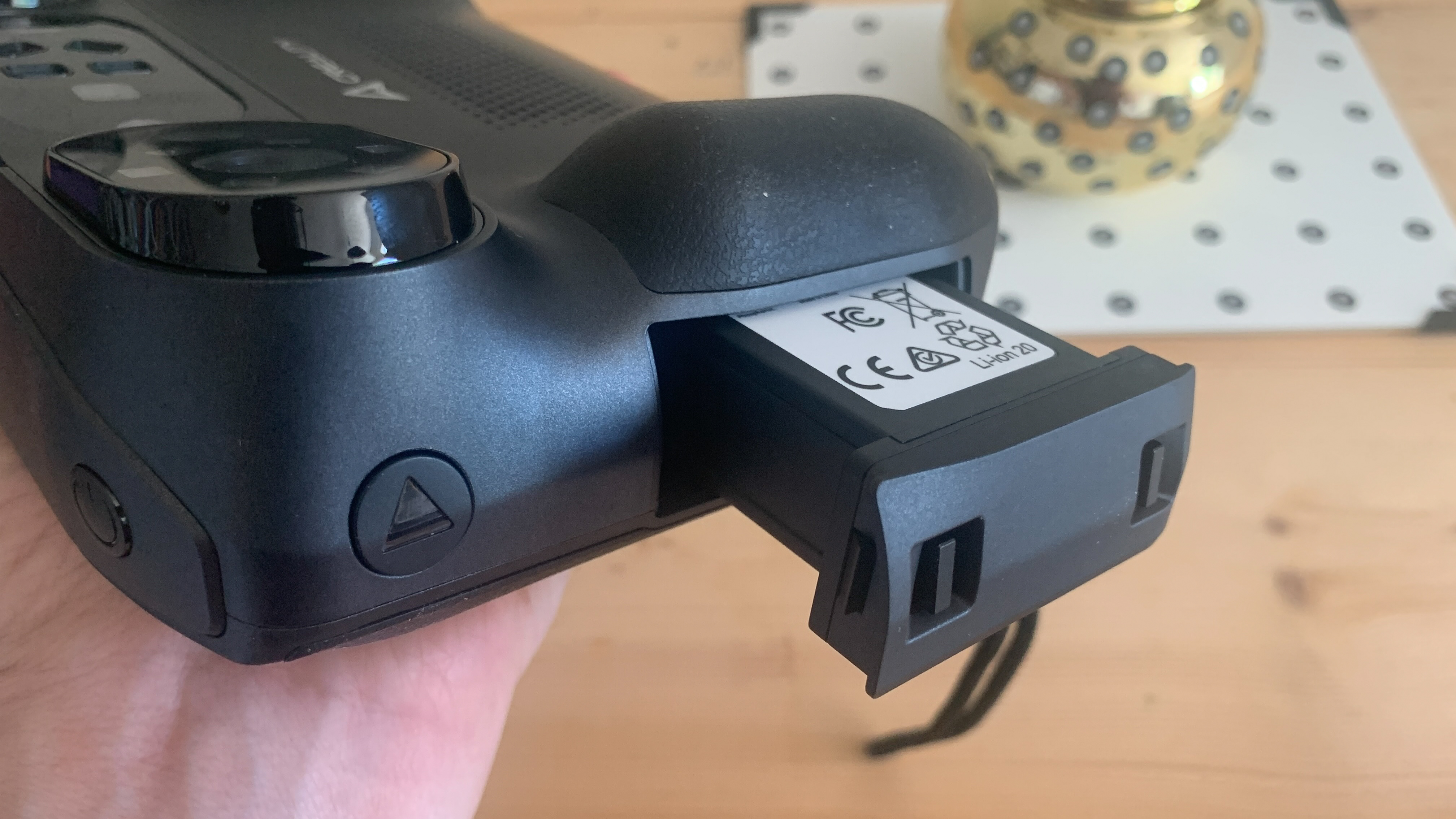
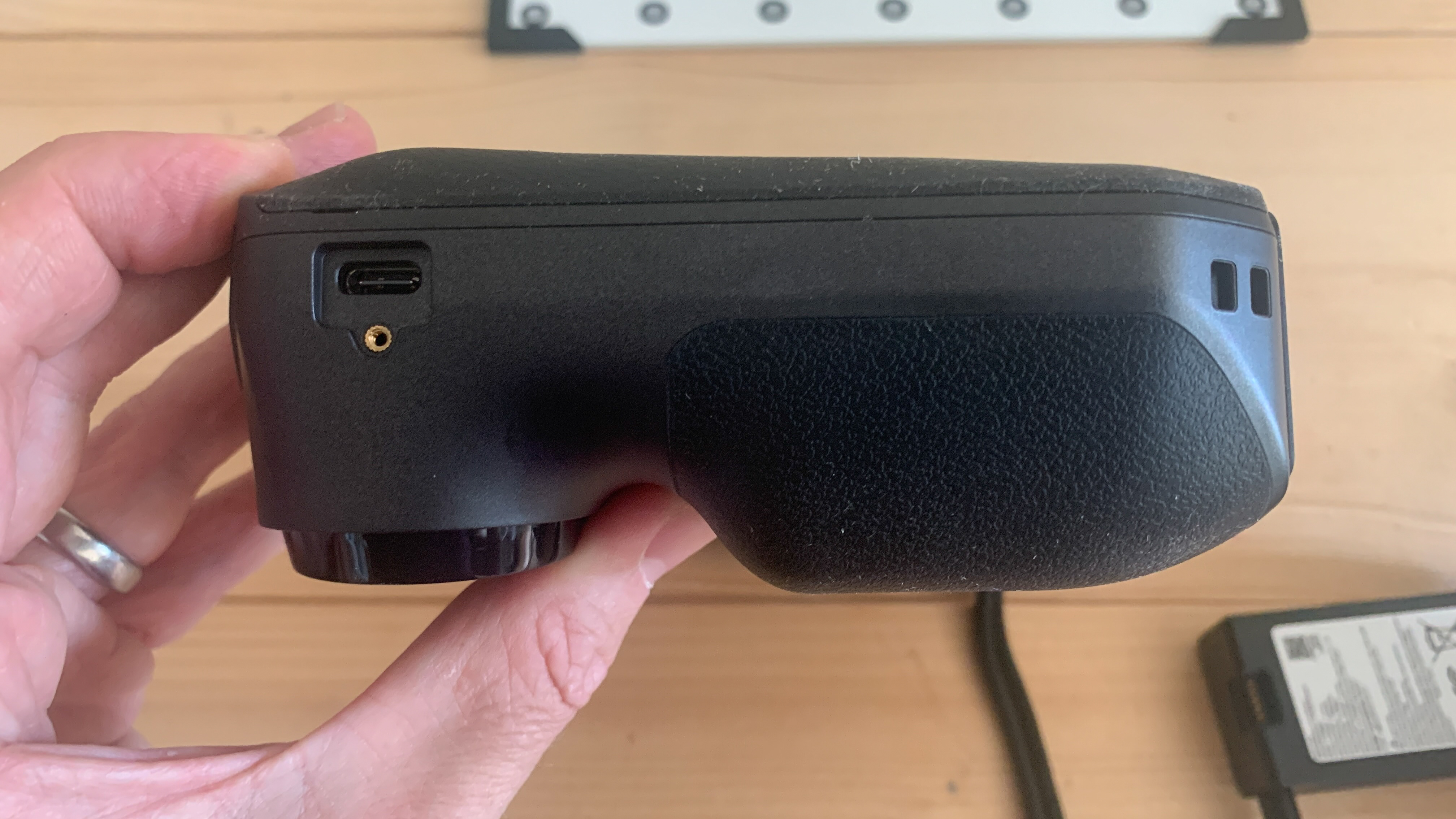
Equipped with an onboard 8-core processor, a high-fidelity 6-inch touchscreen, and a hot-swappable dual-battery system, the P1 functions entirely without the need for a tethered PC. This design choice addresses the primary bottleneck in field scanning: mobility. Whether you are an archaeologist documenting site artifacts, a forensic investigator, or an automotive engineer reverse-engineering engine components, the P1’s ability to process, fuse, and mesh data on-the-go is a transformative workflow feature.
The Technical Backbone
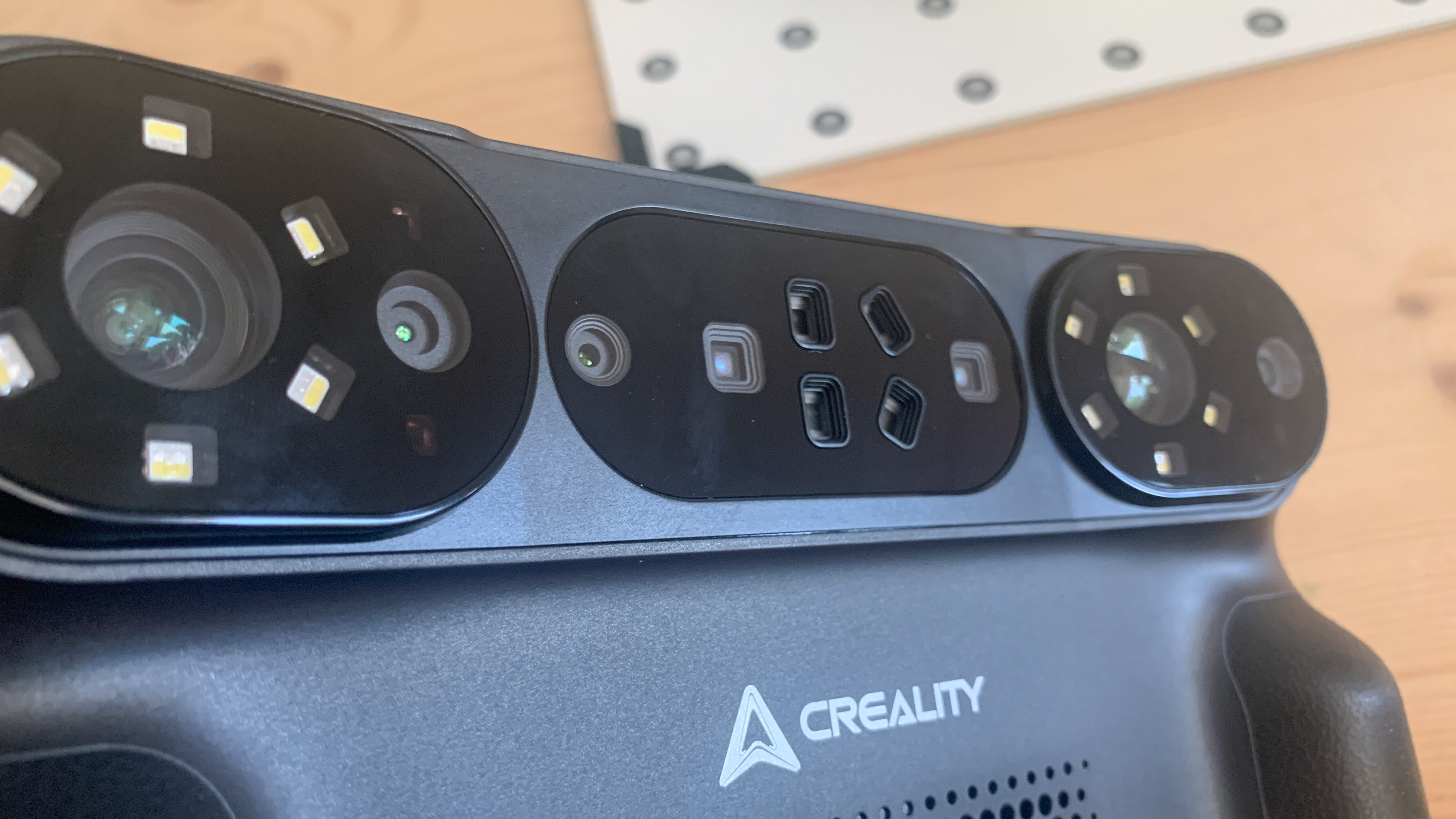
The scanner utilizes a sophisticated hybrid optical system. It pairs ultra-precise blue lasers—ideal for capturing high-detail, small-to-medium objects with geometric complexity—with rapid Near-Infrared (NIR) light, which excels at capturing larger surfaces and human faces.
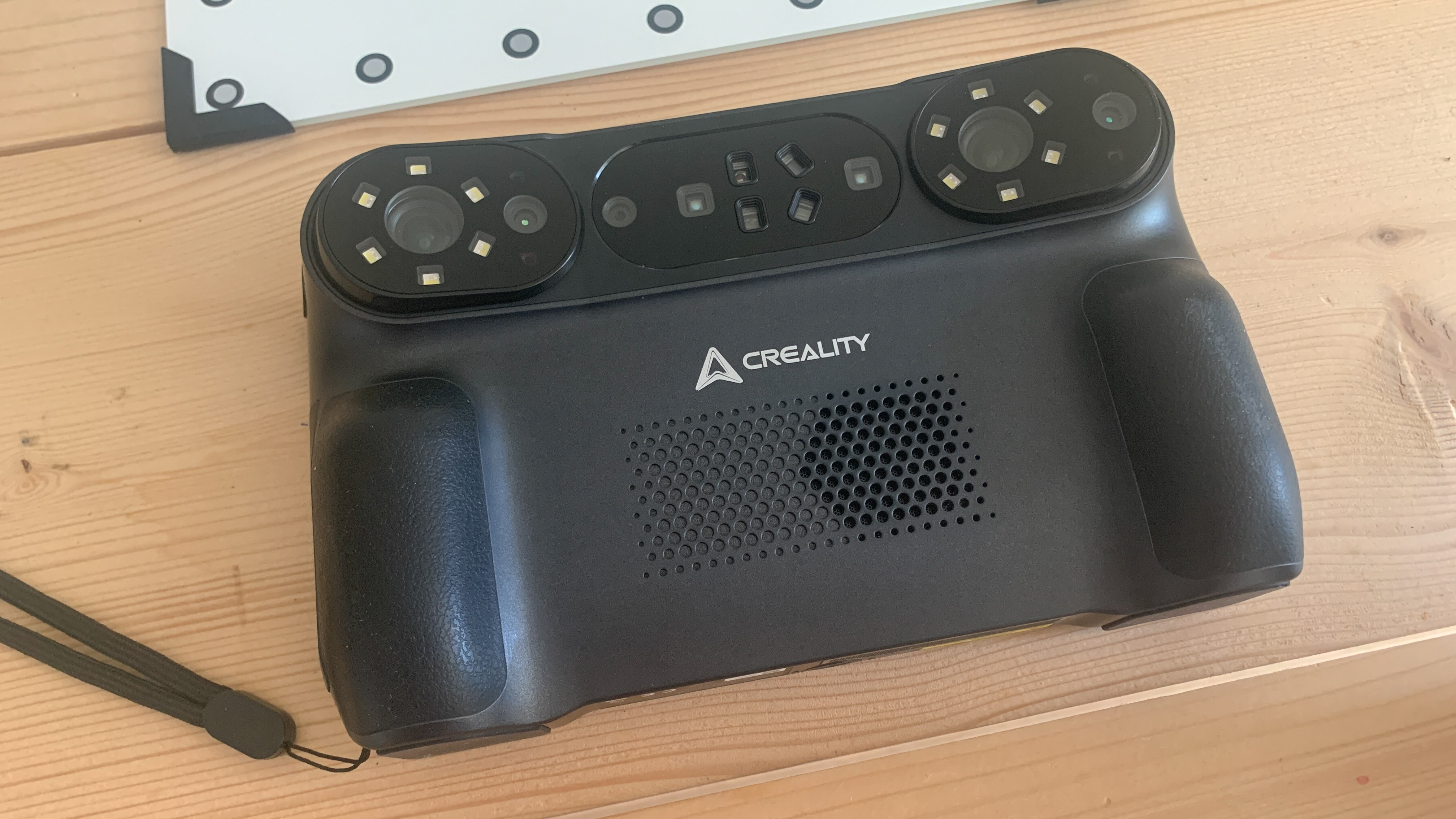
Under the hood, the device is powered by a Qualcomm 8-core 3.36 GHz CPU and an Adreno 740 GPU. With 24GB of RAM and 256GB of internal storage, the hardware is more than capable of handling complex point-cloud generation in real-time. The result is a device that allows for live previewing and immediate editing, meaning the user can verify the quality of their scan before they ever leave the site.
Chronology of Development and Testing
The path to the Sermoon P1’s release has been marked by Creality’s aggressive iteration cycle. Having established a foothold in the 3D printing world, the company recognized that users were increasingly demanding "closed-loop" workflows—printing what they scan without switching software environments.
Our testing protocol, which spanned several days, focused on real-world reliability. Upon unboxing, the P1’s presentation suggests a focus on professional durability. The unit ships in a robust, custom-fitted carry case, ensuring the precision optics remain calibrated during transport.
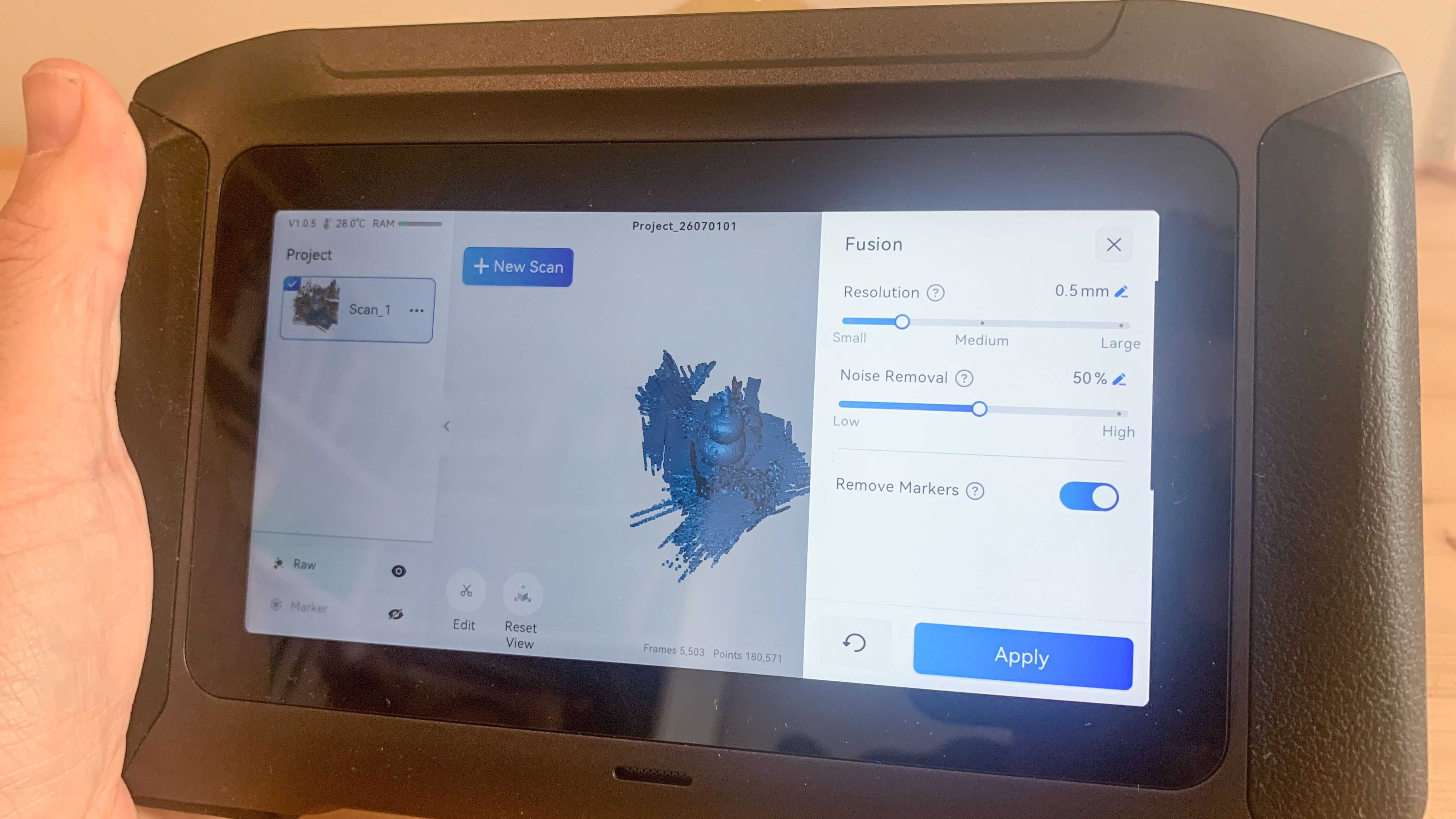
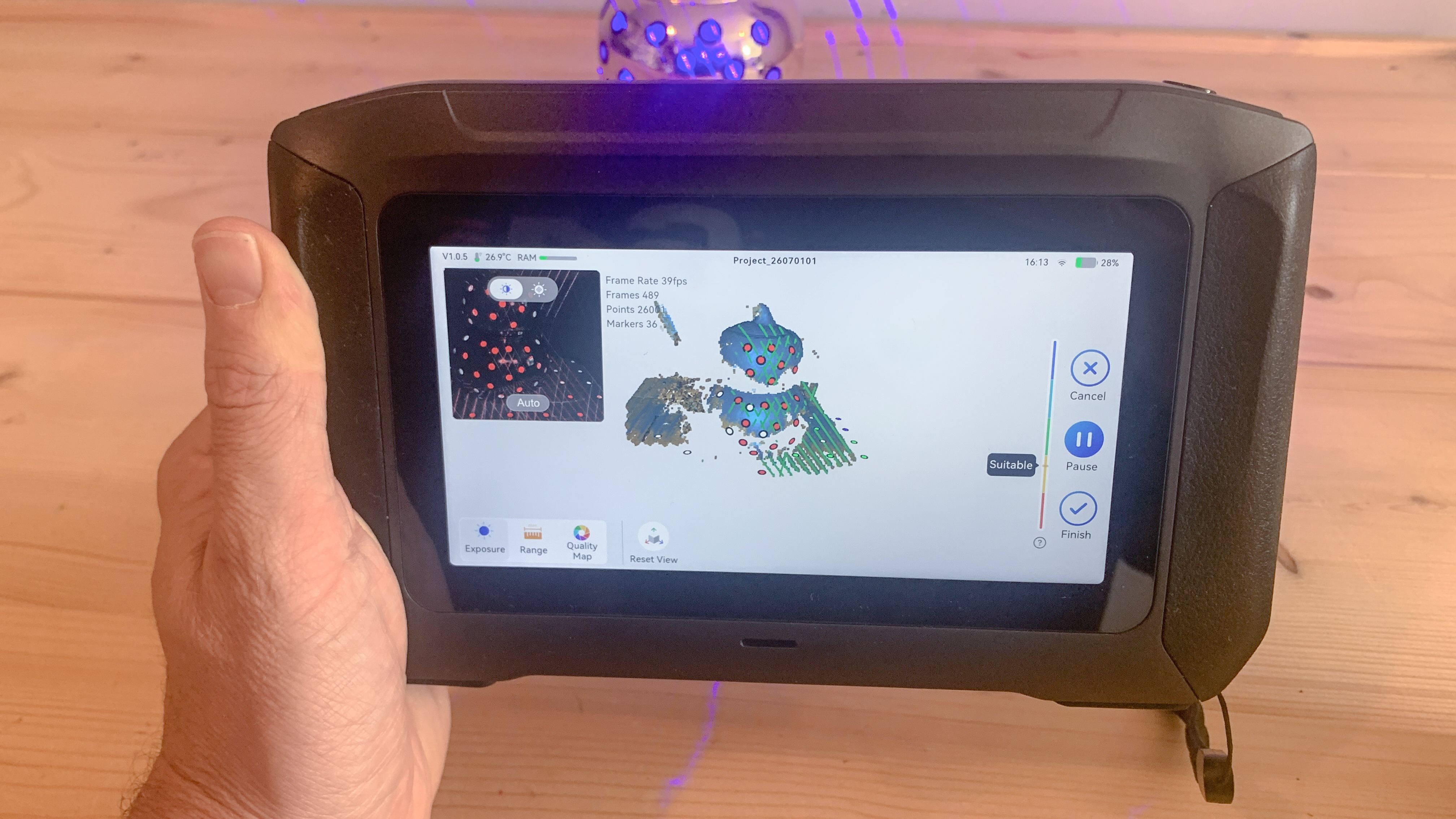
The initial setup is remarkably fast. During our testing, we challenged the device with a notoriously difficult subject: a high-gloss, gold-colored gourd. This object represents a "nightmare scenario" for many scanners due to its reflective, curved surfaces. While the initial blue-laser scan required some trial and error—the scanner occasionally struggled with tracking point positioning, resulting in a slight mesh offset—we were able to rectify these issues through simple adjustment of the scanning mode. Once the settings were dialed in, the software’s hole-filling algorithm seamlessly integrated missing data points along the object’s tangents and curves.
Supporting Data and Performance Metrics
The performance of the Sermoon P1 is best understood through its technical specifications, which justify its $3,299 price tag (currently seeing market fluctuations).
| Feature | Specification |
|---|---|
| Object Size Range | 5 mm³ to 4m³ |
| Laser Accuracy | 0.02 mm (Single-frame) |
| NIR Accuracy | 0.075 mm (Single-frame) |
| Laser Scan Speed | 60 fps (up to 100 fps hardwired) |
| Storage | 256 GB ROM |
| Display | 6-inch Full HD Touchscreen |
The shift from laser to NIR modes allows for significant flexibility. During testing, the blue laser mode provided the promised high-fidelity detail, though we noted that frame rates varied based on the connectivity method. While the unit is advertised at 60 fps in laser mode, we observed closer to 40 fps in wireless operation, with speeds increasing significantly when connected via USB-C. For users prioritizing speed over sheer resolution, the NIR mode provides a broader capture area, ideal for larger objects or quick spatial mapping.
Official Stance and Market Positioning
Creality has positioned the Sermoon P1 as a direct challenger to the Revopoint Miraco Plus. While the Revopoint series is highly regarded for its ergonomic design and integrated screen, Creality argues that the Sermoon P1’s superior processing architecture and the inclusion of a hot-swappable dual-battery system give it the edge for "mission-critical" tasks.
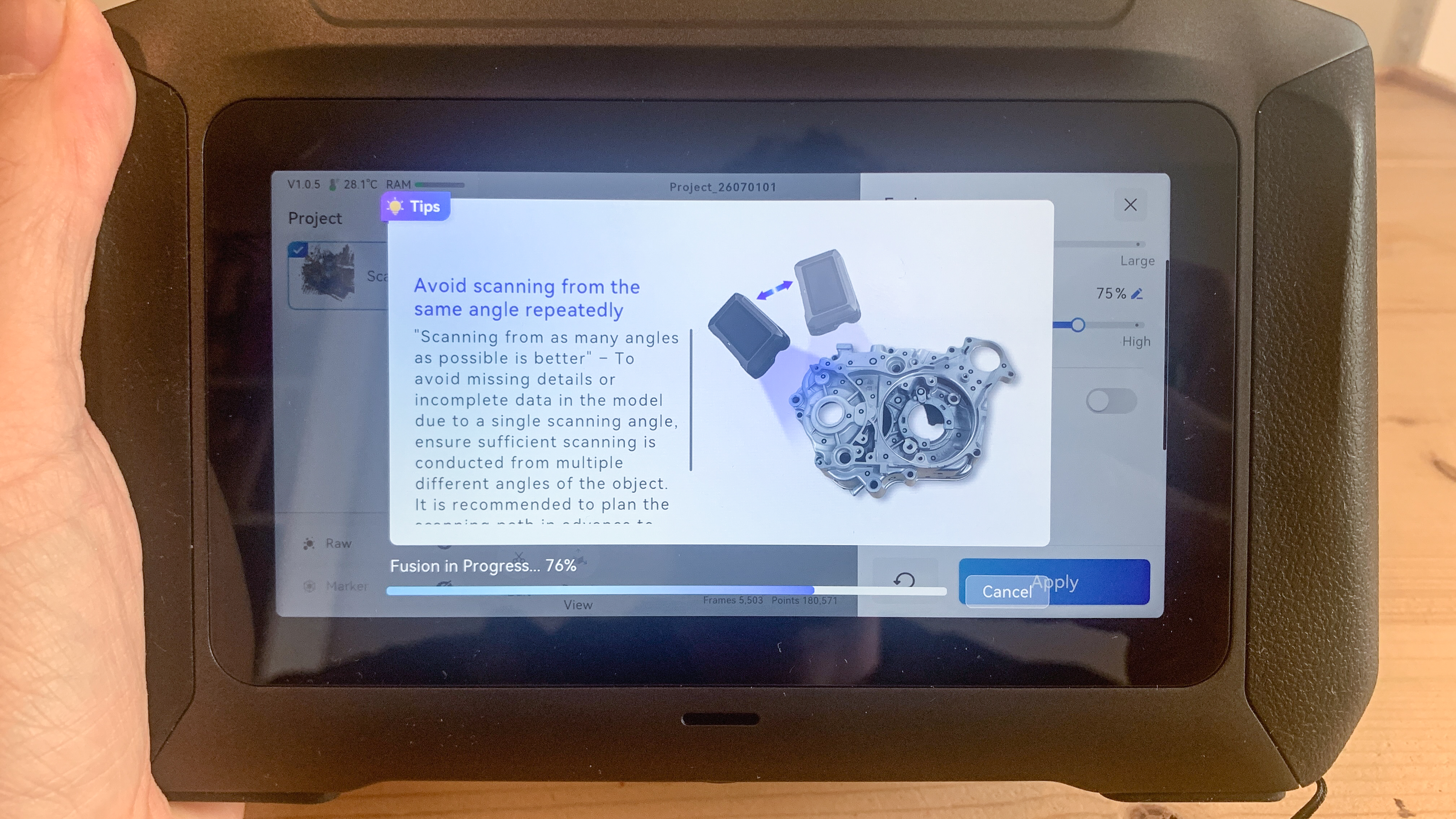
In our discussions with industry experts, the consensus is that the P1 is a "workhorse." By including two batteries in the box, Creality has explicitly addressed the "low-battery anxiety" that plagues most handheld scanners. Furthermore, the ability to export mesh data directly into CAD-ready formats means it is designed for integration into existing professional pipelines.
Implications for the Industry
The release of the Sermoon P1 has several broader implications for the 3D scanning and printing ecosystem:
- The Death of the Tethered Workflow: The success of the P1 signals that the professional market is moving away from PC-dependent scanning. As mobile processors become more powerful, the need to carry a laptop or a workstation into the field is rapidly diminishing.
- Democratization of Metrology: While $3,000 is still a significant investment, it is a fraction of the cost of traditional industrial scanners that require proprietary software and specialized training. The P1 makes high-accuracy reverse engineering accessible to small-to-medium enterprises (SMEs) and independent design firms.
- Workflow Integration: The seamlessness of the P1’s onboard meshing software suggests that future iterations will likely focus on AI-assisted cleanup. The current "hole-filling" capabilities are impressive, but as machine learning models improve, we can expect the post-processing phase to vanish entirely.
Verdict: Who is the Sermoon P1 For?
The Creality Sermoon P1 is a sophisticated piece of hardware, but it is not a "plug-and-play" toy for the casual hobbyist. Its price and intended use cases align it with professionals who require metrology-grade accuracy in dynamic environments.
Buy it if: You are an engineer, prop designer, or researcher who needs to move quickly and cannot rely on a PC workstation. If you work in environments with reflective or dark objects and need a device that can handle them without messy anti-reflective sprays, the blue laser technology in the P1 is a game-changer.
Avoid it if: You are a casual user or hobbyist whose projects are limited to simple, non-critical models. The learning curve—while manageable—and the high entry price make it overkill for printing small figurines or simple household items.
In conclusion, the Creality Sermoon P1 is a formidable entry into the professional 3D scanner market. It isn’t perfect—the weight can cause wrist fatigue during extended sessions, and the lack of an included tripod in the base kit is a notable oversight at this price point. However, when it comes to raw, standalone performance and the convenience of a "scan-to-file" workflow, the Sermoon P1 is an undeniably impressive tool that cements Creality’s reputation as a serious player in the world of high-end digital fabrication.
 Lina Hope
  Reynand Wu
  Pevita Pearce