
 By Pevita Pearce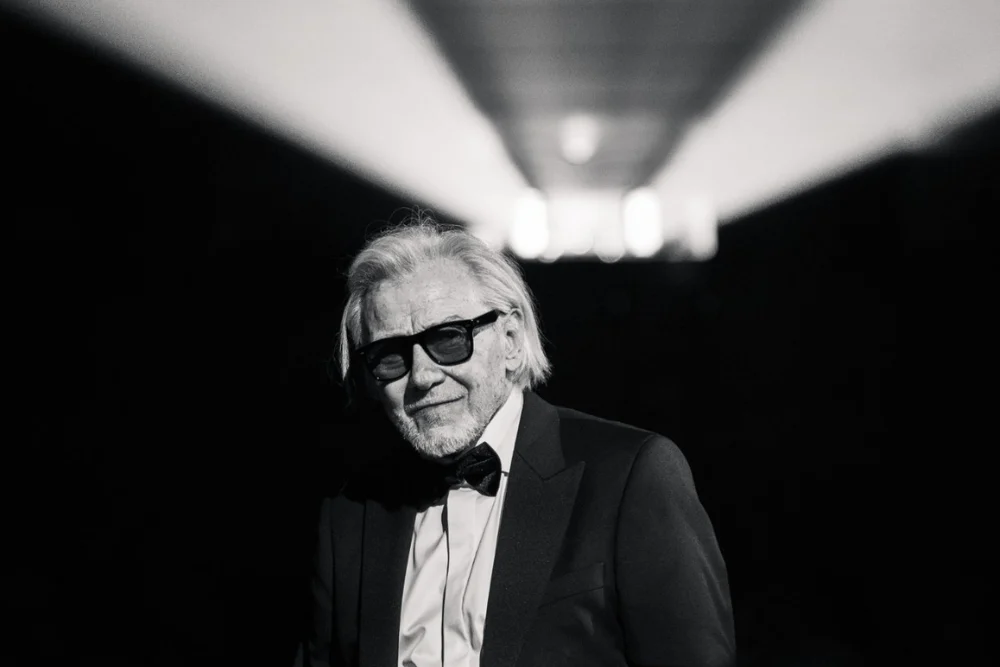
Introduction: A Titan at Karlovy Vary
Harvey Keitel, a foundational figure in American cinema, returned to the Karlovy Vary Film Festival this week with the focused intensity that has defined his half-century-long career. Presenting a screening of Martin Scorsese’s 1973 seminal masterpiece Mean Streets—the film that arguably launched the careers of both men—Keitel reflected not just on the past, but on the evolving, often fraught, landscape of modern performance.
At 85, Keitel remains a vital force, currently engaged in a new, independent project that he describes with a mix of defiance and youthful enthusiasm. His presence at the festival serves as a reminder of the "aesthetic force" he believes is necessary to heal a fracturing world, even as he raises sharp warnings about the encroachment of artificial intelligence on the sanctity of human emotion.
The New Project: Guerrilla Filmmaking in Hollywood
During a candid conversation at the festival, Keitel revealed he is currently in production on a new feature film written by his wife, the accomplished actor, writer, and director Daphna Kastner.
A Grassroots Approach to Storytelling
Keitel characterized the production as "guerrilla warfare," an intimate, non-traditional endeavor that stands in stark contrast to the bloated machinery of the modern Hollywood studio system. "My wife wrote a script; she’s a writer, director, actress… We’re working on it," Keitel explained. "It’s not a Hollywood film, but it’s being done in Hollywood because we live there. We have a lot of college students on the crew, and we’ll see where we go."
While the actor remained tight-lipped regarding the plot, his excitement was palpable. The decision to employ students suggests a desire to foster new talent while maintaining a low-overhead, high-creativity environment. By operating outside the standard studio pipeline, Keitel and Kastner are reclaiming the autonomy that initially drew them to the arts decades ago—a move that echoes the independent spirit of the New Hollywood movement Keitel helped pioneer in the 1970s.
The AI Conflict: Can Machines Emulate the Human Soul?
A significant portion of Keitel’s discourse focused on the existential threat posed by artificial intelligence in the creative sector. Having served as co-president of the prestigious Actors Studio from 1995 to 2017, Keitel views acting not merely as a job, but as a rigorous, spiritual discipline.
The Michael Caine Case Study
Keitel pointed to a recent development involving legendary British actor Michael Caine, who licensed his voice to the AI firm ElevenLabs. Caine’s digital clone has been utilized for an audiobook version of Homer’s The Odyssey. To Keitel, this represents a dangerous precedent.
"They used his voice, but there was no emotion in it," Keitel observed. "They couldn’t reproduce Michael Caine’s beauty."
The Failure of Artificial Empathy
Keitel’s critique strikes at the heart of the ongoing labor disputes in Hollywood regarding the use of "digital replicas." He argues that while technology can map the timbre of a voice or the contours of a face, it cannot replicate the "emotional life" of the performer.
"This new industry is developing where actors are selling their image and their voices, but they can’t reproduce their emotional life," he said. "In that way, the AI thing failed. I know it could be used for good purposes, but we’re going to have to find good people to guide it."
For Keitel, the danger is that audiences—and eventually producers—might become satisfied with a technically accurate imitation, losing the "aesthetic force" that only a living, breathing human can provide through their own personal experiences of love, pain, and mortality.
A Career Defined by Artistic Courage
To understand Keitel’s skepticism of technology, one must look at the body of work he has built over five decades. From the gritty streets of New York in Taxi Driver to the operatic violence of Reservoir Dogs and the quiet, crushing melancholy of The Piano, Keitel’s performances have always been defined by their vulnerability.
Chronology of Collaboration
- 1970s: The Scorsese Era. Mean Streets (1973) and Taxi Driver (1976) defined the "street-smart" archetype of the decade.
- 1990s: The Independent Explosion. Reservoir Dogs (1992) and Pulp Fiction (1994) with Quentin Tarantino solidified his status as an icon of the indie revolution.
- 2000s–Present: The Elder Statesman. Collaborations with Wes Anderson (The Grand Budapest Hotel, Moonrise Kingdom) show a versatility that spans from intense drama to whimsical comedy.
When asked what he still hopes to achieve, Keitel’s response was characteristically philosophical. "There are so many things to deal with as a human being," he remarked. "My fears, my loves, my desires, my errors, my successes, my having to face death… And you can do that very well through the arts."
The Role of Film Festivals in a Divided World
Keitel’s affection for the Karlovy Vary Film Festival is long-standing. He was honored with the Crystal Globe for Outstanding Artistic Contribution to World Cinema in 2004 and has returned repeatedly to engage with global audiences.
Festivals as Sanctuaries
In an era of increasing geopolitical instability, Keitel views film festivals as essential meeting grounds. He expressed deep frustration with the state of global politics, citing the rise of religious conflicts and prejudice as a "disaster."
"Judging somebody by the religion or the color of their skin, I can’t think of anything more fucking ridiculous," he stated. "And yet, we are still doing it."
He views the arts as the primary antidote to this social decay. While politics and religion often serve to divide, he believes that cinema, at its best, fosters empathy. "There are plenty of new talents who are out of work," he noted. "Let’s face it, the arts are a very different field to get involved in, and that’s when we need it the most. Politics is not doing it for us."
Implications: The Future of Artistic Agency
The implications of Keitel’s stance are significant for both the industry and the audience. As studios look to slash costs by digitizing performances, actors like Keitel are drawing a line in the sand.
The Philosophical Mandate
Keitel concluded his thoughts by invoking Aristotle, framing the future of the film industry as a moral imperative rather than a commercial one. "It takes more than words to change a culture," Keitel quoted. "To change a person, it takes aesthetic force. The force of the arts."
Summary of Future Outlook
- Technological Regulation: Keitel’s warnings suggest that the industry must establish clear ethical boundaries regarding AI usage, prioritizing the preservation of human emotional expression over technological efficiency.
- The Rise of Independent "Guerrilla" Cinema: As major studios become more reliant on algorithmic content and AI, we are likely to see a surge in creator-led, grassroots projects that prioritize raw, human-centric storytelling.
- Cultural Preservation: Keitel’s commitment to festivals highlights the necessity of communal viewing experiences. In a digital, atomized world, the physical gathering at a cinema becomes an act of resistance against the dehumanizing effects of modern technology.
As Keitel continues to work—both on his secret, student-staffed project and as a vocal critic of industry shortcuts—he remains a beacon for those who believe that the power of cinema lies not in the precision of pixels, but in the chaotic, beautiful, and irreplaceable depth of the human spirit.
 Siti Muinah
  Ammar Sabilarrohman
  Layla Zulfa