
 By Nana Muazin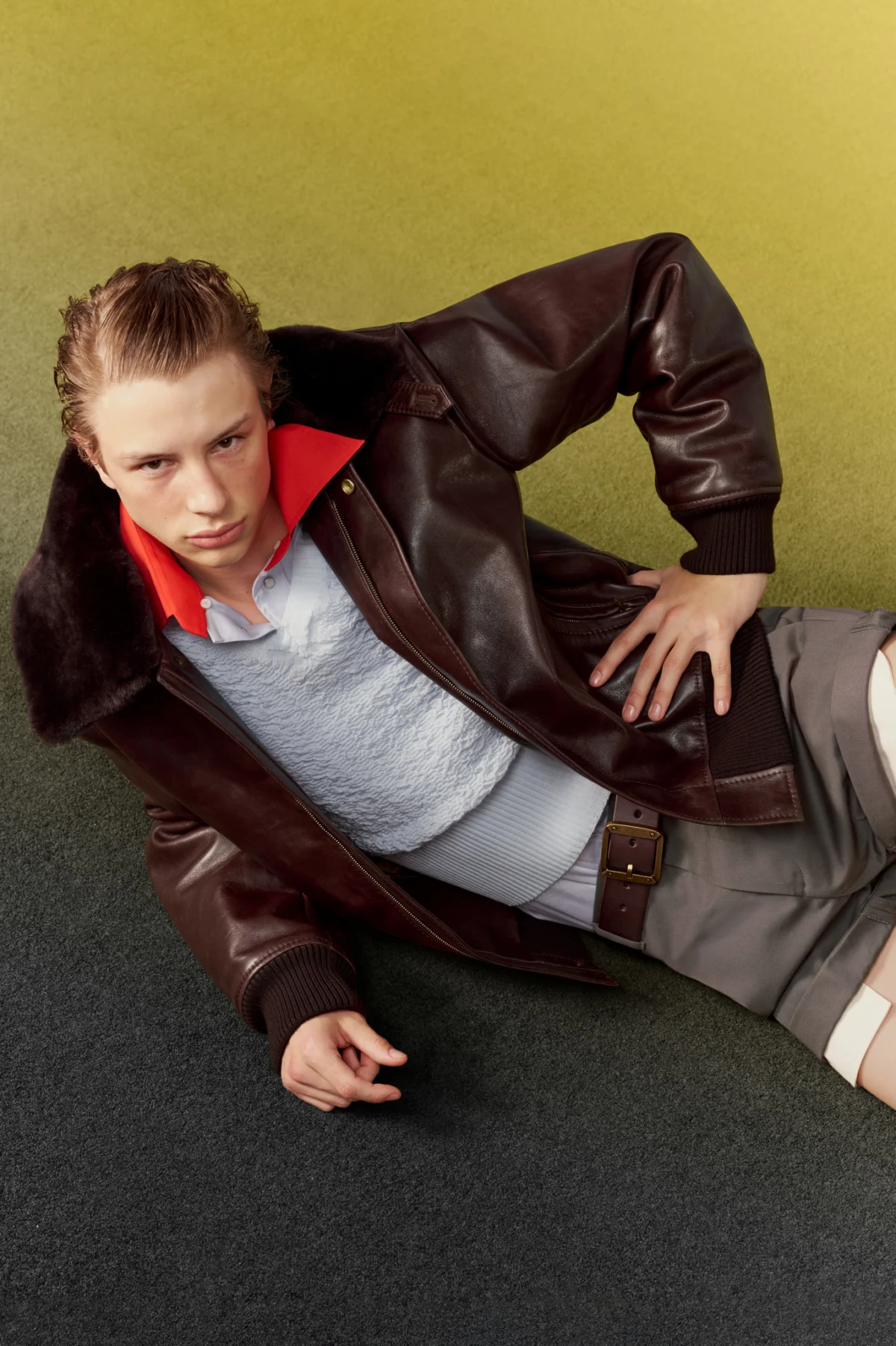
In the shifting landscape of global fashion, where the boundary between the boardroom and the street has become increasingly porous, Acne Studios creative director Jonny Johansson has carved out a unique niche. Known for his cerebral, often avant-garde approach to Scandinavian minimalism, Johansson’s latest Spring collection is a radical departure from the standard "office core" aesthetic. Instead of focusing on the uniformity of professional attire, he has turned his lens toward the psychological tension of the workplace—the human urge to belong, the anxiety of being judged, and the subversion of dress codes that define the modern career.
Main Facts: Deconstructing the Corporate Persona
Johansson’s latest collection is, at its core, a sociological study. By his own admission, the designer—who rarely deviates from a uniform of jeans and a T-shirt—is an unlikely arbiter of office style. Yet, he posits that his detachment from traditional corporate garb is exactly what allows him to analyze it with such precision.
The Spring collection introduces a series of "office denizens," archetypal figures that populate the collective imagination of the professional world. These include "Golfer Billy," a sporty, pastel-clad enthusiast of sorbet tones, and the "Resident Creative," a character whose whimsical nature is manifested in a T-shirt featuring a hand-drawn pocket and tie—a meta-commentary on the performative nature of corporate dress.
The collection serves as a stage for these characters to size one another up. For Johansson, the office is not merely a place of production; it is a theater of jealousy, aspiration, and hierarchy. By juxtaposing preppy staples like the navy blazer and argyle sweater with the gritty, rebellious aesthetic of rockabilly culture—cuffed, studded jeans and biker jackets—Johansson disrupts the traditional office dress code, suggesting that the modern worker is a collage of conflicting identities.
Chronology: From the Swedish North to the Parisian Runway
To understand the collection, one must look back at Johansson’s formative years in Sweden. His journey from Stockholm to the rugged north provided him with a visceral understanding of the "outsider" experience.
The Beetle and the Boundary
A defining memory of Johansson’s youth involves his mother’s purple Volkswagen Beetle. As a child, the car—a striking, non-conformist vehicle in a provincial setting—became a symbol of the struggle to fit in. He vividly recalls begging his mother to drop him off a few blocks away from school to avoid the scrutiny of his peers. This early experience of social anxiety—the acute awareness of being watched and judged—is the bedrock of his creative process.
"Trying to fit in and studying people is why I think I do what I do," Johansson notes. This childhood desire to curate one’s image to suit the environment has matured into a sophisticated design philosophy. He doesn’t just design clothes; he designs social armor.
The Evolution of the Acne Silhouette
Since the inception of Acne Studios, Johansson has consistently played with the tension between the functional and the subversive. In the early 2000s, the brand gained international acclaim for its denim, specifically the raw selvedge jeans that became a cult favorite among the global creative class. Over the decades, the brand evolved from a denim-focused label into a global luxury powerhouse, yet it never lost its "outsider" sensibility.
The recent pivot toward the Spring collection’s focus on office wear follows a global trend of "return to work" fashion, yet it rejects the stiff, joyless silhouettes of the past. By bringing back the exaggerated "winkle picker" shoes—a staple of the brand—and integrating them with corporate-adjacent tailoring, Johansson marks a clear timeline of evolution: from the denim-clad youth to the polished, yet eccentric, professional.
Supporting Data: The Return of the Slim Silhouette
While the fashion industry has spent the last five years oscillating between oversized "dad fits" and loose streetwear, Acne Studios is signaling a subtle shift. Data from the current season suggests a resurgence in demand for slimmer, more tailored silhouettes.
Johansson has responded to this market shift by reissuing and refining the brand’s trademark 1996 and 1979 denim styles. These cuts, characterized by a leaner, more precise fit, are being presented alongside chino-style jeans with front pleats. This hybrid approach—marrying the comfort of denim with the structure of a dress pant—reflects a broader consumer desire for versatility.
The collection’s material diversity is equally telling. As the global climate shifts and urban heat waves become a standard reality—a fact emphasized by the 106-degree Fahrenheit temperatures in Paris during the show—Johansson has introduced a daring array of short shorts. Crafted from everything from shredded, distressed denim to sophisticated Madras check cotton and sleek black leather, these pieces challenge the most rigid of workplace taboos.
Official Responses and Creative Philosophy
The industry reception to the collection has been one of fascination, particularly regarding the intersection of high fashion and office wear. When asked about the audacity of proposing short shorts for the office, Johansson remained characteristically defiant.
"Taboos are made to be broken," he stated. This philosophy is evident in the way he blends disparate style movements. By pairing traditional, conservative navy blazers with biker jackets, he is forcing a dialogue between the "Establishment" and the "Rebel."
The brand’s representatives highlight that the collection is designed to empower the wearer to navigate the hierarchy of the modern workplace without sacrificing their personal identity. The "tension and jealousy" that Johansson speaks of is, in his view, a creative energy. By dressing in a way that is slightly "off"—perhaps too casual, perhaps too avant-garde—the Acne Studios wearer is reclaiming the office as a space for self-expression rather than mere productivity.
Implications: The Future of Professional Identity
The implications of Johansson’s work extend far beyond the runway. As we look toward the future of the modern workplace, the definition of "professional" is becoming increasingly subjective.
The Death of the Uniform
Acne Studios is essentially arguing for the obsolescence of the corporate uniform. If the creative director of a major fashion house can spend his days in a T-shirt, and if the modern worker can walk into a meeting in pleated denim and winkle pickers, the traditional boundaries of dress codes have effectively dissolved. The implications for retail and corporate HR policies are significant: we are moving into an era where "professionalism" is defined by competence and confidence rather than the rigidity of one’s attire.
The Psychology of "Fitting In"
Johansson’s collection also highlights a profound psychological shift. The era of the "corporate drone" is being replaced by the "corporate creative." Even in industries that demand a degree of formality, there is an increasing demand for clothing that allows for personality. The jealousy and sizing-up that Johansson describes are symptoms of a workplace where identity is fluid. By designing for the "outsider," Acne Studios is providing a uniform for the modern individual who refuses to be a cog in the machine.
Sustainability and Longevity
Finally, the return to slimmer, more precise cuts and the use of durable materials like leather and heavy-weight denim suggest a pivot toward longevity. In a world of fast fashion, Acne Studios’ commitment to high-quality, archetypal garments that span decades (such as the 1979 and 1996 cuts) positions the brand as a leader in sustainable luxury.
In conclusion, Jonny Johansson’s latest exploration of the office is a masterclass in fashion sociology. By digging into his own memories of the purple Volkswagen Beetle and the desire to belong, he has created a collection that resonates with the modern professional’s own insecurities and aspirations. Whether or not the short shorts will actually make it to the boardroom remains to be seen, but the message is clear: the modern office is no longer a place of conformity. It is a stage, and it is time for the employees to start dressing the part of the protagonists.
 Nana
Nana  Ali Ikhwan