
 By Ammar Sabilarrohman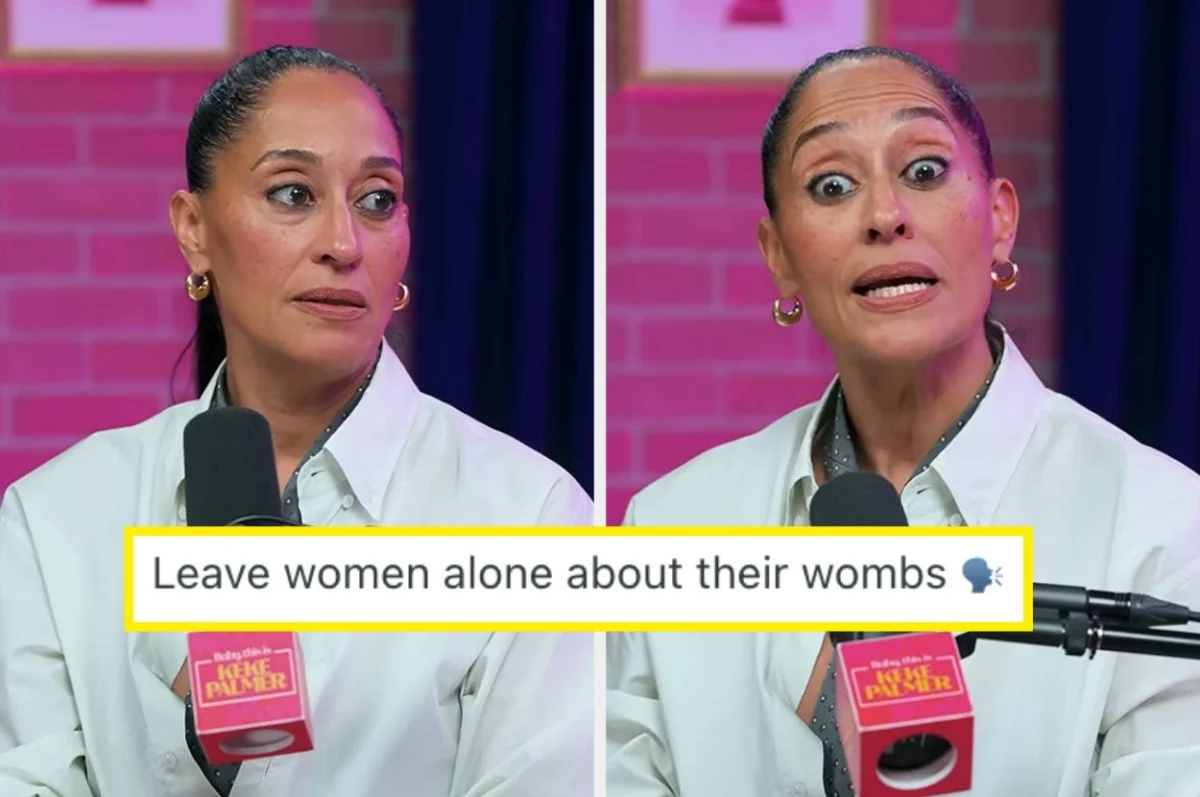
In an era where personal milestones are increasingly scrutinized under the public microscope, few celebrities have navigated the pressures of societal expectations with as much grace, wit, and firm resolve as Tracee Ellis Ross. The Golden Globe-winning actress, entrepreneur, and activist has long been a voice for autonomy, particularly regarding the pervasive, often intrusive, questioning surrounding her decision to remain child-free.
Recently, during a candid appearance on Keke Palmer’s podcast, Baby, This Is Keke Palmer, Ross revisited a particularly egregious period in her professional life, highlighting the persistent social stigma faced by women who deviate from traditional life paths. Her "no-nonsense" response to prying inquiries has since gone viral, sparking a broader cultural debate about privacy, societal expectations, and the fundamental right of a woman to define her own version of a successful life.
The Anatomy of an Invasion: A Chronology of the Conversation
For years, Tracee Ellis Ross has been the subject of public curiosity—not just for her iconic roles in Girlfriends and Black-ish, but for her personal life choices. The chronology of this discourse reveals a persistent pattern of intrusive questioning that Ross has consistently challenged.
The Black-ish Era
During the height of her success on the hit sitcom Black-ish, where she played the matriarch Rainbow Johnson, the lines between fiction and reality began to blur for audiences. Ross recounts a specific, jarring period during the show’s production where interviewers and acquaintances alike felt entitled to interrogate her reproductive choices.
"I went through a phase during Black-ish when, I swear to God, people were asking me why I hadn’t had children and had I thought about it," Ross shared with Palmer. The audacity of these questions, particularly when posed on camera, led to a breaking point. Her response—a direct, boundary-setting question: "Will you get out of my womb?"—marked a shift in how she handles such inquiries. When the individual in question appeared stunned by her bluntness, Ross doubled down, emphasizing the insanity of the premise itself: "No, but really, why are you asking me that question?! That’s insane! I don’t even understand what’s happening right now. It’s so bizarre. Stop!"
The Philosophical Evolution
This wasn’t an isolated incident of frustration; it was the culmination of years of internal and external reflection. In the years following, Ross has evolved from simply swatting away questions to actively dismantling the societal infrastructure that supports them. Her rhetoric has moved from defensive to assertive, positioning her child-free status not as a "lack" of something, but as a valid, intentional choice.
The Societal Cost: Understanding the Stigma
The public’s reaction to Ross’s comments has been overwhelmingly supportive, shedding light on the collective exhaustion many women feel regarding the "marriage and motherhood" checklist.
Supporting Data and Public Sentiment
The discourse on social media platforms, including Reddit and X (formerly Twitter), reflects a deep-seated frustration. Users frequently point out that the societal pressure to reproduce is not merely an annoyance but a systemic issue that ignores the nuances of female existence.
Key arguments frequently raised in support of Ross include:
- The Myth of the "Standard Path": Many commentators note that the persistent questioning of child-free women is rooted in the antiquated belief that a woman’s worth is tied to her reproductive utility.
- The Hidden Complexities: As one online observer noted, not everyone who is child-free is so by choice. The insensitivity of these questions ignores the prevalence of infertility, pregnancy loss, and complex health histories. For these individuals, the question is not just annoying—it is deeply painful.
- The Agency Gap: There remains a double standard where men are rarely, if ever, subjected to the same level of scrutiny regarding their reproductive status, highlighting a gendered disparity in how privacy is respected.
Redefining Worth: Ross’s Manifesto of Self-Validation
Perhaps the most significant contribution Ross has made to this cultural conversation occurred during the New York Times Well Festival last year. Her remarks served as a manifesto for the modern, independent woman, challenging the core assumption that a life without a spouse or children is "unworthy."
"I do not believe that my life is unworthy because I don’t have children," she stated. "I do not believe that my life is unworthy because I do not have a man or partner."
Ross’s philosophy is rooted in a broader definition of caretaking. She argues that she "mothers all over the place," channeling her capacity for love, nurturing, and guidance into her work, her family, her friends, and her community. By decoupling the concept of "mothering" from the act of biological birth, she has opened a dialogue about the diverse ways women can leave a legacy.
The Implications: Why This Matters Now
The cultural impact of Tracee Ellis Ross’s outspokenness cannot be overstated. As a high-profile figure, her willingness to call out the "bizarre" nature of these questions provides a template for others to follow.
The Erosion of Invasive Social Norms
For decades, asking a woman about her reproductive plans was considered "small talk." By characterizing these questions as "insane" and "bizarre," Ross is successfully shifting the social consensus. She is signaling that such questions are no longer socially acceptable, forcing the questioner to confront their own breach of etiquette.
Encouraging Agency
Ross’s advocacy is empowering a generation of women to define their lives on their own terms. When a woman of her stature—successful, affluent, and universally admired—publicly declares that her life is complete as it is, it serves as a powerful antidote to the societal anxiety that many women feel about "checking the boxes."
The Call for Professional Boundaries
The interview with Keke Palmer serves as a reminder to the media and the public alike that professional boundaries must be maintained. The shift in tone from "curious" to "entitled" is a subtle but significant transition that journalists and fans must recognize. The demand for "no BS" responses is a direct result of the public’s growing desire for authenticity and the protection of personal autonomy.
Conclusion: A New Standard of Respect
Tracee Ellis Ross’s refusal to participate in the traditional narrative of the "struggling, unfulfilled single woman" is more than just a media moment; it is a vital step toward a more respectful society. By consistently drawing firm boundaries, she has highlighted the absurdity of placing a woman’s value on her reproductive output.
As she noted in her conversation with Keke Palmer, the goal is not to be confrontational for the sake of it, but to be clear about the sanctity of one’s own life and the boundaries that should protect it. Her journey serves as a powerful reminder that while society may love to ask questions, no woman is under any obligation to provide answers—especially when those questions strike at the heart of her autonomy.
In the future, perhaps the most powerful response to "Why don’t you have kids?" will be the one Tracee Ellis Ross has perfected: a direct, unblinking refusal to accept the premise of the question, and a quiet, confident return to living a life that is, by every metric, profoundly full.
 rifanmuazin
  Suro Senen