
 By Basiran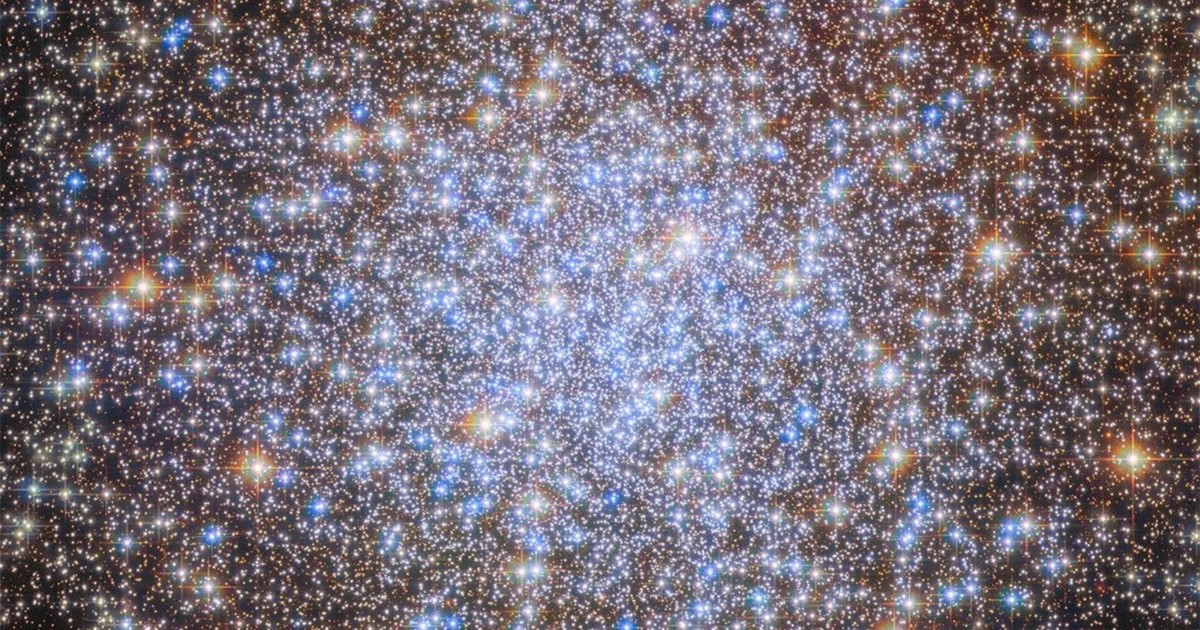
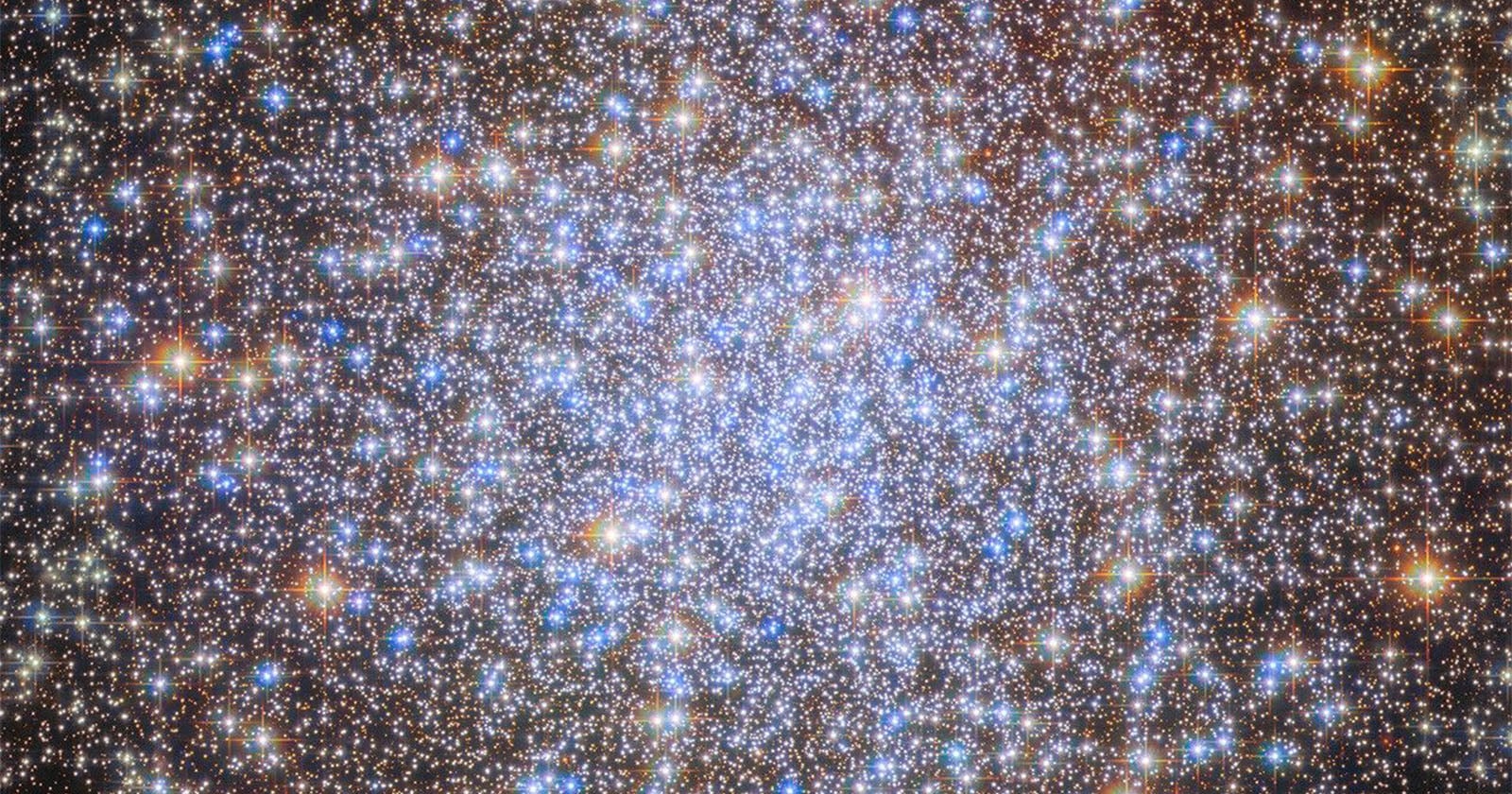
The NASA/ESA Hubble Space Telescope continues to defy its age, proving that even after decades in orbit, it remains the premier instrument for deep-space clarity. In its latest breathtaking dispatch, the telescope has captured a high-resolution portrait of NGC 6723, a globular cluster so densely packed with brilliant, ancient stars that astronomers have affectionately dubbed it the "Chandelier Cluster."
This latest image is more than a triumph of astrophotography; it is a profound scientific document. By peering into the heart of this cluster, which sits approximately 27,000 light-years away in the constellation Sagittarius, researchers are rewriting the narrative of how our galaxy—and the universe itself—began to take shape.
Main Facts: A Stellar Relic in the Sagittarius Constellation
NGC 6723 is not merely a collection of stars; it is a gravitational powerhouse. Globular clusters like this one are spherical collections of stars, ranging from tens of thousands to millions, all bound tightly by their mutual gravitational attraction.
The image released by NASA and the ESA reveals a glittering array of blue, white, and gold stars. These hues are not just aesthetic; they tell a story of stellar evolution. The "Chandelier" moniker is well-earned: the cluster’s extreme density creates the illusion of countless individual light sources hanging within a dark, infinite room.
Located in the southern sky, NGC 6723 represents one of the most significant specimens for studying the "fossil record" of the Milky Way. These stars are among the oldest in our galaxy, with some dating back over 10 billion years. In some cases, these stellar inhabitants are nearly as old as the Universe itself, serving as witnesses to the very first eras of cosmic history.
Chronology: The Formation of the Galactic Architecture
To understand why NGC 6723 is so vital to modern astrophysics, one must look at the timeline of the universe.
The Primordial Epoch
Astronomers hypothesize that globular clusters were among the first structures to form after the Big Bang. While the Milky Way we see today is defined by its sweeping spiral arms and a thin, rotating disk of stars—where our own Sun currently orbits—these clusters are remnants of a much more chaotic, formative period. They likely coalesced billions of years before the disk of the galaxy even began to settle into its current structure.
The Myth of Synchronous Birth
For decades, the standard scientific model suggested that globular clusters were "single-burst" populations. The theory posited that all the stars within a cluster formed simultaneously from a single gargantuan cloud of gas. However, modern observations from Hubble have shattered this simplistic timeline.
Data from the survey of 65 globular clusters, of which NGC 6723 is a centerpiece, has revealed that these clusters are far more complex. They exhibit "multiple populations"—meaning they contain stars of diverse ages and chemical compositions. This indicates that the history of these clusters involved prolonged periods of star formation, gas accretion, and gravitational interaction that standard models failed to predict.
Supporting Data: Hubble’s Ultraviolet Edge
The significance of the NGC 6723 findings lies in the technical capabilities of the Hubble Space Telescope, specifically its ultraviolet (UV) imaging. UV light is essential for identifying the hottest, most luminous stars within a cluster, which are often obscured by the sheer density of older, cooler stars.
The Two-Stage Formation Discovery
Through meticulous UV analysis, researchers discovered that NGC 6723 did not form in one event, but rather in two closely spaced pulses of star birth. The second period of formation occurred roughly 634 million years after the first.
While 634 million years sounds like an eternity on a human timescale, in the context of a 10-billion-year-old cluster, it is a mere "blink of an eye." This discovery provides a smoking gun for researchers: it proves that even in the early universe, these clusters had the capability to retain or gather enough gas to trigger secondary waves of star formation.
The Survey of 65
The research involving NGC 6723 is part of a massive, long-term survey of Milky Way globular clusters. This catalog has become a cornerstone of modern stellar research, informing hundreds of peer-reviewed papers. By comparing 65 different clusters, astronomers can normalize their findings, ensuring that what they see in NGC 6723 is a representative phenomenon of globular cluster evolution rather than an isolated anomaly.
Official Responses and Expert Perspectives
NASA and the ESA have highlighted this image not just as a visual milestone, but as a bridge between past and present technology.
"Astronomers think globular clusters are some of the first structures that formed in our galaxy, coalescing potentially billions of years before the thin disk of stars in which our Sun orbits," NASA stated in a recent press release.
The agency emphasized that while Hubble has done the heavy lifting for this survey, the future of this research is a collaborative effort. By pairing Hubble’s optical and ultraviolet data with the infrared capabilities of the James Webb Space Telescope (JWST), scientists are now able to see through the "dust curtains" of the galaxy. While Hubble identifies the ages and temperatures of stars via ultraviolet light, JWST can observe the cooler, hidden regions of these clusters, providing a comprehensive, multi-spectral map of their internal dynamics.
"Thanks to these findings, astronomers are on the path to understanding how and when globular clusters formed—and Hubble observations of celestial chandeliers like NGC 6723 are lighting the way," concluded the official NASA statement.
Implications: Rewriting the History of the Universe
The study of NGC 6723 has profound implications for our broader understanding of galactic evolution. If the "standard model" of star cluster formation is flawed, then our entire understanding of how galaxies assemble themselves must be re-evaluated.
Rethinking Galactic "Clumpiness"
The presence of multiple star-forming events suggests that the early universe was far more turbulent and "clumpy" than previously assumed. If a cluster like NGC 6723 can manage a second burst of star formation, it implies that these objects were once surrounded by vast reservoirs of cold gas that were not immediately consumed. This changes the math regarding how much mass was available to fuel early star formation.
The Role of Gravity
The density of NGC 6723 is a physical marvel. In such a tightly packed environment, the gravitational interactions between stars are intense. This makes these clusters the perfect laboratories for studying "stellar dynamics"—the way stars interact, migrate, and occasionally collide. By watching these clusters, we are effectively watching the "social life" of stars over a period of 10 billion years.
A Legacy Continued
The fact that Hubble continues to produce such high-impact science decades after its launch is a testament to the engineering and the ongoing maintenance missions that defined the program. The survey of these 65 clusters is widely considered one of the most successful legacy projects in the history of the telescope. As researchers continue to parse the data from NGC 6723, they are essentially unlocking the "genetic code" of the Milky Way.
The "Chandelier Cluster" stands as a beacon, reminding us that even the most ancient structures in the universe have stories left to tell. Every photon captured by Hubble’s sensors is a piece of a cosmic puzzle that, once completed, will reveal not just the history of the stars, but the very origins of our place in the cosmos.
As we look toward the future of deep-space exploration, the lessons learned from NGC 6723 will undoubtedly serve as the foundation for the next generation of discovery. Whether it is through the lenses of Hubble or the infrared mirrors of Webb, the mission remains the same: to find the light in the darkness, and to understand the brilliance of the chandeliers that hang in the grand hall of the universe.
Image credits: ESA/Hubble & NASA, A. Sarajedini, G. Piotto
 Laily UPN
  Reynand Wu
  Lina Hope