
 By Muslim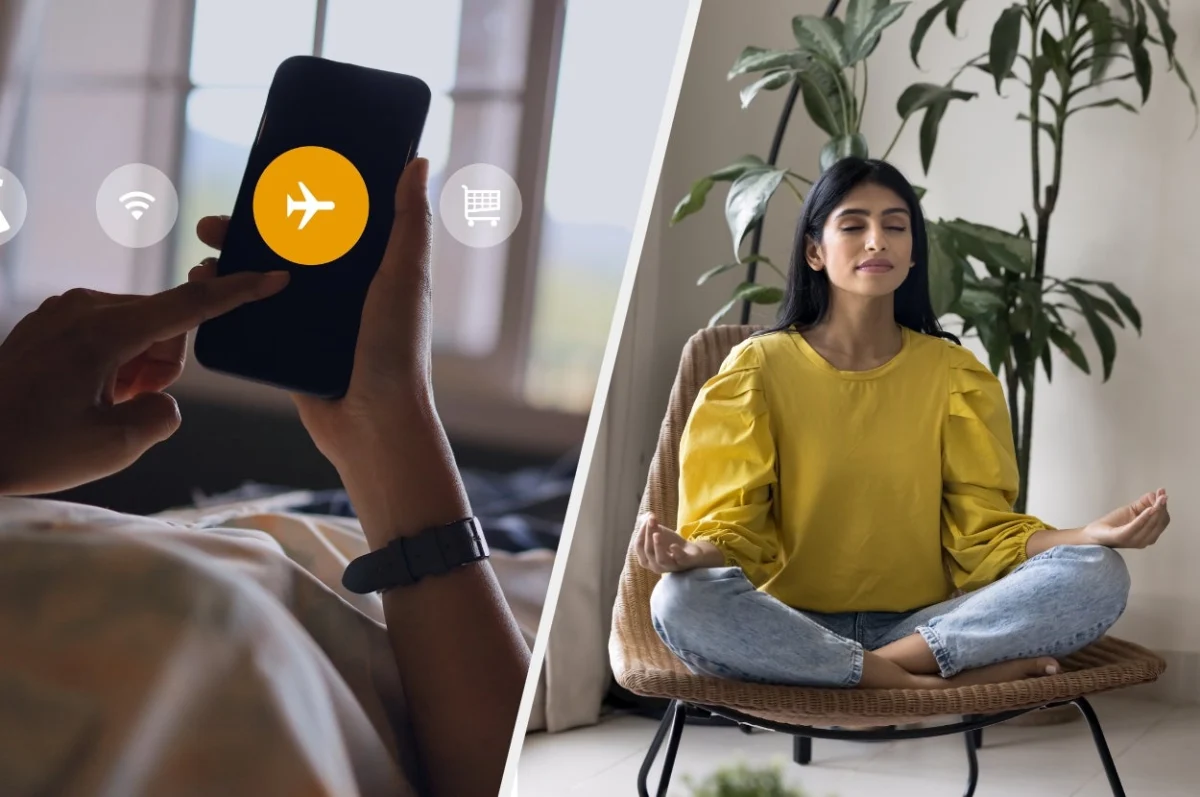
LONDON — In an era defined by hyper-connectivity, the most radical act of self-care requires neither a subscription fee, a specialized diet, nor an intensive gym membership. In fact, it asks for the exact opposite: the simple, yet increasingly difficult act of putting your device down.
While the modern obsession with digital detoxes is hardly a novel concept—our parents and grandparents have long advocated for fresh air over television static—the conversation surrounding our daily screen consumption has reached a fever pitch. Today, smartphone users routinely exchange digital scorecards in group chats, confessing to staggering daily averages that routinely eclipse six, eight, or even twelve hours of continuous screen time.
Yet, as medical professionals point out, the solution does not lie in draconian, unrealistic digital blackouts. Instead, experts suggest that carving out small, sustainable moments of disconnection throughout the day can yield profound benefits for both mind and body.
Main Facts: The Anatomy of Modern Screen Fatigue
The core issue facing contemporary society is not merely the presence of technology, but the involuntary, compulsive nature of our engagement with it. Smartphones, tablets, and computers have transformed from productivity tools into omnipresent companions that accompany us from the moment we wake to the final moments before sleep.
According to Dr. Suzanne Wylie, a general practitioner and medical adviser for IQdoctor, attempting to completely banish screens from one’s life is often counterproductive.
"It doesn’t require a credit card or for you to add anything else to your day. In fact, it’s quite the opposite: put that damn device down," Dr. Wylie notes. Rather than aiming for an unachievable total abstinence from technology, she advocates for micro-breaks—deliberate, short-lived pauses that disrupt the cycle of constant notification-checking and algorithmic scrolling.
While internet culture frequently targets younger demographics—such as Gen Z and Millennials—for their attachment to smartphones, medical professionals emphasize that digital fatigue does not discriminate by age. From school-aged children to retirees, the physical and psychological toll of excessive screen time affects individuals across the demographic spectrum.
Chronology: How We Became a Society Etched in Glass
To understand the urgency of the modern screen-break movement, it is necessary to examine how our relationship with technology evolved so rapidly over the past two decades.
Phase 1: The Transition to Ubiquity (Early 2010s)
Following the mainstream adoption of smartphones and the rapid expansion of high-speed mobile data, technology shifted from something we used at a desk to something we carried in our pockets. Initially heralded as triumphs of convenience, these devices gradually blurred the boundaries between work, leisure, and social interaction.
Phase 2: The Attention Economy and Algorithmic Capture (Mid-to-Late 2010s)
As platform developers refined infinite scrolls, push notifications, and algorithmic content feeds, digital engagement shifted from intentional searching to passive consumption. Screen time quietly crept upward. The concept of "checking your phone" evolved from a five-minute task into an activity that consumed hours of fragmented daily attention.
Phase 3: The Pandemic Acceleration (2020–2022)
Global lockdowns forced professional, educational, and social interactions entirely behind glass screens. For millions of people, remote work and digital socialising eliminated the natural physical barriers that previously limited screen exposure. Daily averages surged past historic highs, permanently altering societal habits.
Phase 4: The Pushback and the Micro-Break Movement (Present Day)
Today, society is experiencing a cultural and medical counter-movement. Tired of chronic mental fatigue, sleep disturbances, and physical discomfort, individuals are beginning to push back. The focus has shifted from total technological rejection to mindful moderation—championing the 10-minute walk, the phone-free dinner, and the evening digital curfew.
Supporting Data: The Physical and Mental Toll of Constant Connection
While human beings have adapted remarkably well to the digital age, human biology has not evolved at the same pace as Silicon Valley software engineering. Prolonged screen exposure triggers a cascade of physiological and psychological responses that researchers are only beginning to fully quantify.
1. Ocular Strain and Neurological Fatigue
Staring at high-resolution displays at close range forces the ciliary muscles inside the eye to remain in a constant state of contraction, leading to digital eye strain (DES). Symptoms include blurred vision, dry eyes, and tension headaches. Furthermore, processing a continuous stream of fragmented information—emails, social media updates, news headlines—overloads the brain’s executive functioning centers, leading to acute mental fatigue.
2. The Sedentary Spiral
Screens are inherently stationary mediums. Every hour spent hunched over a smartphone or laptop is an hour subtracted from physical movement. Regular, short breaks from devices naturally encourage bodily movement, prompting individuals to stand up, stretch, and increase daily step counts.
3. Sleep Disruption and Circadian Disruption
Perhaps the most damaging consequence of modern screen habits is their intrusion into the sanctuary of sleep. The blue light emitted by digital devices suppresses the body’s natural production of melatonin, the hormone responsible for regulating sleep-wake cycles. When combined with the psychological stimulation of late-night scrolling or messaging, the result is chronic sleep deprivation.
+------------------------------------------------------------+
|             COMMON SYMPTOMS OF EXCESSIVE SCREEN TIME       |
+------------------------------------------------------------+
| • Digital Eye Strain (DES): Dry eyes, blurred vision       |
| • Tension Headaches: Caused by poor posture & focus        |
| • Circadian Disruption: Suppressed melatonin production    |
| • Cognitive Fatigue: Reduced attention span & memory       |
| • Physical Inactivity: Increased sedentary behavior        |
+------------------------------------------------------------+
Official Responses and Expert Insights
Medical authorities and wellness experts are increasingly aligning around a pragmatic message: moderation over abstinence.
Dr. Suzanne Wylie emphasizes that the benefits of stepping away from screens extend far beyond simple relaxation. "The obvious one is relieving mental fatigue, eye discomfort, and headaches," she explains, highlighting the immediate physiological relief that comes from closing a laptop or locking a phone.
However, Dr. Wylie places special emphasis on the secondary benefits of digital moderation—specifically, movement and rest.
"It can also encourage us to move our bodies and step away for some much-needed fresh air and exercise—even if it’s just for 10 minutes at a time," she notes. Stepping outside breaks the sensory monotony of indoor digital environments, offering the brain a chance to engage in "attention restoration theory," a psychological concept suggesting that natural environments help replenish depleted cognitive resources.
Regarding sleep hygiene, Dr. Wylie is unequivocal: "Sleep is another particularly important reason to consider a reset, especially if someone has got into the habit of scrolling, watching programmes, or checking messages late into the evening."
Public health organizations are increasingly echoing these sentiments, urging individuals to establish "digital sunset" policies—turning off non-essential screens at least one hour before bedtime to allow the nervous system to wind down naturally.
Implications: Reclaiming Agency in a Hyper-Digital World
The growing movement toward mindful screen breaks carries profound implications for personal health, workplace productivity, and cultural values.
Personal Wellbeing and Autonomy
By deliberately choosing to step away from devices, individuals reclaim agency over their time and attention. In an economy where corporations monetize human attention, reclaiming ten minutes of your day is a subtle act of reclamation. It allows space for introspection, boredom—which is vital for creativity—and authentic face-to-face communication.
Workplace Dynamics and Productivity
Forward-thinking organizations are beginning to recognize that constant connectivity does not equate to high performance. Encouraging employees to take device-free breaks reduces burnout, lowers absenteeism, and enhances long-term focus. The myth of the 24/7 responsive worker is steadily giving way to the reality of the sustainable, rested professional.
Cultural Shifts in How We View Technology
Ultimately, the micro-break movement represents a maturing relationship with technology. We are moving past the initial phase of techno-utopianism—where every new gadget and app was assumed to improve our lives unconditionally—and entering an era of critical digital literacy.
We are learning that technology is a powerful tool, but a terrible master.
As the digital landscape continues to expand with immersive technologies, artificial intelligence, and constant notifications, the humble decision to put the device down will only grow in importance. It does not require a complex strategy or a financial investment. It simply requires a conscious choice: to disconnect from the virtual world, even for a few minutes, in order to reconnect with the real one.
 Pevita Pearce
  Raul Delapena Setiawan
  Layla Zulfa