
 By Neng Nana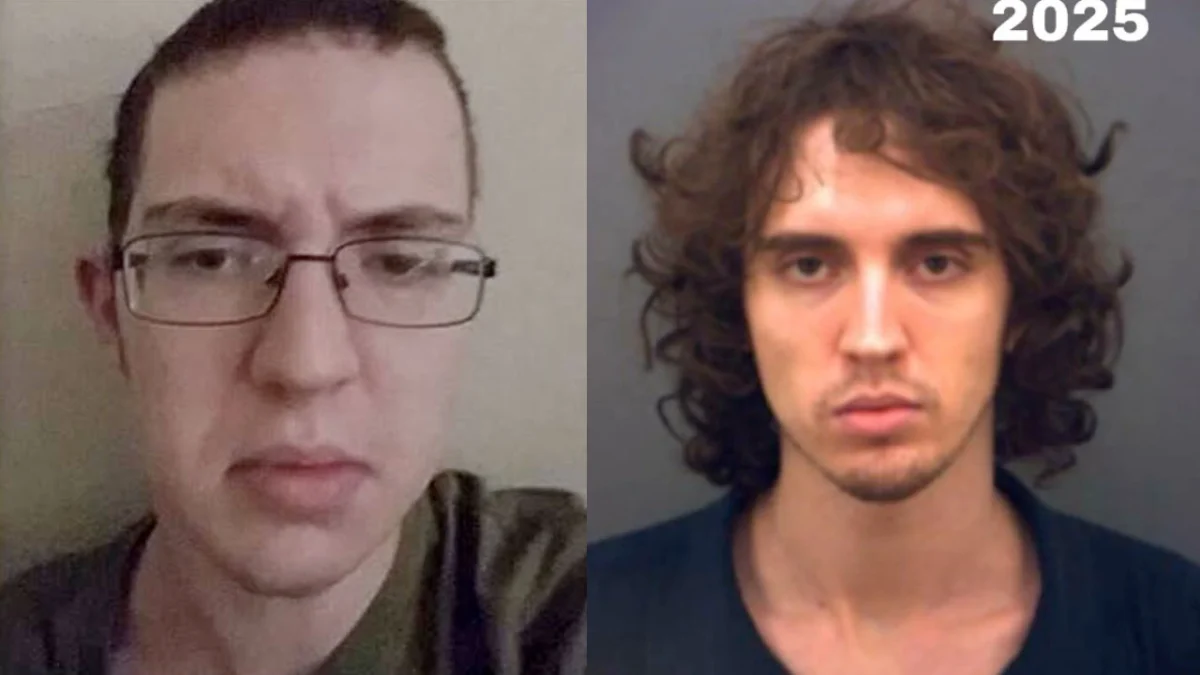
EL PASO, TEXAS – In a chilling testament to the internet’s capacity for trivialization and the dark undercurrents of online culture, recent photographs of Patrick Crusius, the perpetrator of the 2019 El Paso Walmart mass shooting, have ignited a perverse trend across social media platforms. Widely recognized in niche online circles as "Chudjak," a crude meme figure born from the depths of extremist forums, Crusius’s updated appearance has spurred a disturbing wave of commentary, with some users remarking on an imagined "glow-up." This phenomenon underscores a perilous intersection of real-world atrocity and digital detachment, prompting serious questions about desensitization, the spread of hate, and the responsibilities of online platforms.
The images, circulating primarily on X (formerly Twitter) and Reddit, depict Crusius with a noticeably altered look from his initial mugshot: sans glasses, with longer, curly hair and nascent facial scruff. For many, particularly those steeped in the ironic and often transgressive humor of certain online communities, this transformation became fodder for "glow-up" jokes—a term typically reserved for individuals who have undergone a positive personal or aesthetic evolution. However, the subject of these jests is a convicted mass murderer responsible for one of the deadliest hate-motivated attacks in modern American history, serving a lifetime sentence in federal prison. The apparent disconnect between the gravity of his crimes and the flippant online reactions reveals a troubling facet of contemporary digital interaction.
Main Facts: A Mass Murderer, a Meme, and a Morbid Viral Moment
Patrick Crusius gained national infamy on August 3, 2019, when he opened fire at a Walmart store in El Paso, Texas, killing 23 people and injuring dozens more. His motive, articulated in a racist manifesto posted online prior to the attack, was explicitly anti-immigrant and white supremacist, targeting Hispanic individuals. Crusius pleaded guilty to 90 federal charges in July 2023, including hate crimes resulting in death and firearm offenses, and was subsequently sentenced to 90 consecutive life sentences in federal prison. He also faces state capital murder charges, to which he pleaded guilty in April 2025.
Despite the profound human cost and the legal system’s unequivocal condemnation of his actions, Crusius has, for a segment of the online populace, been transmuted into "Chudjak." This character, a variation of the popular Wojak meme, originated on 4chan’s infamous /pol/ (politically incorrect) board in late 2019. Depicted with glasses, deep nasolabial folds, and a perpetual frown, Chudjak is frequently associated with doomsaying and extremist rhetoric, most notably the phrase "The West has fallen. Billions must die." This slogan itself has become a shorthand for online extremist hysteria, reflecting the nihilistic and genocidal fantasies prevalent in certain radicalized corners of the internet.
The recent viral spread of Crusius’s updated photos, coupled with the "glow-up" narrative, has brought this disturbing meme back into the spotlight. What makes this particular incident so jarring is the explicit application of internet humor—often used to poke fun at celebrities, everyday people, or even fictional characters—to a convicted perpetrator of mass violence. This act of "memeification" blurs the lines between ironic commentary and a tacit normalization, if not outright glorification, of an individual whose actions caused immense suffering and fueled profound societal fear. The rapid dissemination and engagement with these images underscore the ongoing challenges faced by social media platforms in moderating content that veers from dark humor into the realm of potential radicalization or re-traumatization.
Chronology of a Disturbing Online Phenomenon
The trajectory of Crusius’s "new" images and their subsequent memeification traces a path from obscure forums to mainstream virality, marked by misinformation and a rapid succession of online reactions.
April 25th, 2025 (Reddit Post): The initial catalyst appears to be a Reddit post by user /u/uncanealguinzaglio in the subreddit /r/masskillers. The user claimed to have obtained a "new federal mugshot" of Crusius via a Freedom of Information Act (FOIA) request. Crucially, the Redditor clarified that while the image was linked to federal charges, it was purportedly taken around July 2023 by El Paso authorities holding him for federal proceedings, not directly by federal agencies in 2025 as some later mislabeled it. The post, likely violating Reddit’s Terms of Service, was swiftly deleted, but not before the image had been captured and began its journey across other platforms.
April 27th, 2025 (X Post Goes Viral): Two days later, an X user identified as @TruueDiscipline posted one of these images, featuring a solemn-looking Crusius without glasses, sporting longer, curly hair and some facial scruff. The accompanying caption, "This is what chudjak looks like now… feel old yet?", invoked a popular meme format typically used for nostalgic comparisons of public figures. The post exploded, accumulating over 1.2 million views and 17,000 likes in just 48 hours, catapulting the image and the "Chudjak glow-up" narrative into widespread internet consciousness.
Immediate Online Reactions: The viral post unleashed a torrent of "deranged fashion" responses, as the original article termed them. X user @Halsted_19 shared a meme depicting women fawning over the incarcerated "Chud," while @hayasaka_aryan posted a side-by-side comparison of Crusius with the caption, "From chud to indie rock singer." Another user, @Marcus_cel, employed the classic "Cereal Guy" meme, showing the character spitting out his breakfast in feigned shock at Crusius’s updated appearance. These reactions, ranging from ironic admiration to incredulous humor, underscored the bizarre and often unsettling ways in which online communities engage with figures of infamy.
Clarification and the Actual Recent Photo: Amidst the virality, @TruueDiscipline, the original X poster, later provided a crucial correction. They noted that the "viral" image was indeed from July 2023, not a truly recent photo. To rectify the misinformation, they shared a genuinely contemporary photograph of Crusius from a court hearing on April 21st, 2025, where he pleaded guilty to capital murder charges. This image depicted Crusius with glasses and a beard, presenting a different, arguably less "glowed-up" appearance than the one that had captivated the internet. This correction, while important for factual accuracy, did little to stem the tide of the initial "glow-up" meme’s spread and its subsequent implications. The initial, more aesthetically "pleasing" image had already cemented its place in the online discourse.
Supporting Data: The Anatomy of a Meme and the Echoes of Extremism
To fully grasp the gravity of the "Chudjak glow-up" phenomenon, it is imperative to delve into the origins and ideological underpinnings of the meme itself, as well as the broader context of the El Paso shooting.
The El Paso Shooting: A Hate Crime’s Legacy: The attack perpetrated by Patrick Crusius was not merely an act of violence but a calculated act of domestic terrorism motivated by white supremacist ideology. Crusius drove over 600 miles from his hometown to El Paso, specifically targeting a community with a significant Hispanic population. His manifesto, rife with anti-immigrant rhetoric and "great replacement" conspiracy theories, mirrored the language and grievances found in extremist online forums. The shooting resulted in the deaths of 23 individuals, ranging in age from 15 to 90, and left dozens more with physical and psychological scars. The FBI formally investigated the incident as an act of domestic terrorism and a hate crime, underscoring its profound societal impact and the dangers of the ideologies that fueled it. The lives irrevocably altered by Crusius’s hatred stand in stark contrast to the casual online humor surrounding his image.
Chudjak and the "Billions Must Die" Meme: The "Chudjak" meme, a derivative of the ubiquitous "Wojak" character, emerged from 4chan’s /pol/ board—a notorious online space often linked to the propagation of hate speech, conspiracy theories, and extremist recruitment. Wojak memes, characterized by their minimalist, expressive line drawings, are typically used to convey relatable emotions or social observations. However, Chudjak represents a darker evolution. His perpetually grim expression, often paired with the declaration "The West has fallen. Billions must die," embodies a nihilistic, Malthusian worldview that resonates deeply within extremist circles.

The phrase "Billions Must Die" itself has become an iconic representation of accelerated global decline, often linked to eco-fascist or white supremacist narratives advocating for drastic population reduction or ethnic cleansing. By associating Crusius with Chudjak, and subsequently memeifying his appearance with a "glow-up" narrative, these online communities are not merely engaging in dark humor; they are inadvertently or intentionally reinforcing a cultural shorthand that normalizes and even valorizes figures associated with violent extremist ideologies. This process desensitizes users to the real-world consequences of such rhetoric, blurring the lines between ironic detachment and genuine ideological sympathy.
The Virality and Its Implications for Desensitization: The rapid virality of the "Chudjak glow-up" — accumulating over a million views and thousands of likes — speaks volumes about the current state of online engagement. In an attention economy, shock value, transgression, and dark irony often reign supreme. For many, sharing and commenting on such content might be a form of "edgy" humor, a way to test boundaries or signal a particular subcultural affiliation. However, the sheer volume of engagement, irrespective of intent, contributes to a broader desensitization. When a mass murderer’s image becomes a subject of aesthetic commentary and lighthearted memes, it risks diluting the gravity of their crimes and the suffering they inflicted. This normalization can be particularly insidious, gradually eroding empathy and making it easier for individuals to consume and even internalize extremist narratives without fully appreciating their real-world implications.
Furthermore, the "glow-up" narrative, even if presented ironically, plays into a disturbing trend of romanticizing or glamorizing figures who embody transgressive or dangerous ideals. This phenomenon, sometimes observed in true crime fandoms or in the online veneration of historical villains, creates a perverse "parasocial" relationship where the gravity of a person’s actions is overlooked in favor of their perceived aesthetic or symbolic power.
Official Responses: Condemnation, Legal Frameworks, and Platform Responsibility
While there have been no direct "official responses" specifically addressing the "Chudjak glow-up" meme from government bodies, the broader context of Crusius’s legal proceedings, the stances of anti-hate organizations, and the actions of social media platforms collectively offer a framework of official condemnation and regulatory efforts.
The Judicial System’s Unambiguous Stance: The most definitive "official response" to Patrick Crusius’s actions comes from the American judicial system. His conviction on 90 federal charges and subsequent sentencing to 90 consecutive life sentences, followed by his guilty plea to state capital murder charges, unequivocally demonstrate society’s rejection of his ideology and the severe consequences for such hate-fueled violence. The legal process emphasizes the profound harm inflicted upon victims and the community, standing in stark contrast to the trivialization observed in online meme culture. Any attempt to humanize or normalize Crusius through a "glow-up" meme directly undermines the solemnity and justice delivered by the courts.
Victim Advocacy and Anti-Hate Organizations: Organizations dedicated to combating hate crimes and supporting victims of violence would universally condemn the memeification of a mass shooter. Groups like the Anti-Defamation League (ADL), the Southern Poverty Law Center (SPLC), and local victim advocacy networks consistently highlight the dangers of online extremism and the re-traumatization caused by the glorification or trivialization of perpetrators. Such organizations would likely view the "Chudjak glow-up" as deeply disrespectful to the victims and their families, a grotesque distortion of reality, and a dangerous reinforcement of the very ideologies that fueled the El Paso shooting. Their official stance is one of unwavering opposition to hate speech and its manifestations, both online and offline.
Social Media Platforms and Content Moderation: Social media platforms bear a significant responsibility in mitigating the spread of harmful content, including the glorification of violence and hate speech. The deletion of the initial Reddit post regarding Crusius’s mugshot, "likely for violating Reddit’s TOS," serves as a direct "official response" from a platform. Most major platforms, including Reddit and X, have policies prohibiting content that promotes terrorism, hate speech, or the glorification of violent perpetrators. However, the sheer volume of content and the nuanced nature of "ironic" or "dark humor" make consistent enforcement a formidable challenge. The virality of the "Chudjak glow-up" on X, despite the platform’s stated policies, highlights the ongoing struggle to effectively moderate such material and prevent it from reaching millions of users. The incident serves as a stark reminder of the need for platforms to continually review and strengthen their content moderation efforts, particularly concerning sensitive topics involving real-world violence and extremism.
Implications: Desensitization, Radicalization, and the Future of Online Discourse
The "Chudjak glow-up" meme, while seemingly a fleeting internet phenomenon, carries profound implications for online culture, societal desensitization, and the ongoing battle against extremist ideologies.
The Normalization of Extremism and Violence: Perhaps the most alarming implication is the subtle yet pervasive normalization of extremism and violence. When a mass murderer is recast as a meme, even ironically, it contributes to a broader cultural desensitization. The horrific reality of his crimes becomes abstracted, replaced by a detached, often humorous, online narrative. This process can make it easier for individuals, particularly younger users, to encounter and engage with extremist content without fully grasping its real-world consequences. It blurs the lines between acceptable discourse and dangerous rhetoric, potentially lowering the barrier for entry into radicalized online communities.
Re-traumatization of Victims and Their Communities: For the survivors, families, and community members affected by the El Paso shooting, the memeification of Patrick Crusius is not a joke; it is a painful re-traumatization. To see the perpetrator of their immense suffering become a subject of casual online humor or aesthetic commentary is deeply insulting and profoundly distressing. This phenomenon underscores how online actions, even those perceived as harmless or ironic by their creators, can have devastating real-world impacts on vulnerable populations.
The Role of Ironic Detachment in Obscuring Malice: The internet’s pervasive culture of ironic detachment often serves as a shield for genuinely malicious or harmful content. Users can claim their participation in such memes is "just dark humor" or "not serious," thereby deflecting criticism and avoiding accountability. However, this ironic distance can inadvertently provide cover for those who genuinely sympathize with extremist views, allowing them to participate in the discourse under the guise of humor. It makes it difficult to discern between genuine extremism and performative edginess, creating fertile ground for radicalization to fester unnoticed.
Challenges for Social Media Governance: The "Chudjak glow-up" incident further highlights the immense challenges faced by social media platforms in governing content. Striking a balance between free speech, user engagement, and the prevention of harm is a constant struggle. The rapid spread of such memes, often evolving in form and context, makes them difficult to track and moderate effectively. This incident reinforces the urgent need for platforms to invest more in sophisticated content moderation technologies, human review, and robust policies that prioritize public safety and the protection of vulnerable communities over pure engagement metrics.
The Erosion of Empathy and Critical Thinking: Ultimately, the "Chudjak glow-up" serves as a stark indicator of a potential erosion of empathy and critical thinking in certain online spaces. The capacity to detach a person’s image from their heinous actions, and then to apply a trivializing or even admiring narrative, suggests a troubling disconnect from the human cost of violence. As online interactions increasingly mediate our understanding of the world, incidents like this demand a critical examination of how digital culture shapes our moral compass and our ability to respond to atrocity with appropriate gravity and compassion. Without a concerted effort to foster greater digital literacy and ethical engagement, the line between dark humor and the normalization of hate risks becoming increasingly blurred.
 rifanmuazin
  Nana
Nana  Iffa Jayyana