
 By Ammar Sabilarrohman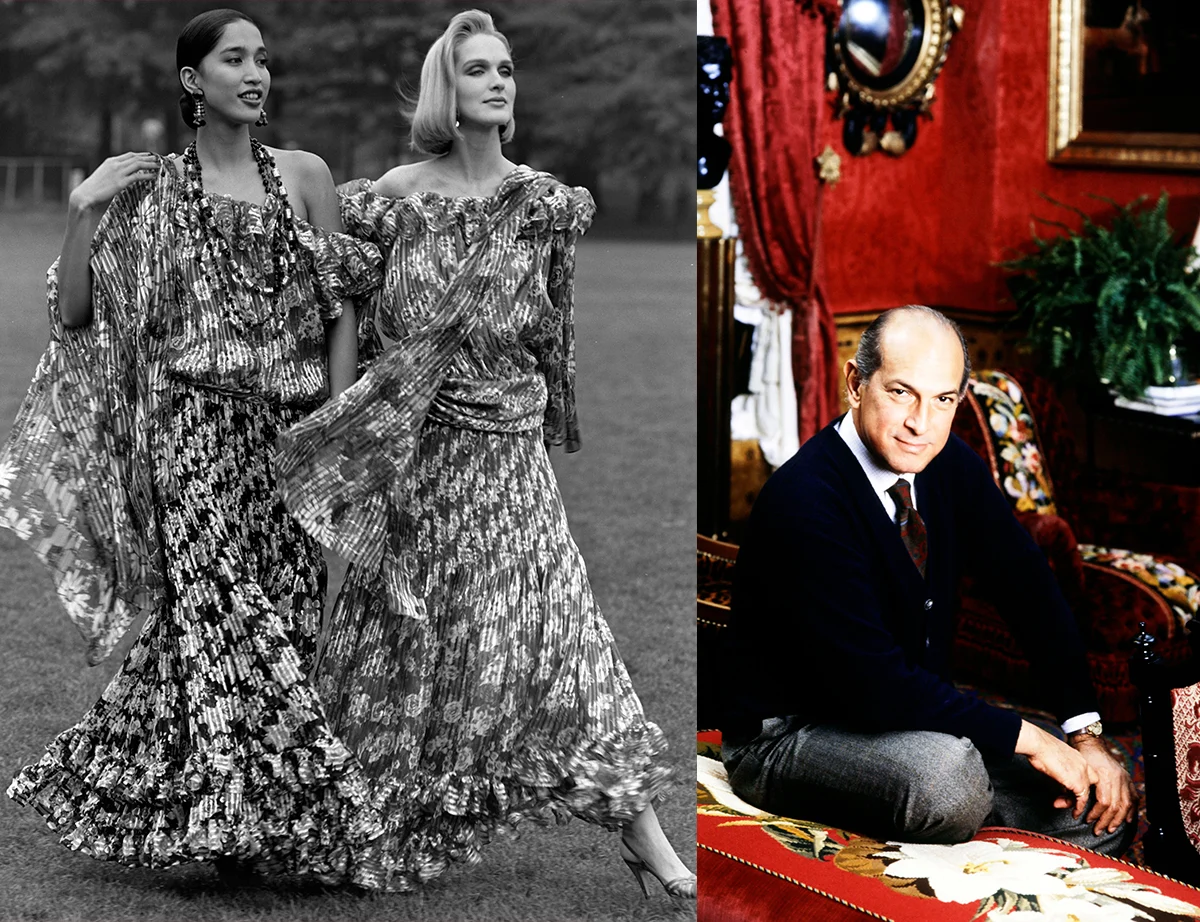
There has always been something uniquely transcendent about the name Oscar de la Renta. To those within the inner sanctums of the industry, he was simply "Oscar"—a mononym that commanded respect, warmth, and an unwavering standard of beauty. While contemporary discourse often favors the avant-garde or the street-style revolution, the foundational contributions of this Dominican-born designer remain the bedrock of modern American luxury. As we celebrate what would have been his 94th birthday, a deep dive into the Fairchild Archives reveals a career not just defined by garments, but by a lifelong commitment to the art of grace.
The Genesis: A Paris-Trained Visionary in New York
The trajectory of Oscar de la Renta’s career began long before he became a household name. In 1963, a young, Paris-trained designer arrived in New York City with a refined sensibility that would soon alter the American fashion landscape. He was tasked with leading the custom atelier for beauty magnate Elizabeth Arden—a move that was, at the time, a bold gamble for both the house and the designer.
Women’s Wear Daily was there to document the pivotal moment. When he presented his debut 60-piece collection for Arden, the industry recognized an immediate shift in the wind. The collection was not merely a series of clothes; it was an exercise in sophisticated tailoring that bridged the gap between European couture rigor and the burgeoning American ready-to-wear movement. This exclusive debut solidified his status as a designer to watch, setting in motion a powerhouse brand that would flourish for nearly half a century.
A Chronology of Distinction
Oscar de la Renta’s journey was punctuated by milestones that redefined the role of a couturier. His early career was characterized by rigorous mentorship; he apprenticed under the titans of Spanish couture, specifically Cristóbal Balenciaga and Antonio del Castillo. These influences granted him a technical mastery that few of his contemporaries possessed.

- 1963: Joins the Elizabeth Arden custom atelier, introducing a new level of European-influenced elegance to the New York social scene.
- 1965: Establishes his eponymous label. This marks the birth of the Oscar de la Renta aesthetic: romantic, feminine, and undeniably luxurious.
- 1973: The "Battle of Versailles." As one of the American designers tasked with squaring off against the legends of French couture, de la Renta’s participation elevated his profile to international superstar status, proving that American design could stand toe-to-toe with the centuries-old houses of Paris.
- 1992: A historic appointment. De la Renta was named the couturier for the House of Balmain. This was a seismic event in fashion history, as he became the first American designer to lead a French couture house, effectively dismantling the barriers between American commerce and European artistry.
- 2014: The passing of a legend. Upon his death, WWD honored him with the title "An American Master," a designation that sought to encapsulate his profound influence on the global fashion identity.
The Philosophy of the Runway: Fashion as a Love Affair
"Fashion is like a love affair," de la Renta once remarked. This sentiment was not just a soundbite; it was the manifesto by which he designed. His collections were always deeply personal, frequently drawing from the vibrant colors and sensory details of his Dominican Republic heritage.
Unlike designers who sought to shock or alienate, de la Renta’s objective was to make the wearer feel beautiful. This approach made him the designer of choice for the world’s most influential women, from socialites to First Ladies. Whether dressing Nancy Reagan, Hillary Clinton, or modern icons like Taylor Swift, de la Renta understood that a dress was an extension of the woman’s persona. He didn’t just create clothing; he created a stage for his clients to inhabit their own power.
Supporting Data: From the Fairchild Archives
The Fairchild Archives serve as a living testament to the evolution of his craft. Photographic records from the 1960s show a meticulous focus on structure, while his 1980s and 90s collections display a masterful evolution into bold, romantic silhouettes.
The data confirms that his impact was not merely aesthetic but commercial. By maintaining a constant presence on the red carpet and at the Met Gala, de la Renta ensured that his brand remained relevant across generations. His 2010 Met Gala appearance, featuring Oprah Winfrey, serves as a masterclass in celebrity collaboration—a model that remains the standard for luxury marketing today.

Official Responses and Industry Legacy
Following his passing, the fashion world expressed a collective sense of loss that extended beyond his professional circle. Industry titans, editors, and former employees described him as a man of immense charm and intellectual curiosity. His influence on the next generation of designers is immeasurable; he taught them that while trends are fleeting, style is eternal.
"A new job… a new country… the stimulation of it all is overwhelming… but it will all happily fall into place with time," he told WWD in 1963. Looking back at his 94-year legacy, it is clear that everything did, indeed, fall into place. He transformed the "overwhelming" nature of the fashion industry into a legacy of poise and permanence.
Implications for the Future of Fashion
What does the legacy of Oscar de la Renta mean for the future of the industry? In an era dominated by rapid cycles and digital consumption, his career offers a vital counter-narrative.
- The Importance of Heritage: De la Renta proved that a designer’s roots—whether in the Dominican Republic or through apprenticeship in Paris—are not just background noise but the very soul of the work.
- The Human Connection: His success was predicated on personal relationships. In a digital-first world, his model of the "love affair" with the customer is a reminder that luxury is fundamentally a human-to-human service.
- Technological Integration: While he was a classicist, he was never a luddite. He understood that to survive, one must evolve. His ability to navigate the transition from the mid-century atelier to the globalized red-carpet era remains a blueprint for any modern creative director.
As we revisit his work—from the sketches of 1963 to the breathtaking gowns worn on the red carpets of the 2010s—we find a consistency that is rare in modern design. Oscar de la Renta did not chase the zeitgeist; he defined it.

The Fairchild Archives remain a gateway into a world where quality, color, and silhouette were held in the highest regard. To study his life is to study the history of American excellence. As the fashion industry continues to navigate the complexities of the 21st century, the ethos of Oscar de la Renta serves as a compass, pointing back to the fundamental truth that fashion, at its best, is a celebration of the human spirit.
In commemorating his 94th birthday, we do not merely look at clothes. We look at a life well-lived, a craft mastered, and a legacy that continues to bloom, season after season, on the runways and in the hearts of those who continue to cherish the beauty he left behind.
 Neng Nana
  Ali Ikhwan
  Lina Hope