
 By Asro
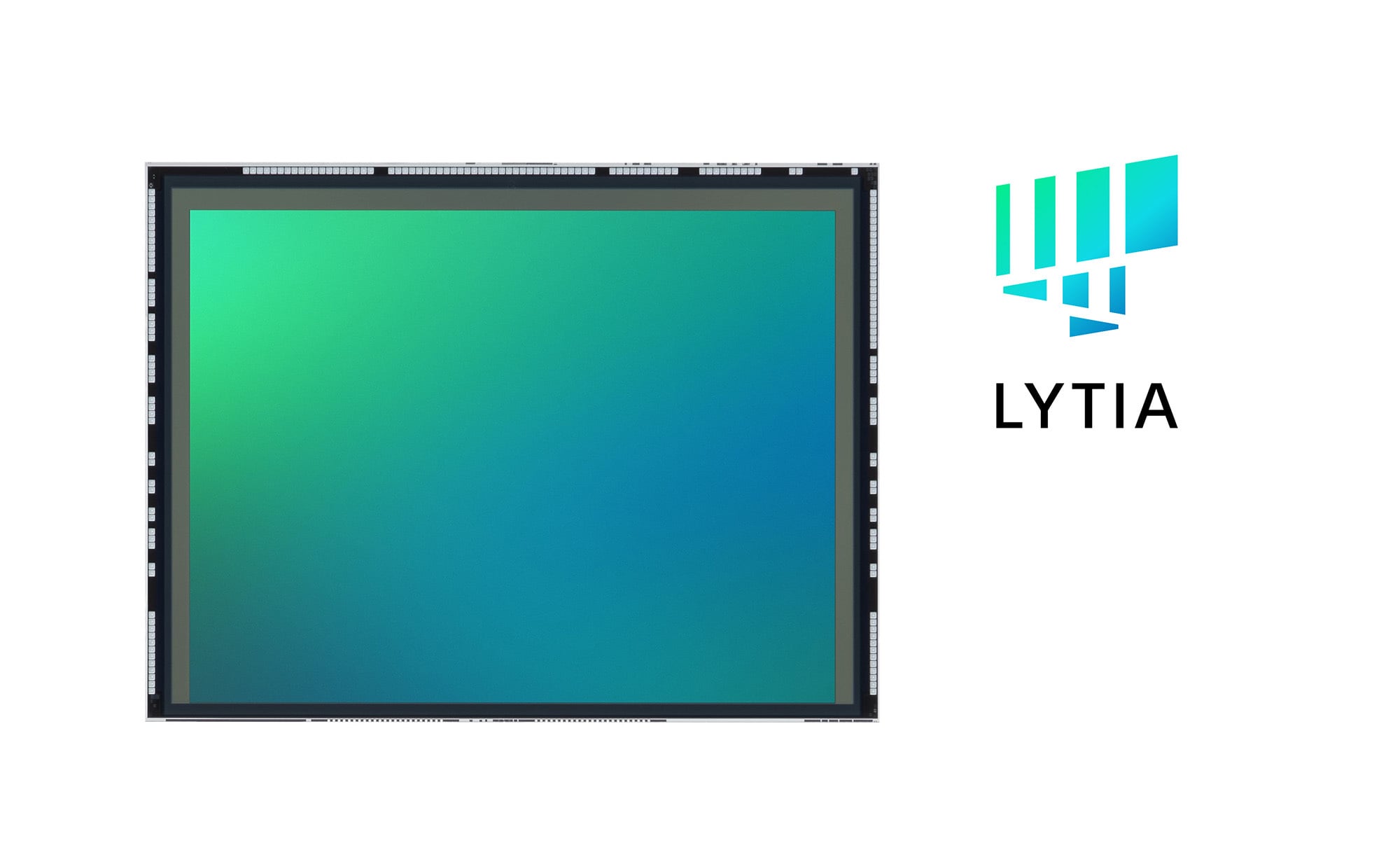
The landscape of mobile photography is on the cusp of a significant paradigm shift. Sony Semiconductor Solutions has officially announced the launch of the Lytia L910, its first image sensor to integrate Lateral Overflow Integration Capacitor (LOFIC) technology. Designed to bring flagship-level performance to a wider range of smartphones, the 50-megapixel sensor promises to bridge the gap between pocket-sized devices and dedicated high-end cameras by fundamentally changing how sensors process light.
As mobile manufacturers move away from the traditional, software-heavy "computational photography" approach—which often relies on stacking multiple frames to simulate dynamic range—Sony’s new hardware-centric architecture seeks to capture the perfect shot in a single exposure.
Main Facts: What is the Lytia L910?
The Lytia L910 is a Type 1/1.28 image sensor that marks a pivotal evolution in Sony’s sensor portfolio. Its defining feature is the LOFIC architecture. In standard image sensors, when a pixel reaches its full capacity (saturation) due to bright light, the excess charge is discarded. This results in "blown-out" highlights—pure white, detail-less areas in an image.
LOFIC technology changes this by creating an overflow capacitor that captures that excess charge. Instead of losing the data, the sensor stores it in a parallel circuit, allowing the camera to retain detail in high-contrast scenes that would otherwise be lost.
Key Specifications:
- Resolution: 50 Megapixels.
- Sensor Type: Type 1/1.28, utilizing LOFIC architecture.
- Dynamic Range: Up to 100 dB (approximately 16.6 stops).
- Technology: Triple Conversion Gain-HDR (TCG-HDR) for optimized shadow and highlight capture.
- Production Timeline: Mass production commences in Summer 2026, with implementation expected in flagship devices by Q4 2026.
Chronology: The Rise of LOFIC
The journey toward the L910 has been marked by a series of incremental, yet vital, breakthroughs in sensor efficiency.
Early 2025: The Computational Wall
As smartphones reached a plateau in physical lens size, manufacturers leaned heavily on "Multi-frame Stacking." While effective, this process introduced shutter lag and motion blur, as the sensor had to capture multiple images in rapid succession to synthesize a high-dynamic-range (HDR) result.
Early 2026: The Xiaomi 17 Ultra Breakthrough
The first major public demonstration of LOFIC’s potential occurred with the release of the Xiaomi 17 Ultra. Featuring a 50-megapixel Light Fusion 1050L sensor (a collaboration between Xiaomi and OmniVision), it proved that a single-shot, hardware-level HDR approach was not only possible but superior for raw DNG capture. PetaPixel noted in its review that the sensor’s ability to recover highlights and maintain shadow integrity without the "artificial" look of software stacking made it the gold standard for mobile imaging at the time.
June 2026: Sony Formalizes the Technology
Following the industry’s positive reception of early LOFIC prototypes, Sony officially unveiled the Lytia L910. By bringing this technology to the broader Lytia brand, Sony effectively signaled that LOFIC would no longer be an experimental feature for niche flagships, but a standardized component for the next generation of mobile devices.
Supporting Data: Understanding the Physics
To understand why the L910 is being hailed as a milestone, one must look at the math of light.
The 100 dB Threshold
Dynamic range is the ratio between the lightest and darkest parts of an image. Most traditional mobile sensors struggle to hit 80-90 dB without significant processing. Sony’s claim of 100 dB—roughly 16.6 stops—is staggering. For context, this approaches the performance of professional-grade cinema cameras.
TCG-HDR: The Secret Sauce
The L910 utilizes Triple Conversion Gain (TCG). When light hits the photodiode, it is converted into an electrical charge. TCG-HDR reads this charge at three different "gain" levels simultaneously. This allows the sensor to be hyper-sensitive in the shadows (High Gain) while remaining stable and deep-well capable in the highlights (Low Gain). By combining these readouts into a single exposure, the L910 provides a clean, noise-free image that reflects the natural contrast seen by the human eye.
Official Responses and Strategic Positioning
Sony’s messaging surrounding the L910 emphasizes "naturalism." In an official statement, the company noted:
"This is the first product in the Lytia lineup with the LOFIC structure. It also features the new HDR technology and logic circuit technology to reduce random noise in dark areas of images… It brings new value to the shooting experience on mobile cameras."
Industry analysts observe that this is a strategic play for Sony to maintain its dominance in the mobile imaging sector. With reports surfacing in late 2025 that Apple—a massive buyer of Sony sensors—might pivot toward Samsung for future innovative sensor architectures, the Lytia L910 serves as a "show of force." It demonstrates that Sony remains at the forefront of hardware innovation, effectively raising the barrier to entry for competitors.
Implications: The Future of Photography
The arrival of the L910 has profound implications for the future of both mobile and professional photography.
1. The Death of Artificial HDR
For years, smartphone users have complained about the "HDR look"—the unnaturally flat, overly sharpened, and neon-tinged aesthetic of mobile photos. Because the L910 handles high-contrast scenes at the hardware level, it reduces the reliance on aggressive AI processing. This leads to images that possess a more "photographic" quality, with natural roll-off in highlights and true-to-life color reproduction.
2. Market Dominance and Distribution
Sony remains the primary supplier for industry giants including Xiaomi, OnePlus, and Vivo. As mass production hits full stride, the L910 will likely become the standard for 2027 flagship devices. This shift will force the entire smartphone industry to abandon older, non-LOFIC sensors, effectively setting a new baseline for mobile image quality.
3. The "Downstream" Effect
While the L910 is currently exclusive to the smartphone market, technology often flows from the mobile sector to the professional camera sector. The mobile market is massive, providing the R&D budget required to iterate on complex structures like LOFIC.
There is significant speculation that Sony will eventually scale this architecture for its Alpha mirrorless camera line. If a full-frame sensor were to incorporate the L910’s LOFIC structure, it would effectively eliminate the need for exposure bracketing in landscape and wedding photography, fundamentally changing the workflow for professional photographers worldwide.
4. Competitive Landscape
The race between Sony and Samsung is no longer just about pixel count (megapixels). It is now about photon management. While Samsung has pioneered high-resolution sensors, Sony’s focus on the quality of the signal via LOFIC suggests a shift in priorities. The winner of this "sensor war" will be determined by which company can better balance high resolution with this new requirement for high-dynamic-range hardware.
Conclusion
The Sony Lytia L910 is more than just a spec-sheet update; it is a fundamental redesign of how a sensor interacts with light. By preserving the charge that was previously treated as waste, Sony has unlocked a new tier of dynamic range that promises to bring mobile photography closer to the realism of human vision. As the L910 prepares to hit the assembly lines this summer, the industry watches with anticipation. The era of the "single-shot perfect image" is not coming—it has arrived.
 Laily UPN
  Reynand Wu
  Lina Hope