
 By Raul Delapena Setiawan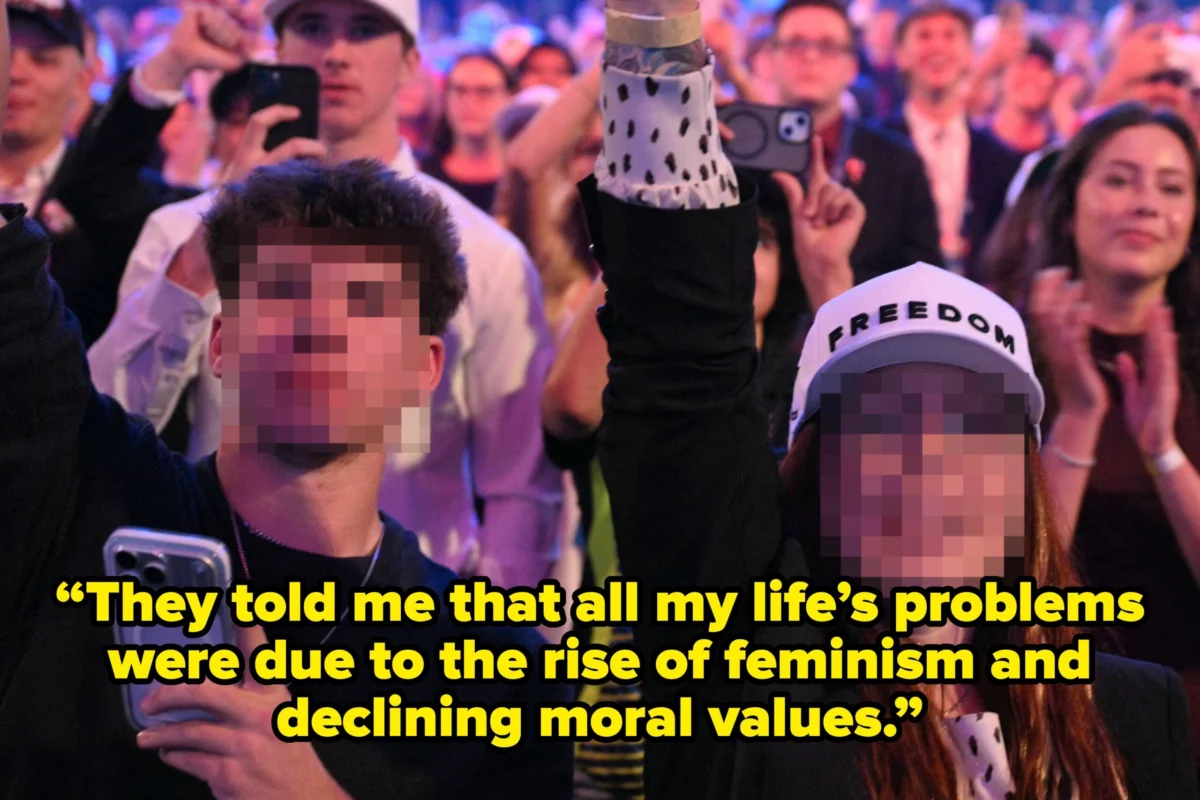
In 2024, the American political landscape witnessed a seismic shift. Data indicated a 15% swing among young men toward conservative ideologies compared to 2020, a movement that served as a critical pillar in Donald Trump’s electoral success. While the political climate remains fluid—with some voters expressing post-election disillusionment—the cultural undercurrents that propelled this shift remain a subject of intense sociological scrutiny. Beyond the ballot box, a growing number of young men are navigating an online ecosystem characterized by increasingly radicalized discourse.
However, amidst the headlines of polarization, a quieter, often overlooked phenomenon is occurring: the "deradicalization" of those who once found themselves deep within these extremist pipelines. Recently, a poignant discussion on Reddit, initiated by user Traumarama79, invited men to reflect on their journeys into—and out of—these ideological silos. These testimonies offer a rare, humanizing look at the anatomy of modern radicalization and the pathways back to the mainstream.
The Anatomy of the Pipeline: How It Starts
The transition into extremist online communities rarely happens overnight. For many, it begins with an innocuous search for answers to existential or social frustrations.
The Skeptical Entry Point
For one contributor, the journey began as a pursuit of intellectual honesty. Growing up in a restrictive religious environment, the individual sought secular viewpoints to reconcile their skepticism. "The problem," the user noted, "was that atheist YouTube content at the time was heavily slanted toward the anti-SJW [social justice warrior] crowd."
This pattern is a recurring theme in sociological studies of the "alt-right pipeline." Algorithms on major platforms often serve as conduits, transitioning users from "skepticism" toward more aggressive content—such as the rhetoric of figures like Ben Shapiro or Jordan Peterson. These influencers provided a narrative that validated the user’s cynical worldview, framing complex societal issues through the lens of a "culture war." By attributing personal failures to feminism or a "decline in moral values," these creators offered a seductive sense of clarity to impressionable, often isolated, young men.
Chronology of Disillusionment
The progression through these digital spaces generally follows a predictable, escalating trajectory.
- The Hook: Content creators frame societal grievances (e.g., loneliness, job dissatisfaction) as direct consequences of progressivism or shifting cultural norms.
- The Reinforcement: Communities—whether on Reddit, 4chan, or Discord—provide a sense of belonging. The "bootstrap" mentality becomes a badge of honor.
- The Descent: As the user becomes more entrenched, the content darkens. Discussions shift toward MGTOW (Men Going Their Own Way), incel ideology, and overt conspiracy theories.
- The Cognitive Dissonance: The turning point often arrives when the extremist rhetoric conflicts with the user’s lived reality or basic scientific literacy.
- The Rebound: Exposure to moderate, fact-based content—such as the YouTube channel Knowing Better—often serves as a bridge back to critical thinking.
Supporting Data: Why Men Are Vulnerable
Sociologists point to a confluence of factors that make young men susceptible to these pipelines. Chief among them is the "crisis of purpose."
As traditional pathways to economic stability and social status shift, many men report a feeling of displacement. Extremist communities exploit this by offering "thought-terminating clichés." These are simplified, binary explanations for complex problems: If the world is failing, it is because of Group X. By casting themselves as the victim of a systemic conspiracy, these individuals find a sense of agency—albeit one built on hate.
Furthermore, mental health plays a significant role. One contributor identified their battle with chronic depression and undiagnosed neurodivergence as a key factor in their susceptibility. Rage, they noted, was a more accessible emotion than the "suffocating, aching physical pain" of long-term depression. The extremist pipeline provided a target for that rage, turning internal suffering into external hostility.
The Role of Digital Echo Chambers
Official responses from organizations like the Anti-Defamation League (ADL) have long warned that these digital spaces are not organic; they are often engineered.
The "meme-ification" of politics—using humor to mask bigotry—is a primary strategy. By "triggering the libs," users feel they are part of a subversive, clever counter-culture. This was highlighted by one contributor who noted that in 2015, the humor and the memes were the entry point. "It all seemed like a big joke," they recalled. "But the heart of these communities was all about one-upping each other in edginess."
The danger lies in the "slow-boil" effect. As users consume more extreme content, their window of tolerance widens. What was once considered "shocking" becomes "normal," and eventually, it becomes a core tenet of their belief system.
Implications for Social Cohesion
The accounts of those who have "returned" from these pipelines suggest that de-radicalization is a personal, rather than institutional, process. It is rarely the result of public shaming, which often causes individuals to dig their heels in deeper. Instead, change typically comes from:
- Real-world connection: Forging relationships with diverse groups of people, including those who do not share the individual’s background or ideology.
- Intellectual curiosity: Transitioning from "rage-bait" media to long-form, evidence-based nonfiction.
- Personal growth: Recognizing the "incel" or "alt-right" identity as a coping mechanism for underlying issues like loneliness, poor self-esteem, or trauma.
The Path Forward
The fact that these individuals have successfully navigated their way out of extremist echo chambers provides a blueprint for those concerned about the future of political discourse. It underscores the importance of media literacy and, more importantly, the necessity of addressing the underlying social isolation that fuels these movements.
"I wasn’t gonna trade one groupthink identity for another," one contributor reflected, highlighting the final stage of their journey: moving beyond tribalism entirely. This critical distance is the hallmark of a healthy democracy.
As society looks toward the future, the challenge lies in creating environments—both online and offline—where young men can find purpose and connection without falling prey to ideologies that demand they view their neighbors as enemies. The recovery of these individuals serves as a reminder that the path toward extremism is not a permanent destination, and with the right resources and human connection, the journey back to reality is entirely possible.
 Ali Ikhwan
  Nana Muazin
  rifanmuazin