
 By Siti Muinah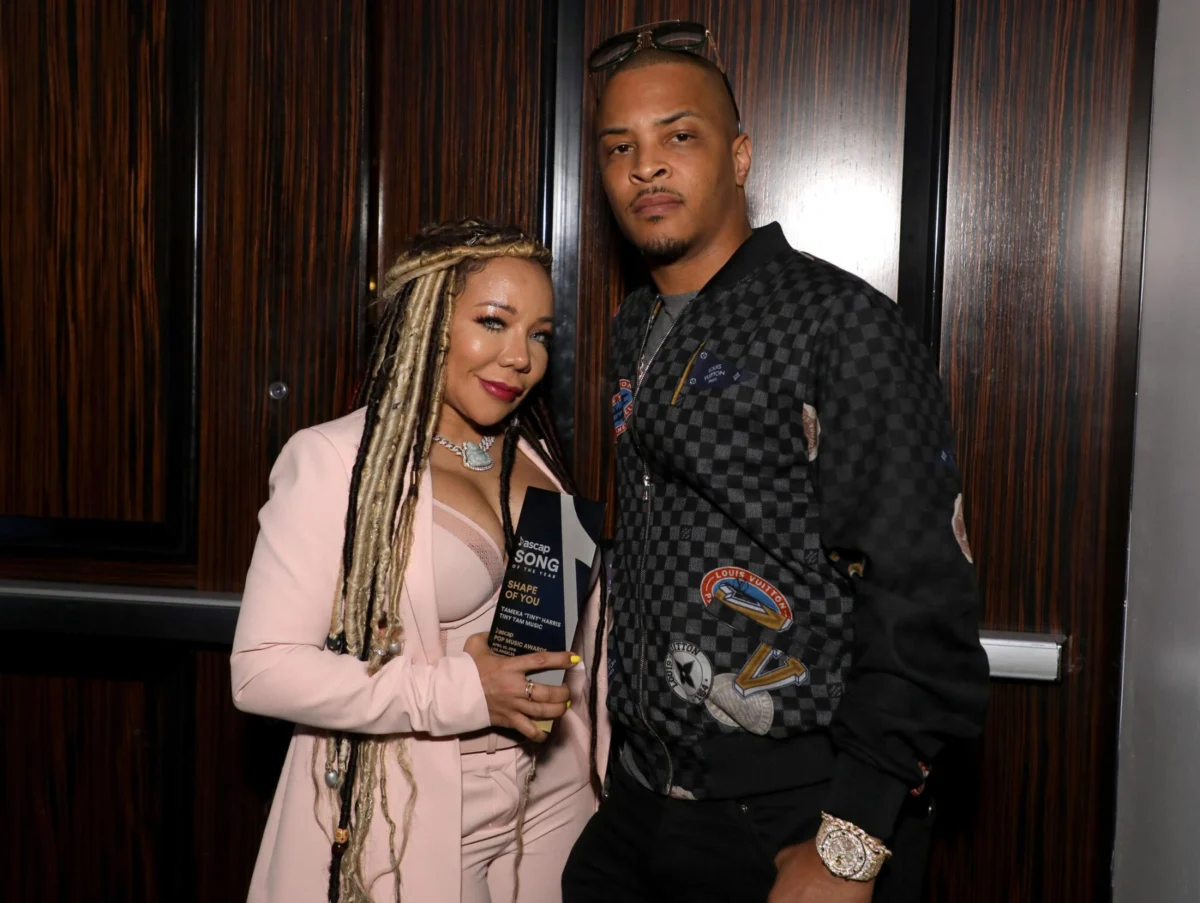
The long-standing intellectual property battle between music industry heavyweights T.I. (Clifford Harris) and Tameka “Tiny” Harris and the toy manufacturing giant MGA Entertainment has reached a definitive—albeit frustrating—milestone. On Wednesday, July 1, a federal jury delivered a verdict that effectively brings the latest phase of this high-stakes legal drama to a close, rejecting the couple’s request for additional punitive damages. While the Harrises retain their previous $18 million award, the failure to secure extra financial penalties marks a significant setback in their six-year crusade to hold the corporate behemoth accountable for what they describe as a calculated act of intellectual property theft.
The Core Dispute: A Question of Identity and Ownership
At the heart of this litigation is the OMG Girlz, a teen pop group founded by T.I. and Tiny in 2009. The group, which gained prominence through its signature aesthetic—characterized by neon-colored hair, distinctive fashion, and a specific brand identity—became a cultural touchstone for a generation of young fans.
In 2020, the Harrises filed a lawsuit against MGA Entertainment, the powerhouse behind global toy brands such as Bratz and Little Tikes. The couple alleged that MGA’s line of “O.M.G.” dolls was not merely a coincidence but a deliberate, unlicensed appropriation of the OMG Girlz’s image and brand. According to the plaintiffs, the dolls mirrored the group’s outfits, hairstyles, and even the group’s name, effectively profiting from the artistic labor and brand recognition the Harrises had cultivated for over a decade. MGA, however, has maintained a consistent defense throughout the years, arguing that the dolls were an independent creative endeavor that did not infringe upon any protected rights.
A Six-Year Legal Odyssey: A Chronology of Conflict
The trajectory of this case has been nothing short of a rollercoaster, marked by procedural complications, mistrials, and evolving interpretations of federal law.
- 2020: The Initial Filing: The Harrises formally initiate litigation against MGA, accusing the company of trademark infringement and misappropriation of their intellectual property.
- 2023: The First Trial and Mistrial: The first attempt to bring the case before a jury ended in a mistrial. The proceedings were derailed by improper testimony regarding race, which the court deemed prejudicial, forcing the legal teams back to the drawing board.
- 2023: The Second Trial: Later that same year, a second jury delivered a verdict in favor of MGA, clearing the company of all wrongdoing. However, this victory for MGA was short-lived; the verdict was later overturned on appeal due to changes in Supreme Court precedent regarding intellectual property and jury instructions.
- 2024: The Breakthrough: A third trial proved to be the most significant for the Harrises. A jury found that MGA had indeed intentionally copied the OMG Girlz. The jury awarded the couple $18 million in profits, plus a staggering $53 million in punitive damages, bringing the total verdict to $71 million.
- 2025: The Judicial Pivot: In a major blow to the couple’s victory, a judge vacated the $53 million punitive damages award. The court determined that the plaintiffs had failed to provide “clear and convincing evidence” of willful infringement that would necessitate such extreme financial punishment.
- 2025: The Fourth Trial (The Punitive Damages Phase): This month, a mini-trial was held specifically to address whether the punitive damages should be reinstated. On July 1, the jury sided with MGA, denying the additional request and effectively capping the total award at the original $18 million.
Analyzing the Evidence: Why the Punitive Damages Were Denied
To understand why the jury rejected the request for punitive damages, one must look at the legal threshold required to win them. Punitive damages are designed not just to compensate a plaintiff for losses, but to punish a defendant for “malicious or oppressive” conduct.
During the latest trial, the Harrises’ legal team argued that MGA’s internal processes—specifically their document retention and collection procedures—were deeply flawed, suggesting a lack of oversight or a deliberate attempt to hide evidence of infringement. They contended that MGA’s corporate culture incentivized the acquisition of popular intellectual property without proper licensing.

However, the jury was not sufficiently persuaded that MGA’s actions rose to the level of “willful or malicious” conduct. In the eyes of the law, there is a distinct difference between a company being found liable for copyright infringement and a company acting with the level of malice required to trigger punitive damages. By rejecting the extra payout, the jury essentially ruled that while MGA was wrong to use the likeness of the OMG Girlz, their actions did not constitute the egregious, predatory behavior necessary to justify the additional $53 million penalty.
Official Responses and Strategic Disappointment
Following the verdict, the legal representatives for T.I. and Tiny issued a measured but pointed statement to Billboard. While they acknowledged the jury’s time and effort, they expressed clear dissatisfaction with the outcome.
“It’s clear from the evidence that MGA’s policies are inadequate to prevent this type of IP infringement and their document retention and collection procedures are equally as suspect,” the attorneys stated. “We will continue to fight for our clients’ rights and the rights of all creatives.”
This statement underscores the broader narrative the Harrises are trying to establish: that this case is about more than just their personal loss. By framing themselves as champions for “all creatives,” they are attempting to elevate their personal battle into a crusade against corporate overreach in the entertainment and toy industries.
MGA Entertainment, by contrast, has remained largely silent following the verdict. Their refusal to engage with the press on this specific outcome signals a strategy of “winning by not losing,” aiming to move past the public relations fallout of a trial that has already cost them an $18 million judgment.
Implications for the Entertainment and Toy Industries
The outcome of this case serves as a cautionary tale for both creators and corporate entities.

For Creators: The case highlights the immense difficulty of protecting intellectual property in an age where aesthetics and branding are easily commodified. Even when a creator successfully proves infringement—as the Harrises did—the path to collecting damages is fraught with legal hurdles. The fluctuation between a $71 million verdict and an $18 million reality underscores how unstable intellectual property litigation can be.
For Corporations: The litigation has shone a spotlight on MGA’s internal procedures. Even without the punitive damages, the fact that an $18 million judgment stands against them serves as a significant financial deterrent. The legal costs and the damage to the company’s reputation as an “innovator” are substantial. Companies like MGA may now face increased pressure to implement more rigorous “clearance” processes when developing products that bear a resemblance to real-world groups or public figures.
What Lies Ahead?
While the legal battle over punitive damages has concluded, the broader conflict remains a point of intense interest. The Harrises’ promise to “continue to fight” suggests that they may explore further appeals or alternative legal avenues to address what they perceive as fundamental flaws in how MGA handles intellectual property.
For the public, the case of the OMG Girlz vs. MGA is a masterclass in the complexities of modern copyright law. It exposes the tension between the rights of individual artists to control their brand and the rights of corporations to draw inspiration from the cultural landscape. As the dust settles on this fourth trial, the $18 million verdict stands as a victory for the Harrises, but the denial of punitive damages leaves the case with a lingering sense of unfinished business.
Whether this represents the final chapter in the saga or merely another intermission, the story of T.I., Tiny, and their quest for justice against a toy titan will likely be cited in entertainment law circles for years to come. It is a reminder that in the high-stakes world of intellectual property, the definition of justice is often as much about the process as it is about the payout.
 Lina Irawan
  Lina Hope