For over two decades, commercial and fine-art photographer SpencerLowell has stood at the intersection of human ambition and industrial evolution. Armed with a camera and an insatiable curiosity for the mechanics of progress, Lowell has crossed laboratory floors, clean rooms, mining sites, and experimental test facilities to document the machinery shaping the modern world. Now, his first major monograph, FuturesPast, gathers 57 striking color photographs across nearly 100 pages, capturing a world where the boundary between biological life and technological systems has effectively dissolved.
Published by KGP Monolith and designed by the Luminosity Lab, Futures Past serves as a retrospective of Lowell’s extensive career shooting for industry-leading outlets and tech giants, including Apple, Bloomberg, National Geographic, Google, Meta, NASA, OpenAI, and TIME. The images selected for the book cover an astonishingly broad terrain: from the soaring aerial transit of a space shuttle through the crowded thoroughfares of Los Angeles to the eerie intimacy of an automated milking machine on a Dutch dairy farm.
The publication is available in multiple tiers through Kris Graves Projects. The standard edition is priced at $75, while specialized bundles—including limited-edition prints signed by Lowell—range from $250 to $1,000.
Chronology: Two Decades Documenting the Avant-Garde of Industry
Spencer Lowell’s trajectory as a premier chronicler of science and industry did not happen overnight. Over a 20-year career, his assignments have routinely placed him inside the high-security sanctums of human ingenuity. The photographs featured in Futures Past span a significant chunk of this timeline, tracing a historical arc through the late 2000s, the 2010s, and into the mid-2020s.
2008: Lowell ventures into the NASA Jet Propulsion Laboratory in Pasadena, California, capturing the otherworldly geometries of an anechoic chamber designed for space communication testing.
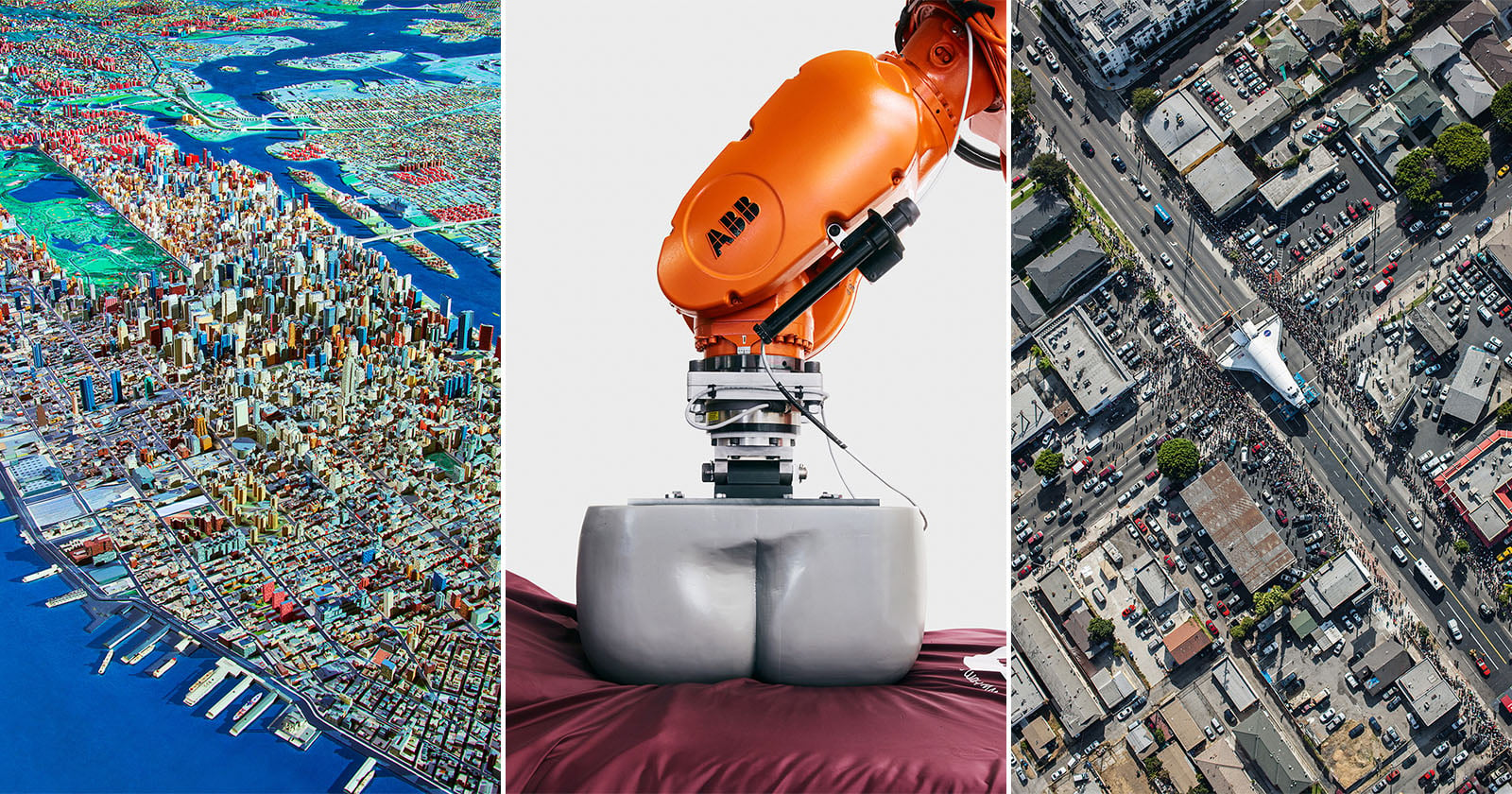
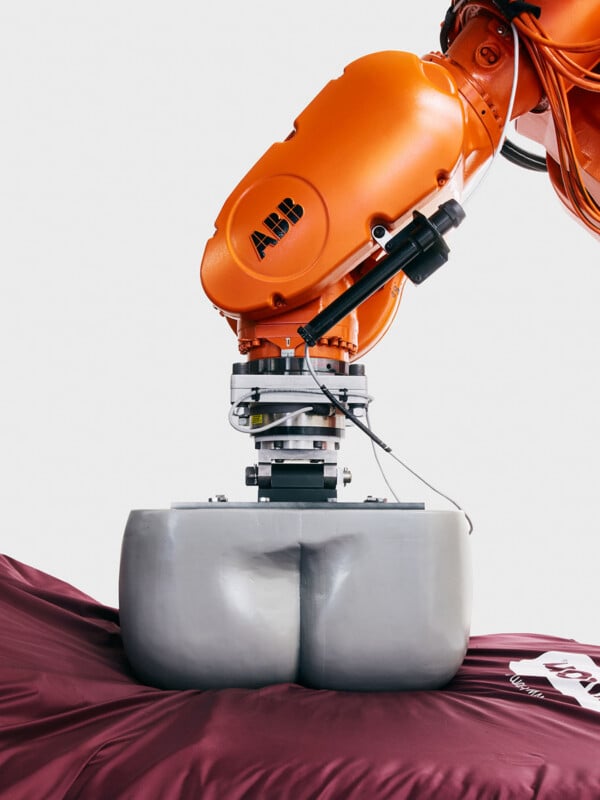
2011: He documents the launch of the Mars Rover Curiosity at Cape Canaveral, Florida, capturing the monumental scale of planetary exploration. That same year, he photographs an orange ABB industrial robotic arm in Batesville, Indiana—a clinical, uncanny study of industrial automation.
2012: Lowell captures the surreal urban spectacle of the Space Shuttle Endeavor being transported on a massive transport vehicle through the bustling, everyday streets of Los Angeles.
2014: Turning his lens toward environmental crises, he photographs microscopic plastic fragments gathered from the Mediterranean Sea, offering a stark preview of ecological entanglements with synthetic materials.
2016–2017: Lowell shoots the sprawling Panorama of the City of New York in Queens, alongside historical relics of human error and hubris, including the Unit 4 Reactor Door at the Fukushima Daiichi Nuclear Power Plant in 2017.
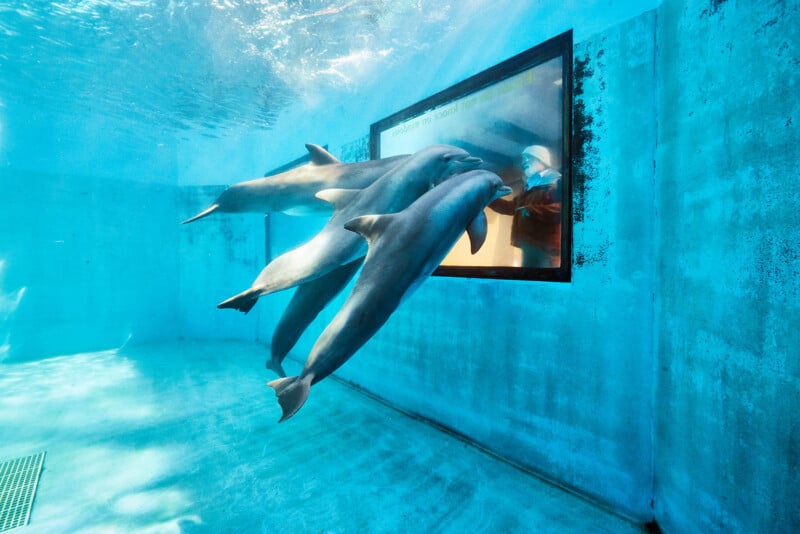
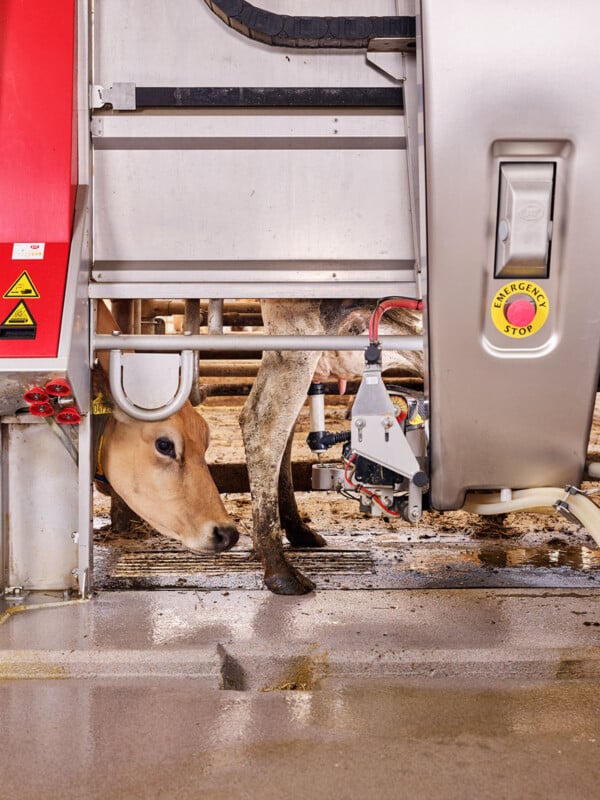
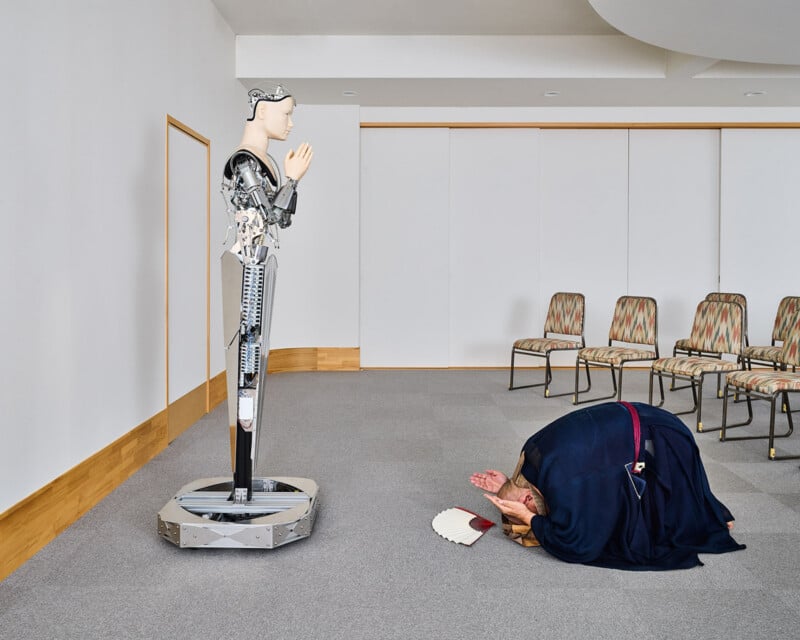
2018–2019: The timeline showcases cultural and biological integrations, featuring Laurence Doyle interacting with dolphins in Vallejo, California (2018), an automated cow milking system in Katwoude, Netherlands (2019), Mindar the robotic priest in Kyoto, Japan (2019), and an experimental fire tornado spinning inside a glass enclosure in Missoula, Montana (2019).
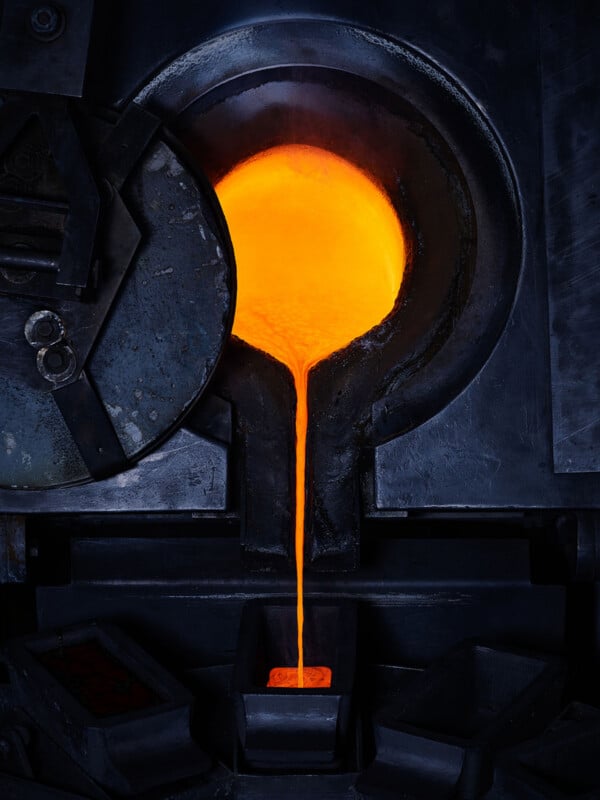
2024: Bringing the timeline closer to the present, Lowell captures the searing, liquid-hot radiance of molten gold pouring at the Cortez Gold Mine Refinery in Elko, Nevada.
Supporting Data: Inside the Pages of Futures Past
To understand the weight of Lowell’s monograph, one must examine the specific mechanics and geographies of the subjects cataloged within its pages. The book avoids straightforward photojournalism, opting instead for a deliberate, highly orchestrated visual language that highlights the aesthetic power of modern infrastructure.
Technical and Geographical Scope of Selected Works
Space Communication Testing (2008): Shot inside NASA’s JPL anechoic chamber, utilizing blue, pyramid-shaped foam sound absorbers that create a visual motif of absolute isolation.
Butt Robot (2011): An exploration of industrial testing where a robotic arm presses against synthetic textures, questioning the emotional and physical boundaries of tactile robotics.
Space Shuttle Endeavor (2012): A masterclass in scale, contrasting the monumental architecture of the aerospace industry against the mundane backdrop of urban Los Angeles traffic and pedestrians.
Microplastics (2014): A macro photograph displaying an array of jagged, brightly colored synthetic fragments against a deep black void, transforming ocean pollutants into chillingly vibrant specimens.
Fukushima Daiichi Nuclear Power Plant (2017): An industrial interior study emphasizing the silent, heavy dread of Unit 4’s reactor door, framed by emergency green exit signage and complex circuitry.
Mindar the Robotic Priest (2019): Captured at Kodai-ji temple in Kyoto, this photograph shows a human worshipper in traditional robes bowing deeply to a synthetic deity—a physical manifestation of shifting spiritual paradigms.
Molten Gold Refining (2024): A high-contrast study of intense thermal energy, showcasing molten metal as it flows from industrial machinery into a waiting mold.
Publishing Specifications
Total Images: 57 full-color photographs.
Length: Nearly 100 pages.
Publisher: KGP Monolith.
Design: Luminosity Lab.
Pricing: Standard Edition ($75); Special Edition with Print ($250); Collector’s Edition with Four Signed Prints ($1,000).
Official Responses and Critical Perspectives
The release of Futures Past has been accompanied by critical commentary from thinkers who position Lowell’s work not merely as documentation, but as philosophical inquiry. An introductory essay by climate activist and Fulbright Award-winning writer Daniel Sherrell contextualizes the uncanny presence of technology in Lowell’s frames.
"There are people in these photos, but rarely are there individuals. The technologies are the real individuals, protagonists of their own cryptic story," Sherrell observes in his essay for the monograph. "The photographs capture them on their own terms, in the worlds that they’ve built — worlds that both serve and exclude us."
Sherrell notes that Lowell approaches his subjects "in thrall to their alien beauty," refusing to rely on lazy dystopian tropes or technophobic panic. Instead, the photographer treats these scientific marvels with a cool, lucid fascination.
Lowell himself has articulated a nuanced philosophy regarding the relationship between humanity, nature, and invention. Rather than viewing technology as an unnatural parasite corrupting an otherwise pristine biosphere, Lowell suggests that human innovation is an extension of biological evolution.
"This work does not propose conclusions," Lowell states regarding the core thesis of Futures Past. "It documents a condition in which biological life and technological systems are no longer separable, yet remain unevenly aligned."
Expounding on this view, Lowell notes that phenomena like a robotic priest in Kyoto or an automated milking parlor in the Netherlands do not stand in opposition to nature; rather, they continue it. They are evolutionary adaptations born from human psychology, survival instincts, and the relentless desire to optimize existence.
Implications: Where Biology and Technology Converge
As artificial intelligence, advanced automation, synthetic biology, and industrial expansion redefine the parameters of daily life, Futures Past arrives as a timely visual ledger. The implications of Lowell’s retrospective extend far beyond the art gallery or the coffee table book market; they strike at the heart of contemporary anxiety and ambition.
1. The Redefinition of the "Natural"
For centuries, human culture has maintained a comfortable binary: nature on one side, human artifice on the other. Lowell’s photographs systematically dismantle this divide. Whether capturing a fire tornado whipped up in a controlled laboratory or the glittering accumulation of marine microplastics, the images demonstrate that human-made systems have become geochemical and ecological forces in their own right. The "artificial" has become the environment.
2. The Eclipse of the Human Subject
As Sherrell points out in his introductory text, humans in Lowell’s photographs are rarely the protagonists. When they do appear, they are dwarfed by anechoic foam chambers, dwarfed by space shuttles, or bowing in subservient reverence to machines like Mindar. This subtle compositional choice forces the viewer to confront a shifting power dynamic. Technology is no longer just a tool wielded by human hands; it has evolved into an independent structural force that frames, dictates, and outlives human agency.
3. Aestheticizing the Anthropocene
By rendering terrifying or sterile environments—such as a Fukushima reactor door or an industrial gold refinery—with exquisite color balance, precise geometry, and profound clarity, Lowell invites viewers to contemplate the aesthetic seduction of progress. We are drawn to the fiery glow of molten metal and the clean, hypnotic lines of clean rooms, even as we recognize the immense ecological and societal pressures those systems generate.
Ultimately, Futures Past does not offer a roadmap for the future, nor does it romanticize a simpler yesterday. Instead, it holds up a mirror to our current, uneasy reality—a world built by our own hands, moving forward at a velocity we are only beginning to comprehend.

 By Basiran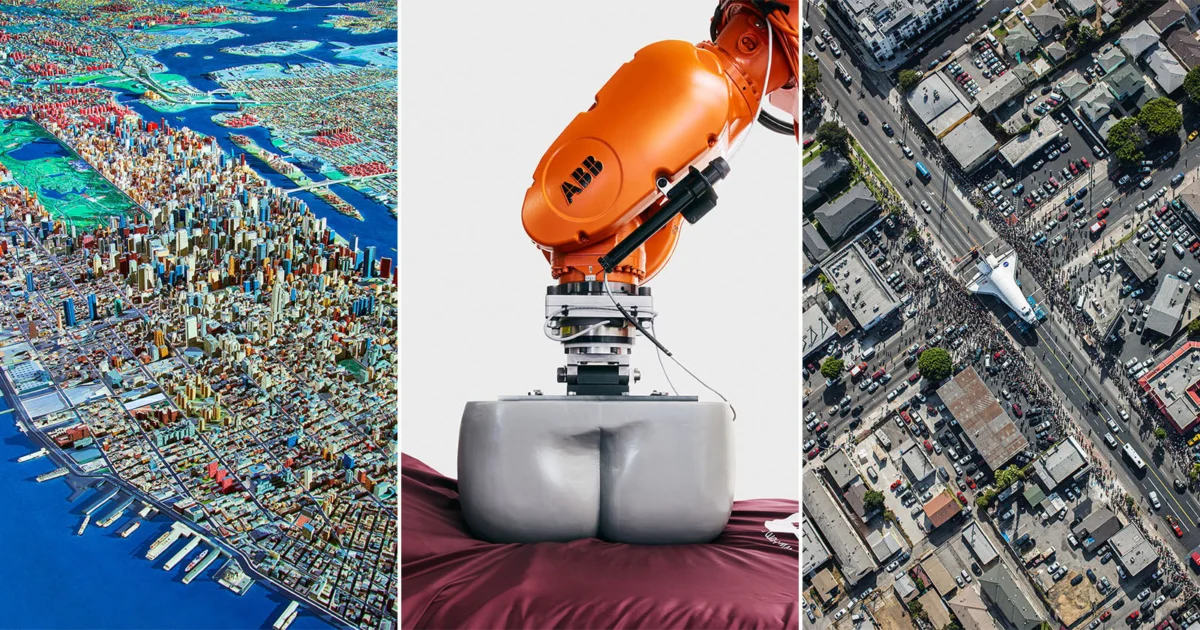
 Azzam Bilal Chamdy
  Ali Ikhwan
  Nila Kartika Wati