
 By Iffa Jayyana
In the rapidly evolving landscape of modern analog photography, few companies have managed to capture the cultural zeitgeist quite like Reto. Following the viral success of the Kodak Charmera and the critical acclaim surrounding the Snapic A1, the brand has returned with its latest offering: the Kodak EC35. Positioned as an "everyday carry" (EDC) companion, the EC35 is a compact 35mm film camera designed to prioritize ease of use, aesthetic appeal, and the tactile nostalgia that has fueled the recent resurgence of film.
By stripping away the technical barriers that often intimidate newcomers, Reto is betting that the market is ready for a device that treats photography as an impulsive, joy-filled activity rather than a calculated scientific endeavor.
Main Facts: A Return to Analog Simplicity
The Kodak EC35 is, by design, a "dead-simple" point-and-shoot camera. It is not intended for the professional photographer seeking manual control over shutter speeds or aperture settings. Instead, it is a tool for the casual snapper who wants to document their life with the unique character that only film can provide.
Technical Specifications at a Glance:
- Format: 35mm film.
- Optics: 25mm fixed-focus lens.
- Aperture: Fixed f/10.
- Shutter Speed: Fixed at 1/100 second.
- Flash: Integrated electronic flash powered by a single AA alkaline battery.
- Dimensions: 119mm x 65mm x 41.5mm.
- Weight: 102 grams (ultra-lightweight plastic construction).
- Viewfinder: Simple optical window located directly above the lens.
The camera operates with a manual film wind and rewind mechanism, mimicking the workflow of classic disposable cameras. However, unlike disposables, the EC35 is designed to be reloaded and kept for the long term. It is a lightweight, plastic-bodied device that aims to be the camera you never leave at home.

Chronology: Building a Brand on Retro Foundations
To understand the release of the EC35, one must look at the trajectory of Reto’s recent product cycles. The company has carved out a niche by licensing the Kodak brand for hardware that blends vintage styling with modern accessibility.
- Late 2025: The launch of the "Kodak Charmera" created a viral sensation, proving that there was a significant appetite for cameras that looked like artifacts from the 1980s but functioned with the reliability of modern components.
- Early 2026: The release of the Snapic A1 cemented Reto’s reputation for quality. It was praised for being "charming, simple, and fun," bridging the gap between toy cameras and entry-level vintage equipment.
- July 2026: The official announcement of the Kodak EC35. This launch represents the deepest collaboration between Reto and Eastman Kodak, as the company now offers bundles that include actual Kodak-manufactured film (Ultramax 400), creating a cohesive ecosystem for the consumer.
This steady release schedule suggests a company that has found a repeatable formula: identify a classic camera archetype, refine its ergonomics for a modern audience, and market it as a lifestyle accessory rather than a piece of high-end equipment.
Supporting Data: The Rise of the "Everyday Carry" Aesthetic
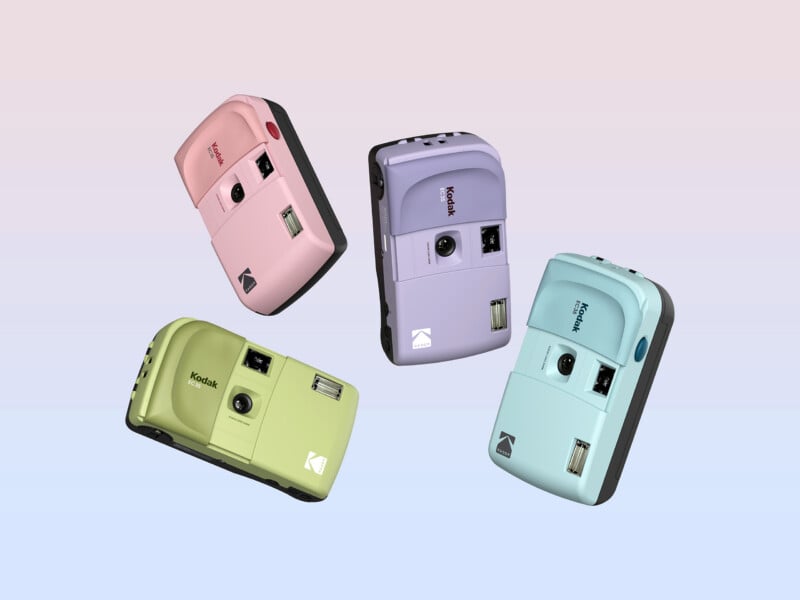
The marketing campaign for the EC35 is strikingly visual. Rather than focusing on MTF charts or resolution tests, Reto has centered its messaging on the camera’s seven colorways: midnight black, vanilla white, butter yellow, lavender, powder blue, blush pink, and avocado green.
The "Fidget" Factor
One of the most notable features of the EC35 is the tactile slide cover. This design element serves a dual purpose: it protects the lens and viewfinder when the camera is tossed into a bag, and it acts as a mechanical "fidget" device. In an era where digital devices are increasingly seamless and sterile, the physical, satisfying "click" of a sliding cover offers a sensory experience that smartphones simply cannot replicate.
Weight and Portability
Weighing in at just 102 grams, the EC35 is lighter than most modern smartphones. This is a critical factor for the target demographic—Gen Z and Millennial photographers who are accustomed to carrying a smartphone but want a dedicated camera for "golden moments" without adding significant bulk to their pockets or bags.
Official Responses and Strategic Positioning
In their official communications, Reto representatives have emphasized that the EC35 is intended to "strip away the complexity of film photography, putting the pure joy back into every frame."
The company’s decision to offer the camera as a bundle—including a strap and a 24-exposure roll of Kodak Ultramax 400—is a deliberate move to reduce the friction of entry. By providing everything a user needs to start shooting immediately, Reto removes the "research phase" that often prevents a potential buyer from taking the plunge into film.
Regarding the lack of advanced features, Reto’s position is clear: the EC35 is not meant to compete with high-end mirrorless cameras or refurbished professional film bodies. It is a companion device, a "beater" camera that can survive a trip to the beach, a concert, or a casual brunch without the anxiety of damaging an expensive vintage heirloom.

Implications: What the EC35 Means for the Film Market
The release of the EC35 has several broader implications for the photography industry:
1. The Democratization of Film
By keeping the price point low ($35 for the camera body, $45 for the bundle), Reto is making film photography accessible to a generation that has grown up entirely on digital sensors. It lowers the barrier to entry significantly, potentially acting as a "gateway" for users who might later graduate to more complex, fully manual cameras.
2. The Shift from Tool to Accessory
The EC35 illustrates a growing trend where cameras are increasingly viewed as lifestyle accessories. Much like the resurgence of vinyl records or mechanical keyboards, the appeal lies in the intersection of function and fashion. The camera is not just a tool for capturing memories; it is part of the user’s personal aesthetic.
3. Sustainability and Reusability
While the EC35 is made of plastic, it is a step up from the single-use disposable cameras that have dominated the "fun" film space for years. By promoting a reloadable, durable-enough design, Reto is encouraging a slightly more sustainable habit—one where the camera is a long-term companion rather than a piece of trash to be discarded after 27 frames.

4. The Power of Brand Licensing
The partnership between Reto and Kodak continues to prove that the Kodak brand remains the gold standard in the public imagination regarding film. By pairing the Kodak name with simple, affordable hardware, Reto is effectively keeping the "Kodak Moment" relevant in the 2020s.
Final Thoughts: A Camera for the Current Moment
The Kodak EC35 does not attempt to change the physics of photography. It does not boast a razor-sharp lens or a sophisticated light meter. Instead, it succeeds by understanding exactly what its users want: a simple, reliable, and aesthetically pleasing way to document their lives in a way that feels intentional and tactile.
As digital fatigue continues to set in, devices like the EC35 offer a refreshing reprieve. By making the process of taking a photo feel like a small, physical ritual, Reto is ensuring that film photography remains a vibrant part of modern culture. Whether you are a veteran photographer looking for a "no-stakes" camera to keep in your coat pocket, or a beginner looking to understand what all the hype is about, the EC35 provides a low-cost, high-reward entry point into the world of silver halide.
For many, the joy of the EC35 won’t be in the technical perfection of the negatives, but in the simple, satisfying snap of the lens cover and the anticipation of seeing those memories develop. In a world that is moving faster than ever, the slow, deliberate process of film is exactly the kind of "everyday" magic that the industry needs.
 Raul Delapena Setiawan
  rifanmuazin
  Ammar Sabilarrohman