
 By Reynand Wu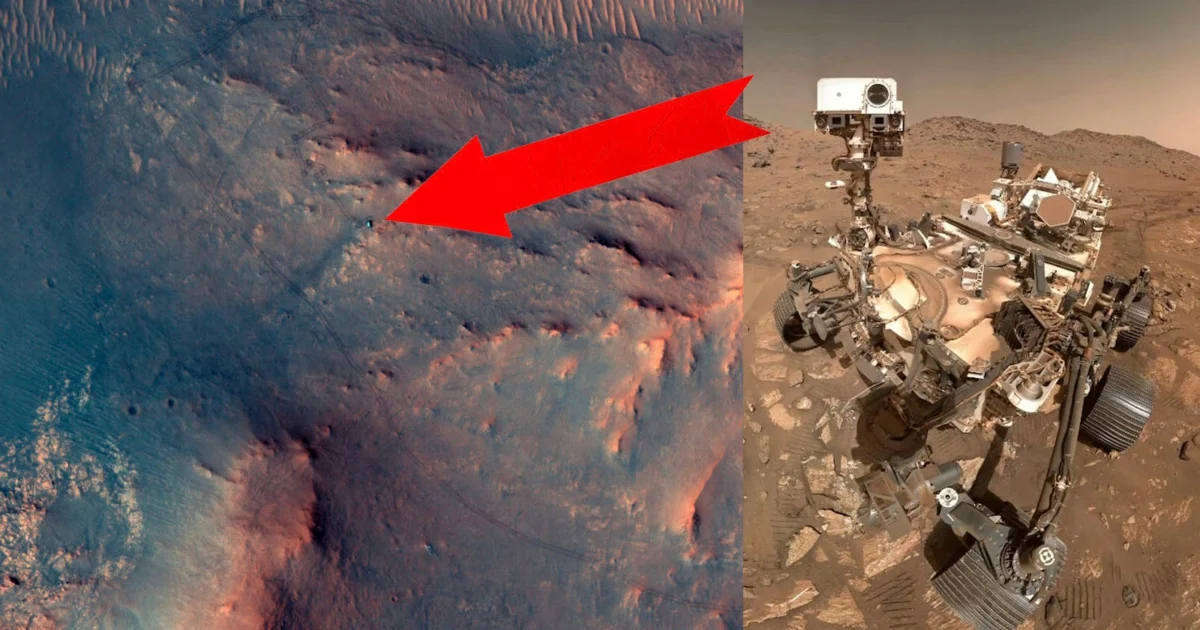
While human athletes on Earth continue to push the boundaries of physiological endurance—recently shattering the two-hour barrier for a full marathon—a solitary robotic explorer on the Red Planet has quietly reached its own staggering milestone. After five years and four months of navigating the treacherous, wind-swept terrain of Mars, NASA’s Perseverance rover has officially traversed 26.2 miles, completing its own "Martian marathon."
This achievement, confirmed on the 1,890th Martian sol of its mission, serves as more than just a testament to engineering longevity; it marks a significant chapter in the ongoing quest to determine whether Mars was once a cradle for life. As the rover continues its slow, methodical trek through the desolate landscapes of the Jezero Crater, its latest scientific findings have brought the scientific community to the precipice of one of the greatest discoveries in human history.
The Long Road to Arbot: A Chronology of Discovery
The journey of the Perseverance rover began with a dramatic "seven minutes of terror" on February 18, 2021, when it touched down in the Jezero Crater. Since that historic landing, the rover has functioned as a mobile geological laboratory, traversing some of the most challenging environments in the solar system.
A Measured Pace
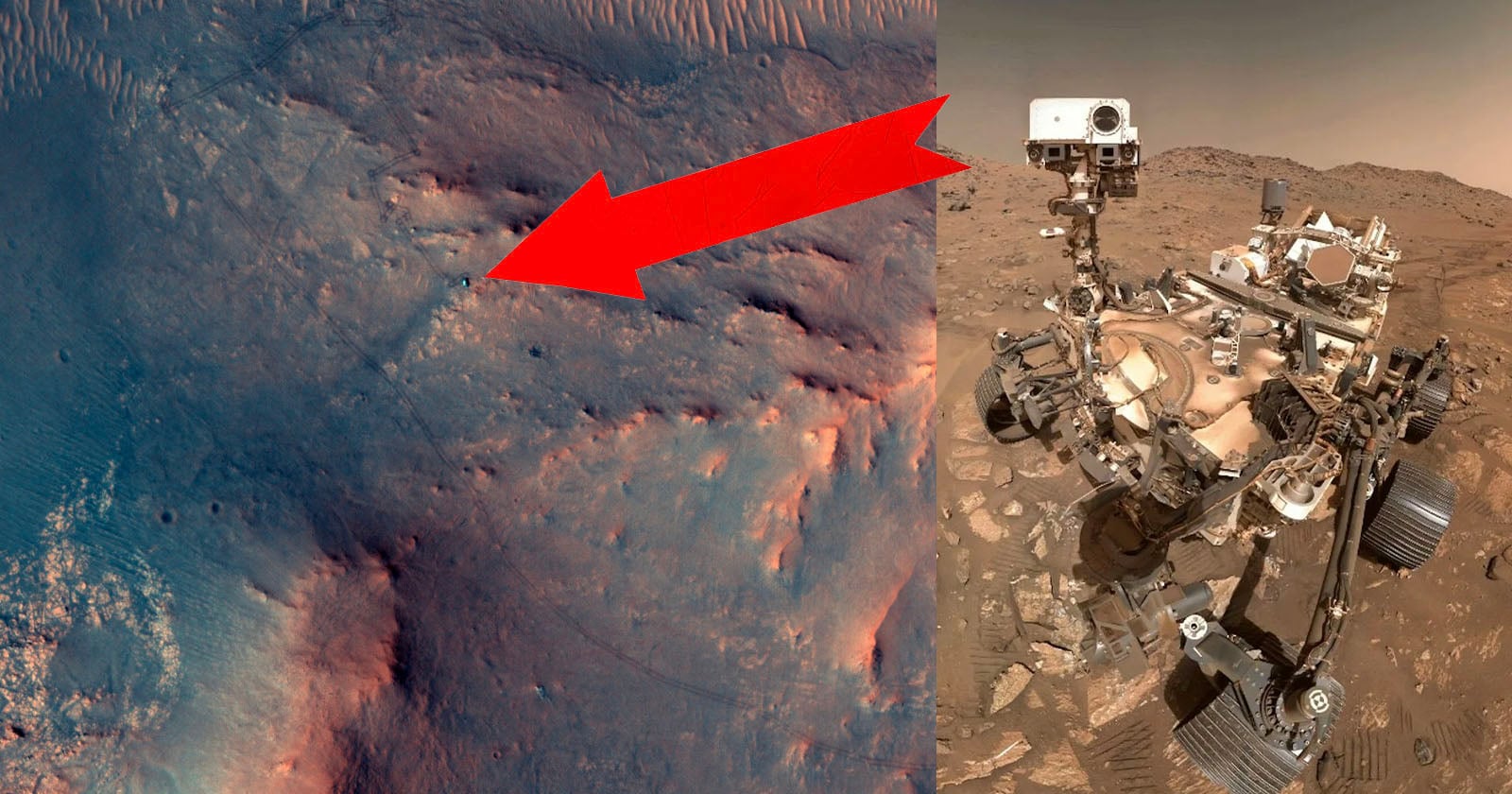
Unlike the rapid transit of a human runner, Perseverance’s "race" has been defined by caution and precision. Every inch of its 26.2-mile journey has been documented by NASA’s Mars Reconnaissance Orbiter (MRO) and the rover’s own high-resolution navigation cameras. On June 13, 2026, the MRO used its High-Resolution Imaging Science Experiment (HiRISE) camera to capture a hauntingly beautiful aerial view of the rover. In the image, Perseverance appears as a tiny, unmistakable green speck against the rust-colored vastness, its long, winding tracks etched into the Martian dust like a permanent signature of human ingenuity.
The rover is currently operating in a region west of the Jezero Crater that the science team has dubbed "Arbot." The terrain here is rugged, characterized by ancient ridges, craters, and sandy textures that test the limits of the rover’s mobility systems.
Breaking Records
To understand the magnitude of this feat, one must look at the history of Martian exploration. The previous record for distance traveled on Mars was held by the legendary Opportunity rover. Opportunity, a smaller and less complex vehicle, took 11 years and two months to reach the 26.2-mile mark. Perseverance has effectively halved that time, demonstrating advancements in autonomous navigation and energy efficiency that have allowed it to sustain a more rigorous scientific pace.
The Search for Life: Organic Molecules in Neretva Vallis
While the odometer reading captures the public imagination, the true mission of Perseverance is buried in the Martian crust. Recent reports indicate that the rover has detected complex carbon molecules within mudstones in an area known as Neretva Vallis—a dried-up riverbed that once fed the ancient lake within Jezero Crater.
The Significance of Macromolecular Carbon
The carbon identified by the rover is classified as macromolecular carbon (MMC). On Earth, MMC is frequently associated with biological processes, often serving as a chemical fingerprint for fossilized organic matter, microbial mats, and even coal.
"It may originate from biological sources such as fossilized organic matter found in microbial mats," notes Dr. Ashley Murphy, a scientist at the Planetary Science Institute in Arizona. The discovery of these molecules in mudstone—a rock type known for its ability to preserve organic material—provides the strongest evidence to date that Mars could have supported ancient microbial life.
The Problem of Abiotic Origins
Despite the excitement, the scientific community remains rigorously cautious. As Dr. Murphy explains, the presence of organic carbon is not, by itself, definitive proof of life. Similar carbon structures can be created through abiotic, or non-biological, processes. These include:
- Geochemical Reactions: Interactions between volcanic rocks, water, and minerals can synthesize simple carbon chains.
- Meteoritic Delivery: Mars is constantly bombarded by meteorites, many of which carry complex organic compounds from deep space.
- Hydrothermal Activity: Ancient hydrothermal vents in the Jezero Crater could have produced these molecules without the involvement of living organisms.
Supporting Data and The Jezero Crater Context
The Jezero Crater is not a random landing site; it was chosen specifically because of its geological history. Billions of years ago, the crater hosted a sprawling lake, fed by a delta system that deposited layers of sediment.
"Jezero crater was once fed water and sediment from rivers, and, billions of years ago, it hosted a lake," says Dr. Murphy. This environment is theoretically perfect for the preservation of biosignatures. The mudstones of Neretva Vallis represent the "bottom" of this ancient lake, where fine-grained sediments settled over eons, potentially trapping organic remains.
The "Leopard Rock" Connection
This latest discovery builds upon previous, equally intriguing findings. In September 2025, the rover transmitted high-resolution images of rocks displaying distinct, circular "leopard-like" spots. These patterns, which typically form through complex chemical reactions involving organic matter, were heralded by many researchers as the strongest visual evidence of organic chemistry found on the surface to date. These findings, when combined with the new MMC data, suggest that the region is chemically "rich" in a way that warrants further, intense investigation.
Official Responses and Future Implications
NASA has not yet declared the discovery of life, and it is unlikely to do so based solely on remote sensing data. The standard for such a claim is exceptionally high.

"We are looking for a ‘smoking gun,’" a NASA spokesperson noted in a briefing. "Detecting the potential for life is the objective of the mission, but verifying it requires the physical return of these samples to Earth-based laboratories."
The "Sample Return" Mandate
The current strategy relies on the Mars Sample Return mission, a complex multi-stage project aimed at bringing the tubes collected by Perseverance back to Earth. Once these samples reach advanced terrestrial laboratories, scientists can use mass spectrometry and high-resolution electron microscopy to distinguish between biological and non-biological carbon, effectively settling the debate.
The Philosophical Weight of the Marathon
The 26.2-mile journey is more than just a technical achievement; it is a profound philosophical milestone. When the Viking landers touched down in the 1970s, the mission was a singular, static point of observation. Today, we have a mobile, autonomous agent capable of traversing a planet’s surface, reading its history in the rocks, and sending the results back in near real-time.
As Perseverance continues its journey toward the rim of the crater, it is doing more than just driving; it is mapping the transition from a dead planet to a potential cradle of life. The marathon may be over, but the investigation into what lies beneath the dust of Arbot has only just begun.
For the researchers at NASA and the Planetary Science Institute, the next few miles of the rover’s journey will be the most critical. Whether the carbon in Neretva Vallis is the remains of ancient Martian organisms or simply the result of geological alchemy, the findings are rewriting our understanding of the solar system. We are no longer asking if Mars has the ingredients for life, but rather, when we will finally confirm that we are not alone in the universe.
 Laily UPN
  Lina Hope