
 By Nana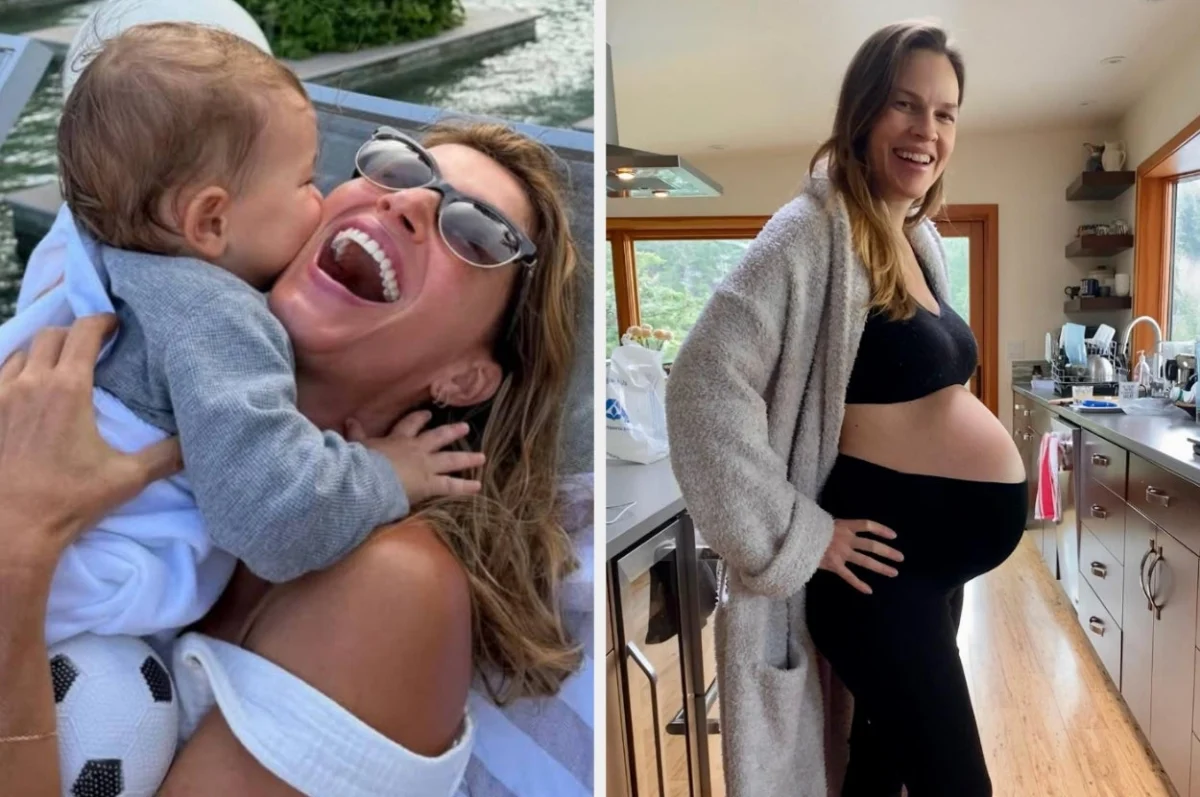
In recent months, a wave of high-profile pregnancy announcements has once again brought the topic of "advanced maternal age" to the forefront of public discourse. From A-list actresses to supermodels, women in their 40s are increasingly choosing to expand their families, often to a chorus of intense, and sometimes vitriolic, online scrutiny. While male celebrities routinely father children well into their 70s and 80s without a whisper of societal judgment, women who choose to do the same are frequently met with unsolicited opinions regarding their biology, parenting capabilities, and life choices.
However, a closer look at the data and the personal testimonies of these women suggests that we are witnessing a cultural shift. Far from being a trend to be criticized, the rise in motherhood after 40 is a reflection of evolving career paths, medical advancements, and a growing recognition that life, and its milestones, do not adhere to a rigid, pre-determined timeline.
A Chronology of Modern Motherhood
The decision to have children later in life is not a new phenomenon, but it has certainly become more visible. Below is a look at notable figures who have embraced motherhood in their 40s and beyond, challenging the outdated narrative that the window for parenting slams shut at 35.
- Gisele Bündchen: In October 2024, the world-renowned supermodel made headlines by announcing her pregnancy at 44. Welcoming her first child with husband Joaquim Valente, Bündchen joined the ranks of mothers navigating the complexities of blended families and late-life parenthood.
- Uma Thurman: The Kill Bill star was 42 when she welcomed her third child, Luna, in 2012. Thurman, already a mother of two, highlighted the normalcy of growing one’s family in midlife.
- Sienna Miller: Now 44, Miller has become a vocal advocate against the ageism directed at older mothers. After welcoming a child at 41 and another in late 2025, she has spoken out against the "incredibly gendered" criticism she faced, emphasizing that age is irrelevant when it comes to the capacity to love and raise a child.
- Anne Hathaway: In June 2026, the Academy Award winner revealed she was pregnant with her third child at 43. Reports from her Devil Wears Prada 2 tour highlighted her "superhero" work ethic, dispelling the myth that pregnancy in one’s 40s equates to frailty.
- Hilary Swank: Demonstrating the possibilities of modern reproductive medicine, Swank became a first-time mother to twins at 48. She has frequently noted that the patience and self-awareness she possesses now would have been absent in her 20s.
- Naomi Campbell: Breaking barriers, Campbell welcomed her first child at 50 and her second at 53 via surrogacy, declaring, "It’s never too late to become a mother."
- Cameron Diaz: At 53, Diaz recently announced the birth of her third child. She has candidly described this chapter of her life as her "sweet spot," noting that motherhood at this age is a conscious, deliberate choice rather than a default expectation.
The Science and Statistics of "Advanced" Parenthood
The medical community classifies pregnancy over the age of 35 as "advanced maternal age." While this terminology is intended to flag potential health risks—such as gestational diabetes, hypertension, or chromosomal abnormalities—it has also inadvertently fueled a stigma that equates age with the inability to parent.
Advancements in assisted reproductive technology (ART), including In Vitro Fertilization (IVF), egg freezing, and surrogacy, have expanded the options available to women. As seen with figures like Angela Bassett, who welcomed twins at 47 after a seven-year IVF journey, or Celine Dion, who famously conceived her "miracle twins" after multiple attempts, science has provided a bridge for those whose personal timelines didn’t align with their biological ones.
Data from the Centers for Disease Control and Prevention (CDC) has shown a steady, decades-long increase in birth rates among women in their 40s. This is largely attributed to socioeconomic factors: higher levels of education, a desire for financial stability, and the pursuit of demanding career paths often push the age of first-time or subsequent parenthood into the fourth and fifth decades of life.
Navigating the Public Discourse: Official Responses and Personal Advocacy
The backlash against older mothers often centers on "health concerns" or "selfishness," arguments that are rarely leveled at fathers. In response, women like Sienna Miller and Eva Mendes have pushed back, calling out the double standard.
Mendes, who had her children in her 40s, famously dismissed the notion that older parents lack the energy to raise children. "In my 20s, I shouldn’t have even been around a child," she stated. "I could not have raised kids in any other era of my life but now."
Similarly, Salma Hayek, who welcomed her daughter at 41, has noted that she feels more "fulfilled" and "patient" as an older mother. Her sentiment is echoed by Sandra Bullock, who famously adopted her children in her mid-40s and 50s, stating that she believes the "universe had her wait" until she was ready to be the best parent she could possibly be.
The Socio-Cultural Implications
The normalization of motherhood in the 40s carries profound implications for gender equality. When society views a woman’s reproductive capacity as her primary value, and one that expires prematurely, it restricts her professional and personal development. By reclaiming their right to choose the timing of their motherhood, these women are disrupting the "ticking clock" narrative that has historically been used to pressure women into early, often unprepared, parenthood.
Furthermore, these stories highlight the diversity of the modern family. Whether through natural conception, IVF, adoption (as in the case of Kristin Davis and Sandra Bullock), or surrogacy, the definition of a "good mother" is being decoupled from the age of the parent.
Conclusion: A Shift Toward Celebration
The scrutiny faced by women like Anne Hathaway or Sienna Miller is a remnant of a bygone era. As we move further into the 21st century, the reality of the modern family is becoming increasingly flexible. Parenthood is a profound commitment that requires emotional maturity, financial stability, and intentionality—all of which are often more abundant in a person’s 40s than in their 20s.
When we look at the list of women who have embraced this path—from Tina Fey and Rachel Weisz to Nicole Kidman and Iman—we don’t see a trend of reckless disregard for health. Instead, we see a collection of deliberate, loving, and deeply grateful parents. It is time for the public discourse to catch up with reality: motherhood is not a race against the clock, but a journey that is best taken when one is truly ready. Celebrating these women is not just about supporting their personal choices; it is about recognizing that every family’s path is unique and equally valid.
 Lina Irawan
  Layla Zulfa
  Asep Darmawan