
 By rifanmuazin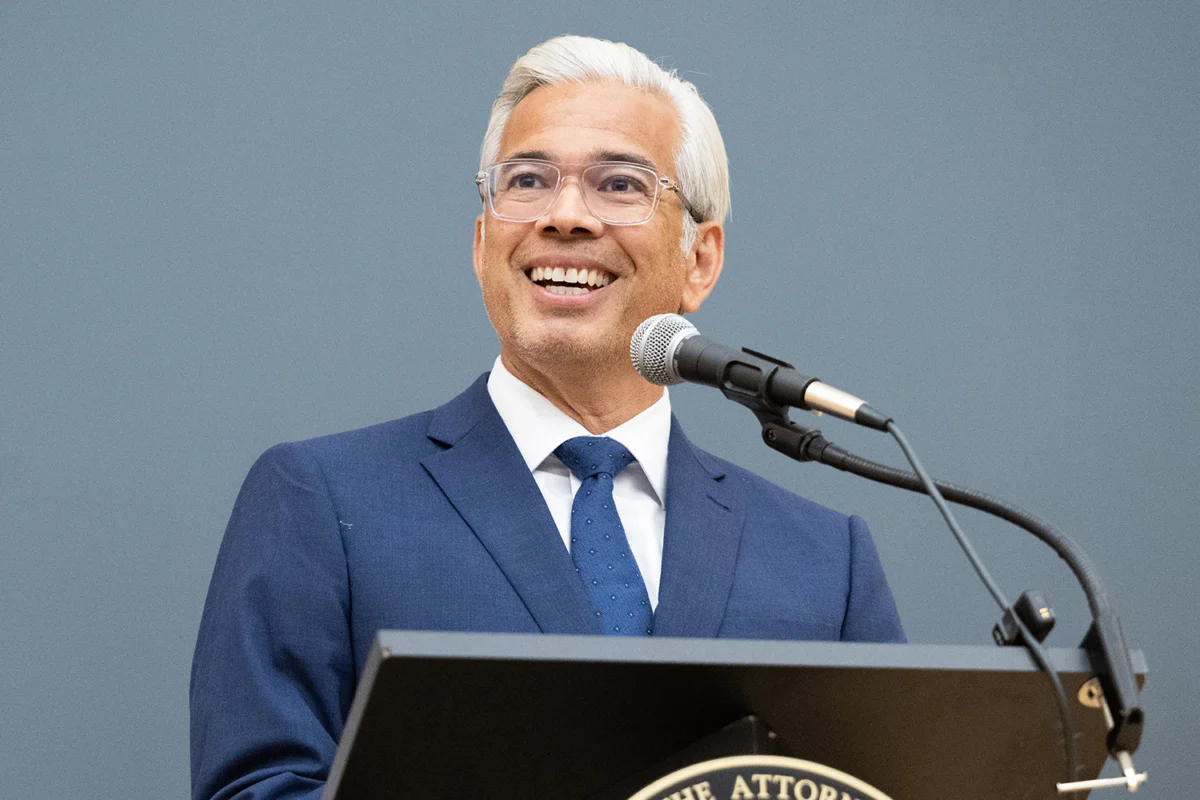
In the complex ecosystem where corporate power meets state governance, few cases have illustrated the volatility of modern antitrust enforcement as starkly as the attempted block of the Paramount-Warner Bros. merger. When California Attorney General Rob Bonta launched his legal challenge in July, it was framed as a righteous defense of market competition against a federal government he accused of prioritizing political alliances over consumer protection.
Barely two months later, that crusade has effectively collapsed. Bonta, once the champion of a "no kings" doctrine, has been forced to abandon his lawsuit, settling for a package of concessions that critics describe as modest at best. The reversal marks a significant moment in the shifting landscape of American antitrust policy, highlighting the limits of state-level intervention when faced with a coordinated push from governors, industry lobbyists, and the looming shadow of federal oversight.
A Chronology of a Collapsed Case
The trajectory of the Paramount-Warner Bros. litigation serves as a case study in the vulnerability of state law enforcement to external political currents.
- July: Attorney General Rob Bonta files a lawsuit seeking to block the merger, accusing the Trump administration’s Department of Justice (DOJ) of being "missing in action" and allowing political decisions to override lawful antitrust scrutiny.
- August: Pressure begins to mount. Paramount, sensing the potential for a prolonged legal battle, initiates a high-stakes lobbying campaign. The studio leverages its deep industry ties, warning of a potential exodus to Tennessee—a move that would devastate a Hollywood already reeling from a historic production slump.
- Early September: Governor Gavin Newsom publicly and privately signals his preference for a settlement. His intervention shifts the narrative from a legal battle over monopoly power to an economic battle for California’s fiscal stability.
- Mid-September: The Directors Guild of America (DGA), IATSE, and Cinema United—the very organizations expected to support the AG’s position—publicly advocate for a settlement, citing the need for industry certainty.
- Late September: The Trump-led DOJ and two Republican state AGs file interventions, effectively challenging the state’s right to enforce antitrust laws in this sector.
- October: Bonta reaches a settlement agreement, withdrawing his opposition to the merger in exchange for minimal conditions.
The Collision of Law and Politics
At the heart of the dispute was Bonta’s belief that the DOJ had become a tool for the executive branch to reward political allies. "They are greenlighting deals that their own antitrust section at U.S. DOJ knows and believes are unlawful, and they’re overriding them in the White House with political decisions," Bonta stated during his initial press conference.
However, the reality of the legal battlefield proved less hospitable than the Attorney General had anticipated. Abiel Garcia, a former California deputy attorney general, noted that while Bonta may have held the "upper hand" on the technical legal merits of his antitrust claim, he was "cut at the knees" by political realities.
The most potent of these realities was the direct pressure exerted by Governor Gavin Newsom. In an era where state leaders are hyper-sensitive to job losses and corporate relocation, the threat of Paramount moving its headquarters to Nashville was treated as a Tier-1 emergency. With the entertainment industry in a deep production slump, the optics of the state driving a major studio out of Hollywood proved to be a political bridge too far for the Governor.
The "State Attorney General" Paradigm: Independent or Influenced?
The resolution of the Paramount case has sent ripples through the legal community, raising uncomfortable questions about the independence of state Attorneys General. While Bonta’s office has attempted to maintain a posture of autonomy, the public involvement of the Governor has cast doubt on that narrative.
"My governor has never, publicly or privately, given me any feedback on any antitrust case," remarked Colorado Attorney General Phil Weiser, whose pointed comment to CFTN News underscored the perceived deviation from standard norms in California.
When pressed on the issue at a panel at George Washington University, Paula Blizzard, the head of the California AG’s antitrust section, was noticeably measured. She reminded the audience that AGs are "separately elected as independent officials," before concluding, "That’s probably all I can say." This reticence highlights the precarious position of an official whose legal mandate is currently in direct conflict with the political agenda of the state’s executive branch.
Corporate Clout and the "Billionaire Factor"
The Paramount case also underscored the shifting dynamics of corporate influence. Bonta’s rhetoric—which focused heavily on the idea of billionaires currying favor with the President—was met with a counter-narrative from Paramount. The company successfully reframed Bonta’s legal challenge as the truly "political" act. By mentioning Donald Trump’s name seven times in his opening press conference, Bonta arguably left himself open to the accusation that he was using the office of the Attorney General for partisan grandstanding rather than narrow antitrust enforcement.
Paramount CEO David Ellison, meanwhile, conducted a masterclass in corporate diplomacy. By courting the President at high-profile events like UFC fights, Ellison effectively aligned the company’s interests with those of the federal government, leaving Bonta isolated.
"It seems the attorney general overestimated the political support he was going to receive from the governor and other luminaries in his party," said Bill Kovacic, a professor at George Washington University. "That’s a reminder of the power companies have to shape opinions by throwing their economic weight around."
Implications for Future Antitrust Enforcement
The fallout from this settlement suggests a grim outlook for state-led antitrust initiatives in the current political climate. When the DOJ, Republican state counterparts, and industry labor unions all align against an aggressive state AG, the probability of success drops significantly.
- Diminished State Autonomy: The fact that the DOJ and other states intervened to question whether California even had the jurisdiction to enforce antitrust law in this context sets a dangerous precedent. It suggests that federal and cross-state coalitions can effectively "choke out" a solo state actor.
- The "Certainty" Argument: The support from labor unions for a settlement—motivated by the desire for industry stability—reveals a fundamental weakness in populist antitrust litigation. When the "victims" of a merger prioritize short-term job security over long-term market competition, the legal argument for the state becomes secondary to the economic argument for the industry.
- The Politicization of Legal Discretion: Perhaps the most lasting implication is the blurring of lines between the Attorney General’s office and the Governor’s mansion. If the public perceives that the AG’s antitrust decisions are subject to the veto power of the Governor, the credibility of the office as an independent check on corporate and political power is fundamentally compromised.
In the end, the Paramount case was not decided in a courtroom, but in the halls of political negotiation. For Rob Bonta, it is a sobering lesson: in a high-stakes battle between the regulatory power of the state and the economic influence of global corporations, the law is often only as strong as the political coalition behind it. As the dust settles, the question remains whether this represents a temporary setback for California’s antitrust agenda or a permanent shift toward a more cautious, politically constrained approach to corporate regulation.
 Raul Delapena Setiawan
  Dwi Wanna
  Siti Muinah